The Short Answer: Honda Did Not Cancel Electric Vehicles
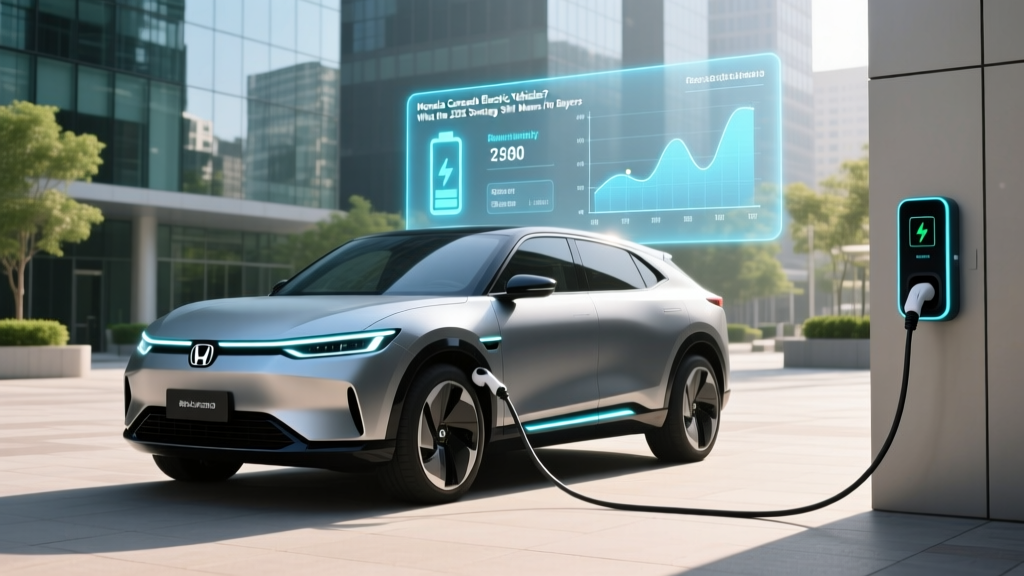
Despite viral headlines suggesting "Honda cancels electric vehicles," the automaker has not abandoned EVs. What Honda has done is significantly scale back its EV production targets and pivot hard toward hybrids as a bridge strategy through the late 2020s. As of early 2026, the Honda Prologue remains on sale, and Honda has confirmed next-generation EVs built on its proprietary "0 Series" platform are still in development for 2027 and beyond. However, Honda cut its global EV output target by roughly 30% and delayed several planned EV launches, leaning instead on its proven hybrid lineup (Accord Hybrid, CR-V Hybrid) to meet emissions goals while demand for pure EVs normalizes.
If you're shopping for an electrified Honda in 2026: The Prologue EV is available now with up to 308 miles of EPA range. The CR-V Hybrid and Accord Hybrid offer 40+ MPG without any charging infrastructure concerns. Your best choice depends on your home charging access, daily mileage, and budget.
What Honda Actually Changed — and Why the Headlines Got It Wrong
In mid-2025, Honda announced a revised electrification roadmap that reduced its planned EV investment by approximately ¥3 trillion (about $20 billion USD at the time) and lowered its global battery-electric production target. The company cited slower-than-expected EV adoption in North America, persistent concerns about charging infrastructure reliability, and tightening tariff and trade dynamics affecting battery supply chains.
What got lost in translation: Honda never used the word "cancel." The automaker's official communications framed this as a recalibration — slowing the pace of pure-EV rollouts while accelerating hybrid and plug-in hybrid development. Honda's "0 Series" EV concept lineup, previewed at CES 2024 and 2025, remains the company's long-term EV architecture, with production vehicles expected starting in 2027.
Meanwhile, the 2026 Honda Prologue — built on General Motors' Ultium platform — continues production. Honda also extended its partnership with GM to develop next-generation EVs, though the companies parted ways on a previously planned affordable EV platform.
2026 Honda Prologue: What You Can Actually Buy Today
The Prologue is Honda's only all-electric vehicle currently available in the U.S. Here's exactly what you're getting for the money:
| Spec | FWD (EX/Touring) | AWD (Elite) |
|---|---|---|
| EPA Range | 308 mi (EX FWD) | 283 mi (Elite AWD) |
| Battery (usable) | 85 kWh, NMC lithium-ion (Ultium) | |
| Peak DC Fast Charge | 190 kW | |
| 10–80% DC Charge Time | ~30 minutes (preconditioned) | |
| Level 2 Charge Rate | 11.5 kW (~34 mi/hr) | |
| Horsepower | 220 hp (FWD) | 288 hp (AWD) |
| 0–60 mph | ~7.2 sec | ~5.9 sec |
| MPGe (combined) | 99 MPGe | 93 MPGe |
| Base MSRP | $47,400 (EX) | $57,900 (Elite AWD) |
| Federal Tax Credit (§30D) | Eligibility varies — verify at IRS.gov | |
| Battery Warranty | 8 years / 100,000 miles | |
Real-World Range Reality: The EPA rates the Prologue EX FWD at 308 miles. In mixed highway driving at 70 mph in moderate temperatures, expect roughly 260–280 miles. In sub-30°F winter conditions with cabin heat running, plan for 210–240 miles — a 20–30% reduction typical of NMC chemistry without a dedicated heat pump. The Prologue uses a resistive PTC heater on some trims, which draws more energy than a heat-pump system.
Prologue EV vs. CR-V Hybrid: A Cost and Practicality Comparison
For most Honda shoppers in 2026, the real decision isn't "EV or gas" — it's "EV or hybrid." Honda's CR-V Hybrid offers a compelling middle ground. Here's how the numbers stack up:
| Factor | Prologue EX (EV) | CR-V Hybrid EX-L (HEV) |
|---|---|---|
| MSRP | $47,400 | $38,500 |
| Estimated Federal Tax Credit | Up to $7,500 (verify eligibility) | $0 (not a BEV/PHEV) |
| Effective Purchase Price | ~$39,900 | $38,500 |
| EPA Efficiency | 99 MPGe (29 kWh/100mi) | 40 MPG combined |
| Annual Fuel/Energy Cost (15,000 mi) | ~$560 (home charging at $0.14/kWh) | ~$1,200 (gas at $3.20/gal) |
| 5-Year Fuel/Energy Cost | ~$2,800 | ~$6,000 |
| Maintenance (5 yr est.) | ~$1,200 | ~$2,800 |
| Insurance (5 yr avg.) | ~$9,500 | ~$7,800 |
| 5-Year Total Cost (purchase + fuel + maint. + ins.) | ~$53,400 | ~$55,100 |
Key takeaway: When the Prologue qualifies for the full §30D credit, its 5-year total cost of ownership comes in slightly below the CR-V Hybrid, primarily due to dramatically lower fuel and maintenance costs. Without the credit, the Prologue's higher purchase price and insurance premiums push its TCO higher. Run the numbers for your specific situation — the IRS §30D eligibility rules include income caps ($150K single / $300K joint), MSRP caps ($55K for SUVs), and battery sourcing requirements that change annually.
Who Should Buy the Prologue — and Who Should Wait or Go Hybrid
Decision Framework: Which Electrified Honda Fits Your Life?
- Choose the Prologue EV if: You have reliable Level 2 home charging (a 240V/48A circuit), your daily driving is under 100 miles round-trip, you live in a mild-to-moderate climate, and you qualify for the §30D credit. The Prologue's 308-mile range handles most commutes with ease, and home charging at ~$0.14/kWh keeps running costs minimal.
- Choose the CR-V Hybrid if: You lack home charging access, you frequently drive over 300 miles between stops, you live in a region with extreme cold (below 10°F regularly), or you want the lowest upfront cost with no charging logistics. The CR-V Hybrid's 40 MPG combined and 400+ mile total range eliminate all infrastructure dependency.
- Wait for Honda's "0 Series" EVs (2027+) if: You want a Honda-engineered EV from the ground up (not GM-sourced), you're looking for a sedan or smaller crossover, or you want next-gen features like thinner battery packs, 800V architecture for faster charging, and Honda's new ADAS suite. Honda has previewed these vehicles but pricing and specs remain preliminary.
Common Misconceptions About Honda's EV Plans
| Myth | Fact |
|---|---|
| "Honda canceled all electric vehicles." | Honda reduced EV production targets by ~30% and delayed some models. The Prologue is still on sale, and "0 Series" EVs are planned for 2027+. |
| "The Prologue is being discontinued." | No official discontinuation has been announced. The Prologue continues for the 2026 model year. Honda's future EV lineup will shift to its own platform eventually. |
| "Honda abandoned EVs because they don't work." | Honda cited slower consumer adoption and infrastructure gaps, not technology failure. The company is simultaneously expanding hybrid production — a pragmatic business decision, not a technology verdict. |
| "I can't get a tax credit on the Prologue." | Credit eligibility depends on your income, the vehicle's MSRP, and battery mineral sourcing — not on Honda's corporate strategy. Check current rules at IRS.gov or ask your dealer about point-of-sale transfer options. |
| "Hybrids are just a compromise." | For buyers without home charging, a hybrid like the CR-V (40 MPG) or Accord Hybrid (48 MPG city) is often the optimal choice — not a compromise. Hybrids require zero behavior change and deliver consistent savings regardless of climate. |
Real-World Ownership: What First-Time EV Buyers Must Know
If the Prologue is your first EV, here's what the brochures won't emphasize:
Home Charging Is Non-Negotiable for Satisfaction
Public DC fast charging works for road trips, but daily EV ownership is built on Level 2 home charging. Budget $800–$2,200 for a quality Level 2 station (like a ChargePoint Home Flex or Emporia Vue) plus professional installation. If your electrical panel is older or maxed out, a panel upgrade can add $1,500–$3,000. Without home charging, you'll rely on public infrastructure — and while networks like Electrify America and EVgo have improved, downtime and broken stalls remain real frustrations in 2026.
Charging Speed Tapers Above 80%
The Prologue's peak charge rate is 190 kW, but that peak only holds between roughly 10–40% State of Charge. From 40–80%, the rate steps down progressively, and above 80% it drops to under 40 kW. This is normal battery physics — it protects the cells — but it means a "10–80% charge in 30 minutes" is realistic, while 10–100% can take over 55 minutes. On road trips, plan to charge to 80% and go rather than waiting for a full battery.
Cold Weather Cuts Range — Plan Accordingly
NMC battery chemistry (which the Prologue uses) loses efficiency in cold temperatures. Below freezing, expect a 20–30% range reduction due to cabin heating demands and reduced battery chemical efficiency. If your commute is 80 miles round-trip and you live in Minnesota, a 308-mile EPA rating still leaves comfortable margin — but a 283-mile AWD Prologue in a Dakota winter at highway speeds may require mid-day charging. Preconditioning the battery while plugged in (a feature the Prologue supports via the HondaLink app) mitigates some of this loss.
Insurance Costs More — Budget for It
EV insurance premiums run 15–25% higher than equivalent gas vehicles, driven by higher repair costs for battery packs and specialized bodywork. For the Prologue, expect annual premiums in the $1,700–$2,100 range depending on your state, driving record, and coverage level. Get quotes before you buy.
Looking Ahead: Honda's "0 Series" and What to Expect by 2027
Honda's next-generation EVs, branded the "0 Series," represent a clean-sheet approach. Previewed by the Saloon and Space-Hub concepts, these vehicles will feature:
- Thin battery packs — Honda has emphasized a low-profile battery design for better interior space and handling, though specific kWh figures are not yet confirmed.
- 800V architecture — enabling faster DC charging (potentially 10–80% in under 15 minutes at compatible 350 kW+ stations).
- Proprietary Honda platform — moving away from GM's Ultium underpinnings used in the Prologue.
- Advanced ADAS — Honda has signaled Level 3-capable highway driving assistance in certain markets, though U.S. availability of true Level 3 features will depend on regulatory approval and geofencing.
These are announced/preliminary specifications. Honda has not released final pricing, range estimates, or U.S. trim details. If you're not in a rush, waiting for the 0 Series could yield a more Honda-specific EV experience. If you need a vehicle now, the Prologue and Honda's hybrid lineup are proven, available options.
Did Honda officially cancel its electric vehicle program?
No. Honda reduced its EV production targets by approximately 30% and delayed some planned models, but the 2026 Prologue remains on sale and next-generation "0 Series" EVs are still planned for 2027 and beyond. Honda's shift is a strategic recalibration, not a cancellation.
Is the 2026 Honda Prologue still a good EV to buy?
The Prologue offers competitive range (up to 308 miles EPA), reasonable DC fast-charging speeds (190 kW peak, ~30 min 10–80%), and a practical two-row SUV layout. Its main drawbacks are a higher starting price ($47,400) compared to rivals like the Hyundai Ioniq 5, and reliance on GM's Ultium platform rather than Honda's own engineering. If it fits your budget and you can charge at home, it's a solid choice.
Will Honda release a plug-in hybrid (PHEV) in the U.S.?
As of early 2026, Honda has not announced a PHEV for the U.S. market. The company's bridge strategy focuses on traditional hybrids (CR-V Hybrid, Accord Hybrid, Civic Hybrid) alongside the Prologue BEV. Honda has offered PHEVs in China and Europe, so a U.S. PHEV remains possible but unconfirmed.
How does the Prologue's charging speed compare to competitors?
The Prologue's 190 kW peak is mid-pack for 2026. The Hyundai Ioniq 5 peaks at 240 kW (800V architecture, ~18 min 10–80%), and the Tesla Model Y can hit 250 kW at V3 Superchargers. The Prologue's ~30-minute 10–80% time is adequate for road trips but not class-leading. For daily home charging, the 11.5 kW Level 2 rate adds about 34 miles per hour of charging — plenty to refill overnight.
What's the cheapest electrified Honda I can buy in 2026?
The 2026 Honda Civic Hybrid starts around $30,000 and delivers an EPA-estimated 50 MPG combined — making it the most affordable and efficient electrified Honda. The CR-V Hybrid starts around $36,000. The Prologue EV starts at $47,400 but may qualify for up to $7,500 in federal tax credits, bringing its effective price closer to $39,900.