Quick Answer: As of 2026, Honda's only all-electric vehicle available in the U.S. is the Honda Prologue, a midsize SUV built on General Motors' Ultium platform. It offers an EPA-estimated 296 miles of range (FWD Elite trim), DC fast charging up to 150 kW, and a starting MSRP around $47,400. Honda has no other battery-electric models on sale — the brand's broader lineup remains heavily hybrid (Accord, CR-V, Civic). If you want a Honda-badged EV today, the Prologue is your only option. If you're open to alternatives, competitors like the Hyundai Ioniq 5 and Tesla Model Y offer faster charging and more mature software ecosystems.
Honda's Electric Reality: One Model, Big Expectations
Honda was late to the battery-electric vehicle market in the United States. While competitors like Hyundai, Kia, Ford, and Tesla built dedicated EV platforms and scaled production, Honda spent years refining its hybrid powertrains and leasing the compliance-oriented Clarity Electric in limited markets. The Honda Prologue, launched for the 2024 model year and refreshed for 2026, represents the brand's first serious all-electric offering — and it arrived not from Honda's own engineering labs, but from a partnership with General Motors.
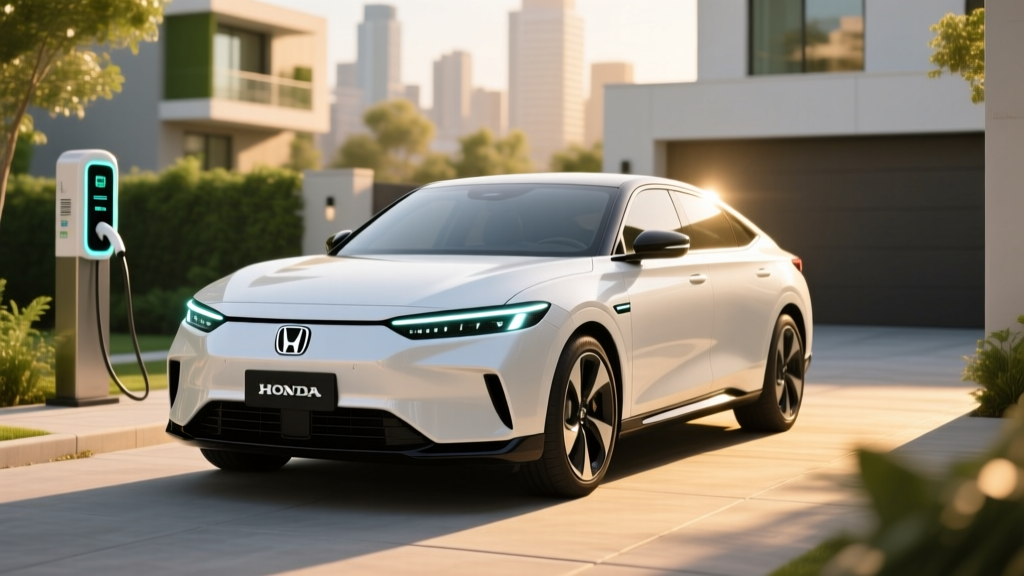
The Prologue rides on GM's Ultium platform, sharing its bones with the Chevrolet Blazer EV and Cadillac Lyriq. That means you're getting proven battery architecture with Honda styling, interior design, and tuning philosophy. For 2026, Honda has streamlined the Prologue lineup to three trims: EX, Touring, and Elite, with front-wheel drive standard and all-wheel drive available.
But here's what matters to buyers searching for "Honda all electric": this is the entire menu. Honda has announced future in-house EV platforms and a next-generation 0 Series concept, but nothing from those efforts is available to purchase today. If you need a Honda-badged EV now, the Prologue is it.
Prologue Specs: Range, Battery, and Charging Numbers
Let's get to the figures that matter for purchase decisions. The 2026 Prologue uses an 85 kWh usable lithium-ion battery (NMC chemistry, Ultium pouch cells). Range varies by trim and drivetrain:
| Trim | Drivetrain | EPA Range | Battery | Peak DC Charge | 10–80% Time | Level 2 Rate | 0–60 mph | MSRP |
|---|---|---|---|---|---|---|---|---|
| EX | FWD | 296 mi | 85 kWh (NMC) | 150 kW | ~28 min | 11.5 kW | 7.1 sec | $47,400 |
| Touring | AWD | 273 mi | 85 kWh (NMC) | 150 kW | ~28 min | 11.5 kW | 6.2 sec | $51,400 |
| Elite | AWD | 266 mi | 85 kWh (NMC) | 150 kW | ~28 min | 11.5 kW | 6.2 sec | $56,900 |
Real-World Range Reality: The EPA 296-mile figure (FWD) is achievable in mild conditions around town. On sustained highway driving at 70–75 mph, expect 240–260 miles. In freezing temperatures (below 30°F), range drops to roughly 210–230 miles due to battery resistance and cabin heating demands. The Prologue does not use a heat pump — it relies on resistive heating, which is less efficient in cold climates. Plan accordingly if you live north of the 37th parallel.
Charging at 150 kW peak is adequate but not class-leading. The Hyundai Ioniq 5 peaks at 240 kW on an 800V architecture, hitting 10–80% in roughly 18 minutes. The Prologue's 28-minute 10–80% time means slightly longer road-trip stops. The charge curve also tapers noticeably above 70% SoC — that peak 150 kW is not sustained for the full session. On Level 2 at home (11.5 kW / 48A), a full charge from 10% takes about 8 hours, which works well for overnight charging.
Cost of Ownership: Prologue vs. Gas CR-V
The most common cross-shopping question: should you buy the Prologue or stick with a gas (or hybrid) Honda CR-V? Here's a five-year cost projection comparing the Prologue EX (FWD) against the 2026 CR-V EX (gas) and CR-V Sport Hybrid, assuming 12,000 miles/year, $3.50/gallon gas, and $0.14/kWh home electricity:
| Cost Factor (5 Years) | Prologue EX (EV) | CR-V EX (Gas) | CR-V Sport Hybrid |
|---|---|---|---|
| Purchase Price (MSRP) | $47,400 | $34,500 | $37,500 |
| Est. Federal Tax Credit (§30D) | $0–$7,500* | $0 | $0 |
| Fuel / Energy (60,000 mi) | $2,520 (home) | $7,350 | $5,250 |
| Maintenance | $600 | $2,800 | $2,400 |
| Insurance (avg. premium) | $9,500 | $7,200 | $7,400 |
| Est. Depreciation | $18,000 | $12,000 | $13,000 |
| Total 5-Year Cost | $50,520–$58,020 | $63,850 | $65,550 |
*The §30D federal EV tax credit of up to $7,500 depends on battery sourcing, critical-mineral content, buyer income caps ($150K single / $300K joint), and the $80,000 SUV MSRP cap. The Prologue qualifies in many configurations, but eligibility can change. Check current rules at IRS.gov and verify with a tax professional. As of 2026, the credit can be transferred at the point of sale, reducing your purchase price directly.
The Prologue wins on fuel and maintenance — no oil changes, no transmission fluid, regenerative braking extends pad life. But higher insurance premiums (EVs typically cost 15–25% more to insure) and steeper upfront cost narrow the gap. The break-even point versus the gas CR-V is roughly 3.5 to 4.5 years if you qualify for the full tax credit and charge primarily at home. Without the credit or if you rely on expensive public DC fast charging, the math shifts unfavorably.
Tax Credit Eligibility: What You Actually Need to Know
The Prologue benefits from its GM-sourced Ultium battery in ways that some competitors do not. Under current IRS §30D rules, the credit has two components — $3,750 for critical-minerals sourcing and $3,750 for battery-component manufacturing — both of which must be satisfied independently. The Prologue's North American assembly and GM battery supply chain have positioned it favorably, but specific eligibility shifts as sourcing requirements tighten annually.
- MSRP cap: SUVs must be under $80,000. All Prologue trims qualify.
- Income cap: Adjusted gross income ≤ $150,000 (single), $225,000 (head of household), $300,000 (joint).
- Final assembly: Must be in North America — Prologue is built in Tennessee. ✓
- Battery sourcing: Critical-minerals and component thresholds increase each year. Verify current-year compliance on fueleconomy.gov.
- Point-of-sale transfer: You can assign the credit to the dealer to reduce your purchase price at closing, rather than waiting for a tax refund.
Common Misconceptions About Honda's Electric Plans
| Myth | Fact |
|---|---|
| "Honda has a full EV lineup — I just need to pick one." | The Prologue is Honda's only battery-electric model sold in the U.S. as of 2026. Everything else is gas or hybrid. |
| "The Prologue is 100% Honda engineering." | It's built on GM's Ultium platform with Honda design, suspension tuning, interior, and infotainment. Think of it as a Honda-bodied GM EV. |
| "EVs have shorter lifespans than gas cars." | Honda covers the Prologue's battery with an 8-year / 100,000-mile warranty (10 years / 150,000 miles in CARB states). GM Ultium packs have demonstrated less than 10% degradation over 100K+ miles in fleet data. |
| "I'll save $7,500 no matter what." | Tax credit eligibility depends on your income, the vehicle's battery sourcing compliance, and MSRP caps. Not all buyers qualify. |
| "I can charge anywhere — public chargers are everywhere." | Public DC fast-charging infrastructure remains uneven. Rural corridors and some apartment complexes are still charging deserts. Home Level 2 installation is strongly recommended for daily convenience. |
Who Should Buy the Prologue — and Who Shouldn't
The Prologue makes sense for a specific buyer. It doesn't try to be everything to everyone, and that's fine — but you need to know which camp you're in before signing a purchase agreement.
Buy the Honda Prologue if:
- You want a midsize electric SUV with Honda styling and dealer support
- You have access to home Level 2 charging (or can install it)
- Your daily commute is under 80 miles round-trip
- You qualify for the §30D tax credit, bringing effective price below ~$40K
- You prefer a conventional SUV design over futuristic styling
- You value Honda's resale reputation and service network
Look elsewhere if:
- You need fast DC charging for frequent road trips (Ioniq 5 or Model Y charge faster)
- You live in a cold climate without a garage — no heat pump means significant winter range loss
- You want the latest EV software/OTA features (Tesla, Rivian, and Hyundai lead here)
- You need three rows of seating (consider the Kia EV9)
- You can't install home charging and your area has limited public infrastructure
- You want a sub-$40K EV — the Prologue starts at $47,400 before incentives
Home Charging Setup: What the Prologue Requires
The Prologue's 11.5 kW onboard charger means you'll want a Level 2 home station on a 240V / 60A circuit to maximize overnight charging speed. A standard 120V outlet (Level 1) adds only about 3–4 miles of range per hour — roughly 36 miles overnight — which works only for very low-mileage drivers.
Expect to spend $800–$2,500 on a complete Level 2 home installation, depending on your electrical panel's capacity. If your panel is 100A or older, an upgrade to 200A can add $1,500–$3,500. Honda includes a portable dual-level charge cord with the Prologue, but a hardwired wall unit (ChargePoint Home Flex, Emporia V2, or Wallbox Pulsar Plus) delivers better reliability and speed. Always hire a licensed electrician and pull a permit — unpermitted work can void homeowner insurance claims.
For public charging, the Prologue uses the NACS connector (Tesla's standard, now adopted industry-wide). This gives you access to Tesla Superchargers via native port — a significant advantage over older CCS-only vehicles that require adapters. Electrify America, EVgo, and other networks have also begun deploying NACS cables.
Frequently Asked Questions
Is Honda releasing another all-electric model soon?
Honda has previewed its "0 Series" EV platform with concept vehicles, targeting global launch around 2026–2027. However, no additional Honda-badged BEV is currently on sale or available for order in the U.S. beyond the Prologue. Any future models remain announced/preliminary until official specs and pricing are confirmed.
How does the Prologue compare to the Chevrolet Blazer EV?
Both share the Ultium platform and similar battery capacity, but the Prologue carries a premium of roughly $3,000–$5,000 at equivalent trims. You're paying for Honda's interior materials, dealer experience, and brand loyalty. The Blazer EV offers a slightly longer-range SS trim and more aggressive styling. If price is the priority, the Blazer EV is the value pick; if brand trust matters, the Prologue justifies the premium for Honda loyalists.
Does the Prologue qualify for the full $7,500 federal tax credit?
It has qualified for much of the credit in recent years due to North American assembly and GM battery sourcing. However, critical-mineral thresholds tighten annually under §30D. Check the latest eligibility on fueleconomy.gov before purchasing, and confirm with your tax advisor that your income falls within caps.
What's the Prologue's real-world highway range?
On a flat interstate at 70 mph in 65°F weather, expect approximately 245–260 miles from the FWD EX trim (EPA 296). AWD trims drop to roughly 225–240 miles. In winter (20°F), plan for 210–230 miles regardless of trim. The Prologue lacks a heat pump, so cold-weather efficiency suffers more than competitors equipped with one (like the Ioniq 5 or Model Y).
Can I tow with the Prologue?
Yes, but modestly. The Prologue is rated for 1,500 pounds (FWD) to 4,000 pounds (AWD with towing package). That handles a small utility trailer or a pair of dirt bikes, but not a loaded camper. Towing also cuts range by 30–50% depending on weight and aerodynamics.
Is the Prologue a good first EV?
For Honda-loyal buyers with home charging access and moderate daily mileage, yes. The driving experience is conventional and unintimidating, the controls are familiar, and Honda dealerships provide a service network most buyers trust. The main caveat is charging speed — 150 kW peak means longer road-trip stops than the fastest-charging rivals. If you road-trip frequently, test-drive a Hyundai Ioniq 5 or Tesla Model Y first to compare charging times.