Why the Honda Prologue Is Dominating August Sales Numbers
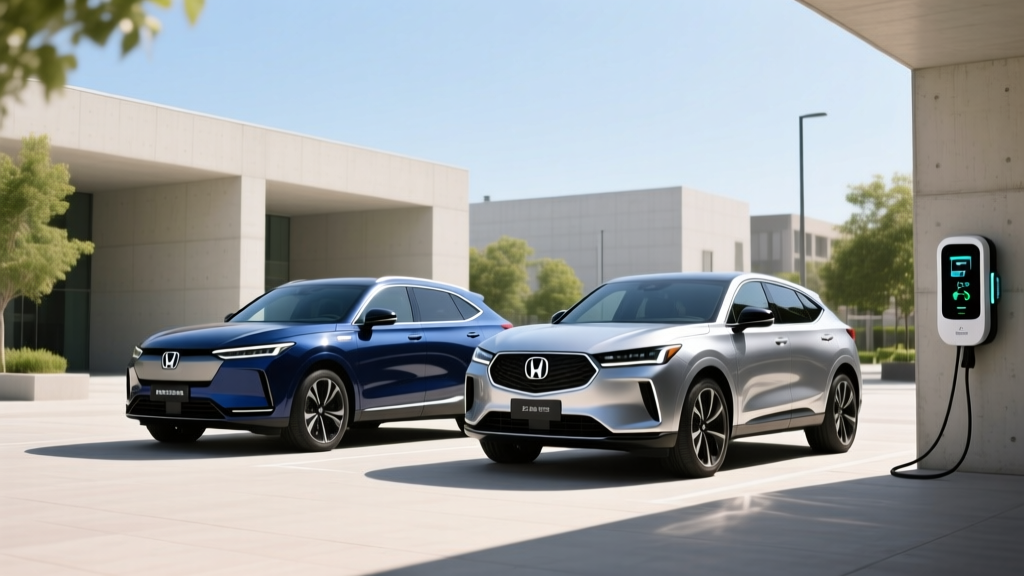
August 2025 marked a turning point for Honda's electrification strategy. The automaker reported robust sales across its Honda and Acura divisions, and one nameplate stood out: the Honda Prologue. As Honda's first mass-market battery-electric vehicle built on General Motors' Ultium platform, the Prologue has drawn buyers who want a midsize electric SUV without the polarizing design or software quirks of some competitors. Acura's electric counterpart, the ZDX, has similarly contributed to the brand's electrified momentum.
But sales figures only tell part of the story. If you're researching the Prologue after seeing those August headlines, you need to know what it's actually like to live with — its real-world range, charging behavior, ownership costs, and whether the federal tax credit applies to your specific situation. This review breaks down every spec that matters.
Range, Battery, and Efficiency: The Numbers That Matter
| Spec | FWD (EX / Touring) | AWD (Elite) |
|---|---|---|
| Battery (usable) | 85 kWh, NMC lithium-ion | 85 kWh, NMC lithium-ion |
| EPA Range | 296 mi (EX FWD) | 281 mi (Elite AWD) |
| MPGe (city/hwy/combined) | 108 / 90 / 99 MPGe | 101 / 87 / 94 MPGe |
| Energy Consumption | 34 kWh/100 mi | 36 kWh/100 mi |
| Horsepower | 212 hp | 288 hp |
| Torque | 236 lb-ft | 333 lb-ft |
| 0–60 mph | ~7.2 sec | ~5.8 sec |
| Drivetrain | Single-motor FWD | Dual-motor AWD |
Source: fueleconomy.gov
The Prologue EX FWD carries an EPA-estimated 296 miles of range. In real-world driving, expect:
- City/suburban commuting: ~280–295 mi (regen braking helps recover energy)
- Sustained highway driving (70–75 mph): ~240–260 mi (aerodynamic drag dominates)
- Cold weather (below 32°F): ~210–240 mi (battery resistance + cabin heating draw)
The Elite AWD trim drops to an EPA-estimated 281 miles. On a winter road trip at highway speeds, plan for roughly 200–220 usable miles between charges. Always budget a 10–15% buffer for detours and charger availability.
The 85 kWh usable battery uses NMC (nickel manganese cobalt) chemistry — the same Ultium cells found in the Chevrolet Blazer EV and Cadillac Lyriq. NMC offers higher energy density than LFP, which keeps the pack compact, but it's more sensitive to sustained 100% state-of-charge storage. For daily driving, charge to 80–90% and reserve 100% for road-trip mornings.
Charging Speed: DC Fast Charge and Home Level 2
| Charging Level | Power | Speed / Time |
|---|---|---|
| Level 1 (120V household) | ~1.4 kW | ~4 mi/hr — 70+ hr for full charge |
| Level 2 (240V, 48A) | 11.5 kW (onboard charger) | ~34 mi/hr — full charge in ~9 hr |
| DC Fast Charge (peak) | 150 kW | 10–80% in ~32 min |
| DC Fast Charge (sustained avg.) | ~105–115 kW | 10–80% realistic average |
The Prologue's 150 kW peak DC fast-charge rate is adequate but not class-leading. Competitors like the Hyundai Ioniq 5 (up to 240 kW on 800V architecture) or the Tesla Model Y (up to 250 kW) add range significantly faster. Here's what the Prologue's charge curve actually looks like in practice:
- 10–40% SoC: The pack pulls close to peak 150 kW — you'll see roughly 3–4 miles of range added per minute.
- 40–65% SoC: Charge rate tapers to ~110–120 kW as battery management protects cell health.
- 65–80% SoC: Further taper to ~75–90 kW.
- Above 80% SoC: Sharp drop to ~40–50 kW. Charging from 80–100% can add another 25–30 minutes.
Practical takeaway: On a road trip, plan stops around the 20–80% window for the fastest throughput. A 30-minute stop gets you roughly 170–190 miles of range in the FWD model. Preconditioning the battery (via the infotainment navigation routing to a DC charger) helps the pack reach optimal temperature for faster charging, especially in cold weather.
At home, the 11.5 kW onboard charger is a strong point. With a 48-amp Level 2 wall connector on a 60-amp circuit, you'll recover a full battery overnight in about 9 hours. That's 34 miles of range per hour of charging — plenty for daily replenishment. Installation costs for a Level 2 home setup typically run $800–$2,000 depending on whether your electrical panel needs an upgrade.
Pricing, Trims, and Federal Tax Credit Eligibility
| Trim | Drivetrain | MSRP | Est. After §30D Credit* |
|---|---|---|---|
| EX | FWD | $47,400 | ~$39,900 |
| Touring | FWD | $51,400 | ~$43,900 |
| Elite | AWD | $55,400 | ~$47,900 |
*Estimated price assumes full $7,500 federal tax credit. Actual eligibility depends on buyer income, battery sourcing, and MSRP caps. Verify at irs.gov.
The Prologue may qualify for up to $7,500 under IRS §30D, but you must meet ALL of the following:
- MSRP cap: SUVs must be under $80,000 — all Prologue trims qualify ✅
- Buyer income cap: AGI ≤ $150,000 (single) / $225,000 (head of household) / $300,000 (joint) ✅ Check your tax return
- Battery sourcing: Critical minerals and battery components must meet phased-in thresholds that tighten annually. Honda sources Ultium cells from the LG Energy Solution–GM joint venture (Ultium Cells LLC) with U.S. manufacturing. Confirm current-year compliance on the IRS qualified vehicle list.
- Point-of-sale transfer: As of 2024+, you can transfer the credit to the dealer at purchase for an immediate price reduction, rather than waiting to claim it on your tax return.
- One credit per VIN, one new-EV credit per taxpayer per year.
Rules change frequently. Consult a tax professional and the IRS clean vehicle credit page before purchasing.
Interior, Tech, and Daily Livability
The Prologue's cabin borrows heavily from GM's Ultium-era playbook — a 11.3-inch infotainment touchscreen running a Google Built-in OS sits front and center, with wireless Apple CarPlay and Android Auto. An 11-inch digital driver display replaces traditional gauges. The shifter is a column-mounted stalk, freeing up console space.
Cargo and passenger space is competitive for the midsize electric SUV segment:
- Cargo (behind rear seats): 25.2 cu ft
- Cargo (rear seats folded): 57.7 cu ft
- Front legroom: 41.4 in
- Rear legroom: 37.0 in
- No front trunk (frunk): The Ultium platform packaging leaves no space for one — a notable omission vs. the Hyundai Ioniq 5 or Ford Mustang Mach-E.
Honda Sensing 360+ is standard across all trims. This is a Level 2 (SAE) driver-assistance suite that includes adaptive cruise control, lane-keeping assist, blind-spot monitoring, and automatic emergency braking. A hands-on-wheel requirement remains — this is not a hands-free system like GM's Super Cruise or Ford's BlueCruise. The driver must remain actively engaged at all times.
Honda Sensing 360+ is an SAE Level 2 system. It provides steering and speed assistance simultaneously but requires continuous driver supervision. It does NOT make the Prologue a self-driving vehicle. Keep your hands on the wheel and eyes on the road.
Pros, Cons, and the Verdict
- Comfortable, car-like ride quality — refined for an EV crossover
- Spacious rear seat and cargo area for the class
- 11.5 kW Level 2 onboard charger enables fast home replenishment
- Honda Sensing 360+ standard on all trims
- Strong dealer network for service and warranty work
- Eligible for up to $7,500 federal tax credit (verify sourcing/year)
- 150 kW peak DC charging is slow vs. 800V rivals (Ioniq 5, EV6)
- No frunk — lost utility for cable storage or groceries
- GM-sourced infotainment feels less polished than Honda's usual UX
- Elite AWD trim pushes past $55K before options
- No hands-free driving assist (no Super Cruise option)
- Cold-weather range loss is pronounced (~20–25%)
How the Prologue Stacks Up Against Key Rivals
| Spec | Honda Prologue EX FWD | Hyundai Ioniq 5 SEL RWD | Tesla Model Y LR AWD | Ford Mach-E Premium RWD |
|---|---|---|---|---|
| EPA Range | 296 mi | 303 mi | 311 mi | 290 mi |
| Battery (usable) | 85 kWh (NMC) | 77.4 kWh (NMC) | 75 kWh (NMC/LFP varies) | 75.7 kWh (NMC) |
| Peak DC Charge | 150 kW | 240 kW (800V) | 250 kW | 150 kW |
| 10–80% DC Time | ~32 min | ~18 min | ~25 min | ~38 min |
| 0–60 mph | 7.2 sec | 7.0 sec | 4.8 sec | 6.1 sec |
| Base MSRP | $47,400 | $46,650 | $47,990 | $42,995 |
| Frunk | No | Yes (0.85 cu ft) | Yes (4.1 cu ft) | Yes (4.7 cu ft) |
Choose the Honda Prologue if: You prioritize ride comfort, want Honda's dealer network for peace of mind, value a roomy rear seat for family duty, and charge primarily at home overnight.
Choose the Hyundai Ioniq 5 if: Fast DC charging is critical for your road-trip habits (18 min vs. 32 min 10–80% is a real-world difference of ~45 minutes on a 600-mile trip).
Choose the Tesla Model Y if: You want maximum range, Supercharger network access (though NACS adapters now open this to others), and the strongest software/OTA ecosystem.
Choose the Ford Mach-E if: Budget is your top priority — it undercuts the Prologue by ~$4,400 at base MSRP while offering similar range.
Warranty and Long-Term Ownership
Honda backs the Prologue with its standard new-vehicle warranty plus specific EV component coverage:
- New vehicle limited: 3 years / 36,000 miles
- Powertrain: 5 years / 60,000 miles
- Battery pack: 8 years / 100,000 miles (capacity retention warranty — covers defects and excessive degradation below a defined threshold, typically ~70% of original capacity)
- Corrosion perforation: 5 years / unlimited miles
- Roadside assistance: 3 years / 36,000 miles
The 8-year/100,000-mile battery warranty aligns with the federal minimum for EV battery coverage and matches most competitors. Honda does not currently offer an extended battery warranty comparable to Hyundai's 10-year/100,000-mile EV battery coverage on the Ioniq 5. For a vehicle in the $47K–$55K range, that gap is worth noting if you plan to keep the Prologue past the 8-year mark.
Who Should Buy the Honda Prologue?
The Prologue is best suited for suburban families and commuters who:
- Have reliable home Level 2 charging and drive fewer than 60 miles round-trip daily
- Want a conventional SUV experience — quiet, comfortable, familiar — without learning a new ecosystem
- Value Honda's reputation for reliability and widespread dealer service
- Take occasional road trips but don't live on the highway (the 150 kW charge rate is manageable but not fast)
It's less ideal for: high-mileage road warriors who need ultra-fast DC charging, buyers who want hands-free highway driving (no Super Cruise equivalent), or those who need a frunk for gear storage.
Frequently Asked Questions
What is the real-world range of the Honda Prologue?
The EPA rates the FWD Prologue EX at 296 miles. In mixed real-world driving, expect 250–280 miles. On sustained highway trips at 70+ mph, plan for 240–260 miles. In freezing weather, that drops to roughly 210–240 miles.
How fast does the Prologue charge at home and on the road?
At home on a 240V Level 2 charger (48A), the Prologue charges at up to 11.5 kW — adding about 34 miles of range per hour and a full charge in roughly 9 hours. On a DC fast charger, it peaks at 150 kW and reaches 10–80% in about 32 minutes, though the sustained average is closer to 105–115 kW due to charge-curve taper.
Does the Honda Prologue qualify for the federal EV tax credit?
The Prologue is eligible for up to $7,500 under IRS §30D, provided you meet income limits (≤$300K joint / $150K single), the MSRP is under $80K (all trims qualify), and the battery meets current-year critical-mineral and component-sourcing thresholds. The credit can be transferred to the dealer at point of sale for an instant price reduction. Always verify on the fueleconomy.gov tax credit lookup and with a tax professional.
Is the Prologue worth buying over the Hyundai Ioniq 5 or Tesla Model Y?
If ride comfort, cabin quietness, and Honda dealer support matter most, yes. If fast road-trip charging or maximum range are your priorities, the Ioniq 5 (240 kW charging) or Model Y (311 mi range, Supercharger access) are stronger choices. The Prologue wins on traditional SUV comfort; it loses on charging speed and tech polish.
Does the Prologue have a frunk?
No. The Ultium platform packaging in the Prologue does not include a front trunk. You'll store charging cables in the rear cargo area (25.2 cu ft behind the rear seats).
What is the battery warranty?
Honda covers the Prologue's battery pack for 8 years or 100,000 miles against defects and excessive capacity loss. This is the industry-standard minimum; Hyundai offers 10 years/100,000 miles on the Ioniq 5 for comparison.