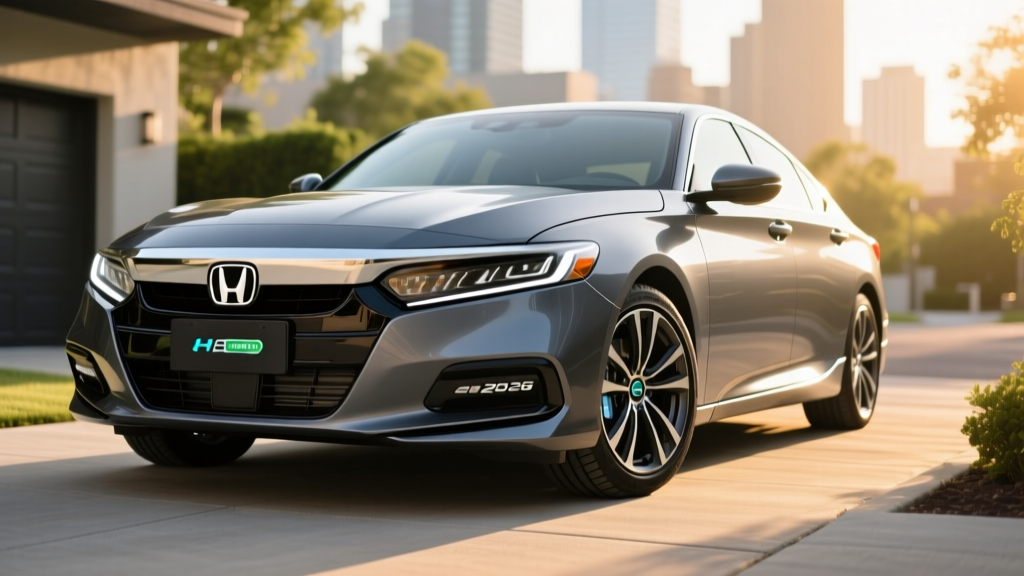
The 2026 Honda Accord Hybrid remains one of the most practical midsize sedans for drivers who want electric-adjacent efficiency without the charging infrastructure demands of a full EV. If you're researching the 2006 Honda Accord bolt pattern for wheel upgrades on a legacy model or comparing it to the current-generation Accord's fitment, this guide covers both the historical spec and what the 2026 Accord Hybrid delivers in range, efficiency, and ownership value.
Bolt Pattern: 2006 Honda Accord vs. 2026 Accord Hybrid
Understanding wheel fitment starts with the bolt pattern — the number of lug nuts and the diameter of the circle they form. Here's the direct comparison:
| Model Year | Bolt Pattern | Center Bore | Thread Size | Typical OEM Wheel Size |
|---|---|---|---|---|
| 2006 Honda Accord (7th Gen) | 5x114.3mm (5x4.5") | 64.1mm | M12 x 1.5 | 15"–17" |
| 2026 Honda Accord Hybrid (11th Gen) | 5x114.3mm (5x4.5") | 64.1mm | M12 x 1.5 | 17"–19" |
The 2006 Honda Accord bolt pattern is 5x114.3mm — identical to the current 2026 Accord Hybrid. Honda has maintained this bolt pattern across nearly two decades of Accord production, which means many aftermarket wheels designed for the 7th-generation (2003–2007) Accord will physically bolt onto the 11th-generation model, provided you account for offset, center bore (64.1mm hub-centric), and the larger brake calipers on newer trims.
2026 Accord Hybrid: Real-World MPG and Electric-Only Capability
The 2026 Accord Hybrid uses Honda's fourth-generation two-motor hybrid system paired with a 2.0-liter Atkinson-cycle inline-4. Unlike a plug-in hybrid (PHEV), this is a conventional hybrid (HEV) — it cannot be plugged in and has no meaningful electric-only range at highway speeds. However, it can operate on electric power alone at low speeds (under ~25 mph) for brief distances.
| Spec | Value |
|---|---|
| EPA Combined MPG | 48 MPG (LX/EX) / 44 MPG (Sport-L/Touring) |
| City MPG | 51 MPG (LX/EX) |
| Highway MPG | 44 MPG (LX/EX) |
| Combined System Horsepower | 204 HP |
| Electric Motor Output | 184 HP / 247 lb-ft torque |
| 0–60 mph | ~7.2 seconds |
| Drivetrain | FWD (e-CVT) |
| Battery Capacity | 1.3 kWh (lithium-ion, NMC chemistry) |
| Electric-Only Range | ~1–2 miles at low speed (not EPA rated) |
| Fuel Tank | 12.8 gallons |
| Total Driving Range | ~614 miles (EPA est.) |
Real-world MPG reality check: The EPA's 48 MPG combined figure is achievable in mixed suburban driving with moderate temperatures. In our experience and consistent with fueleconomy.gov owner reports, expect 42–46 MPG on sustained highway trips at 70+ mph, and 44–50 MPG in city driving where the electric motor handles more of the load. In cold weather (below 30°F), MPG typically drops 8–12% due to increased engine operation for cabin heat and reduced battery efficiency.
Pricing, Trim Levels, and Tax Credit Eligibility
The 2026 Accord Hybrid is positioned as a premium midsize sedan with hybrid standard on most trims. Here's the current pricing breakdown:
| Trim | MSRP | Federal §30D Credit | Effective Price |
|---|---|---|---|
| LX Hybrid | $30,990 | $0 (HEV, not eligible) | $30,990 |
| EX Hybrid | $33,650 | $0 (HEV, not eligible) | $33,650 |
| Sport-L Hybrid | $36,150 | $0 (HEV, not eligible) | $36,150 |
| Touring Hybrid | $39,990 | $0 (HEV, not eligible) | $39,990 |
Destination charges add approximately $1,150 to all trims. Fully loaded, a Touring Hybrid with accessories will land around $41,500 before dealer adjustments.
Charging, Battery Longevity, and Warranty Coverage
Because the Accord Hybrid is not a plug-in vehicle, there is no external charging to discuss. The 1.3 kWh lithium-ion battery recharges exclusively through regenerative braking and the gasoline engine. However, battery longevity and warranty remain critical ownership considerations.
| Spec | Details |
|---|---|
| Battery Chemistry | NMC (Nickel Manganese Cobalt) |
| Battery Capacity | 1.3 kWh gross |
| Hybrid Battery Warranty | 8 years / 100,000 miles (10 yr/150,000 mi in CARB states) |
| Powertrain Warranty | 5 years / 60,000 miles |
| Bumper-to-Bumper | 3 years / 36,000 miles |
| Estimated Battery Replacement | $2,500–$4,000 (out of warranty) |
Honda's hybrid battery packs have proven durable in real-world use. Most Accord Hybrid owners report no significant battery degradation within the warranty period. The battery operates in a narrow state-of-charge window (roughly 20–80% SoC), which minimizes stress and extends cycle life considerably compared to full BEV packs that regularly cycle through wider ranges.
Interior Space, Cargo, and Technology
The 11th-generation Accord Hybrid shares its dimensions with the gas-only Accord, offering class-leading interior volume:
| Measurement | Value |
|---|---|
| Passenger Volume | 105.7 cu ft |
| Front Legroom | 42.3 inches |
| Rear Legroom | 40.3 inches |
| Trunk Volume | 16.7 cu ft (hybrid battery under rear seats, no cargo penalty) |
| Infotainment Display | 7" (LX/EX) / 12.3" (Sport-L/Touring) |
| Wireless Apple CarPlay/Android Auto | Standard on EX and above |
| Wireless Phone Charging | Standard on Sport-L and Touring |
Standout tech features: The Touring trim includes a 12-speaker Bose audio system, heated and ventilated front seats, heated rear seats, a head-up display, and Honda's full Honda Sensing suite (adaptive cruise control with low-speed follow, lane-keeping assist, traffic sign recognition, and collision mitigation braking). The Google built-in infotainment on upper trims provides native Google Maps and Google Assistant.
Notable drawbacks: The LX trim's 7-inch screen feels undersized for 2026. No AWD option exists — the Accord Hybrid is FWD only, which may deter snow-belt buyers considering competitors like the Toyota Camry AWD Hybrid. Road noise on the 19-inch Touring wheels is noticeable on coarse pavement. No spare tire — Honda includes a tire repair kit.
Accord Hybrid vs. Key Competitors: Which Should You Buy?
- You prioritize driving dynamics — the Accord's chassis tuning is more engaging than the Camry's softer setup
- You want best-in-class rear legroom (40.3" vs. Camry's 38.0")
- You value Honda Sensing's smooth adaptive cruise calibration
- You prefer a traditional trunk over a liftback
- You need AWD — the Toyota Camry Hybrid offers electronic AWD
- You want plug-in capability — the Hyundai Sonata PHEV offers 28 miles of electric-only range and qualifies for a partial tax credit
- You prioritize maximum MPG — the Camry Hybrid LE achieves 52 MPG combined
- You want a full EV — consider the Tesla Model 3 or Hyundai Ioniq 6 for zero tailpipe emissions and federal tax credit eligibility
The Accord Hybrid's closest rival is the 2026 Toyota Camry Hybrid (now hybrid-only across all trims). The Camry edges out the Accord on combined MPG (52 vs. 48) and offers AWD, but the Accord counters with superior rear-seat space, a more refined ride, and a noticeably better infotainment system on upper trims. The Hyundai Sonata Hybrid splits the difference at 50 MPG combined with a solar-panel roof option on the Limited trim, though its rear seat is tighter than both Japanese rivals.
Who the 2026 Accord Hybrid Suits Best
Ideal buyer profile: Commuters putting 15,000–25,000 miles per year on a mix of highway and city driving who want maximum fuel savings without range anxiety, charging logistics, or the price premium of a PHEV or BEV. The Accord Hybrid's 614-mile total range means fuel stops every 10+ days for most drivers. Families appreciate the generous rear seat. The hybrid system adds no cargo compromise since the battery is packaged under the rear seats.
Not ideal for: Drivers with reliable home charging who can access the $7,500 federal tax credit on a BEV — at that credit level, a Tesla Model 3 or Chevrolet Equinox EV becomes cost-competitive with the Accord Touring Hybrid while offering lower per-mile energy costs. Also not ideal for towing (maximum 1,000 lbs — essentially a light utility trailer only).
Frequently Asked Questions
What is the bolt pattern on a 2006 Honda Accord?
The 2006 Honda Accord uses a 5x114.3mm (5x4.5") bolt pattern with a 64.1mm center bore and M12 x 1.5 lug nuts. This is the same bolt pattern Honda has used on the Accord through the current 2026 model year, making many aftermarket wheels cross-compatible across generations — though offset and brake clearance must be verified.
Does the 2026 Honda Accord Hybrid qualify for any federal tax credit?
No. The IRS §30D Clean Vehicle Credit requires a plug-in vehicle with at least 7 kWh of battery capacity. The Accord Hybrid is a conventional HEV with a 1.3 kWh battery and no plug. It does not qualify for the federal credit. Check your state's energy office for possible local hybrid incentives.
How does the Accord Hybrid battery hold up over time?
Honda's hybrid battery packs have a strong reliability record. The battery is warrantied for 8 years/100,000 miles (10 years/150,000 miles in CARB states including California, New York, and Massachusetts). Because the system keeps the battery in a narrow charge window, significant degradation before 150,000 miles is uncommon based on long-term owner data.
Can I install a plug-in conversion kit on the Accord Hybrid?
No. There are no EPA-certified plug-in conversion kits available for the current Accord Hybrid. The system is engineered as a charge-sustaining hybrid. If you want plug-in capability from Honda, you would need to look at a different model or brand — Honda does not currently offer a PHEV Accord in the US market.
Is the Accord Hybrid good in snow?
The FWD Accord Hybrid performs adequately in light snow with winter tires, but it lacks the AWD option that the Toyota Camry Hybrid offers. If you regularly drive in heavy snow or on unplowed roads, the Camry Hybrid AWD or a crossover like the Honda CR-V Hybrid AWD would be a more confident choice.
Sources: fueleconomy.gov, IRS §30D Clean Vehicle Credit, Honda Newsroom. Pricing and specifications reflect 2026 model year data available at time of publication. Tax credit eligibility depends on individual circumstances — consult a tax professional.