The Quick Answer on Honda 0 Series EVs
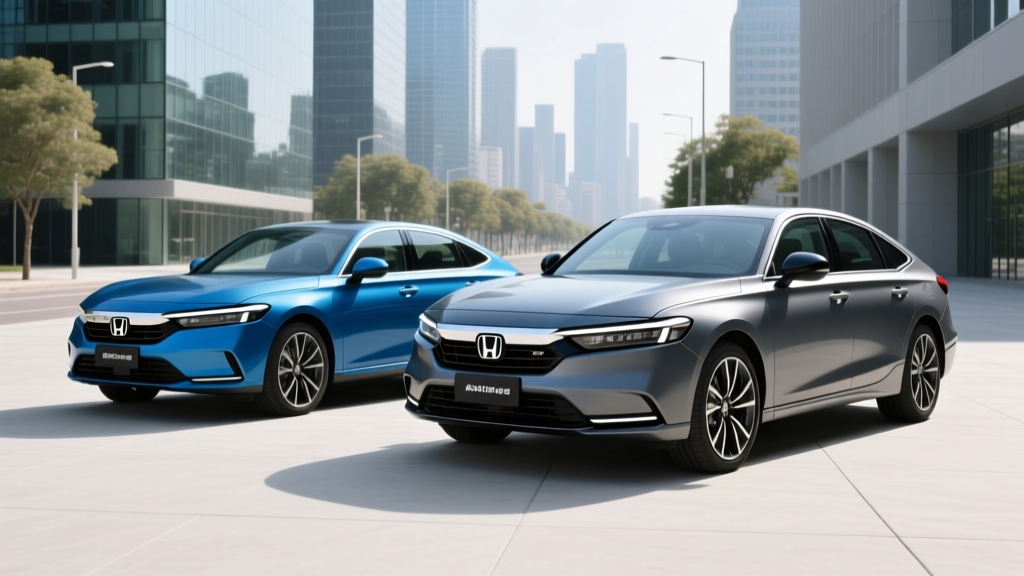
Honda's 0 Series is a ground-up EV platform launching in North America for the 2027 model year, with production starting in late 2026 at Honda's Ohio EV Hub. The first two models — the Honda 0 Series Saloon (a sleek sedan) and the Honda 0 Series SUV — target roughly 300+ miles of EPA range, thin lightweight battery packs under 90 kWh, and a dedicated rear-wheel-drive or all-wheel-drive EV architecture. Pricing is expected to start in the mid-$40,000s before incentives. These are Honda's first dedicated battery-electric vehicles, replacing the discontinued Clarity and the Prologue (which rides on GM's Ultium platform). If you can wait for late-2026 delivery and want a Honda-badged EV built on Honda's own engineering rather than a borrowed platform, the 0 Series is worth tracking — but if you need an EV today, competitors like the Tesla Model 3, Hyundai Ioniq 6, and Kia EV6 are available now with proven charging networks and confirmed EPA ratings.
What the Honda 0 Series Actually Is
The 0 Series represents Honda's reset on electrification. Unlike the Honda Prologue, which was co-developed with General Motors and uses the Ultium battery platform, the 0 Series vehicles are engineered entirely in-house on Honda's new dedicated EV architecture. Honda debuted the Saloon and Space-Hub concepts at CES 2024, confirmed production versions at CES 2025, and has committed to manufacturing them at the newly built EV Hub in Marysville, Ohio.
Honda's stated engineering philosophy for the 0 Series is "Thin, Light, and Wise" — prioritizing a low center of gravity, reduced battery weight, and aerodynamic efficiency over simply packing in the largest possible battery. The result is a platform designed around thinner battery packs (reportedly under 90 kWh usable capacity) that aim to deliver competitive range through efficiency rather than brute energy storage.
Two Launch Models Confirmed
- 0 Series Saloon: A low-slung, aerodynamic sedan with a fastback silhouette. Positioned as Honda's flagship EV. Targets the Tesla Model 3, Hyundai Ioniq 6, and BMW i4 segment.
- 0 Series SUV: A midsize crossover with Honda's signature packaging efficiency. Targets the Tesla Model Y, Hyundai Ioniq 5, and Ford Mustang Mach-E segment.
Honda has also teased an Acura-badged 0 Series performance variant — the Acura RSX — which will share the platform but feature more powerful dual-motor AWD tuning. That model is expected to follow shortly after the Honda-badged launches.
Projected Specs: Range, Battery, and Charging
Because the 0 Series Saloon and SUV are not yet EPA-certified (production begins late 2026), the figures below are based on Honda's official statements, concept-car disclosures, and industry analysis. Treat them as preliminary estimates until EPA certification is published on fueleconomy.gov.
| Specification | 0 Series Saloon (Est.) | 0 Series SUV (Est.) |
|---|---|---|
| Drivetrain | RWD standard / AWD available | RWD standard / AWD available |
| Battery Capacity | ~80–88 kWh usable (NMC) | ~80–88 kWh usable (NMC) |
| EPA Range (Target) | ~300–320 miles | ~280–310 miles |
| Peak DC Fast Charge | ~200–250 kW (est.) | ~200–250 kW (est.) |
| 10–80% DC Charge Time | ~22–28 minutes (est.) | ~22–28 minutes (est.) |
| Level 2 AC Charging | ~11.5 kW onboard charger | ~11.5 kW onboard charger |
| 0–60 mph | ~5.5s (RWD) / ~4.5s (AWD) | ~6.0s (RWD) / ~5.0s (AWD) |
| Charging Port | NACS (native Tesla Supercharger access) | NACS (native Tesla Supercharger access) |
| Platform | Honda dedicated EV architecture | Honda dedicated EV architecture |
Real-World Range Reality Check
Honda is targeting 300+ miles EPA for the Saloon. In practice, expect:
- Highway driving (75 mph): ~250–275 miles before needing a charge
- Cold weather (below 32°F): ~210–240 miles (20–30% reduction typical for NMC packs without aggressive preconditioning)
- Mixed city/highway, moderate temps: ~280–300 miles is achievable
Honda has confirmed a heat pump for cabin heating, which mitigates cold-weather range loss compared to resistive heaters. However, thin battery packs may have less thermal mass to buffer extreme temperatures — something to watch for in real-world testing once cars reach reviewers.
Charging Architecture: NACS and Supercharger Access
Honda confirmed that all 0 Series vehicles sold in North America will use the NACS (North American Charging Standard) connector natively — meaning direct access to Tesla's Supercharger network without an adapter. This is a significant advantage over CCS-equipped vehicles that require adapter dongles for Supercharger access.
Honda has stated the 0 Series platform supports charging from 10% to 80% in approximately 20–30 minutes depending on pack size and charger capability. The thinner battery design may limit peak charge rates compared to thicker packs (like Hyundai's 800V E-GMP architecture, which peaks at ~240 kW and achieves 10–80% in ~18 minutes). We'll need to see actual charge-curve data before confirming sustained charging speeds.
How the 0 Series Compares: EV vs. Hybrid vs. Gas
Honda's lineup currently spans gas-only Civics and Accords, the Accord Hybrid, and the Prologue EV. Here's how a 0 Series Saloon might stack up against internal alternatives and key competitors.
| Metric | Honda 0 Series Saloon (Est.) | Honda Accord Hybrid (2026) | Tesla Model 3 LR (2026) | Hyundai Ioniq 6 SEL (2026) |
|---|---|---|---|---|
| Powertrain | BEV (RWD/AWD) | HEV (2.0L + 2 motors) | BEV (AWD) | BEV (RWD) |
| EPA Range / MPG | ~300–320 mi | 48 MPG combined | 341 mi | 361 mi |
| Starting MSRP | ~$45,000 (est.) | ~$33,000 | ~$42,500 | ~$42,000 |
| Fed. Tax Credit (§30D) | Up to $7,500 (if sourcing rules met) | None (HEV) | Up to $7,500 | Up to $7,500 |
| Fuel/Charge Cost per Mile | ~$0.04–0.06 (home L2) | ~$0.08 (gas at $3.20/gal) | ~$0.04–0.06 | ~$0.04–0.06 |
| 0–60 mph | ~5.5s (RWD) | ~7.0s | 4.2s | ~6.5s |
| Cargo Volume | TBD (fastback trunk + frunk likely) | 16.7 cu ft | 23 cu ft (rear + frunk) | 12.3 cu ft (trunk) |
The Accord Hybrid remains the pragmatic choice for buyers who lack reliable home charging or drive in areas with sparse DC fast-charging infrastructure. At ~$33,000 with 48 MPG combined and zero range-anxiety, it's hard to beat on pure economics. The 0 Series Saloon makes sense for buyers who have home Level 2 charging, want zero tailpipe emissions, and value the instant torque and lower per-mile energy cost of a BEV.
Cost of Ownership: 5-Year Breakdown
Let's model a realistic 5-year ownership scenario comparing the 0 Series Saloon against the Accord Hybrid, assuming 15,000 miles/year, home Level 2 charging, and electricity at $0.14/kWh (national average).
| Cost Category | Honda 0 Series Saloon (Est.) | Honda Accord Hybrid |
|---|---|---|
| Purchase Price (base MSRP) | $45,000 | $33,000 |
| Federal Tax Credit (§30D) | –$7,500 (if eligible) | $0 |
| Net Purchase Price | $37,500 | $33,000 |
| Home L2 Charger Install | $1,200–$2,000 | $0 |
| Energy/Fuel (5 yrs, 75k mi) | $4,200–$5,500 | $6,200–$7,500 |
| Maintenance (5 yrs) | $1,000–$1,500 | $2,500–$3,500 |
| Insurance (5 yrs, est.) | $8,500–$10,500 | $6,500–$8,000 |
| Estimated Depreciation | $14,000–$18,000 | $10,000–$13,000 |
| Estimated 5-Year Total | $52,400–$63,500 | $48,200–$55,000 |
Key takeaways:
- The 0 Series Saloon's higher MSRP is partially offset by the §30D federal tax credit (up to $7,500, subject to IRS battery-sourcing and income requirements).
- EV maintenance is significantly cheaper — no oil changes, no transmission fluid, fewer brake replacements thanks to regenerative braking.
- Insurance premiums for EVs typically run 15–25% higher than comparable gas/hybrid models, due to higher repair costs and battery replacement risk.
- Depreciation is the wildcard. Honda's brand loyalty is strong, but EV depreciation curves are steeper than ICE vehicles in the current market. The Accord Hybrid will likely hold value more predictably.
Tax Credit Eligibility: What You Need to Know
The federal §30D Clean Vehicle Credit can reduce your tax liability by up to $7,500 for a qualifying new EV, and as of 2024, it can be transferred to the dealer at point of sale — effectively reducing your purchase price at the dealership rather than waiting for a tax refund.
§30D Credit Requirements (2026 Rules)
- MSRP Cap: Sedans must be under $55,000 MSRP; SUVs/trucks under $80,000. The 0 Series Saloon must price below $55K to qualify; the SUV has more room.
- Buyer Income Cap: Modified AGI must not exceed $150,000 (single), $225,000 (head of household), or $300,000 (joint filing).
- Battery Sourcing: At least 60% of battery component value must be manufactured or assembled in North America; at least 50% of critical minerals must be sourced from the US or an FTA partner country. Honda's Ohio battery plant (LG-Honda joint venture) is designed to meet these thresholds, but final certification per model year is required.
- FEOC Restriction: Battery components cannot come from a "foreign entity of concern" (primarily targeting Chinese supply chains). Honda has stated its supply chain is being structured to comply.
- Point-of-Sale Transfer: You can assign the credit to the dealer, reducing your out-of-pocket cost at purchase — no need to wait until tax filing.
Important caveat: Tax credit eligibility is determined per vehicle per model year by the IRS and the Department of Energy. Honda's Ohio battery production strongly positions the 0 Series to qualify, but always verify the specific trim on the IRS qualified vehicle list before purchasing. Consult a tax professional for your personal situation.
Common Misconceptions About the 0 Series
| Myth | Fact |
|---|---|
| "It's just a rebadged Prologue." | No. The Prologue uses GM's Ultium platform. The 0 Series is Honda's own dedicated architecture, engineered in Japan and built in Ohio. |
| "Honda is late to EVs, so the tech will be behind." | Honda has decades of EV experience (EV Plus, Insight, Clarity, e:NY1). The 0 Series benefits from lessons learned, though competitors like Hyundai and Tesla have more production-scale EV refinement. |
| "Thin batteries mean short range." | Range is a function of efficiency, not just capacity. A lighter, more aerodynamic vehicle with an 85 kWh pack can match or beat a heavier vehicle with a 100 kWh pack. The Ioniq 6 achieves 361 miles with just 77.4 kWh. |
| "I can't charge it at Tesla Superchargers." | The 0 Series will have a native NACS port, meaning direct Supercharger access without adapters — the same as Tesla vehicles. |
| "EV batteries need replacing every 5 years." | Modern NMC and LFP packs are warrantied for 8 years/100,000 miles (federal minimum) and typically retain 70–85% capacity at that point. Replacement is rare and usually covered under warranty during that period. |
Who Should Buy a Honda 0 Series EV — And Who Shouldn't
Decision Framework
Choose the Honda 0 Series Saloon or SUV if:
- You have (or can install) Level 2 home charging — a 240V outlet or hardwired charger is the foundation of convenient EV ownership.
- You're a current Honda loyalist who values the brand's reliability reputation, dealer network, and resale history.
- You want a Honda-badged EV that isn't a rebadged GM product (as the Prologue effectively is).
- Your daily commute is under 80 miles round-trip, and you take road trips 3–5 times per year where DC fast charging is available along your routes.
- You can wait for late-2026/early-2027 availability and are comfortable buying a first-year production model.
Look elsewhere if:
- You need an EV now — the 0 Series is still pre-production. The Tesla Model 3, Hyundai Ioniq 5/6, Kia EV6, and Ford Mustang Mach-E are all available today with confirmed specs.
- You lack home charging access and rely exclusively on public charging. While the NACS port opens Supercharger access, public-charging-only ownership adds time and cost to every "refuel."
- You regularly drive in extreme cold (below 0°F) for long distances. Any BEV loses 20–30% range in deep cold; a PHEV or HEV may be more practical.
- You want a proven, second- or third-generation EV with years of real-world reliability data. The 0 Series is a first-generation product on a new platform.
- Budget is the primary concern. The Accord Hybrid at ~$33,000 with 48 MPG delivers outstanding value with zero infrastructure requirements.
What First-Time EV Buyers Should Know Before Committing
If the 0 Series is your first EV, here are the ownership realities that spec sheets don't capture:
Home Charging Is Non-Negotiable for Convenience
Level 2 home charging (240V, ~11.5 kW) adds roughly 35–45 miles of range per hour. Plug in overnight and wake up with a full battery every morning. Installation costs $1,200–$2,000 for most homes with a 200-amp electrical panel; older homes with 100-amp panels may need a $2,000–$4,000 panel upgrade. Factor this into your budget. Without home charging, EV ownership becomes significantly less convenient — you'll be planning your life around charging stops.
Charging Speeds Aren't Constant
When Honda says "10–80% in ~25 minutes," that assumes a DC fast charger capable of delivering the vehicle's peak charge rate (estimated 200–250 kW). In practice:
- Charging slows significantly above 80% State of Charge (SoC) to protect battery health — a 10–100% session may take 45+ minutes.
- Not all public chargers deliver their rated power. A "150 kW" station may deliver 90–120 kW depending on ambient temperature, battery preconditioning, and station load.
- Cold batteries charge slower. The 0 Series' thermal management system will precondition the pack when you navigate to a charger, but winter fast-charging sessions will still be longer than summer ones.
The Insurance Premium Surprise
EV insurance typically costs 15–25% more than an equivalent gas car. Reasons include higher repair costs after collisions (specialized parts, high-voltage safety protocols), battery replacement risk, and generally higher vehicle MSRP. Get quotes from your insurer before committing to a purchase — the difference can be $200–$400/year.
First-Year Platform Risk
The 0 Series is a brand-new architecture. Historically, first-year models on new platforms can have software bugs, build-quality inconsistencies, and early recall campaigns. Honda's quality control is among the best in the industry, but this is an inherent risk of any new platform. If reliability is paramount, consider waiting for the 2028 model year to let Honda iron out early issues.
Frequently Asked Questions
When can I actually buy a Honda 0 Series EV?
Production at Honda's Ohio EV Hub is scheduled to begin in late 2026, with customer deliveries expected in early-to-mid 2027 as a 2027 model-year vehicle. Reservations may open in late 2026. Honda has not announced a specific on-sale date as of this writing.
Will the Honda 0 Series qualify for the $7,500 federal tax credit?
Honda's Ohio battery plant (a joint venture with LG Energy Solution) is specifically designed to meet §30D battery-sourcing requirements. However, final credit eligibility depends on per-model-year IRS certification, MSRP caps ($55K for sedans, $80K for SUVs), and your personal income. Check the IRS qualified vehicles list before purchasing.
What battery chemistry does the 0 Series use?
Honda has confirmed NMC (nickel manganese cobalt) chemistry for the 0 Series launch models. NMC offers higher energy density than LFP (lithium iron phosphate), which helps achieve the 300+ mile range target with a thinner, lighter pack. Honda has not ruled out LFP variants for future, potentially lower-priced trims.
How does the 0 Series compare to the Honda Prologue?
The Prologue is larger, heavier, and built on GM's Ultium platform at a GM factory. The 0 Series is Honda's own design, expected to be lighter and more efficient, with a native NACS port (the Prologue uses CCS). The 0 Series is positioned as Honda's long-term EV future; the Prologue was a bridge product.
Will the 0 Series have a frunk (front trunk)?
Honda has shown concept images suggesting a front storage compartment, but official cargo specifications have not been published. Given the dedicated EV platform with no engine bay, a modest frunk is likely — but don't expect the large front trunks found in the Ford F-150 Lightning or Rivian R1T.
What is the battery warranty?
Federal law mandates a minimum 8-year/100,000-mile battery warranty for EVs. Honda has not published specific 0 Series warranty terms yet, but expect at least the federal minimum, with a capacity-retention threshold of ~70% over the warranty period — consistent with industry standards.