The Short Answer on Honda 0 EV Underwater Screens and LED Lights
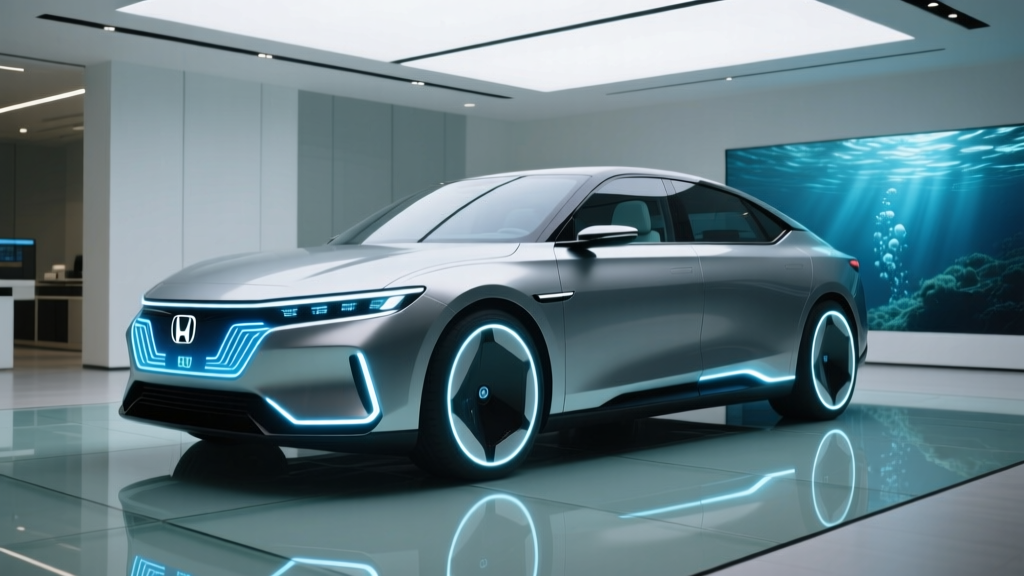
The "underwater screens" and dramatic LED lighting you've seen in Honda 0 Series concept videos are design-study elements, not confirmed production features. As of early 2026, Honda has not announced any production vehicle with submerged or water-sealed display panels. The LED light signatures, however, are expected to carry over to the upcoming Honda 0 SUV and Saloon production models — albeit in simplified, road-legal forms. If you're researching a purchase, focus on the confirmed specs (range, charging, price) rather than concept-car theatrics.
What Are the Honda 0 EV "Underwater Screens"?
The phrase "underwater screens" originated from social-media reactions to Honda's CES 2024 and 2025 concept reveals, where the Honda 0 Series Saloon and SUV concepts featured deeply recessed, translucent dashboard panels with ambient lighting that gave an aquatic, submerged visual effect. Automotive journalists and TikTok creators began calling them "underwater screens" — a catchy but misleading label.
In reality, Honda's concept interiors use:
- Layered translucent OLED panels embedded behind polarized glass, creating a depth illusion
- Ambient LED backlighting in blues and greens that reinforces the water-like aesthetic
- Flush-mounted capacitive surfaces that replace physical buttons with touch zones
None of these displays are actually waterproof or submerged in liquid. The term is purely a visual metaphor that went viral.
LED Light Signatures: Concept vs. Production Reality
The Honda 0 Series concepts feature full-width LED light bars, animated startup sequences, and illuminated Honda badges. Here's what buyers can realistically expect when the production Honda 0 SUV (targeted for 2026-2027 U.S. delivery) and Saloon arrive:
| Feature | Concept Show Car | Likely Production Spec |
|---|---|---|
| Full-width front light bar | Animated, multi-zone RGB | White/amber DRL, static or simple sweep |
| Illuminated badge | Color-shifting Honda logo | Single-color white backlight (regulation-dependent) |
| Interior ambient lighting | Multi-layer "underwater" effect | Standard LED ambient strips, 10-30 color options |
| Door-handle lighting | Projected puddle logos + edge glow | Likely retained on upper trims |
| Animated welcome sequence | 60-second choreographed show | Shortened 10-15 second sequence |
Federal Motor Vehicle Safety Standards (NHTSA) strictly regulate exterior lighting colors and animation patterns. Expect Honda to tone down the concept's theatrical lighting significantly for U.S.-spec production models.
Confirmed Honda 0 Series Specs: What We Know for 2026
While the screens and LEDs grab headlines, the actual engineering underneath matters more for purchase decisions. Here are the preliminary specifications Honda has shared for the 0 Series production platform:
| Specification | Honda 0 SUV (Estimated) | Honda 0 Saloon (Estimated) |
|---|---|---|
| Platform | New dedicated EV architecture (thin battery pack) | |
| Battery Chemistry | NMC (Nickel Manganese Cobalt) | NMC |
| Battery Capacity (est.) | ~85-100 kWh usable | ~90-105 kWh usable |
| EPA Range (target) | 300+ miles | 320+ miles |
| DC Fast Charge (peak) | ~200-250 kW (est.) | ~200-250 kW (est.) |
| 10-80% Charge Time | ~20-25 minutes (est.) | ~20-25 minutes (est.) |
| Drivetrain | AWD dual motor | RWD or AWD |
| 0-60 mph | ~5.0 sec (est.) | ~4.5 sec (est.) |
| ADAS | Honda SENSING 360+ (Level 2+) | Honda SENSING 360+ |
| Starting MSRP (est.) | $50,000-$55,000 | $55,000-$65,000 |
Important caveat: These figures are preliminary estimates based on Honda's public statements and industry analysis. Final EPA certification, pricing, and trim details will be confirmed closer to each model's on-sale date. Honda has emphasized a "thin, light, and wise" engineering philosophy — aiming for lower vehicle weight than competitors, which could yield efficiency advantages.
Real-World Range Expectation: If Honda achieves a 300-mile EPA rating for the 0 SUV, expect approximately 250-270 miles in mixed highway driving at 70+ mph, and potentially 200-230 miles in cold-weather conditions (below 32°F). These reductions are typical for NMC battery packs across all EV brands.
Cost Breakdown: Honda 0 EV vs. Gas Equivalent vs. Hybrid
Let's compare the estimated ownership costs of the upcoming Honda 0 SUV against the current gasoline Honda Pilot and the Honda Pilot Hybrid (if/when available) over a 5-year, 75,000-mile ownership period.
| Cost Category | Honda 0 SUV (est. BEV) | Honda Pilot (Gas AWD) | Competitor PHEV SUV |
|---|---|---|---|
| Purchase Price (MSRP) | $52,000 | $42,000 | $50,000 |
| Federal Tax Credit (§30D) | Up to $7,500* | $0 | Up to $7,500* |
| Effective Purchase Price | ~$44,500 | $42,000 | ~$42,500 |
| Fuel/Energy (5 yr) | $4,500 (home charging avg) | $11,250 (22 MPG, $3.30/gal) | $7,000 (mixed) |
| Maintenance (5 yr) | $1,800 | $4,500 | $3,500 |
| Insurance (5 yr avg) | $9,500 | $7,500 | $8,500 |
| 5-Year Total Cost | $60,300 | $65,250 | $61,500 |
*Federal §30D credit eligibility depends on buyer income caps ($150K single / $300K joint), vehicle MSRP caps ($80K SUV), battery critical-mineral sourcing, and North American final assembly. Honda 0 Series vehicles will be assembled in Ohio, but battery sourcing compliance is not yet confirmed. Always verify current rules at IRS.gov before purchasing.
The EV wins on energy and maintenance costs but pays more upfront and in insurance premiums. Your actual savings depend heavily on local electricity rates, whether you can install a Level 2 home charger, and your annual mileage.
Real-World Ownership Considerations Before You Buy
Home Charging Access
The Honda 0 Series will support Level 2 AC charging (estimated 11-19 kW onboard charger). A full home charge from empty on an 11.5 kW Level 2 unit would take roughly 8-9 hours for an ~90 kWh pack. Installation costs for a 240V/48A home charger typically range from $800 to $2,500 depending on panel capacity and run length. If your electrical panel is maxed out at 100A, a panel upgrade to 200A can add $1,500-$3,000.
Public Charging Reality
Honda is co-developing a high-power charging network with ABB and other partners, but as of 2026, Honda owners will rely primarily on Electrify America, EVgo, ChargePoint, and the expanding Tesla Supercharger network (via NACS adapter or native NACS port — Honda has committed to NACS for future models). In areas with sparse DC fast-charger coverage, the 0 Series' ~300-mile range means planning stops on road trips longer than 200 miles one-way.
Climate Impact
Honda has not confirmed whether the 0 Series will include a heat pump for cabin heating. Without one, cold-weather range loss in northern U.S. states can reach 30-40% in extreme conditions. This is a critical spec to watch for when final details are released.
Common Misconceptions About the Honda 0 EV
| Myth | Fact |
|---|---|
| "The underwater screens are real waterproof displays" | The effect is layered translucent OLED panels with ambient backlighting — no liquid involved. |
| "The Honda 0 is available to buy now" | As of 2026, the 0 SUV and Saloon are announced/upcoming. Production begins late 2026 at Honda's Ohio EV Hub, with deliveries likely in 2027. |
| "It will get 400+ miles of range" | Honda targets 300+ miles EPA. No official certification yet. Claims above 350 miles are speculative. |
| "All the concept LEDs will be on the production car" | NHTSA regulations limit exterior lighting colors and animations. Production lighting will be simpler. |
| "It qualifies for the full $7,500 tax credit automatically" | Credit eligibility depends on battery sourcing rules, buyer income, and MSRP caps — none fully confirmed for 0 Series yet. |
| "It's self-driving" | Honda SENSING 360+ is a Level 2 driver-assist system. The driver must remain fully engaged at all times. It is not autonomous. |
Decision Framework: Should You Wait for the Honda 0 EV?
Wait for the Honda 0 Series if:
- You want a mid-size electric SUV with Honda's reputation for reliability and aren't in a rush (deliveries likely 2027+)
- You value Honda's "thin and light" engineering approach over maximum horsepower
- You currently own a Honda and want to stay in the brand ecosystem
- You have reliable home charging and drive under 250 miles daily
Buy an available EV now if:
- You need a vehicle within 3-6 months
- You want confirmed EPA range, tax-credit eligibility, and real-world reviews before committing
- You live in a cold climate and want proven heat-pump equipped models (Hyundai Ioniq 5, Tesla Model Y, BMW iX)
- You need confirmed NACS native charging for Supercharger access without an adapter
Consider a PHEV instead if:
- You lack reliable home charging or apartment charging access
- You regularly drive 400+ mile routes through areas with limited DC fast charging
- You want to reduce fuel costs without full EV range commitment
Frequently Asked Questions
Will the Honda 0 EV actually have "underwater" dashboard screens?
No. The "underwater" look is a visual effect created by layered translucent display panels and blue-green ambient LED backlighting in the concept car. Production models will likely feature a more conventional widescreen digital dashboard with standard ambient lighting options.
When can I buy the Honda 0 Series in the U.S.?
Honda plans to begin production at its EV Hub in Ohio in late 2026, with the 0 SUV likely reaching U.S. dealers in 2027. The Saloon sedan may follow later. Exact timing has not been confirmed.
How much will the Honda 0 SUV cost?
Industry estimates place the starting MSRP between $50,000 and $55,000 for the 0 SUV, with higher trims reaching $60,000+. Final pricing will be announced closer to launch. If the vehicle qualifies for the §30D federal tax credit, effective pricing could drop to the mid-$40,000s.
Will the Honda 0 EV use NACS or CCS for charging?
Honda has committed to adopting the Tesla NACS connector for future EVs in North America. The 0 Series is expected to feature a native NACS port, granting access to Tesla Supercharger stations without an adapter. Honda has not officially confirmed this for the 0 Series specifically.
Is Honda SENSING 360+ self-driving?
No. Honda SENSING 360+ is classified as an SAE Level 2 driver-assistance system. It provides adaptive cruise control, lane-centering, and advanced collision avoidance, but requires the driver to remain fully attentive and in control at all times. It is not an autonomous driving system.
What battery chemistry will the Honda 0 Series use?
Honda has indicated NMC (Nickel Manganese Cobalt) chemistry for the 0 Series, prioritizing energy density for maximum range. LFP (Lithium Iron Phosphate) may be offered in future lower-cost trims, but this has not been confirmed. NMC offers higher range but is more sensitive to sustained 100% charging — daily charging to 80% is recommended for longevity.