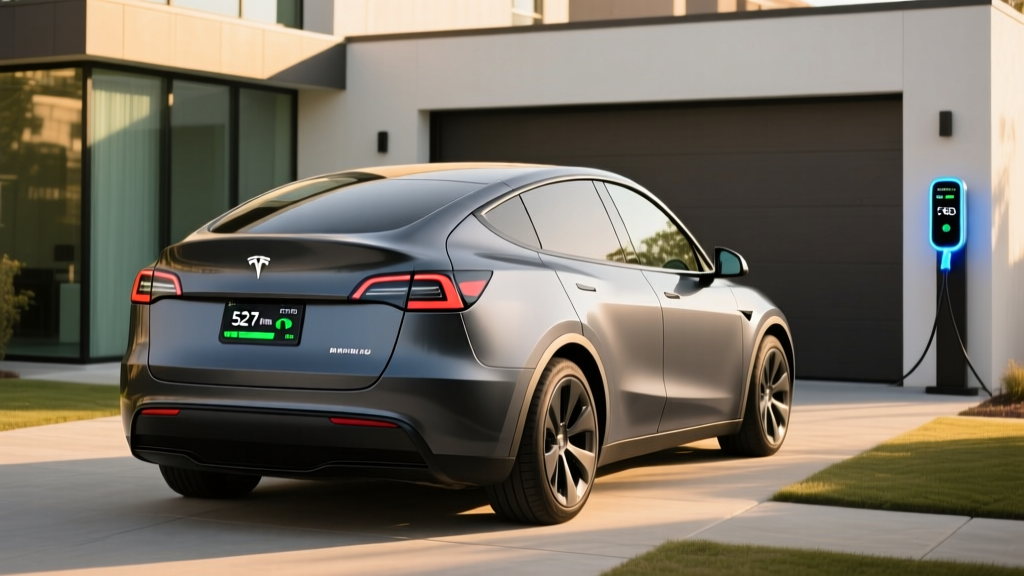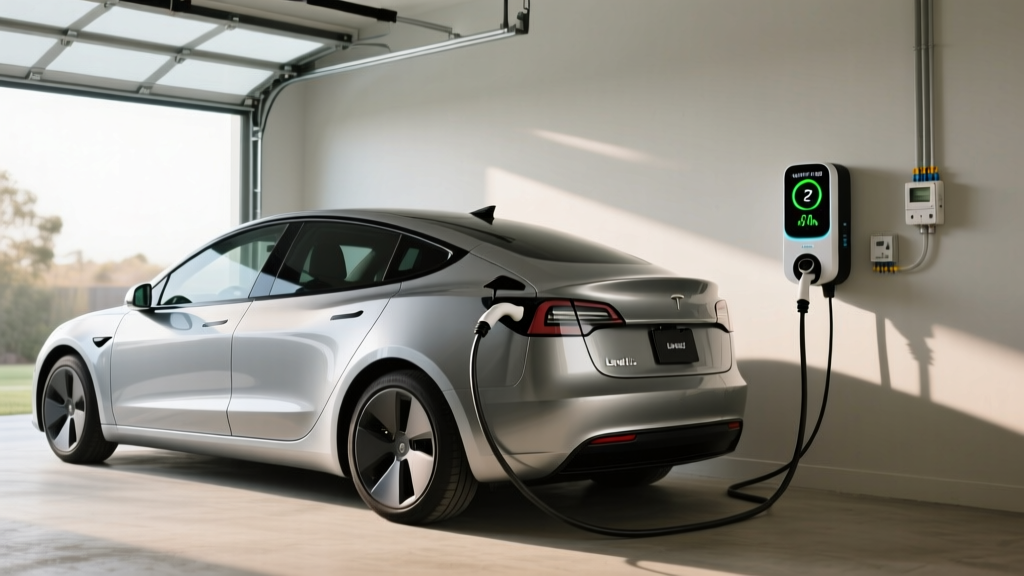
Most EV owners do the bulk of their charging at home — and for good reason. It's cheaper than public DC fast charging, better for long-term battery health, and means you start every morning with a full battery. Here's the direct answer on how to charge an electric vehicle at home:
Quick Answer: Plug your EV into a standard 120V household outlet (Level 1) for roughly 3–5 miles of range per hour of charging, or install a dedicated 240V Level 2 home charger for 25–44 miles of range per hour. Level 1 works if you drive under 40 miles daily; Level 2 is the standard for most EV owners and typically costs $500–$2,500 installed, depending on your electrical panel and wiring run.
That's the short version. The details — connector types, actual costs per mile, whether your electrical panel needs an upgrade, and how charging speed affects your daily routine — determine whether home charging is seamless or frustrating. This guide breaks it all down with real numbers.
Level 1 vs Level 2 Home Charging: Speeds and What They Mean
The two practical options for home EV charging are Level 1 and Level 2. The difference is voltage, power delivery (measured in kilowatts, or kW), and how quickly your battery (measured in kilowatt-hours, or kWh) refills. Here's the critical distinction: kW is the rate of energy flow (like water pressure from a hose), while kWh is the total energy stored (like the size of the bucket). You need both numbers to understand charging.
| Charging Level | Voltage | Power (kW) | Miles of Range per Hour | Full Charge Time (82 kWh Battery) | Best For |
|---|---|---|---|---|---|
| Level 1 (standard outlet) | 120V | 1.2–1.9 kW | 3–5 miles | ~45–70 hours | Low-mileage drivers, PHEVs, overnight trickle |
| Level 2 (240V dedicated) | 240V | 7.2–11.5 kW | 25–44 miles | ~7–11 hours | Daily drivers, full overnight refill, most EV owners |
| DC Fast Charging (public) | 400–800V DC | 50–350 kW | 150–600+ miles | 10–80% in 18–40 min | Road trips, emergency top-ups (not for daily home use) |
Let's put this in real-world terms. If you drive a 2026 Hyundai Ioniq 5 (84 kWh usable battery, EPA 310-mile range) and arrive home with 30% battery remaining, you need roughly 59 kWh to refill. On Level 1 at 1.4 kW, that takes about 42 hours — impractical. On a 48-amp Level 2 charger delivering ~11.5 kW, it takes roughly 5.5 hours, meaning you plug in at 10 PM and wake up fully charged by 6 AM.
For plug-in hybrids like the Toyota RAV4 Prime (18.1 kWh battery, EPA 42 miles electric range), Level 1 is often sufficient — a full overnight charge takes about 10–12 hours at 1.4 kW, which is fine for a 42-mile electric commute.
Level 2 Home Charger Installation: What It Actually Costs
This is where most first-time EV buyers have the most questions. Installing a Level 2 charger isn't just buying a wall box — it involves electrical work that varies dramatically by home. Here's a realistic breakdown based on 2025–2026 installer data:
| Cost Component | Simple Install (Near Panel) | Moderate Install (50–80 ft Run) | Complex Install (Panel Upgrade + Long Run) |
|---|---|---|---|
| Level 2 charger hardware (24–48 amp) | $350–$700 | $350–$700 | $350–$700 |
| Electrician labor (2–8 hours) | $300–$600 | $500–$1,200 | $800–$1,500 |
| Wiring and conduit materials | $50–$150 | $200–$500 | $300–$700 |
| Permit and inspection | $50–$200 | $50–$200 | $50–$200 |
| Electrical panel upgrade (100A → 200A, if needed) | Not required | Not required | $1,500–$3,000 |
| Estimated total | $750–$1,650 | $1,100–$2,600 | $3,000–$6,100 |
The biggest cost wildcard is your electrical panel. Homes built after 2000 typically have 200-amp panels with spare capacity, making a Level 2 install straightforward. Older homes with 100-amp panels may need an upgrade — or you can opt for a lower-amperage charger (24 amp instead of 48 amp) that draws less continuous load, avoiding the panel upgrade entirely. A 24-amp Level 2 charger still delivers roughly 25 miles of range per hour, which covers most daily driving.
Pro tip: Some utilities offer rebates of $200–$500 for Level 2 charger installation, and the federal Residential Clean Energy Credit (IRS §25C) covers 30% of charger hardware costs up to $1,000 through 2032. Check with your local utility and a licensed electrician for exact eligibility in your area.
Home Charging Cost vs Gas: Real Per-Mile Numbers
The economic case for home charging rests on electricity being cheaper per mile than gasoline. But the exact savings depend on your local electricity rate and the vehicle's efficiency. Let's compare a typical EV and gas car using real EPA data from fueleconomy.gov:
| Metric | 2026 Tesla Model Y (Long Range AWD) | 2026 Toyota RAV4 (Gas AWD) |
|---|---|---|
| Energy consumption | 28 kWh/100 miles (EPA) | 3.7 gallons/100 miles (27 MPG combined) |
| Cost per 100 miles (home charging @ $0.16/kWh avg) | $4.48 | — |
| Cost per 100 miles (gas @ $3.40/gal avg) | — | $12.58 |
| Annual fuel/energy cost (12,000 miles/yr) | $538 | $1,510 |
| Annual savings (EV home charging) | $972/year | |
Those numbers assume the national average residential electricity rate of roughly $0.16/kWh. If you live in a state with higher rates (California averages ~$0.30/kWh, for instance), your EV cost per 100 miles rises to about $8.40 — still cheaper than gas, but the gap narrows. Conversely, if your utility offers off-peak overnight rates of $0.08–$0.10/kWh, your cost drops to $2.24–$2.80 per 100 miles, making EV charging dramatically cheaper.
This is why time-of-use (TOU) electricity plans matter. Most utilities offer TOU rates that charge significantly less for electricity used between 10 PM and 6 AM. Setting your EV or charger to only charge during off-peak hours can cut your home charging cost by 40–60%.
Real-World Home Charging Considerations
Specs and cost tables only tell part of the story. Here's what actually affects your daily home charging experience:
Cold weather slows charging and reduces range
In sub-freezing temperatures, lithium-ion batteries charge more slowly and hold less usable energy. Expect 20–30% range loss in sustained cold (below 25°F), and Level 2 charging speeds may be throttled until the battery warms up. If you garage your EV, this effect is reduced significantly. Many EVs offer battery preconditioning — the car warms its battery pack before or during charging to optimize speed. Use this feature whenever possible in winter.
Not everyone has easy home charging access
If you live in an apartment, condo, or street-parking situation, home charging may not be an option. Before buying an EV, honestly assess whether you have: (a) a garage or driveway with outlet access, (b) landlord or HOA approval for charger installation, and (c) a dedicated circuit available on your panel. If home charging isn't feasible, a PHEV with 30–42 miles of electric range plus a gas engine (like the RAV4 Prime or Jeep Wrangler 4xe) may be a more practical electrified choice than a full BEV.
Charger connector: NACS vs CCS
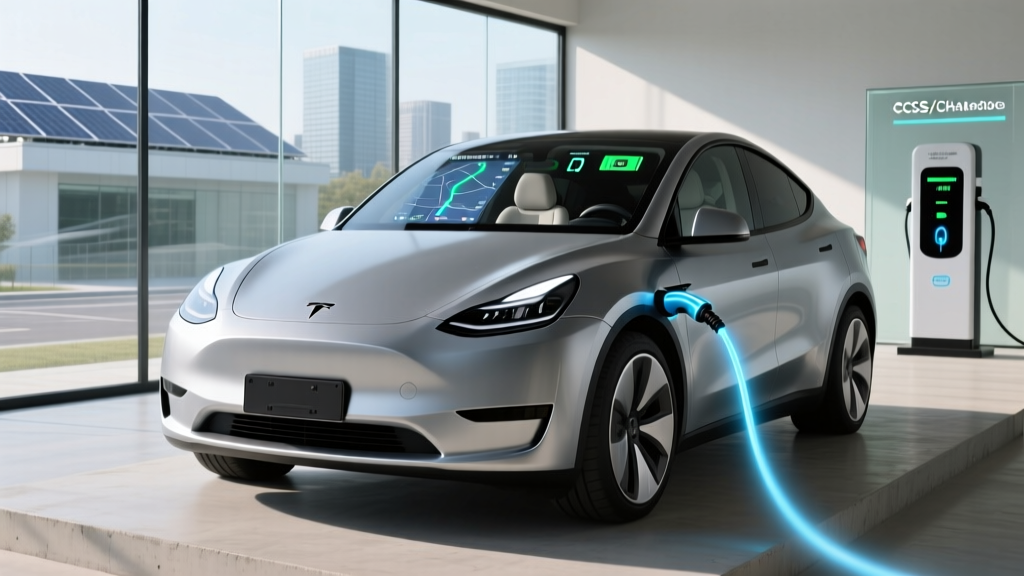
As of 2025–2026, the North American Charging Standard (NACS) — originally Tesla's proprietary connector — has been adopted by Ford, GM, Rivian, Hyundai, Kia, and most major automakers. New vehicles ship with NACS ports, and CCS1 adapters are available for older models. When buying a Level 2 home charger, confirm the connector matches your vehicle. Most major charger brands (ChargePoint, Emporia, Wallbox, Tesla Wall Connector) now offer NACS versions.
Smart chargers vs dumb chargers
A "smart" Level 2 charger connects to Wi-Fi and lets you schedule charging sessions, monitor energy use, and integrate with TOU rate plans through an app. A basic ("dumb") charger simply delivers power when plugged in. Smart chargers cost $50–$150 more but can save you real money by automatically charging during off-peak hours. For most owners, the smart charger pays for itself within a year through optimized electricity rates.
Common Home Charging Myths vs Facts
| Myth | Fact |
|---|---|
| "I need a special outlet or 240V line to charge at home." | Every EV comes with a Level 1 cord that plugs into a standard 120V household outlet. It's slow (3–5 mi/hr), but works for low-mileage drivers and PHEVs. A 240V Level 2 circuit is an upgrade, not a requirement. |
| "Home charging will massively spike my electric bill." | Charging an EV adds roughly $40–$80/month to your electric bill for 12,000 miles/year of driving — but you eliminate $100–$150/month in gas. Net savings are typically $50–$80/month. |
| "Charging every night damages the battery." | Modern EVs have sophisticated battery management systems. For NMC chemistry batteries, setting a daily charge limit of 80% (via the car's settings) is optimal. For LFP chemistry batteries (found in many Tesla Model 3/Y Standard Range variants), charging to 100% daily is recommended by the manufacturer. |
| "I need the fastest charger available." | A 48-amp charger delivers ~11.5 kW, but your car's onboard charger may be limited to 7.2 or 11.5 kW anyway. Check your vehicle's max AC charge rate before overspending on a higher-amperage unit. |
| "My house wiring can't handle an EV charger." | Most homes built after 1980 with a 100A+ panel can support at least a 24-amp Level 2 charger. A licensed electrician can perform a load calculation to confirm. Panel upgrades are sometimes needed but are a one-time investment. |
Total EV Ownership Cost: The Full Picture
Home charging savings are real, but they're one piece of the ownership equation. Here's a 5-year total cost comparison for a mid-range EV versus a comparable gas vehicle, based on 12,000 miles/year:
| Cost Category (5 years) | 2026 Tesla Model Y LR ($46,000 MSRP) | 2026 Toyota RAV4 AWD ($34,000 MSRP) |
|---|---|---|
| Purchase price (after §30D credit, if eligible) | $38,500 (assuming full $7,500 credit) | $34,000 |
| Home charger install (one-time) | $1,500 | $0 |
| Energy/fuel (5 years) | $2,690 (home charging) | $7,550 (gasoline) |
| Maintenance (oil changes, filters, brakes) | $800 (no oil changes, less brake wear from regen) | $3,500 |
| Insurance (5 years, avg) | $9,000 (EV premiums typically 15–25% higher) | $7,200 |
| Estimated 5-year total | $52,490 | $52,250 |
The totals are remarkably close, which illustrates an important point: EV home charging and maintenance savings are significant, but higher purchase prices and insurance premiums offset them. The economics tilt further in the EV's favor if you qualify for the full federal tax credit, have access to cheap off-peak electricity, or drive more than 12,000 miles per year.
Federal tax credit note: The IRS §30D credit offers up to $7,500 for qualifying new EVs, but eligibility depends on vehicle MSRP caps ($55,000 for cars, $80,000 for SUVs/trucks), buyer income limits ($150K single / $300K joint), battery critical-mineral sourcing requirements, and point-of-sale transfer availability. Rules evolve — verify current-year eligibility at irs.gov or consult a tax professional.
Decision Framework: Which Home Charging Setup Is Right for You?
Use this if/then framework to choose your setup:
- If you drive under 40 miles/day AND own a PHEV: Level 1 (standard 120V outlet) is sufficient. No installation cost. Plug in overnight and wake up with a full battery.
- If you drive under 40 miles/day AND own a BEV: Level 1 works but is tight — a 30-mile commute uses ~8–10 kWh, requiring 6–8 hours to replenish. Level 2 gives comfortable margin.
- If you drive 40–100 miles/day: Level 2 is strongly recommended. A 32–48 amp charger refills 25–44 miles of range per hour, covering daily use with hours to spare overnight.
- If you have a 200A electrical panel with spare capacity: Install a 48-amp hardwired Level 2 charger for maximum speed. Budget $1,000–$2,000 total.
- If you have a 100A panel or limited spare capacity: Install a 24-amp Level 2 charger (~5.8 kW) to avoid a panel upgrade. Still delivers 25 miles of range per hour. Budget $750–$1,500.
- If you rent or lack dedicated parking: Prioritize a PHEV over a BEV, or confirm workplace/public charging access before committing to a full EV.
Frequently Asked Questions
Can I charge my EV with a regular household outlet?
Yes. Every EV sold in the US includes a Level 1 charging cord that plugs into a standard 120V (NEMA 5-15) outlet. It delivers 1.2–1.9 kW, adding 3–5 miles of range per hour. This works for PHEVs with smaller batteries and BEV owners who drive under 30–40 miles daily. For higher-mileage drivers, Level 2 is far more practical.
Do I need an electrician to install a home EV charger?
For Level 1, no — just plug it in. For Level 2, yes. A 240V circuit requires a dedicated breaker, proper wire gauge, and a permit in most jurisdictions. A licensed electrician should perform the work and pull the permit. DIY electrical work on 240V circuits carries real safety and insurance-liability risks.
How long does it take to charge an EV at home on Level 2?
For a typical 75–85 kWh battery on a 48-amp (11.5 kW) Level 2 charger, a full charge from 10% to 100% takes roughly 7–8 hours. Most owners plug in at night and wake up fully charged. You rarely need a complete 0–100% charge — topping up from 30% to 80% takes about 4 hours.
Is it cheaper to charge an EV at home or at public stations?
Home charging is significantly cheaper. Residential electricity averages $0.16/kWh nationally, while public DC fast charging networks (Electrify America, EVgo, Tesla Superchargers) typically charge $0.30–$0.50/kWh. For a 60 kWh charge session, that's ~$9.60 at home versus $18–$30 at a public station. Home charging also puts less thermal stress on the battery than frequent DC fast charging.
Will charging my EV at home increase my electric bill a lot?
Your electric bill will increase, but your total energy spending will usually decrease because you're no longer buying gasoline. Expect your electric bill to rise by $40–$80/month for average driving, while eliminating $100–$150/month in gas purchases. Net monthly savings of $50–$80 are typical for home-charging EV owners.
What's the best home EV charger to buy?
Top-rated Level 2 chargers in 2025–2026 include the ChargePoint Home Flex (up to 50A, adjustable amperage, ~$550), Emporia Vue 2 (48A, energy monitoring, ~$400), and Tesla Wall Connector (48A, NACS native, ~$475). Choose based on your vehicle's connector type (NACS or CCS), desired amperage, and whether you want smart scheduling features. Always verify UL certification for safety.