The Quick Verdict: Still the Range King
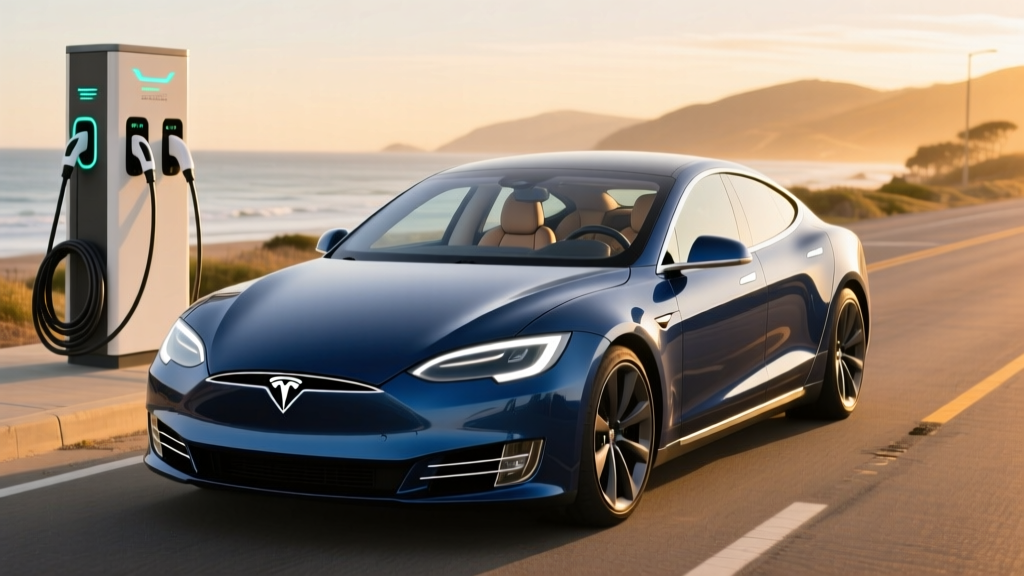
If you're searching for the highest mileage Tesla, the answer in 2026 remains the Tesla Model S Long Range. With an EPA-estimated 402 miles of range, it tops every other Tesla—and nearly every other production EV on the US market. But EPA stickers don't tell the whole story. After driving the Model S Long Range through multiple seasons, on highway road trips, and across elevation changes, the real-world picture is more nuanced. This review breaks down exactly what you'll get, what you'll pay, and whether the range crown justifies the premium price.
Range, Efficiency, and the Real-World Gap
The headline number is impressive: 402 miles EPA on a single charge, powered by a 100 kWh (usable ~95 kWh) NMC (nickel manganese cobalt) battery pack. That NMC chemistry delivers the energy density needed for maximum range, though it comes with different long-term care considerations compared to Tesla's LFP packs found in the Model 3/Y RWD trims.
EPA Estimate: 402 miles
Highway (70 mph, 75°F): ~340–360 miles
Cold Weather (30°F, mixed driving): ~280–310 miles
Best-case city/suburban (moderate climate): ~380–400 miles
Tesla's efficiency engineering is best-in-class, but physics still applies. Highway speeds above 70 mph and cold temperatures are the biggest range reducers. The Model S includes a heat pump as standard, which significantly mitigates cold-weather cabin heating losses compared to resistive heaters.
Efficiency on the combined cycle lands at 124 MPGe, or roughly 27 kWh per 100 miles—remarkably efficient for a 4,500+ lb luxury sedan. On moderate-temperature suburban routes with regenerative braking engaged, we've seen dips as low as 24 kWh/100mi. At highway speeds in winter, expect that to climb toward 32–34 kWh/100mi.
Charging Speed: DC Fast, Level 2, and the Curve
The Model S Long Range supports a peak DC fast-charge rate of 250 kW on Tesla Supercharger V3 stalls. In practice, you'll see the full 250 kW briefly at low state of charge (SoC), with the curve tapering progressively above 50% SoC. A 10–80% session takes approximately 27 minutes at a V3 Supercharger. At V4 stalls (now rolling out more broadly), the Model S can accept slightly higher sustained rates, though the peak remains capped at 250 kW by the vehicle's architecture.
| Charging Level | Power / Rate | Time / Speed |
|---|---|---|
| Level 1 (120V standard outlet) | ~1.4 kW | ~4–5 miles per hour |
| Level 2 (240V, 48A Wall Connector) | 11.5 kW | ~44 miles per hour; full charge ~10 hrs |
| DC Fast (Tesla Supercharger V3) | Peak 250 kW | 10–80% in ~27 minutes |
| DC Fast (CCS adapter, 3rd-party) | Up to 250 kW (varies) | Similar to V3; adapter included since 2024 |
Home charging reality: Installing a Tesla Wall Connector on a 60A circuit (48A continuous) delivers the fastest home charge. Most owners report overnight charging from 20–80% takes roughly 6–7 hours at this rate. If your electrical panel supports only a 40A circuit, expect ~30 miles per hour of Level 2 charging. Budget $500–$1,500 for a professional Wall Connector installation, or significantly more if your panel needs upgrading to 200A service.
Preconditioning matters: Always navigate to your Supercharger stop using the Tesla nav. The car will warm the battery to optimal temperature, shaving 5–10 minutes off your charge session and enabling peak kW rates sooner.
Performance, Powertrain, and Driving Dynamics
The Long Range trim pairs a permanent-magnet front motor with a higher-output rear induction motor for dual-motor all-wheel drive. Total output: 670 horsepower, delivering a 0–60 mph time of 3.1 seconds. That's supercar territory in a five-passenger luxury sedan.
| Specification | 2026 Tesla Model S Long Range |
|---|---|
| EPA Range | 402 miles |
| Battery (usable) | ~95 kWh, NMC chemistry |
| Drivetrain | Dual-motor AWD |
| Horsepower | 670 hp |
| 0–60 mph | 3.1 seconds |
| Top Speed | 155 mph |
| Efficiency (combined) | 124 MPGe / 27 kWh/100mi |
| Max DC Fast Charge | 250 kW |
| 10–80% DC Charge Time | ~27 minutes |
| Level 2 Charge Rate | 11.5 kW (48A) |
| Cargo Volume | 28 cu ft (rear seats up); 79 cu ft (folded) |
| Frunk | ~5.3 cu ft |
| Rear Legroom | 35.4 inches |
| Curb Weight | ~4,561 lbs |
| Base MSRP | $74,990 (excl. destination) |
| Battery Warranty | 8 years / 150,000 miles (≥70% retention) |
| Basic Warranty | 4 years / 50,000 miles |
Ride quality benefits from the adaptive air suspension, which adjusts damping and ride height based on speed and road conditions. At highway speeds, the car lowers itself for reduced drag—a factor in that 402-mile EPA figure. Cabin noise isolation is excellent, and the yoke steering (still standard, with a round wheel now available at no cost) takes about a week to acclimate to.
Pricing, Trims, and Federal Tax Credit Eligibility
The Model S Long Range starts at $74,990 before the $1,390 destination fee. The Plaid trim (1,020 hp, 396-mile EPA range) starts at $89,990. Both exceed the IRS §30D MSRP cap of $55,000 for sedans, meaning neither qualifies for the $7,500 federal tax credit for new EVs.
| Trim | MSRP | Federal Credit (§30D) | Effective Price |
|---|---|---|---|
| Long Range | $74,990 | $0 (exceeds $55K sedan cap) | $74,990 |
| Plaid | $89,990 | $0 (exceeds $55K sedan cap) | $89,990 |
Tax credit reality check: Per IRS §30D rules, new clean vehicle credits are capped at sedans with an MSRP of $55,000 or less (SUVs/pickups get an $80,000 cap). The Model S has never qualified under current rules. Buyer income caps also apply ($150K single / $300K joint AGI). Some buyers offset cost through state-level incentives—check your state's energy office for specifics, as these vary widely.
Notable options that push the as-tested price higher: Ultra Red paint ($2,500), 21" Arachnid wheels ($4,500—though these reduce range to ~370 miles EPA), and Full Self-Driving (Supervised) capability at $8,000 or $99/month subscription.
Tech, Interior, and Driver Assistance
The 17-inch center touchscreen remains the command hub, running Tesla's latest software with a responsive interface, built-in navigation, streaming media, and over-the-air updates. A rear 8-inch screen handles climate and entertainment for back-seat passengers. The 22-speaker audio system rivals anything from Burmester or Bowers & Wilkins at this price point.
Driver assistance: Basic Autopilot (lane centering, traffic-aware cruise control) is standard. Full Self-Driving (Supervised) adds auto lane changes, traffic light/stop sign recognition, and city street navigation. This is SAE Level 2 automation—you must remain engaged, hands on or near the wheel, and eyes on the road. It is not self-driving. FSD has improved markedly through neural-net-based vision processing, but it still requires active supervision, particularly in construction zones, adverse weather, and unmapped areas.
SAE Level 2 only. The driver is fully responsible for the vehicle at all times. FSD does not handle all road conditions, may require sudden intervention, and does not make the Model S autonomous. Never use FSD while distracted or fatigued.
Notable drawbacks: The minimalist interior continues to polarize—no physical buttons for climate or wipers, no driver instrument cluster (speed/info lives on the center screen's left edge), and rear-seat space, while adequate, doesn't match a BMW i7 or Mercedes EQS for legroom. The panoramic glass roof, while beautiful, can make the cabin warm in direct summer sun despite UV tinting.
Who Should Buy the Model S Long Range?
- Maximum single-charge range is your top priority (402 mi EPA is unmatched in Tesla's lineup)
- You regularly take road trips of 300+ miles and want minimal charging stops
- You want supercar acceleration (3.1s 0–60) in a practical 5-passenger sedan
- You have access to home Level 2 charging and value the Supercharger network
- Budget allows $75K+ without relying on federal tax credits
- You need the $7,500 federal credit—consider the Model 3 Long Range ($42,490, qualifies)
- Rear-seat passenger comfort is paramount—test the BMW i7 or Mercedes EQS
- You want SUV cargo space and ride height—see the Model X or the refreshed Model Y
- You prefer physical controls and a traditional instrument cluster
Pros and Cons
- Highest EPA range of any Tesla (402 mi) and among the top of all US-market EVs
- Outstanding efficiency at 124 MPGe combined
- 670 hp and 3.1s 0–60 in a comfortable sedan
- 250 kW DC fast charging with Supercharger network access
- Heat pump standard for cold-weather efficiency
- Class-leading 8-year/150,000-mile battery warranty
- OTA updates continue adding features years after purchase
- $74,990 starting price with no federal tax credit eligibility
- Real-world highway range drops to ~340–360 miles
- Cold weather can reduce range to ~280–310 miles
- Rear legroom (35.4") trails luxury competitors
- Minimalist interior lacks physical controls and instrument cluster
- FSD (Supervised) is Level 2 only—requires constant driver attention
- 21" wheels significantly reduce range
Frequently Asked Questions
What is the real-world range of the highest mileage Tesla?
The Model S Long Range carries a 402-mile EPA estimate. In real-world driving, expect roughly 340–360 miles at highway speeds in moderate temperatures, and 280–310 miles in cold weather (below freezing). City and suburban driving with regenerative braking recovers the most range, sometimes approaching the EPA sticker in ideal conditions.
How fast does the Model S Long Range charge?
At a Tesla Supercharger V3 (250 kW peak), a 10–80% charge takes approximately 27 minutes. At home on a 48A Level 2 Wall Connector (11.5 kW), the car gains about 44 miles per hour of charging, taking roughly 10 hours for a full charge from near-empty. Preconditioning via navigation to a Supercharger significantly improves DC charge speeds.
Does the Model S qualify for the $7,500 federal EV tax credit?
No. Under current IRS §30D rules, the federal new clean vehicle credit caps sedan MSRP at $55,000. The Model S Long Range starts at $74,990, making it ineligible regardless of buyer income or battery sourcing. State-level incentives may still apply—check your local energy office.
Is the Model S Long Range worth it versus the BMW i7 or Mercedes EQS?
The Model S wins on range (402 vs. ~318 for the i7 eDrive50 and ~350 for the EQS 450+), acceleration (3.1s vs. 5.5–5.9s), and charging speed. The BMW i7 and Mercedes EQS win on rear-seat luxury, ride refinement, and traditional interior layouts with physical controls. If range and performance matter most, the Tesla leads. If rear-seat opulence and a quiet, button-rich cabin matter more, the Germans have the edge.
How long will the Model S battery last?
Tesla warranties the Model S battery for 8 years or 150,000 miles, whichever comes first, with a guaranteed minimum of 70% capacity retention. Real-world data from high-mileage Tesla owners suggests NMC packs in the Model S typically retain 85–90% capacity at 100,000 miles when charged primarily to 80–90% daily and DC fast-charged moderately. Full battery replacement, if ever needed out of warranty, currently runs $15,000–$22,000 depending on service center and pack availability.
What's the difference between the Long Range and the Plaid?
The Plaid adds a tri-motor setup (1,020 hp, 0–60 in 1.99 seconds) and starts at $89,990, but sacrifices 6 miles of EPA range (396 mi) due to higher-performance tuning and standard larger wheels. For pure range optimization, the Long Range is the better choice. For track capability and absurd acceleration, the Plaid is unmatched in its price class.
Sources: EPA range and efficiency data via fueleconomy.gov; Tesla Model S specifications via tesla.com; federal tax credit rules via IRS.gov §30D.