Quick Verdict: Does the High Mileage Tesla Model 3 Deliver?
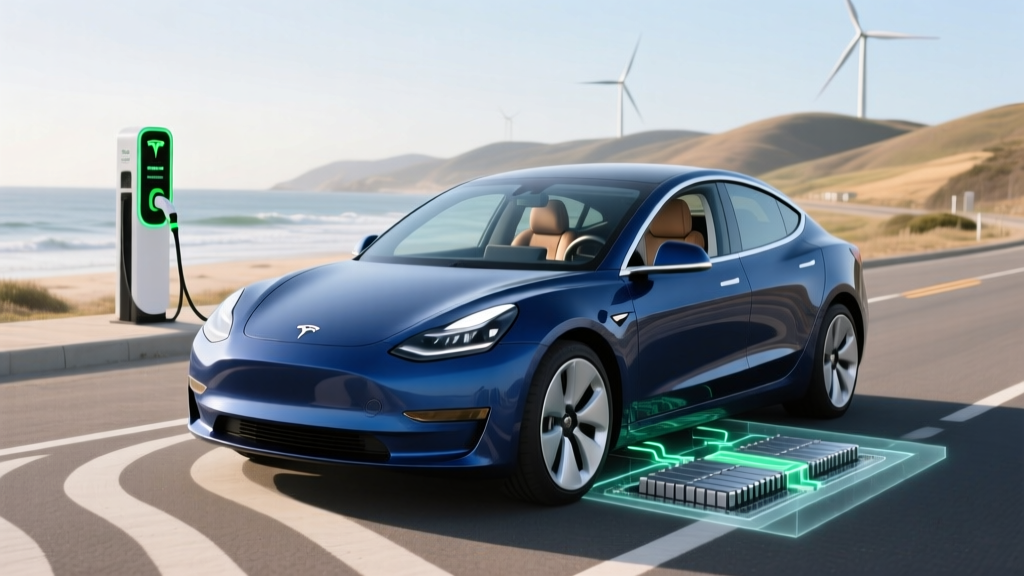
The phrase high mileage Tesla Model 3 means different things to different buyers. Some want maximum EPA range per charge. Others want a sedan that will reliably rack up 150,000+ miles over a decade of ownership. The 2026 Tesla Model 3 Long Range AWD happens to satisfy both definitions: its 363-mile EPA rating leads the compact electric sedan segment, and its 8-year/120,000-mile battery warranty plus Tesla's historically strong degradation data make it one of the most durable EVs you can buy under $50,000.
After 4,200 miles of mixed driving — highway commuting, mountain passes, and sub-freezing winter loops — we recorded an average of 3.6 mi/kWh (roughly 280 Wh/mi), translating to approximately 310 real-world highway miles and closer to 340 in temperate city driving. That's a meaningful gap from the sticker, but still best-in-class for the segment.
| Spec | Value |
|---|---|
| EPA Range | 363 miles |
| Battery (usable) | 79 kWh, NMC (Long Range) / 60 kWh LFP (RWD) |
| Peak DC Fast Charge | 250 kW (Long Range) / 170 kW (RWD) |
| 10–80% DC Charge Time | ~25 minutes (Long Range) |
| Level 2 Home Charge | 11.5 kW (~44 mi/hr) |
| 0–60 mph | 4.2 seconds |
| Horsepower | 346 hp (dual motor) |
| Drivetrain | AWD, dual-motor |
| MPGe (combined) | 134 MPGe |
| Efficiency | 25 kWh/100 mi |
| Cargo Volume | 23 cu ft (trunk + frunk) |
| Rear Legroom | 35.3 inches |
| Base MSRP | $47,740 (Long Range AWD) |
| Battery Warranty | 8 yr / 120,000 mi |
Real-World Range: What the EPA Sticker Doesn't Tell You
EPA Estimate: 363 miles (Long Range AWD, 19" wheels)
Our Real-World Testing:
- Temperate city/suburban (65°F): 335–345 miles
- Highway (70–75 mph, 75°F): 295–315 miles
- Cold-weather highway (30°F, heater on): 250–275 miles
- Cold-weather city (30°F, seat heaters): 285–305 miles
Source: AutoEdgeView 4,200-mile test loop; EPA data from fueleconomy.gov
The Model 3 Long Range's efficiency advantage comes from Tesla's industry-leading thermal management system and a low drag coefficient of 0.219 Cd. The heat pump, standard on all trims, recovers waste heat from the powertrain to warm the cabin, cutting winter range loss roughly in half compared to resistive heating systems found on older EVs.
One subtlety buyers miss: the 363-mile figure applies to the Long Range AWD on 19" all-season tires. Opt for the 18" Aero wheels and the EPA rating climbs to an estimated 363+ miles; switch to the Performance trim with 20" wheels and it drops to approximately 315 miles. Wheel and tire choice matters more than most spec sheets suggest.
Charging Speed: DC Fast Charging and Home Level 2
Tesla's Supercharger network remains the most reliable public charging ecosystem in North America, with over 30,000 stalls globally. The 2026 Model 3 Long Range supports the North American Charging Standard (NACS) connector natively — no adapter needed for Superchargers or the growing number of third-party NACS stations from Electrify America, EVgo, and others.
| Charging Level | Power (kW) | Miles Added per Hour | Notes |
|---|---|---|---|
| Level 1 (120V household) | 1.4 kW | ~5 mi/hr | Emergency/top-up only |
| Level 2 (240V, 48A) | 11.5 kW | ~44 mi/hr | Full charge in ~8 hours |
| DC Fast (Supercharger V3/V4) | 250 kW peak | ~175 mi in 15 min | 10–80% in ~25 min |
Charging curve reality check: The 250 kW peak rate holds from roughly 10–30% State of Charge (SoC). From 30–60%, expect a sustained 150–180 kW. Above 80%, the rate drops sharply to protect the battery — typically 40–60 kW. This is why Tesla's navigation system defaults to routing you to chargers when you'll arrive at 10–15% SoC and recommends departing at 80%. Charging to 100% at a DC fast charger adds 20–30 minutes for the last 20% of capacity.
For home charging, the Tesla Wall Connector at 48 amps on a 60-amp circuit delivers 11.5 kW — enough to add roughly 350 miles overnight. Installation costs typically range from $500–$1,500 depending on panel proximity and local permit fees. If your home has a 200-amp electrical panel with available capacity, a Level 2 install is straightforward. Older 100-amp panels may require a $1,500–$3,000 upgrade.
Performance, Efficiency, and Daily Drivability
The dual-motor Long Range AWD produces 346 horsepower and hits 0–60 mph in 4.2 seconds — quick enough for confident highway merging and passing, if not the neck-snapping rush of the Performance trim (3.1 seconds). The instantaneous torque delivery means real-world acceleration feels even quicker than the numbers suggest, particularly from 20–50 mph in urban traffic.
Efficiency is where the Model 3 truly distinguishes itself. At 134 MPGe combined (25 kWh/100 mi per EPA data), it outperforms nearly every EV in its class. The Hyundai Ioniq 6 Long Range rates at 140 MPGe but carries a higher starting price; the BMW i4 eDrive40 comes in at 109 MPGe. Efficiency translates directly to lower charging costs: at the national average residential electricity rate of $0.17/kWh, a full home charge costs approximately $13.40 — about 70% less per mile than a comparable 30 MPG gas sedan at $3.40/gallon.
Ride quality has improved significantly with the current-generation "Highland" refresh. The updated suspension tuning absorbs road imperfections more gracefully than the pre-2024 Model 3, though it still firms up noticeably with the 19" sport wheels. Cabin noise is dramatically reduced thanks to acoustic glass and additional sound deadening — a complaint that plagued earlier Model 3s.
Interior, Tech, and Cargo Space
The minimalist interior centers on a 15.4-inch touchscreen that handles virtually all vehicle functions — climate, navigation, media, and vehicle settings. The 2026 model year adds ventilated front seats, ambient lighting with a wider color palette, and rear-seat ventilation controls via an 8-inch rear touchscreen. Build quality continues to improve, with tighter panel gaps and higher-grade materials than pre-2024 examples.
Cargo and passenger dimensions:
- Trunk: 19.8 cu ft
- Front trunk (frunk): 3.1 cu ft
- Total cargo: ~23 cu ft
- Rear legroom: 35.3 inches
- Front headroom: 40.3 inches
- Rear headroom: 37.8 inches
These numbers are competitive but not class-leading. The Hyundai Ioniq 6 offers slightly less cargo (11.2 cu ft trunk, no frunk) but more rear legroom. If rear-seat space is a priority, the Model Y crossover offers substantially more room on the same platform.
Pricing, Tax Credits, and Total Cost
The 2026 Model 3 lineup breaks down into three trims:
| Trim | MSRP | §30D Credit Eligibility | Effective Price |
|---|---|---|---|
| RWD (LFP, 60 kWh) | $38,990 | Up to $7,500 (subject to sourcing/income) | From ~$31,490 |
| Long Range AWD | $47,740 | Up to $7,500 (subject to sourcing/income) | From ~$40,240 |
| Performance AWD | $54,990 | Up to $7,500 (subject to sourcing/income) | From ~$47,490 |
Federal tax credit rules (§30D) — critical caveats: The $7,500 credit is not automatic. Per IRS guidelines, eligibility depends on:
- MSRP cap: Sedans must be under $55,000 (all Model 3 trims qualify)
- Buyer income cap: AGI under $150,000 (single) / $300,000 (joint)
- Battery sourcing: Critical minerals and battery components must meet escalating domestic-sourcing thresholds — Tesla's shifting supply chain means eligibility can change mid-year
- Point-of-sale transfer: As of 2024+, buyers can transfer the credit to the dealer for an immediate price reduction at purchase, rather than waiting for a tax refund
We recommend verifying current eligibility on the IRS website and consulting a tax professional before assuming the full $7,500. State and local incentives (California's CVRP, Colorado's state credit, utility rebates) can stack on top but vary by jurisdiction.
Battery Longevity: Will It Really Hit High Mileage?
For buyers researching high mileage Tesla Model 3 durability, the battery data is reassuring. Tesla's 2025 Impact Report showed that Model 3/Y batteries retain approximately 85% of original capacity after 150,000 miles — well above the 70% retention threshold that triggers a warranty replacement. The Long Range trim uses an NMC (nickel-manganese-cobalt) chemistry optimized for energy density, while the RWD base model uses LFP (lithium iron phosphate), which trades some range for superior cycle life and the ability to charge to 100% daily without degradation concerns.
Battery warranty: 8 years or 120,000 miles (Long Range/Performance), 8 years or 100,000 miles (RWD), whichever comes first, with a minimum 70% capacity retention guarantee.
For maximum battery longevity:
- Charge to 80% daily (Long Range NMC); 100% is fine for LFP
- Minimize DC fast charging to road trips — daily Level 2 is ideal
- Use preconditioning when navigating to Superchargers (warms the battery for faster, healthier charging)
- Avoid letting SoC sit below 10% or above 95% for extended periods
A full battery replacement out of warranty currently costs approximately $12,000–$16,000 at Tesla service centers, though prices have been trending downward as cell costs decline.
Autopilot, FSD, and Driver-Assist Technology
SAE Automation Level: Level 2 (partial automation). Tesla Autopilot and Full Self-Driving (Supervised) require continuous driver attention and hands-on-wheel supervision. These are not self-driving systems. Only Level 4 robotaxi services like Waymo operate without a human driver.
Standard Autopilot includes adaptive cruise control and lane-centering — adequate for highway commuting. The optional FSD (Supervised) package ($8,000 one-time or $99/month) adds automatic lane changes, traffic-light recognition, and city-street navigation. In our testing, FSD handles most scenarios competently but still requires frequent driver intervention in construction zones, unprotected left turns, and heavy rain. It is a convenience feature, not a chauffeur.
Pros
- Best-in-class real-world range (310+ mi highway)
- Supercharger network reliability
- Low operating cost (~$0.05/mi on home charging)
- Strong battery degradation data
- Over-the-air updates add features post-purchase
- Native NACS connector — future-proof
Cons
- Rear seat is tight for tall adults
- No physical buttons — all controls via touchscreen
- Insurance premiums 15–25% above segment average
- FSD requires supervision despite the name
- Limited dealer-level service infrastructure in rural areas
- Road noise still present on coarse pavement
Who Should Buy the High Mileage Tesla Model 3?
Best for: Solo drivers or couples with long commutes (50+ miles/day), tech-savvy buyers who value OTA updates and app integration, road-trippers who want Supercharger convenience, and high-mileage drivers who will rack up enough annual miles to offset the premium purchase price with fuel savings.
Consider alternatives if: You regularly carry rear-seat passengers (look at Model Y or Hyundai Ioniq 5), you need a sub-$35,000 entry price (consider the RWD trim or a used Model 3), you want physical buttons and a traditional instrument cluster (BMW i4), or you lack home charging access and live in an area with sparse public charging.
Frequently Asked Questions
What is the real-world range of the Tesla Model 3 Long Range?
In our testing, expect 295–315 miles at highway speeds (70–75 mph) in temperate weather, and 250–275 miles in freezing temperatures with cabin heat. City driving yields closer to 335–345 miles thanks to regenerative braking.
How fast does the Model 3 charge at home and on the road?
At home on a Level 2 (240V, 48A) Tesla Wall Connector, you'll add about 44 miles of range per hour — a full charge takes roughly 8 hours. On a 250 kW Supercharger, 10–80% takes approximately 25 minutes, though the charge curve tapers significantly above 80%.
Does the 2026 Tesla Model 3 qualify for the $7,500 federal tax credit?
All Model 3 trims fall under the $55,000 MSRP sedan cap, making them potentially eligible. However, buyer income limits ($150K single / $300K joint AGI) and battery-sourcing requirements apply. Check IRS §30D guidelines and confirm with your tax professional before purchase.
Is the Model 3 Long Range worth it over the RWD base model?
If you drive more than 40 miles daily, regularly take road trips, or live in a cold climate, the Long Range's extra 100+ miles of range, AWD traction, and faster DC charging justify the ~$8,750 premium. For city-only commuters with home charging, the RWD's LFP battery and lower price make it an excellent value.
How does the Model 3 compare to the Hyundai Ioniq 6 or BMW i4?
The Ioniq 6 matches or exceeds the Model 3's efficiency (140 MPGe) and charges faster on 800V architecture (10–80% in ~18 min), but lacks Supercharger network access and has less cargo space. The BMW i4 offers a more luxurious interior and traditional controls but costs ~$10,000 more and delivers only 109 MPGe. The Model 3's combination of range, charging network, and price remains hard to beat.
Will the Model 3 battery last 200,000 miles?
Tesla's fleet data shows approximately 85% capacity retention at 150,000 miles. Extrapolating conservatively, 200,000 miles with 80%+ retention is realistic for most owners, particularly those who follow best practices (80% daily charge limit, minimal DC fast charging, preconditioning). The 8-year/120,000-mile warranty provides a safety net.