The 2026 Tesla Model 3 Highland: Quick Verdict
The 2026 Tesla Model 3 (refreshed internally as the "Highland" generation) remains the benchmark compact electric sedan — not because it's perfect, but because it nails the fundamentals: EPA range up to 341 miles, DC fast charging that peaks at 250 kW, and a software ecosystem that keeps improving long after purchase. The "Hey Tesla" voice assistant, once a novelty, has matured into a genuinely useful hands-free interface for climate, navigation, media, and vehicle controls.
Starting at $38,990 for the Rear-Wheel Drive trim, the Model 3 undercuts many rivals on price while offering Supercharger network access (now with a native NACS port), over-the-air updates, and class-leading efficiency. Its weaknesses — a minimalist cabin that isn't for everyone, the absence of traditional gauges, and Tesla's controversial panel-gap history — persist, but for most buyers, the value proposition is hard to beat.
Range, Battery & Real-World Efficiency
Long Range AWD: EPA 341 miles | Real-world highway (~70 mph): ~290–310 miles | Cold weather (below 30°F): ~240–270 miles
Rear-Wheel Drive: EPA 272 miles | Real-world highway: ~235–250 miles | Cold weather: ~195–220 miles
Performance AWD: EPA 315 miles | Real-world highway: ~265–285 miles | Cold weather: ~220–250 miles
| Trim | Usable Battery (kWh) | Chemistry | EPA Range | MPGe (City/Hwy/Combined) | kWh/100 mi |
|---|---|---|---|---|---|
| Rear-Wheel Drive | 60 kWh | LFP (CATL) | 272 mi | 138 / 121 / 130 | 26 |
| Long Range AWD | 79 kWh | NMC (Panasonic) | 341 mi | 134 / 119 / 127 | 27 |
| Performance AWD | 79 kWh | NMC (Panasonic) | 315 mi | 125 / 110 / 118 | 29 |
The RWD model uses a lithium iron phosphate (LFP) battery sourced from CATL. LFP chemistry sacrifices some energy density (hence the shorter range) but gains cycle longevity and allows regular 100% charging without degradation concerns — Tesla recommends daily 100% charges for LFP packs. The Long Range and Performance trims use nickel-manganese-cobalt (NMC) cells from Panasonic, offering higher energy density but requiring an 80% daily charge limit for long-term health.
Efficiency is where the Model 3 shines. At 26–29 kWh/100 mi, it's among the most efficient EVs on the market, rivaling the Hyundai Ioniq 6 and beating the BMW i4 and Polestar 2. This efficiency translates directly to lower charging costs and more miles per minute at a DC fast charger.
Charging Speed: DC Fast, Level 2 & Home Setup
| Charging Level | Power / Rate | Speed (Miles Added) | Notes |
|---|---|---|---|
| Level 1 (120V household) | ~1.4 kW | ~3–4 mi/hr | Emergency/trickle only |
| Level 2 (240V home Wall Connector) | 11.5 kW (48A) | ~44 mi/hr | Full charge in ~6–7 hrs |
| DC Fast Charge (V3 Supercharger) | Peak 250 kW | 10–80% in ~25 min | Curve tapers sharply above 80% |
| DC Fast Charge (V4 Supercharger) | Peak 250 kW | 10–80% in ~25 min | Same peak; V4 offers better cable management |
The Model 3's charging curve is well-managed but not class-leading. At a V3 or V4 Supercharger, the Long Range AWD peaks near 250 kW at low state-of-charge (below 20%), sustaining roughly 200+ kW up to about 40% SoC, then tapering progressively. The 10–80% session takes approximately 25 minutes. Above 80%, charge rate drops to under 50 kW — this is normal for NMC chemistry and thermal management, but it means highway road-trip stops should target 10–80% sessions rather than topping off.
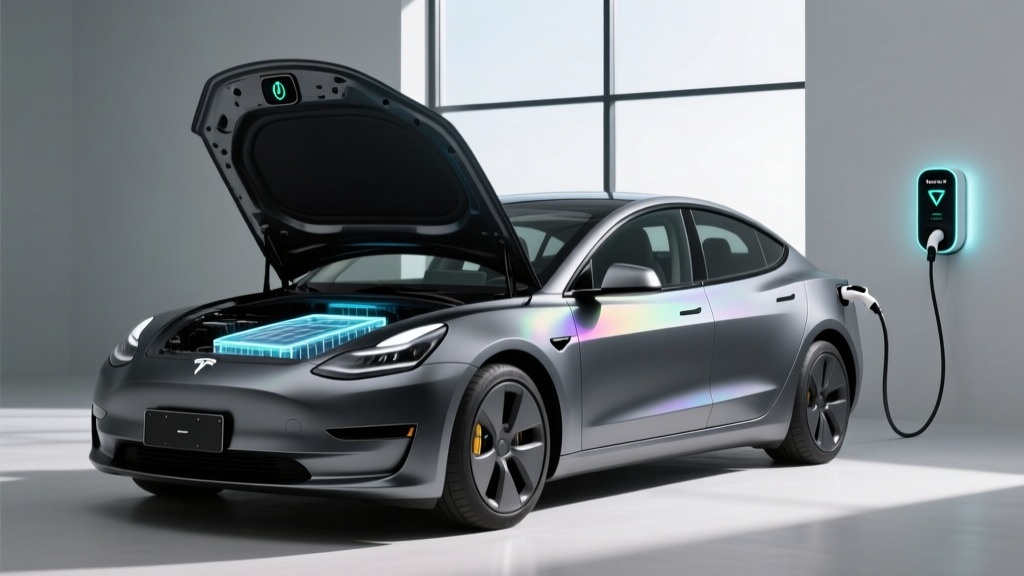
At home, the Tesla Wall Connector delivers up to 11.5 kW on a 60-amp circuit (48 amps continuous), adding roughly 44 miles of range per hour. A full overnight charge is easily achievable. Installation costs vary widely: expect $800–$2,000 for a straightforward install near the electrical panel, or $2,500–$5,000+ if a panel upgrade to 200 amps is needed. Consult a licensed electrician for your specific home.
The 2026 Model 3 comes with a native NACS (North American Charging Standard) port, meaning it accesses Tesla Superchargers without an adapter. For CCS-based public networks (Electrify America, EVgo, ChargePoint), Tesla sells a CCS adapter (~$175), though many of these networks are transitioning to NACS connectors.
Performance & Drivetrain
| Trim | Drivetrain | Horsepower | 0–60 mph | Top Speed |
|---|---|---|---|---|
| Rear-Wheel Drive | RWD (single motor) | 271 hp | 5.8 sec | 125 mph |
| Long Range AWD | AWD (dual motor) | 346 hp | 4.2 sec | 125 mph |
| Performance AWD | AWD (dual motor) | 510 hp | 2.9 sec | 163 mph |
Even the base RWD Model 3 is quick by any standard — 5.8 seconds to 60 mph is faster than most gas-powered sport sedans. The Long Range AWD drops that to 4.2 seconds with the security of all-wheel drive, making it the sweet spot for most buyers who want both range and performance. The Performance trim's 2.9-second sprint is supercar territory, complete with Track Mode, adaptive dampers, and high-performance brakes.
Ride quality has improved significantly with the Highland refresh. Revised suspension tuning, new frequency-selective dampers, and additional acoustic glass reduce road noise and harshness — previous-generation complaints about a jarring ride over rough pavement are largely resolved.
"Hey Tesla" Voice Assistant & Interior Tech
The Hey Tesla voice assistant is activated by saying "Hey Tesla" (or pressing the right steering-wheel button). In the 2026 model year, Tesla has expanded its capabilities considerably:
- Navigation: "Hey Tesla, navigate to the nearest Supercharger" or "Take me to 123 Main Street"
- Climate: "Set temperature to 72 degrees," "Turn on seat heaters," "Defrost the windshield"
- Media: "Play jazz on Spotify," "Skip this track," "Turn volume to 5"
- Vehicle controls: "Open the glovebox," "Fold the mirrors," "Turn on sentry mode"
- General queries: Basic factual questions, though it's not a general-purpose AI assistant
Recognition accuracy has improved with a dedicated microphone array, and the system now handles multi-step commands ("Navigate home and set the temperature to 70"). It's not as conversational as Google Assistant in the Polestar 2 or Apple Siri in CarPlay-equipped vehicles, but for core driving-related tasks, it's reliable and keeps your hands on the wheel.
The 15.4-inch central touchscreen handles everything — there is no instrument cluster. Speed, range, and navigation directions appear in a small area at the top-left of the screen. The steering wheel is a yoke-style or round wheel (buyer's choice at no extra cost), with capacitive touch buttons. Rear passengers get an 8-inch touchscreen for climate and media control, a major upgrade from the previous generation.
All Tesla driver-assistance features, including Autopilot, Enhanced Autopilot, and Full Self-Driving (Supervised), are SAE Level 2 systems. The driver must remain fully engaged, hands on the wheel, and eyes on the road at all times. FSD (Supervised) can navigate on-ramps, city streets, and stoplights, but it makes errors and requires constant supervision. It is not a Level 4 autonomous system like Waymo's driverless robotaxi service.
Pricing, Tax Credits & Ownership Cost
| Trim | Base MSRP | Federal Tax Credit (§30D) | Effective Price (if eligible) |
|---|---|---|---|
| Rear-Wheel Drive | $38,990 | Up to $7,500 (point-of-sale) | ~$31,490 |
| Long Range AWD | $45,990 | Up to $7,500 (point-of-sale) | ~$38,490 |
| Performance AWD | $52,990 | Up to $7,500 (point-of-sale) | ~$45,490 |
- MSRP cap: Sedans must be ≤$55,000 MSRP (all three trims qualify)
- Buyer income cap: AGI ≤$150,000 (single), ≤$225,000 (head of household), ≤$300,000 (joint)
- Battery sourcing: Critical minerals and battery components must meet phased-in domestic-sourcing thresholds — verify current-year compliance on IRS.gov
- Point-of-sale transfer: Eligible buyers can apply the credit as an immediate price reduction at the dealership, rather than waiting for a tax refund
- Leasing loophole: Commercial-lease credit (§45W) may allow credit passthrough on leased vehicles without income/MSRP caps — consult a tax professional
Beyond the purchase price, the Model 3's total cost of ownership benefits from low fueling costs (home charging at $0.13/kWh averages ~$0.04/mile vs. ~$0.12/mile for a 30 MPG gas car at $3.50/gallon), minimal maintenance (no oil changes, reduced brake wear from regen), and strong residual values. Insurance, however, tends to be 15–25% higher than comparable gas sedans — get quotes before purchasing.
Space, Cargo & Practicality
| Measurement | Value |
|---|---|
| Front headroom | 40.3 in |
| Front legroom | 42.7 in |
| Rear headroom | 37.8 in |
| Rear legroom | 35.2 in |
| Trunk (rear cargo) | 23 cu ft |
| Frunk (front trunk) | 3.1 cu ft |
| Total cargo volume | 26.1 cu ft |
The Model 3 is a compact sedan, and interior space reflects that. Front-seat occupants enjoy generous headroom and legroom, but the rear seat is best suited for children or adults on shorter trips — legroom is tighter than in the Model Y or Hyundai Ioniq 5. The 23 cu ft trunk is practical for groceries and luggage, and the 60/40 split-folding rear seat expands utility for longer items. The frunk is small but useful for charging cables and emergency supplies.
Warranty & Reliability
| Component | Coverage |
|---|---|
| Basic vehicle | 4 years / 50,000 miles |
| Battery & drive unit (RWD) | 8 years / 100,000 miles |
| Battery & drive unit (Long Range/Performance) | 8 years / 120,000 miles |
| Battery retention threshold | ≥70% capacity during warranty period |
Tesla's battery warranty guarantees that the pack will retain at least 70% of its original capacity during the warranty period. Real-world data from fueleconomy.gov and third-party fleet analyses suggest Tesla NMC packs degrade roughly 10–12% over 100,000 miles, with LFP packs showing even slower degradation due to the chemistry's inherent stability. Replacement cost, if out of warranty, ranges from $12,000–$16,000 depending on the pack — a significant expense, but one that most owners will never face.
Pros, Cons & Who Should Buy
- Class-leading efficiency (26–29 kWh/100 mi)
- Supercharger network access with native NACS port
- 250 kW peak DC fast charging
- Strong real-world range (290–310 mi highway on Long Range)
- Competitive pricing, especially after §30D credit
- Mature Hey Tesla voice assistant
- Over-the-air updates add features post-purchase
- Improved ride quality with Highland suspension
- No instrument cluster — everything on the center screen
- Rear seat is tighter than crossover rivals
- FSD (Supervised) is expensive ($8,000 or $99/mo) and still Level 2
- Insurance premiums above segment average
- Turn-signal stalk removed (steering-wheel buttons)
- Build quality improved but still lags German/Japanese rivals
- You want maximum range and efficiency per dollar
- You have reliable home Level 2 charging access
- You value the Supercharger network for road trips
- You're comfortable with a screen-centric interface
- You prefer a traditional instrument cluster and physical buttons
- You need more rear-seat space for adults
- You want a more premium interior feel at a similar price point
Frequently Asked Questions
What is the real-world range of the 2026 Tesla Model 3?
The Long Range AWD achieves an EPA-estimated 341 miles, but real-world highway driving at 70 mph typically yields 290–310 miles. In cold weather (below 30°F), expect 240–270 miles due to battery resistance and cabin heating demands. The RWD model delivers roughly 235–250 highway miles in moderate conditions.
How fast does the Model 3 charge at home and on the road?
At home on a 240V Tesla Wall Connector (11.5 kW), the Model 3 adds about 44 miles of range per hour, fully charging overnight. On a V3 or V4 Supercharger, it peaks at 250 kW DC, completing a 10–80% session in approximately 25 minutes. The charge curve tapers significantly above 80%, so plan road-trip stops around 10–80% sessions.
Does the 2026 Model 3 qualify for the $7,500 federal EV tax credit?
All three trims fall under the $55,000 MSRP cap for sedans and may qualify for up to $7,500 under IRS §30D, provided the buyer meets income limits ($150K single / $300K joint) and the vehicle's battery meets current-year critical-mineral and component sourcing requirements. The credit can be applied as a point-of-sale price reduction. Verify eligibility on IRS.gov before purchasing.
How does the Hey Tesla voice assistant compare to competitors?
The Hey Tesla voice assistant handles vehicle-specific commands (climate, navigation, media, vehicle controls) reliably, with improved multi-step command support in 2026. It's more vehicle-integrated than Apple Siri or Google Assistant but less capable for general knowledge queries. It compares favorably to Mercedes MBUX for EV-specific tasks but lacks the conversational depth of Google's system in the Polestar 2.
Is the Model 3 worth buying over the Model Y or key competitors?
The Model 3 is the right choice if you prioritize driving dynamics, efficiency, and value over cargo space and ride height. The Model Y offers more rear-seat room and cargo volume (30 cu ft behind the rear seats) but costs ~$5,000 more and is slightly less efficient. Against the Hyundai Ioniq 6 (EPA 361 mi, more traditional interior) and BMW i4 (premium feel, lower range), the Model 3 wins on Supercharger access and software ecosystem. Test-drive all three to decide which interface philosophy suits you.