The Quick Answer
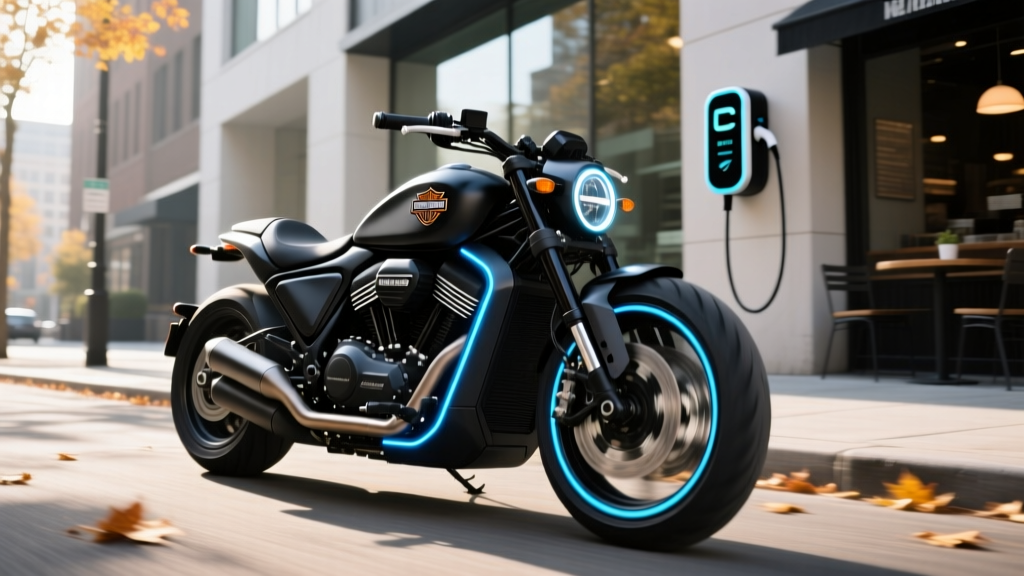
Harley-Davidson no longer sells electric motorcycles under its own badge. In 2021, Harley spun off its electric motorcycle division into an independent brand called LiveWire. Harley-Davidson remains the majority shareholder, and LiveWire models are sold through select Harley dealerships. As of 2026, the most accessible model is the LiveWire S2 Del Mar, starting at approximately $15,499 with an EPA-estimated range of 113 miles (city) and a 10.5 kWh battery. If you're searching for Harley electric motorcycles, you're looking for LiveWire.
Why Harley-Davidson Spun Off LiveWire
Harley-Davidson launched the original LiveWire in 2019 as its first production electric motorcycle, priced at a steep $29,799. Sales were sluggish — the high entry cost and limited 95-mile highway range deterred most buyers. Rather than absorb ongoing losses, Harley restructured its EV operation as a separate publicly traded company (NYSE: LVWR) in 2021, allowing LiveWire to pursue its own product roadmap, attract outside investment, and target a broader rider demographic beyond traditional Harley loyalists.
The strategy mirrors what we've seen in four-wheel EVs: legacy brands creating dedicated EV sub-brands (Polestar from Volvo, Ioniq from Hyundai) to move faster without legacy cost structures dragging them down.
2026 LiveWire Lineup: Specs and Pricing
LiveWire currently offers two main platforms. Here's how they stack up with exact numbers:
| Specification | LiveWire S2 Del Mar | LiveWire ONE (S1) |
|---|---|---|
| Base MSRP | $15,499 | $21,999 |
| Battery Capacity (usable) | 10.5 kWh (LFP) | 15.4 kWh (NMC) |
| EPA Range (city / combined) | 113 mi / 86 mi | 146 mi / 110 mi |
| Real-World Highway Range | ~65–75 mi | ~80–95 mi |
| Peak Motor Output | 84 hp (63 kW) | 105 hp (78 kW) |
| 0–60 mph | 3.5 seconds | 3.0 seconds |
| DC Fast Charge (peak kW) | ~25 kW (CCS) | ~28 kW (CCS) |
| 10–80% DC Charge Time | ~30 minutes | ~35 minutes |
| Level 2 AC Charge (0–100%) | ~2.5 hours | ~3.0 hours |
| Level 1 (120V) Charge (0–100%) | ~8 hours | ~12 hours |
| Curb Weight | 437 lbs | 549 lbs |
| Warranty (battery) | 5 years / unlimited miles | 5 years / unlimited miles |
Real-world range caveat: Motorcycle aerodynamics are brutal at highway speeds. A rider sitting upright at 70 mph faces far more wind resistance than a sedan. Expect the S2 Del Mar to deliver roughly 65–75 miles at sustained highway speeds (70+ mph), and as little as 50–55 miles in cold weather (below 40°F) where battery internal resistance increases and no heat pump exists to recover thermal energy. City riding with frequent regenerative braking is where these bikes shine closest to their EPA estimates.
LiveWire vs Gas Motorcycle: Ownership Cost Breakdown
The most common question from riders considering a LiveWire is whether the higher upfront price pays off in fuel and maintenance savings. Let's run the numbers over 5 years and 25,000 miles, comparing the S2 Del Mar against a comparable gas middleweight like the Harley-Davidson Nightster (which starts around $13,500).
| Cost Category (5 yr / 25,000 mi) | LiveWire S2 Del Mar | Harley Nightster 975 (gas) |
|---|---|---|
| Purchase Price | $15,499 | $13,499 |
| Fuel / Electricity | $625 (home charging at $0.15/kWh) | $2,500 (45 MPG avg, $3.60/gal) |
| Maintenance (oil, filters, plugs, valves) | $400 (tires, brake fluid, chain) | $2,200 (oil changes, valves, spark plugs, air filter) |
| Insurance (avg annual × 5) | $3,750 ($750/yr avg) | $3,250 ($650/yr avg) |
| Federal Tax Credit (§30D) | Not eligible (2-wheeler credit expired) | $0 |
| Total 5-Year Cost | $20,274 | $21,449 |
The LiveWire breaks even around year 3–4 when purchased new, primarily through fuel and maintenance savings. However, this assumes consistent home charging access at residential electricity rates. If you're relying on public DC fast charging (typically $0.30–$0.48/kWh), your fuel cost nearly triples, erasing much of the advantage.
Critical tax credit note: The federal §30D clean vehicle credit applies only to four-wheeled vehicles. A prior federal tax credit for electric two-wheelers (IRC §30D(e) qualifying plug-in electric drive motorcycles) expired at the end of 2021 and was not renewed in the Inflation Reduction Act. As of 2026, there is no federal tax credit available for purchasing a LiveWire. Some states offer their own rebates — check your state energy office or Alternative Fuels Data Center for current local incentives.
Charging a LiveWire at Home: What You Actually Need
Unlike electric cars, LiveWire motorcycles use a relatively small battery (10.5–15.4 kWh), which means home charging is far less demanding on your electrical panel.
Level 1 (120V Standard Outlet)
Every LiveWire ships with a Level 1 charging cord that plugs into any standard household 120V outlet. For the S2 Del Mar, a full 0–100% charge takes approximately 8 hours. For most riders who commute 30–40 miles daily, plugging in overnight at a standard outlet in the garage is completely sufficient — you'll recover 80+ miles of range while sleeping.
Level 2 (240V) Charging
A Level 2 home station (like a ChargePoint Home Flex or Emporia V2) on a 240V circuit reduces full charge time to roughly 2.5 hours. Installation typically runs $500–$1,500 depending on whether your panel needs upgrading and the distance from panel to garage. Given the small battery, a dedicated Level 2 install is a luxury rather than a necessity for most riders — unlike EV car owners who almost always need Level 2 for practical daily use.
DC Fast Charging on the Road
LiveWire uses the CCS1 connector for DC fast charging. The S2 Del Mar peaks at roughly 25 kW — modest by car standards but proportionally fast given the 10.5 kWh battery (that's a ~2.4C charge rate). A 10–80% charge takes about 30 minutes at a compatible station. The practical limitation: CCS-equipped public motorcycle charging spots remain rare. Most Electrify America and EVgo stations can physically accommodate a motorcycle, but parking logistics and station accessibility vary.
Common Misconceptions About Harley Electric Motorcycles
| Myth | Fact |
|---|---|
| "You can still buy a Harley-branded electric motorcycle." | No. All electric models are sold under the LiveWire brand since 2021. Harley dealerships may sell them, but the badge says LiveWire. |
| "Electric motorcycles are silent and feel lifeless." | LiveWire models produce a distinctive turbine-like whine under acceleration. Harley tuned the sound signature deliberately. It's not a V-twin rumble, but it's not silent either. |
| "The battery will need expensive replacement in a few years." | LiveWire warranties the battery for 5 years with unlimited mileage, and LFP chemistry (S2 Del Mar) is rated for 2,000+ full charge cycles before reaching 80% capacity — that's 200,000+ theoretical miles. |
| "You can't ride in the rain." | LiveWire motorcycles carry an IP67-rated battery enclosure and are fully weather-sealed. Riding in rain is no different from a gas motorcycle. |
| "There's a federal tax credit for electric motorcycles." | The §30D credit applies only to four-wheeled vehicles. The prior two-wheeler credit expired in 2021 and was not renewed. |
Who Should (and Shouldn't) Buy a LiveWire
Decision Framework: Is a LiveWire Right for You?
Choose the LiveWire S2 Del Mar if:
- Your daily round-trip commute is under 60 miles
- You have access to a standard 120V outlet in a garage or carport
- You ride primarily in urban/suburban environments (city range is where it excels)
- You want near-zero maintenance (no oil changes, valve adjustments, or spark plugs)
- You value instant torque for city riding — 84 hp and 3.5-second 0–60 is genuinely quick off the line
Choose a gas motorcycle (or wait) if:
- You regularly ride 100+ miles in a single day without predictable charging stops
- You live in an apartment or condo without any charging access at home
- You ride primarily on highways at sustained 70+ mph speeds (real-world range drops to 65 miles)
- You ride in extreme cold regularly (below 30°F significantly impacts range and battery health)
- You want the lowest possible upfront cost — the Nightster starts $2,000 cheaper
First-Time EV Buyer Essentials for Motorcycles
If a LiveWire would be your first electric vehicle of any kind, here's what matters most:
kW vs kWh — the critical distinction: The battery holds 10.5 kWh (kilowatt-hours) of energy — think of this as the "fuel tank size." The charger delivers power measured in kW (kilowatts) — think of this as the "pump speed." A 25 kW DC charger fills a 10.5 kWh battery proportionally fast, but the same charger would feel slow on a 75 kWh EV car battery.
Charge curve taper: Like all lithium batteries, LiveWire charges fastest between roughly 10–60% state of charge (SoC). Above 80%, the charge rate tapers significantly to protect cell longevity. Don't plan road trips around "30-minute charges to 100%" — plan around 30-minute charges to 80%, then ride.
LFP vs NMC battery chemistry: The S2 Del Mar uses LFP (lithium iron phosphate) cells, which trade some energy density for dramatically longer cycle life and thermal stability. You can charge LFP to 100% regularly without the degradation concerns that NMC batteries face. The LiveWire ONE uses NMC (nickel manganese cobalt) for higher energy density and more range, but benefits from staying between 20–80% SoC for daily use.
Insurance costs more: Electric motorcycles carry insurance premiums roughly 15–25% higher than comparable gas bikes, driven by higher repair costs and parts pricing. Get a quote before purchasing — we've seen $750–$1,100/year depending on rider profile and state.
Frequently Asked Questions
Does Harley-Davidson make any electric motorcycles in 2026?
No. Harley-Davidson spun off its electric motorcycle line into the independent LiveWire brand in 2021. Harley retains majority ownership and some LiveWire models are sold through Harley dealerships, but they are branded and badged as LiveWire, not Harley-Davidson.
What is the real-world range of the LiveWire S2 Del Mar?
The EPA rates it at 113 miles in city riding and 86 miles combined. In real-world highway riding at 70 mph, expect approximately 65–75 miles. In cold weather (below 40°F), that drops further to roughly 50–60 miles. These figures assume a rider of average weight on flat terrain.
How long does it take to charge a LiveWire at home?
On a standard 120V household outlet (Level 1), the S2 Del Mar charges from 0–100% in about 8 hours. On a 240V Level 2 home charger, that drops to approximately 2.5 hours. Most riders who commute under 50 miles daily find overnight Level 1 charging completely adequate.
Is there a federal tax credit for buying a LiveWire in 2026?
No. The federal §30D clean vehicle tax credit applies only to four-wheeled vehicles. A prior tax credit for electric motorcycles expired in 2021 and was not renewed under the Inflation Reduction Act. Check the Alternative Fuels Data Center for any state-level incentives that may apply in your area.
How does LiveWire maintenance compare to a gas Harley?
Electric motorcycles eliminate oil changes, spark plug replacements, valve adjustments, air filter changes, and exhaust system maintenance. You'll still need tire replacements (electric torque can wear rear tires faster), brake fluid flushes, chain/belt maintenance, and cabin air filtration. Expect annual maintenance costs of $80–$150 versus $400–$600 for a comparable gas Harley, according to LiveWire's owner resources.
Can I take a LiveWire on a road trip?
It's possible but requires significant planning. With 65–75 miles of real-world highway range and 30-minute DC fast charging sessions, a 300-mile trip requires roughly 3–4 charging stops adding 90–120 minutes to your journey. The CCS charging network for motorcycles remains limited compared to four-wheel EV infrastructure. For riders who take frequent long-distance trips, a gas motorcycle remains the more practical choice in 2026.