Harley-Davidson's Electric Motorcycle: What Buyers Need to Know in 2026
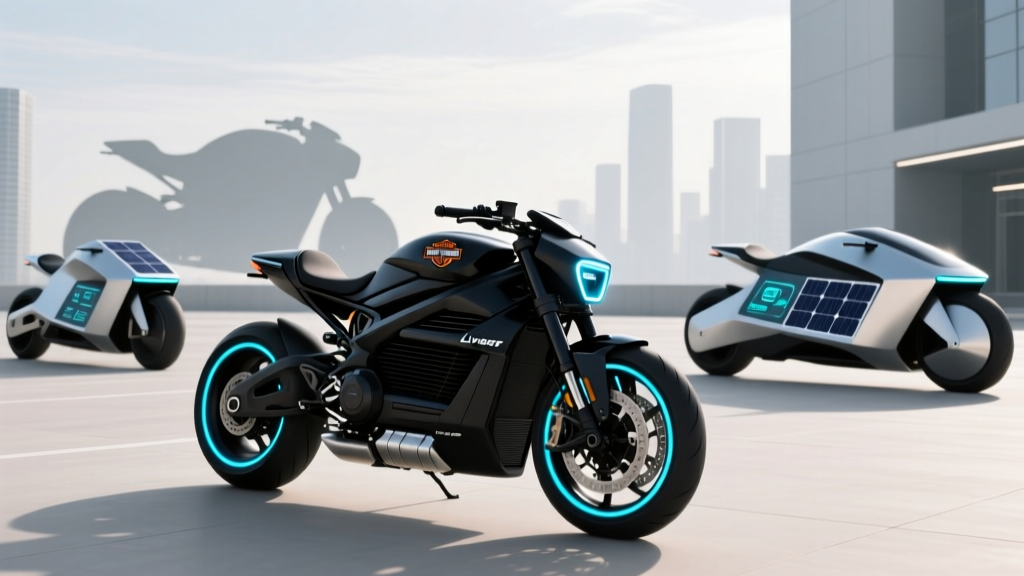
Harley-Davidson's electric motorcycle effort lives under the LiveWire brand — spun off as an independent EV marque but still majority-owned by Harley-Davidson. The flagship LiveWire ONE (MSRP $21,999) pairs a 15.5 kWh RESS battery with a 105-hp electric motor, delivering 146 miles of EPA-estimated city range and a 0-60 mph time of 3.0 seconds. For 2026, the lineup also includes the Del Mar (starting $15,499) and the lighter S2 TrackST aimed at urban commuters.
Before we get into the numbers, let's address the core question directly: Harley-Davidson electric motorcycles are real, available now, and competitive in the premium EV two-wheeler segment — but they carry a significant price premium over gas equivalents, and range limitations make them best suited for riders with predictable commuting patterns and access to home charging. They are not touring machines. If you're cross-shopping a gas Sportster or a Zero SR/F, this guide gives you the exact data to decide.
LiveWire Lineup: 2026 Specs at a Glance
| Spec | LiveWire ONE | LiveWire Del Mar | LiveWire S2 TrackST |
|---|---|---|---|
| Base MSRP | $21,999 | $15,499 | $16,499 |
| Motor Power | 105 hp / 86 lb-ft | 84 hp / 62 lb-ft | 84 hp / 62 lb-ft |
| Battery (usable) | 15.5 kWh (NMC) | 10.5 kWh (NMC) | 10.5 kWh (NMC) |
| EPA City Range | 146 mi | 113 mi | 113 mi |
| Real-World Mixed Range | ~95 mi | ~70 mi | ~70 mi |
| 0–60 mph | 3.0 sec | 3.5 sec | 3.5 sec |
| Top Speed | 110 mph | 103 mph | 103 mph |
| Level 2 Charge (0–100%) | 60 min | 75 min | 75 min |
| DC Fast Charge | Not available | Not available | Not available |
| Curb Weight | 470 lbs | 436 lbs | 428 lbs |
| Warranty (battery) | 5 years / unlimited miles | 5 years / unlimited miles | 5 years / unlimited miles |
Critical note on range: The EPA city-cycle range of 146 miles for the LiveWire ONE is measured under stop-and-go conditions with heavy regenerative braking recovery. On sustained highway riding at 70 mph, expect roughly 70–85 miles before needing a charge. Mixed riding typically yields 90–100 miles. Cold weather (below 40°F) reduces usable range by an additional 15–25% due to battery chemistry limitations and lack of active thermal management on the smaller battery pack.
Electric vs Gas Motorcycle: Real Cost Comparison
The most common question from riders eyeing a Harley electric motorcycle is whether the premium over a gas bike pays for itself. Let's compare the LiveWire ONE against a Harley-Davidson Sportster S (MSRP ~$15,499, 1,252cc V-twin) over 5 years and 30,000 miles of riding.
| Cost Category | LiveWire ONE (Electric) | Sportster S (Gas) |
|---|---|---|
| Purchase Price | $21,999 | $15,499 |
| Federal Tax Credit (§30D) | Not eligible (motorcycles excluded) | $0 |
| Energy/Fuel (30K mi) | $540 (at $0.14/kWh, 3.5 mi/kWh) | $3,430 (at $3.80/gal, 44 mpg) |
| Maintenance (5 yr) | ~$400 (tires, brake fluid, belt) | ~$2,800 (oil, filters, plugs, valves, chain/belt) |
| Insurance (avg annual) | ~$450/yr ($2,250 total) | ~$380/yr ($1,900 total) |
| 5-Year Total Cost | $25,189 | $23,629 |
| Cost Per Mile | $0.84 | $0.79 |
The takeaway: The LiveWire ONE costs roughly $1,560 more over 5 years than the Sportster S, even after accounting for massive fuel and maintenance savings. The electric motorcycle's operating costs are dramatically lower — about $0.03 per mile for electricity vs $0.08 per mile for gas — but the $6,500 purchase premium is hard to recoup at typical annual mileage. Riders who commute 20+ miles daily and charge at home will narrow the gap fastest.
It's important to note that electric motorcycles do NOT qualify for the federal §30D clean vehicle tax credit. The credit applies only to four-wheeled vehicles meeting specific battery-sourcing and MSRP requirements per IRS guidelines. Some states and utilities offer separate motorcycle EV rebates — check your local programs.
Charging a Harley Electric Motorcycle: What's Required at Home
LiveWire motorcycles charge via a standard J1772 connector (the same used by most EVs) for Level 2, and include a Level 1 cord for standard 120V outlets. Here's what each level delivers:
| Charging Level | Power (kW) | LiveWire ONE: 0–100% | Miles Added Per Hour |
|---|---|---|---|
| Level 1 (120V outlet) | ~1.3 kW | ~12 hours | ~12 mi/hr |
| Level 2 (240V, 32A) | ~7.2 kW | ~60 minutes | ~146 mi/hr |
| DC Fast Charge | N/A — not supported | N/A | N/A |
Home charging reality: If you have a garage or covered parking with a standard 120V outlet, you can trickle-charge overnight and recover roughly 90–120 miles in an 8–10 hour session — enough for most commuters. For faster turnaround, a Level 2 home charger (240V) requires a dedicated 40A circuit. Expect $500–$1,500 for installation depending on your electrical panel's capacity and the distance from the panel to your parking spot. If your home has a 100A panel already near capacity, a panel upgrade to 200A can add $1,500–$3,000.
The lack of DC fast charging is the LiveWire's biggest touring limitation. On a road trip, you're limited to Level 2 public chargers — and finding one that's convenient for a motorcycle (not blocked by a charging SUV) can be a challenge. Plan routes around ChargePoint or Blink Level 2 stations with 60-minute stops.
Common Misconceptions About Harley Electric Motorcycles
| Myth | Fact |
|---|---|
| "Harley doesn't make electric motorcycles" | Harley-Davidson launched the LiveWire in 2019 and spun it into a standalone brand. The 2026 lineup includes three street models and the LiveWire S2 Del Mar platform. |
| "Electric motorcycles have no power" | The LiveWire ONE hits 60 mph in 3.0 seconds with instant 86 lb-ft of torque — faster than most gas superbikes off the line. The electric powertrain delivers 100% torque at 0 RPM. |
| "You can get the $7,500 tax credit" | Federal §30D credits apply only to four-wheeled vehicles. Electric motorcycles are excluded under current IRS rules. Some states (e.g., California's CVRP) may offer separate incentives. |
| "The battery will need replacing in a few years" | LiveWire's NMC battery carries a 5-year/unlimited-mile warranty against capacity loss below 80%. Real-world degradation data from early 2019–2021 models shows approximately 5–8% capacity loss after 20,000 miles — well within warranty thresholds. |
| "It's silent, so it's dangerous" | LiveWire motorcycles produce a distinctive whine from the helical-cut gear drive and include an artificial sound generator at low speeds. At highway speed, wind and tire noise dominate regardless of powertrain. |
Who Should (and Shouldn't) Buy a Harley Electric Motorcycle
Choose the LiveWire ONE if:
- You commute 15–60 miles round-trip and can charge at home overnight
- You prioritize acceleration and instant torque for urban/suburban riding
- You want minimal maintenance — no oil changes, no valve adjustments, no spark plugs
- You ride primarily in fair weather (the battery has no active heating for cold climates)
- You value the Harley-Davidson dealer network for service and parts
Choose a gas Sportster S or competing ICE bike if:
- You regularly ride 150+ miles in a day or tour on weekends
- You lack reliable home charging access (apartment/condo without garage outlet)
- You ride in extreme cold (below 30°F) where EV range drops 20%+
- You want to spend under $16,000 on a new motorcycle
- Refueling speed matters — a gas tank fills in 2 minutes vs 60 minutes on Level 2
Consider the LiveWire Del Mar if:
- You want the LiveWire platform at a lower entry price ($15,499 vs $21,999)
- Your daily riding is under 50 miles round-trip
- You prefer a lighter, more agile motorcycle (436 lbs vs 470 lbs)
Competitive Landscape: LiveWire vs Zero vs Gas
The LiveWire's main electric rival is the Zero SR/F (MSRP ~$19,995), which offers a larger 17.3 kWh battery, EPA city range of 161 miles, and optional DC fast charging (adding up to 82 miles in 20 minutes). The Zero also offers a Power Tank accessory for extended range. However, the LiveWire ONE generally receives higher marks for fit-and-finish, suspension quality (Showa forks), and the Harley-Davidson dealer service network.
Against gas alternatives — the Sportster S, Indian Scout, or Triumph Speed Triple — the LiveWire sacrifices range and refueling speed but wins on operating cost, acceleration, and maintenance simplicity. For a full breakdown of EV motorcycle efficiency, the EPA's fueleconomy.gov database includes MPGe ratings for qualifying electric motorcycles.
Frequently Asked Questions
Does Harley-Davidson still make the LiveWire?
Yes. LiveWire operates as an independent brand under Harley-Davidson ownership. The 2026 lineup includes the LiveWire ONE ($21,999), Del Mar ($15,499), and S2 TrackST ($16,499). All are currently available through LiveWire/Harley-Davidson dealerships.
Can I take a LiveWire on a road trip?
It's possible but requires significant planning. With ~95 miles of real-world mixed range and no DC fast charging, you'll need to stop every 60–80 miles at a Level 2 public charger for roughly 45–60 minutes. Most riders find the LiveWire best suited for day rides within a 40-mile radius of home. For touring, a gas motorcycle or a Zero SR/F with the optional Charge Tank (DC fast charging) is more practical.
How much does it cost to charge a LiveWire at home?
The LiveWire ONE's 15.5 kWh battery costs approximately $2.17 to fully charge at the US average residential electricity rate of $0.14/kWh. That works out to roughly $0.03 per mile — about 60% cheaper than fueling a 44-mpg gas motorcycle at $3.80/gallon. Over 6,000 miles per year, expect annual electricity costs of about $108 vs $518 for gas.
What happens if the battery degrades?
LiveWire's battery warranty guarantees the pack will retain at least 80% of original capacity for 5 years with unlimited miles. Based on data from 2019–2021 models, NMC chemistry in motorcycle applications degrades approximately 1–2% per year under normal use. A full battery replacement (if out of warranty) is estimated at $4,000–$6,000 based on current NMC cell pricing — though costs continue to decline.
Is the LiveWire a good first motorcycle?
The instant torque and 3.0-second 0–60 time make the LiveWire ONE a poor choice for brand-new riders. The Del Mar and S2 TrackST, with 84 hp and slightly gentler power delivery, are more manageable — but all electric motorcycles deliver instant, linear torque with no clutch or gears to modulate. New riders should complete an MSF course and consider starting on a lower-power gas motorcycle before stepping up to any 80+ hp machine.
Do electric motorcycles need insurance?
Yes. All street-legal motorcycles require liability insurance regardless of powertrain. LiveWire insurance averages $400–$550 per year depending on your state, age, and riding record — roughly 15–20% more than a comparable gas Harley due to the higher replacement cost of the battery and electric drivetrain. Get quotes from GEICO, Progressive, and Markel (specialists in motorcycle coverage) before purchasing.
Sources: LiveWire official specifications (livewire.com), EPA fueleconomy.gov, IRS §30D clean vehicle credit guidelines (irs.gov). Prices and specifications reflect 2026 model year and are subject to change. Always verify current incentive eligibility with a tax professional.