The Short Answer on Harley Electric Motorcycles
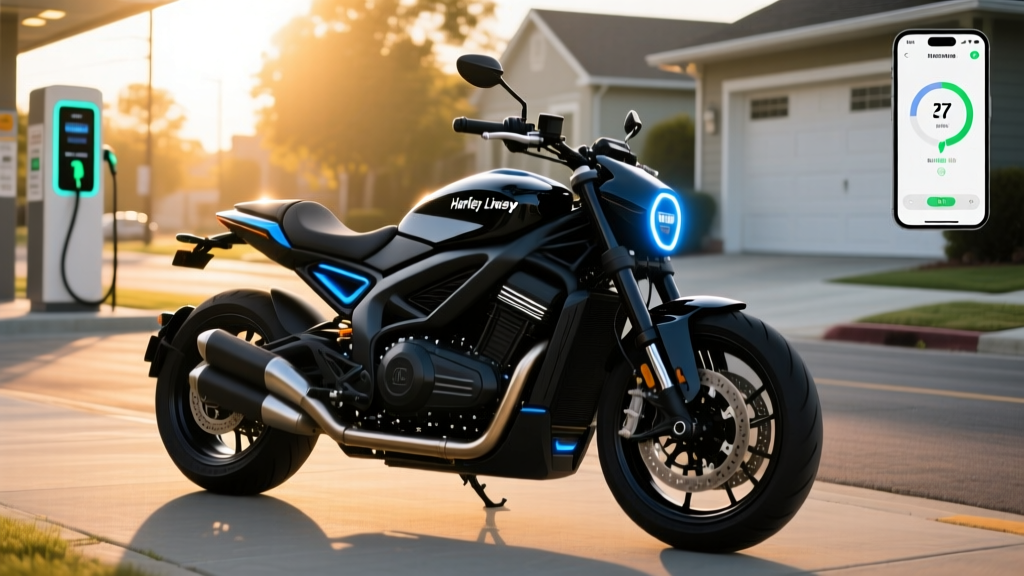
Harley-Davidson's electric motorcycle lineup now lives under its LiveWire brand. As of the 2026 model year, the core offerings are the LiveWire ONE (premium sport-naked, ~146-mile city range, $21,999 MSRP) and the LiveWire S2 Del Mar (flat-track-inspired midweight, ~100-mile combined range, ~$15,499 MSRP). These are high-torque, zero-emission machines that cost substantially less to "fuel" and maintain than their gas counterparts — but they carry a steep upfront premium and limited fast-charging infrastructure compared to gas stations. If you ride primarily in urban or suburban environments with access to home Level 2 charging, a Harley electric motorcycle can pay for its premium within 3-5 years. If you tour long-distance or lack reliable charging access, a gas Harley remains the more practical choice.
Harley's Electric Lineup: What You Can Actually Buy
Harley-Davidson spun off its electric motorcycle division as LiveWire in 2021, and the brand has since expanded to a dedicated dealer network and independent product roadmap. For 2026, two primary models are available to US buyers:
| Spec | LiveWire ONE | LiveWire S2 Del Mar |
|---|---|---|
| MSRP (base) | $21,999 | $15,499 |
| Battery (usable) | 15.4 kWh (NMC lithium-ion) | 10.5 kWh (NMC lithium-ion) |
| City Range | 146 miles | ~113 miles |
| Combined Range (70 mph) | 95 miles | ~76 miles |
| Peak Power | 105 HP (78 kW) | 84 HP (63 kW) |
| Torque | 86 lb-ft | 194 lb-ft (rear wheel) |
| 0-60 mph | 3.0 seconds | 3.5 seconds |
| DC Fast Charge (10-80%) | ~28 min (peak 28 kW) | ~31 min (peak 22 kW) |
| Level 2 Charge (0-100%) | ~1 hour | ~1.2 hours |
| Level 1 (120V) Charge | ~9 hours | ~7 hours |
| Weight (curb) | 470 lbs | 418 lbs |
| Battery Warranty | 5 years / unlimited miles | 5 years / unlimited miles |
Key distinction: Electric motorcycles, like EVs, distinguish between kW (power — how fast energy flows during charging or to the motor) and kWh (energy — total battery capacity, like a fuel tank measured in gallons). The LiveWire ONE's 15.4 kWh battery is modest by car standards but substantial for a motorcycle.
Range Reality: Sticker vs. the Open Road
EPA City Range: LiveWire ONE — 146 mi | S2 Del Mar — 113 mi
Real-World Highway (70 mph sustained): LiveWire ONE — ~95 mi | S2 Del Mar — ~76 mi
Cold-Weather Adjustment (below 40°F): Subtract 15-25% from combined figures. NMC batteries lose efficiency in cold temps, and cabin/motor heating draws additional power.
Motorcycle aerodynamics matter enormously at speed. Unlike cars with their enclosed, wind-tunnel-optimized shapes, a rider on an upright motorcycle creates a large, turbulent drag profile. At 70 mph, the LiveWire ONE's range drops to roughly 65% of its city rating. This is physics, not a defect — it mirrors the efficiency loss any gas motorcycle experiences at highway speed, but it's more visible because the "tank" is smaller.
For urban commuters averaging 30-45 mph with frequent regenerative braking opportunities, the 146-mile city rating on the ONE is achievable. For weekend canyon carving or highway stretches between towns, plan conservatively around 80-90 usable miles on the ONE and 60-70 on the Del Mar before you need to find a charger.
Charging: Where and How Fast
LiveWire models use the CCS1 connector for DC fast charging — the same standard used by most non-Tesla EVs. This means you can use Electrify America, EVgo, and other major networks, though not all DC stations are well-suited for motorcycles (tight access lanes, heavy cables, car-centric layouts).
| Charging Level | Power (kW) | LiveWire ONE Time | Miles Added/Hour |
|---|---|---|---|
| Level 1 (120V household) | ~1.3 kW | ~9 hours (0-100%) | ~16 mi/hr |
| Level 2 (240V home/public) | ~6.6 kW | ~1 hour (0-100%) | ~146 mi/hr |
| DC Fast Charge (CCS) | Peak 28 kW | ~28 min (10-80%) | Varies by SoC |
Home charging is the backbone of electric motorcycle ownership. A standard 120V outlet will fully recharge the ONE overnight — workable for commuters with short daily rides. A 240V Level 2 setup (the same circuit an EV or electric dryer uses) slashes that to roughly one hour. Most riders plug in when they get home and start every morning at 100%.
DC fast charging caveat: The LiveWire ONE's peak 28 kW charge rate is modest compared to electric cars (which commonly hit 150-350 kW). The charge curve tapers significantly above 80% state of charge, so the published 10-80% time of ~28 minutes is realistic, but pushing from 80-100% on DC will add another 20+ minutes. On a road trip, plan 30-minute stops every 60-80 miles of highway riding.
Cost Breakdown: LiveWire vs. Gas Harley
The sticker shock is real — but so are the ongoing savings. Here's a 5-year ownership comparison between the LiveWire ONE and a comparable gas Harley-Davidson Sportster S (MSRP ~$14,499):
| Cost Category (5-Year) | LiveWire ONE | H-D Sportster S (Gas) |
|---|---|---|
| Purchase Price (MSRP) | $21,999 | $14,499 |
| Federal Tax Credit (§30D)* | $0 (motorcycles excluded) | $0 |
| Fuel/Energy (12,000 mi/yr avg) | ~$1,260 ($0.021/mi)** | ~$5,400 ($0.09/mi)*** |
| Maintenance (oil, filters, plugs, valves) | ~$400 | ~$2,800 |
| Tires (comparable wear) | ~$1,200 | ~$1,200 |
| Insurance (avg, varies by rider/state) | ~$3,600 | ~$3,000 |
| Total 5-Year Cost | ~$28,459 | ~$26,899 |
*The federal §30D clean vehicle credit applies to four-wheeled vehicles only — electric motorcycles are not eligible. Some states and utilities offer separate EV motorcycle rebates (California's CVRP, for example, has offered up to $1,500 for electric motorcycles). Check your state energy office for current programs.
**Based on $0.15/kWh national average residential electricity and ~3 mi/kWh efficiency.
***Based on $4.00/gallon premium fuel and ~50 MPG combined.
Common Misconceptions About Harley Electric Motorcycles
| Myth | Fact |
|---|---|
| "You get the $7,500 federal tax credit." | §30D applies only to four-wheeled vehicles. Electric motorcycles qualify for a separate, smaller credit (up to $2,500 under §30D for two/three-wheelers if reauthorized — check IRS.gov for current-year status). |
| "The battery will die in a few years." | LiveWire warranties the battery for 5 years/unlimited miles with a minimum 80% capacity retention threshold. NMC cells in a thermally managed pack typically degrade 1-2% per year under normal use. |
| "It has no power compared to a gas Harley." | The LiveWire ONE produces 86 lb-ft of torque available at 0 RPM — it out-accelerates most gas Harleys to 60 mph (3.0 sec vs. ~3.5 sec for the Sportster S). |
| "You can't ride it in the rain." | LiveWire models are IP-rated for weather exposure and are engineered for all-weather riding, same as any modern motorcycle. |
| "Charging takes all day." | Level 2 home charging fills the ONE in ~1 hour. Overnight Level 1 is sufficient for most daily commutes. |
Real-World Ownership: Who This Works For
Electric motorcycle ownership succeeds or fails based on your riding pattern and charging access — not the bike itself. Here's what to honestly assess:
Home charging access is non-negotiable for most riders. Unlike electric cars, which have a growing network of workplace and destination chargers, electric motorcycles rely heavily on home charging. If you have a garage or dedicated parking spot with a 120V or 240V outlet, you're set. If you park on the street or in a building without EV infrastructure, daily electric motorcycle ownership becomes logistically difficult.
Climate matters. Riders in Southern California, Texas, or Florida will see range figures close to EPA ratings year-round. Riders in the Northeast, Midwest, or Mountain West will lose 15-25% of range in winter months. Cold also slows DC fast charging because the battery needs to warm before accepting peak power — plan for 35-40 minute stops instead of 28 in freezing conditions.
Riding pattern determines viability. Urban commuters doing 20-40 miles per day with stop-and-go traffic (where regenerative braking recaptures energy) are the ideal LiveWire owners. Weekend warriors riding 150-mile loops through the mountains will find the ONE adequate with one charging stop, while the Del Mar may require two. Multi-day touring riders covering 300+ miles daily should stick with gas — the DC fast-charging network is not yet built for motorcycle touring cadence.
Decision Framework: Should You Buy a Harley Electric?
Choose the LiveWire ONE if:
- Your daily ride is under 60 miles (round trip), mostly urban or suburban
- You have home charging (garage outlet or Level 2 installation)
- You value instant torque and silent acceleration over exhaust rumble
- You want minimal maintenance — no oil changes, no valve adjustments, no clutch
- You ride in a state with electricity rates below $0.18/kWh (most of the US)
Choose the LiveWire S2 Del Mar if:
- You want the LiveWire experience at a lower price point (~$15,500 vs. ~$22,000)
- Your rides are primarily under 50 miles
- You prefer a lighter, more agile bike (418 lbs vs. 470 lbs)
- Flat-track styling appeals to you over the ONE's sport-naked aesthetic
Stick with a Gas Harley-Davidson if:
- You regularly ride 150+ miles in a single day
- You lack reliable home charging access
- You ride primarily in cold climates (below 30°F for extended seasons)
- The sound, feel, and culture of a V-twin are central to why you ride
- Your budget is under $15,000 and you want a new bike
What First-Time Electric Motorcycle Buyers Must Know
If you're coming from a gas motorcycle — or a gas car — here are the ownership realities that catch new EV riders off guard:
1. Regenerative braking changes how you ride. The LiveWire offers adjustable regen levels. At maximum, lifting the throttle slows the bike significantly without touching the brake lever — similar to one-pedal driving in an electric car. This is excellent in city traffic but takes a week or two to internalize. Most riders end up preferring high regen after the adjustment period.
2. No clutch, no gears, no engine braking as you know it. Electric motorcycles are single-speed direct drive. There's no shifting, no clutch lever, and no engine compression braking. The deceleration feel comes entirely from regen and friction brakes. New riders find this liberating; veteran riders sometimes miss the mechanical engagement.
3. Insurance can be higher. Electric motorcycles often carry insurance premiums 10-20% above comparable gas models, reflecting higher repair costs and the specialized nature of battery work. Get a quote from your provider before purchasing — don't assume it matches a Sportster S.
4. Tire wear is similar, not worse. Despite the instant torque, motorcycle tires wear at comparable rates to gas bikes because the overall weight is similar or lighter. Budget $200-300 per tire replacement, typically every 5,000-8,000 miles depending on riding style.
5. Battery replacement is expensive but unlikely. Out of warranty, a replacement battery pack for the LiveWire ONE runs approximately $8,000-$10,000. However, with the 5-year/unlimited-mile warranty and typical NMC degradation curves showing 80%+ capacity after 100,000+ miles, most original owners will never face this cost. See fueleconomy.gov for EPA efficiency data across electric vehicles.
FAQ: Harley Electric Motorcycles
Is LiveWire still owned by Harley-Davidson?
LiveWire was established as a separate brand by Harley-Davidson in 2021. Harley-Davidson remains the majority shareholder and primary investor, but LiveWire operates with its own branding, dealer network, and product roadmap. Think of it as Harley's electric sub-brand — the engineering DNA is Harley, but the badge and experience are distinct.
Can I charge a LiveWire at a Tesla Supercharger?
No. LiveWire models use the CCS1 connector for DC fast charging. Tesla Superchargers use the NACS (North American Charging Standard) connector, which is physically incompatible. You'll use Electrify America, EVgo, ChargePoint, and other CCS-equipped networks. For Level 2 AC charging, LiveWire uses the standard J1772 connector common to all non-Tesla EVs.
How long does the LiveWire battery last before replacement?
LiveWire warranties the high-voltage battery for 5 years with unlimited miles, guaranteeing a minimum of 80% capacity retention. Based on NMC lithium-ion degradation data from the broader EV industry, these packs typically retain 85-90% capacity after 50,000 miles and 80%+ after 100,000 miles under normal use. Avoid routinely storing the bike at 100% or 0% state of charge for extended periods to maximize longevity.
How does the LiveWire compare to other electric motorcycles?
The LiveWire ONE competes with the Zero SR/S (~$23,000, ~164-mile city range) and the Energica Ego+ (~$25,000+, ~200+ mile range). The LiveWire's advantage is Harley-Davidson's dealer and service network, which is substantially larger than Zero's or Energica's. The S2 Del Mar competes more directly with the Zero S and FXE in the midweight segment, offering competitive range at a slightly lower price point.
Are there any tax incentives for buying an electric motorcycle?
The federal §30D clean vehicle credit does not apply to two-wheeled motorcycles. There was previously a separate federal credit for electric motorcycles (up to $2,500), but it expired and has not been consistently reauthorized — check IRS.gov for current-year eligibility. Several states offer their own incentives: California's Clean Vehicle Rebate Project has historically offered rebates for electric motorcycles, and some utilities offer discounted electricity rates for EV charging. Contact your state energy office and local utility for specifics in your area.
Is it safe to ride an electric motorcycle in the rain?
Yes. LiveWire motorcycles are designed and tested for all-weather operation, including rain, puddles, and wet roads. The battery pack and electrical systems are sealed to IP (Ingress Protection) ratings that prevent water intrusion. The same precautions that apply to any motorcycle in wet conditions — reduced lean angles, longer braking distances, gentle throttle inputs — apply equally to the LiveWire. The low center of gravity (battery mounted low in the frame) actually provides stable handling in adverse conditions.