Quick Answer: Is There an Electric Harley-Davidson?
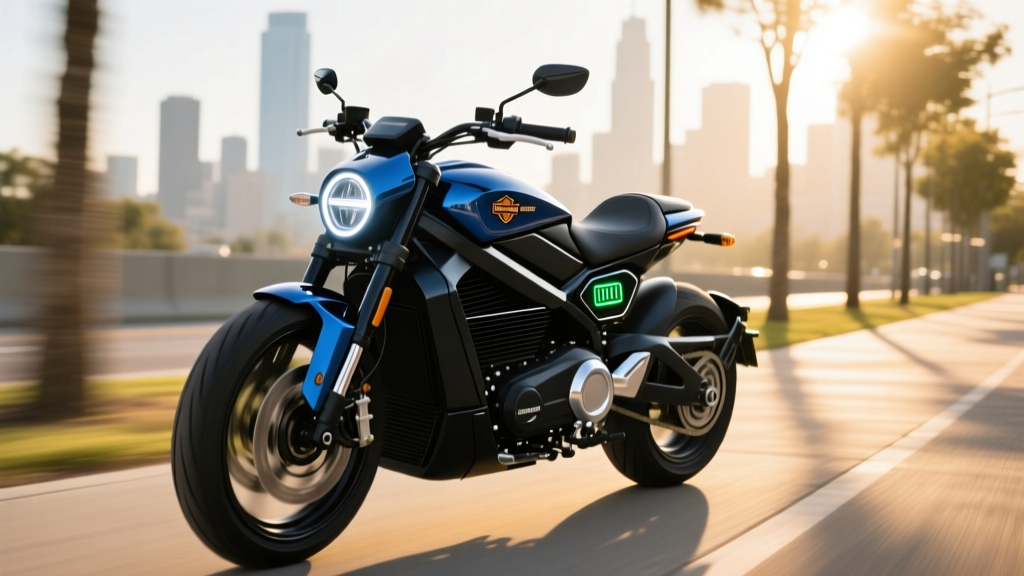
Harley-Davidson's electric motorcycle brand is LiveWire, spun off as a separate marque in 2021 but still owned by Harley-Davidson. As of the 2026 model year, the lineup includes the LiveWire ONE (streetfighter, ~$21,998 MSRP), the S2 Del Mar (urban commuter, ~$14,999), and the S2 Alpinista (adventure-touring, ~$16,499). EPA range varies from roughly 59 to 146 city miles depending on model, with real-world highway range significantly lower. These are premium-priced electric motorcycles aimed at riders who want instant torque, low maintenance, and urban-friendly performance — not long-distance touring replacements for a Road Glide.
The LiveWire Lineup: Models, Specs, and Pricing
Harley-Davidson launched the original LiveWire in 2019 at a steep $29,799. The brand has since restructured into the standalone LiveWire marque with more accessible models built on the modular Arrow platform. Here's where the 2026 lineup stands on paper:
| Spec | LiveWire ONE | S2 Del Mar | S2 Alpinista |
|---|---|---|---|
| Base MSRP | $21,998 | $14,999 | $16,499 |
| Battery (usable) | 15.4 kWh | 10.5 kWh | 10.5 kWh |
| Motor Output | 105 hp / 86 lb-ft | 84 hp / 62 lb-ft | 84 hp / 62 lb-ft |
| EPA City Range | 146 mi | 113 mi | 113 mi |
| EPA Highway Range | 70 mi | 59 mi (est.) | 59 mi (est.) |
| EPA Combined Range | 95 mi | ~80 mi | ~80 mi |
| 0–60 mph | 3.0 sec | 3.5 sec | 3.5 sec |
| DC Fast Charge (10–80%) | ~40 min (peak ~50 kW) | ~35 min (peak ~35 kW) | ~35 min (peak ~35 kW) |
| Level 2 Charge (0–100%) | ~2.5 hours | ~1.75 hours | ~1.75 hours |
| Weight (curb) | 470 lbs | 431 lbs | 447 lbs |
| Warranty (battery) | 5 years / unlimited miles | 5 years / unlimited miles | 5 years / unlimited miles |
Real-world range caveat: EPA motorcycle range testing heavily favors stop-and-go city riding where regenerative braking recaptures energy. On sustained highway runs at 70 mph, expect the LiveWire ONE to deliver roughly 65–75 miles before you're searching for a charger, and the S2 models closer to 50–60 miles. Cold weather (below 40°F) can reduce range an additional 15–25%. These are commuter and canyon-carving machines, not cross-country tourers.
Electric Harley vs. Gas Cruiser: Cost and Performance Comparison
The most common question: how does a LiveWire stack up against a traditional Harley-Davidson gas motorcycle in cost and riding experience? We compared the LiveWire ONE against the Harley-Davidson Nightster (a similarly positioned gas Sportster) over a 5-year ownership horizon.
| Factor | LiveWire ONE (Electric) | HD Nightster (Gas) |
|---|---|---|
| Base MSRP | $21,998 | $13,499 |
| Fuel/Energy Cost (10,000 mi/yr) | ~$120/yr (at $0.15/kWh) | ~$510/yr (at $3.50/gal, 49 MPG) |
| 5-Year Fuel/Energy Total | $600 | $2,550 |
| Maintenance (5-yr est.) | ~$200 (tires, brake fluid, cabin filter) | ~$1,800 (oil, filters, chain/belt, valves) |
| Insurance (avg. annual) | ~$450–$600 | ~$350–$500 |
| 5-Year Total Cost of Ownership | ~$25,000–$26,500 | ~$20,000–$21,500 |
| 0–60 mph | 3.0 sec | ~5.5 sec |
| Range per "Tank" | 65–95 mi (real-world) | ~140 mi |
| Refuel/Recharge Time | 40 min (DC fast) / 2.5 hr (L2) | ~3 min |
The verdict on cost: The LiveWire ONE commands an $8,500 premium at purchase. Over five years, you'll save roughly $3,550 in fuel and maintenance combined. That still leaves a ~$5,000 net cost gap that electric riding doesn't close — you're paying for instant torque, near-silent operation, and dramatically reduced maintenance, not financial savings. If you're coming from a Harley Iron 883 or Nightster strictly for economics, the math doesn't pencil out. If you want a premium, low-maintenance urban performance motorcycle with a tech-forward identity, the value proposition shifts.
Charging the LiveWire: What You Actually Need at Home
Every LiveWire model ships with a Level 1 (120V) charging cord that plugs into a standard household outlet. Here's the reality of charging speeds across levels:
| Level | Power (kW) | Miles Added/Hour | Full Charge Time (LiveWire ONE) |
|---|---|---|---|
| Level 1 (120V outlet) | ~1.3 kW | ~8–10 mi/hr | ~14 hours |
| Level 2 (240V, J1772) | ~6.6 kW | ~40–50 mi/hr | ~2.5 hours |
| DC Fast (CCS) | Peak ~50 kW | ~100+ mi/hr | 10–80% in ~40 min |
kW vs kWh reminder: kW (kilowatts) measures charging power — how fast energy flows in. kWh (kilowatt-hours) measures battery capacity — how much energy the battery holds. The LiveWire ONE's 15.4 kWh battery charged at 6.6 kW takes roughly 2.3 hours mathematically, or ~2.5 hours accounting for taper.
Home charging reality: If you ride 40 miles daily and have access to a standard 120V outlet in your garage, Level 1 charging overnight (~14 hours) will replenish a depleted battery. For riders covering 60+ miles daily or wanting faster turnaround, a Level 2 (240V) home station is strongly recommended. Installation typically costs $800–$2,000 including a licensed electrician, depending on whether your electrical panel needs an upgrade. LiveWire uses the J1772 connector for Level 2 and CCS for DC fast charging — the same standards used by most non-Tesla electric cars, so public charging infrastructure is accessible, though public DC chargers optimized for cars may have cable-routing challenges for motorcycles.
Public charging for motorcycles — the honest limitations: Most DC fast-charging stations are designed for four-wheeled vehicles. Parking a motorcycle in a charging stall can feel exposed, and some station layouts don't accommodate two-wheelers safely. Plan highway rides around Level 2 destination chargers (hotels, restaurants) where you'll be parked for 1–2 hours anyway, rather than relying on DC fast stops.
Tax Credits and Incentives: Does the LiveWire Qualify?
Here's where the news is mixed for 2026 buyers. The federal §30D Clean Vehicle Credit applies to four-wheeled vehicles — motorcycles are excluded from this credit. The LiveWire does not qualify for the $7,500 federal EV tax credit that applies to electric cars and trucks.
What incentives CAN apply to electric motorcycles:
- State/local rebates: Some states (California's CVRP, for example) have offered rebates for zero-emission motorcycles, though program availability and funding vary by year. Check your state's energy office or AFDC incentive database for current programs.
- Utility company rebates: Many electric utilities offer $200–$500 rebates for EV/motorcycle charging equipment installation.
- Employer commuter benefits: Some workplace programs include electric motorcycle incentives.
- Federal alternative fuel vehicle refueling property credit (§30C): You may qualify for up to $1,000 (30% of cost) for installing a home Level 2 charger, subject to income and census-tract eligibility per IRS guidelines.
Always verify current incentive eligibility with your tax professional — rules change annually and have income, location, and sourcing requirements.
Common Misconceptions About Electric Harleys
| Myth | Fact |
|---|---|
| "Electric Harleys have no soul — no sound, no vibration" | The LiveWire produces a distinctive turbine-like whine under acceleration that many riders find engaging. Harley engineered the sound profile deliberately. It's different, not absent. |
| "The battery will need replacing in a few years" | LiveWire batteries carry a 5-year, unlimited-mile warranty. Lithium-ion motorcycle batteries typically retain 80%+ capacity after 100,000+ miles based on cell chemistry data. Degradation is gradual, not cliff-like. |
| "You can't ride one in the rain" | All LiveWire models are fully weather-sealed with IP ratings for water resistance. They're designed for all-weather riding, same as any modern motorcycle. |
| "There's nowhere to charge on the road" | The CCS connector gives access to Electrify America, EVgo, and other major networks. The real limitation is range, not charger availability — plan rides within the ~60–80 real-world highway mile radius. |
| "It's just a Harley with a battery bolted on" | LiveWire is a separate brand with a dedicated electric platform (Revelation powertrain for ONE, Arrow platform for S2). The engineering is purpose-built, not a conversion. |
Real-World Ownership: Who Should Buy an Electric Harley-Davidson?
After analyzing specs, costs, and rider use patterns, here's a practical decision framework:
Choose a LiveWire if:
- Your daily riding is under 60 miles round-trip (urban commute, canyon runs, errands)
- You have garage or covered parking with an electrical outlet for overnight charging
- You value instant torque (0–60 in 3.0 seconds on the ONE) and smooth, clutchless riding
- You want minimal maintenance — no oil changes, no valve adjustments, no chain lubrication, significantly less brake wear thanks to regenerative braking
- You're drawn to the tech-forward identity and don't need the traditional V-twin rumble
- You live in a mild climate or accept 15–25% range reduction in cold weather
Stick with a gas Harley (or skip) if:
- You regularly ride 100+ miles between stops or take multi-day touring trips
- You have no home charging access and rely on street parking
- The $8,000–$10,000 purchase premium over a comparable gas Sportster/Nightster is a dealbreaker
- The sound, vibration, and mechanical character of a V-twin engine are central to why you ride
- You live in an area with limited public charging infrastructure and no realistic path to home charging
First-Time Electric Motorcycle Buyer Checklist
If you're considering a LiveWire as your first electric motorcycle — or first motorcycle period — these are the items to nail down before signing:
- Confirm your charging situation. Do you have a garage, carport, or covered outlet? A 120V outlet works for light daily use; 240V Level 2 is ideal.
- Map your actual rides. Use your phone to track your typical weekly mileage. If 90% of your riding is under 50 miles per outing, range isn't your problem.
- Test ride before buying. The instant torque and regenerative braking feel fundamentally different from a gas motorcycle. Most riders adapt in minutes, but you need to experience it.
- Get insurance quotes first. Electric motorcycles can carry higher premiums due to repair costs and battery replacement values. Shop quotes from providers that specifically cover electric motorcycles (Progressive, Dairyland, and Markel are common carriers).
- Research local incentives. Use the Alternative Fuels Data Center to find state and utility rebates available in your ZIP code.
- Understand the warranty. LiveWire's 5-year/unlimited-mile battery warranty is strong. Confirm what's covered (capacity degradation threshold) and what voids it.
Frequently Asked Questions
Does Harley-Davidson still make the LiveWire?
Yes, but under the separate LiveWire brand, which Harley-Davidson spun off in 2021. Harley retains ownership, and LiveWire motorcycles are sold through select Harley-Davidson dealerships as well as dedicated LiveWire retailers. The 2026 lineup includes the LiveWire ONE, S2 Del Mar, and S2 Alpinista.
How far can an electric Harley-Davidson really go on a charge?
The EPA combined range for the LiveWire ONE is 95 miles, and roughly 80 miles for the S2 models. Real-world highway riding at sustained speeds drops this to 65–75 miles (ONE) and 50–60 miles (S2). Cold weather further reduces range by 15–25%. These figures make LiveWire models excellent commuters and day-ride machines but impractical for long-distance touring without meticulous charging-route planning.
How long does it take to charge a LiveWire?
On a standard 120V household outlet (Level 1), a full charge takes roughly 14 hours for the LiveWire ONE. A 240V Level 2 home charger cuts that to about 2.5 hours. DC fast charging (CCS connector) reaches 80% in approximately 40 minutes at peak rates around 50 kW. Note that charging slows significantly above 80% state of charge to protect battery health — this is called the charge curve taper and applies to all lithium-ion batteries.
Is an electric Harley-Davidson cheaper to own than a gas Harley?
On a pure cost basis over 5 years, no. The LiveWire ONE costs roughly $8,500 more upfront than a gas Nightster, and you'll save approximately $3,550 in fuel and maintenance over five years — leaving a net premium of about $5,000. The value proposition is performance (3.0-second 0–60), near-zero maintenance, and a unique riding experience, not total cost savings.
Can I get a federal tax credit for buying a LiveWire?
No. The federal §30D Clean Vehicle Credit applies to four-wheeled vehicles only — motorcycles are excluded. However, you may qualify for the §30C Alternative Fuel Vehicle Refueling Property Credit (up to $1,000) for installing a home charger, and some states and utilities offer separate electric motorcycle rebates. Consult a tax professional for your specific situation and check current IRS guidance.
How long will the LiveWire battery last?
LiveWire provides a 5-year, unlimited-mile battery warranty. Based on lithium-ion cell degradation data, you can expect the battery to retain roughly 80% or more of its original capacity well past 100,000 miles under normal use patterns. Factors that accelerate degradation include frequent DC fast charging, consistently storing the battery at 100% or 0% state of charge, and extreme heat exposure. Best practice: charge to 80% for daily use, use DC fast charging sparingly, and store in moderate temperatures when possible.