Why 'Hacking a Tesla' Is the Wrong Question (And the Right One)
Search engines are full of articles about hacking a Tesla in the sense of jailbreaking firmware, spoofing key fobs, or unlocking paid-locked features like heated rear seats or acceleration boosts. We're not going to help you violate Tesla's Terms of Service, void your warranty, or compromise your vehicle's security — those stunts routinely brick MCUs and flag VINs in Tesla's service system.
The hack worth pursuing in 2026 is different: extracting the maximum real-world value from a Tesla Model 3 Highland through disciplined charging strategy, preconditioning discipline, tire and aero choices, and a clear-eyed read of what the EPA sticker actually means on a cold highway. That's the version of hacking a Tesla this guide covers — and it's the one that saves owners thousands over five years.
Below is a complete profile of the 2026 Tesla Model 3 lineup (Long Range AWD, Rear-Wheel Drive, and Performance), with the data points that matter when you're deciding whether to buy one and how to run it efficiently.
Model 3 Highland at a Glance: 2026 Specs
| Spec | Long Range AWD | Rear-Wheel Drive | Performance |
|---|---|---|---|
| EPA Range | 341 mi | 272 mi | 315 mi |
| Battery (usable) | ~75 kWh, NMC | ~57.5 kWh, LFP | ~75 kWh, NMC |
| Drivetrain | Dual-motor AWD | Single-motor RWD | Dual-motor AWD |
| Horsepower | ~346 hp | ~271 hp | ~510 hp |
| 0–60 mph | 4.2 sec | 5.8 sec | 2.9 sec |
| Peak DC Fast Charge | 250 kW | 170 kW | 250 kW |
| 10–80% DCFC Time | ~25 min | ~30 min | ~25 min |
| Level 2 (11.5 kW) | ~44 mi/hr | ~33 mi/hr | ~44 mi/hr |
| MPGe (combined) | 131 MPGe | 132 MPGe | 119 MPGe |
| Efficiency | 26 kWh/100 mi | 25 kWh/100 mi | 28 kWh/100 mi |
| Base MSRP | $47,740 | $38,990 | $52,990 |
| Battery Warranty | 8 yr / 120,000 mi | 8 yr / 100,000 mi | 8 yr / 120,000 mi |
Source: fueleconomy.gov and Tesla's 2026 order configurator. Prices exclude destination.
Real-World Range: What the EPA Sticker Doesn't Tell You
EPA sticker: 341 miles. Expect in practice:
- City / moderate climate: 320–340 mi (regen-friendly, low aero load)
- 70-mph highway, 68°F: ~280–300 mi
- 70-mph highway, 30°F with heat on: ~230–260 mi
- Mountain pass or sustained 80+ mph: ~240–270 mi
The Model 3 Highland's improved aero (0.219 Cd) and heat pump help, but physics still wins at highway speed in cold weather.
The Long Range AWD's 75 kWh NMC pack delivers strong highway numbers by EV standards, but the RWD's smaller LFP pack (57.5 kWh usable) shows its limits outside the city. If your commute is 60+ miles round-trip with a highway component, the RWD becomes a daily-charge vehicle in winter. The LFP chemistry, however, rewards that pattern — it tolerates regular 100% SoC holds better than NMC, so daily full charges are fine for the RWD.
For the Performance trim, expect a 10–15% range penalty versus the Long Range in equivalent driving, mostly from the wider 235/40R19 rear tires, stickier compound, and more aggressive drive calibration.
Charging the Model 3: Speeds, Curves, and the 80% Taper
| Level | Power | Miles Added Per Hour | Notes |
|---|---|---|---|
| Level 1 (120V, 12A) | ~1.4 kW | ~4–5 mi/hr | Emergency/trickle only |
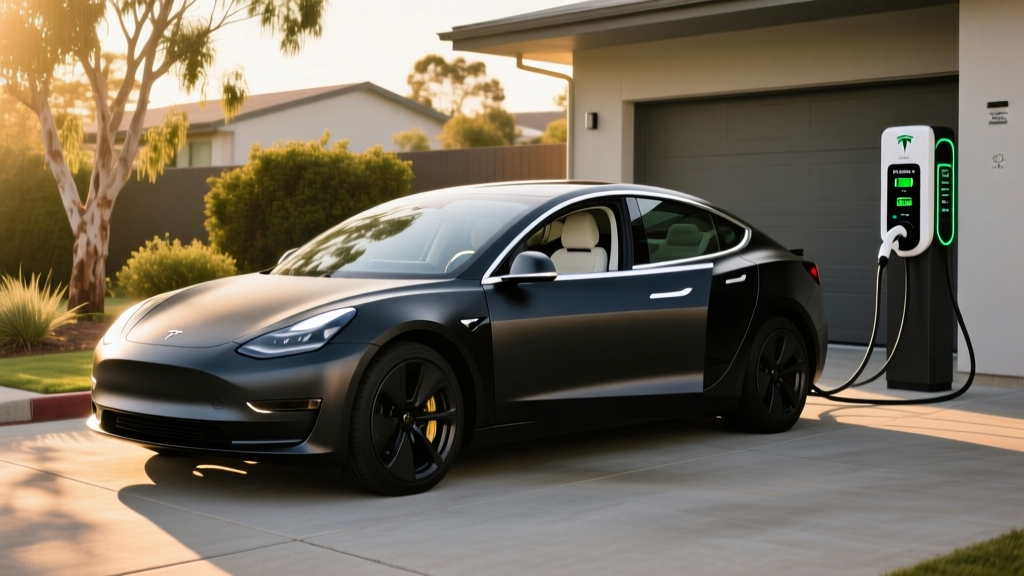
| Level 2 (240V, 48A) | 11.5 kW | ~33–44 mi/hr | Home Wall Connector; full overnight charge |
| DC Fast (RWD) | Peak 170 kW | — | 10–80% in ~30 min; tapers above 60% |
| DC Fast (LR / Perf) | Peak 250 kW | — | 10–80% in ~25 min; sharp taper above 80% |
| Tesla Supercharger V4 | Up to 250 kW (cabinet-shared) | — | Model 3 Highland can't exceed 250 kW on-board |
Peak kW numbers are not sustained averages. On a 250 kW Supercharger, a preconditioned Long Range Model 3 will hit ~240–250 kW between 10–30% SoC, settle to ~170 kW through 50%, then drop to ~90 kW near 70% and ~45 kW by 85%. That's why 10–80% takes ~25 minutes but 10–100% takes nearly 50. Plan road trips around 80% stops — pushing to 95% is rarely worth the time.
Preconditioning is non-negotiable for fast charging. Navigate to the Supercharger in the car's nav (even if you're just pretending) and the battery heater will bring the pack to optimal temperature. Skip this step on a cold morning and your first 10 minutes at the stall may cap at 50–70 kW.
Performance and Drivetrain: Which Model 3 Fits Your Driving
The RWD's 5.8-second 0–60 time is plenty quick for merging and passing; its single rear motor makes it the lightest, most efficient variant at ~3,862 lbs curb weight. It's also the cheapest to insure in most states.
The Long Range AWD adds a front induction motor for all-weather traction and a 4.2-second 0–60. The dual-motor setup is the sweet spot for snow-belt buyers who don't want to pay the Performance premium.
The Performance trim's 2.9-second 0–60 is supercar territory, with track mode, adaptive dampers, and larger brakes. It's a legitimate sports sedan that happens to be electric — but you pay for it in efficiency, tire cost, and insurance.
All three trims use Tesla's latest HW4 Autopilot hardware. Remember: Autopilot and FSD (Supervised) are SAE Level 2 driver-assist systems. You must keep hands on the wheel and eyes on the road. They are not self-driving. Tesla's marketing language has been the subject of regulatory scrutiny in California and elsewhere; treat the features as sophisticated cruise control with lane centering, not autonomy.
Interior, Cargo, and the Highland Refit
The 2024-onward Highland refresh brought genuine improvements: ventilated front seats, ambient lighting, rear 8-inch touchscreen, acoustic glass all around, and a substantially quieter cabin at highway speed. Build quality is the best Tesla has produced, closing the panel-gap complaints that dogged pre-2023 cars.
Space figures:
- Front legroom: 42.2 in
- Rear legroom: 35.3 in (adequate for adults on short trips, tight for 6-footers)
- Cargo (rear trunk + frunk): 23 cu ft total
- Rear seats fold 60/40 for longer cargo
Notable drawbacks: the turn-signal buttons on the steering wheel (replacing the stalk) remain controversial and take real adaptation. No Apple CarPlay or Android Auto — everything routes through Tesla's native UI. Rear visibility is compromised by the sloped glass; rely on the backup camera.
Pricing, Tax Credits, and the Real Cost to Buy
| Trim | Base MSRP | Destination | §30D Credit Eligibility | Effective Price If Qualified |
|---|---|---|---|---|
| RWD (LFP) | $38,990 | $1,390 | Up to $3,750 (partial — sourcing rules) | ~$36,630 |
| Long Range AWD | $47,740 | $1,390 | Up to $7,500 if sourcing thresholds met | ~$41,630 |
| Performance | $52,990 | $1,390 | Up to $7,500 if sourcing thresholds met | ~$46,880 |
The federal §30D EV credit is not a flat $7,500 for everyone. Per IRS rules for 2026, eligibility depends on:
- Buyer income caps: AGI ≤ $150k single / $225k HOH / $300k joint
- MSRP cap: $55,000 for sedans (all Model 3 trims qualify)
- Battery sourcing: $3,750 tied to critical-minerals sourcing, $3,750 to battery-component manufacturing. Both thresholds tighten annually; the RWD's CATL-sourced LFP pack has historically missed the component test, limiting it to the $3,750 half-credit
- Point-of-sale transfer: You can apply the credit at purchase to reduce the transaction price, rather than waiting until tax filing
Consult a tax professional for your specific situation. State incentives (California's CVRP, Colorado's $5,000 credit, etc.) stack on top and vary by jurisdiction — check your state's energy office.
Pros, Cons, and Who Should Buy
- Class-leading Supercharger network access (NACS native, no adapter drama)
- Excellent efficiency — 25–28 kWh/100 mi beats most rivals
- Highland cabin is materially quieter and better-built
- OTA updates continue to add features years after purchase
- Strong resale relative to most EVs (though softened since 2023)
- Turn-signal buttons on wheel are a genuine ergonomic regression
- No CarPlay / Android Auto — Tesla-only ecosystem
- RWD's 272-mi EPA range is tight for road-trippers
- Insurance premiums run 15–30% higher than comparable Camry/Accord
- FSD (Supervised) remains Level 2 despite the name and price
Best for: Tech-forward commuters with home Level 2 charging, solo drivers or couples (rear seat is secondary), and buyers who value the Supercharger network for road trips. The Long Range AWD is the default recommendation for most buyers; the RWD wins for budget-conscious city commuters in mild climates.
Skip it if: You regularly haul adults in back (look at the Model Y or Ioniq 5), you need CarPlay, you lack home charging access and rely entirely on public infrastructure, or you want a Level 4 robotaxi experience (this is a driver's car, not a Waymo).
FAQ: Hacking a Tesla Model 3 for Real Ownership Wins
What is the real-world range of the 2026 Model 3?
The Long Range AWD posts 341 mi EPA, but expect ~280–300 mi on a 70-mph highway day and ~230–260 mi in freezing weather. The RWD's 272 mi EPA translates to ~220 mi highway in cold conditions. Plan conservatively.
How fast does the Model 3 charge at home and on the road?
At home on a 48A Wall Connector (11.5 kW), the Long Range adds ~44 miles of range per hour — enough to fully refill overnight. On a 250 kW Supercharger, 10–80% takes about 25 minutes, but the curve tapers sharply above 80%.
How much does a Model 3 cost after the federal tax credit?
Between ~$36,630 (RWD with partial $3,750 credit) and ~$46,880 (Performance with full $7,500 credit), assuming you meet IRS income caps and the vehicle's battery-sourcing qualifies in the purchase year. State credits can reduce this further.
Does the Model 3 qualify for the §30D federal EV tax credit?
All trims clear the $55,000 sedan MSRP cap. Income caps apply ($150k/$225k/$300k AGI). The Long Range and Performance typically qualify for the full $7,500 when sourcing thresholds are met; the RWD often qualifies for only $3,750 due to LFP cell sourcing. Verify current-year rules at irs.gov before purchasing.
Is hacking a Tesla (software mods) worth it?
No. Third-party firmware mods risk bricking the MCU, voiding the 8-year battery/powertrain warranty, and getting your VIN flagged in Tesla's service system. The meaningful "hacks" are behavioral: precondition for DCFC, keep highway speed at 70 not 80, use Chill Mode to extend range, and stay at 80% SoC on NMC packs for daily use.
Is the Model 3 worth it versus a Hyundai Ioniq 6 or BMW i4?
The Ioniq 6 offers more rear headroom and CarPlay but a less mature charging network. The i4 is more luxurious but costs ~$15k more and charges slower. For most US buyers prioritizing charging access and efficiency, the Model 3 Long Range AWD remains the default answer — provided you accept the Tesla ecosystem lock-in.
Sources: fueleconomy.gov, IRS §30D guidance, NHTSA, Tesla US order configurator.