The Hacker Tesla Phenomenon: Why Cybertruck Draws Tinkerers and Exploit Hunters
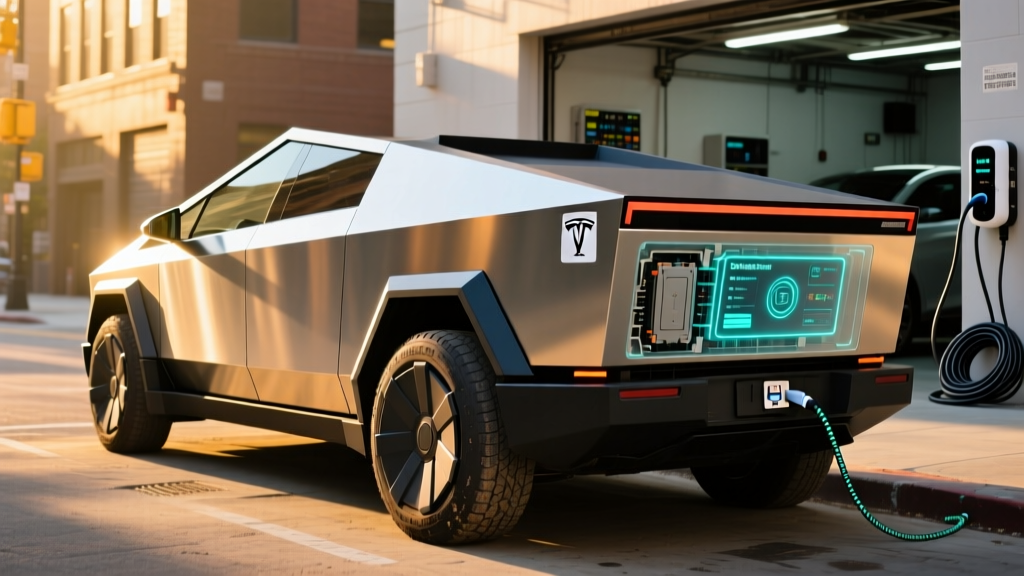
The Tesla Cybertruck has become the most modified, probed, and software-dissected vehicle on the road. A quick search for "hacker Tesla" surfaces everything from owners unlocking hidden battery capacity and jailbreaking infotainment systems to security researchers demonstrating keyless-entry relay attacks. Tesla's software-defined architecture—where over-the-air (OTA) updates control everything from suspension height to thermal management—makes the Cybertruck a rolling computer that invites both creative customization and adversarial scrutiny.
This review covers the 2026 Tesla Cybertruck through the lens that matters to buyers: what the real-world range, charging speeds, pricing, and ownership experience actually look like—alongside an honest assessment of the security and software-modification landscape that has made this truck a magnet for the hacker community.
Cybertruck Specs at a Glance: Range, Battery, and Performance
| Spec | Value |
|---|---|
| EPA Estimated Range | 340 miles (AWD) / 320 miles (Beast trim) |
| Battery Capacity (Usable) | ~123 kWh, NMC (nickel manganese cobalt) |
| Peak DC Fast Charge | 250 kW (V3 Supercharger), ~350 kW capable on V4 |
| 10–80% DC Charge Time | ~30 minutes (250 kW peak) |
| Level 2 Home Charging | 11.5 kW / 48A (~37 miles per hour) |
| 0–60 mph | 3.9 seconds (AWD) / 2.6 seconds (Beast) |
| Horsepower | 600 hp (AWD) / 845 hp (Beast) |
| Drivetrain | Dual-motor AWD |
| MPGe (Combined) | 70 MPGe (AWD) per fueleconomy.gov |
| Efficiency | 48 kWh/100 mi |
| Towing Capacity | 11,000 lbs (AWD/Beast) |
| Cargo Bed Volume | 67 cu ft (bed) + 7 cu ft (frunk) |
| Battery/Drive Unit Warranty | 8 years / 120,000 miles |
Real-World Range: What the EPA Sticker Doesn't Tell You
EPA Sticker: 340 miles (AWD Dual-Motor)
Real-World Expectation:
- City/commute driving (moderate climate): ~310–330 miles — regen braking recovers energy effectively in stop-and-go.
- Highway cruising at 75 mph: ~260–290 miles — the Cybertruck's angular stainless-steel body creates significant aerodynamic drag, and efficiency drops sharply above 70 mph.
- Cold weather (below 32°F): ~220–260 miles — NMC chemistry loses capacity in freezing temperatures, and cabin/battery heating draws substantial energy. Expect 25–35% range loss in sustained sub-freezing conditions.
- Towing (loaded trailer ~7,000 lbs): ~150–180 miles — towing is the ultimate range killer for any EV truck.
The Cybertruck's 48 kWh/100 mi efficiency figure is notably worse than a Model Y (~28 kWh/100 mi). The massive battery compensates, but physics governs the outcome: a 7,000-lb stainless-steel wedge will never match a crossover's efficiency. Buyers planning frequent highway road trips should plan charging stops every 240–260 miles to stay comfortable, and every 150 miles when towing heavy loads.
Charging Speed: DC Fast, Level 2, and the Curve Reality
The Cybertruck uses the NACS (North American Charging Standard) connector natively—no adapter needed for Tesla's Supercharger network, which remains the most reliable DC fast-charging infrastructure in the U.S.
| Charging Level | Power (kW) | Miles Added per Hour | Notes |
|---|---|---|---|
| Level 1 (120V outlet) | 1.4 kW | ~3 mi/hr | Emergency/trickle only; ~95 hours for 10–80% |
| Level 2 (240V, 48A Wall Connector) | 11.5 kW | ~37 mi/hr | Full charge in ~10 hours; ideal for overnight |
| DC Fast (250 kW V3 Supercharger) | 250 kW peak | ~200+ mi in 15 min | Peak rate only below ~40% SoC; tapers significantly above 60% |
| DC Fast (350 kW V4 Supercharger) | Up to ~325 kW sustained | ~220+ mi in 15 min | Available at select V4 stations; Cybertruck can accept higher rates than V3 allows |
Charging curve reality: The published "250 kW peak" figure is not sustained across the full session. In practice, the Cybertruck charges at peak rate only when the battery is preconditioned and below ~40% state of charge. Between 60–80%, the rate drops to roughly 80–120 kW. A typical 10–80% session on a V3 Supercharger takes approximately 30 minutes. Plan road-trip stops accordingly—the last 20% of any DC session is always the slowest.
For home charging, Tesla's Wall Connector at 48 amps (11.5 kW) adds roughly 37 miles of range per hour. Most owners who charge overnight from 20–80% (a recommended daily practice for NMC batteries) will wake up fully topped off. A 240V/60A circuit is required; budget $800–$2,000 for professional installation depending on panel proximity and local permit costs.
Pricing, Trims, and Federal Tax Credit Eligibility
The 2026 Cybertruck lineup has stabilized after initial delivery-year pricing volatility. Here's where the trims land:
| Trim | Base MSRP | Federal Tax Credit (§30D) | Effective Price After Credit |
|---|---|---|---|
| AWD Dual-Motor | $79,990 | Up to $7,500 (if eligible) | ~$72,490 |
| Beast (Tri-Motor) | $99,990 | Up to $7,500 (if eligible) | ~$92,490 |
Tax credit caveats — read carefully: The IRS §30D credit is not automatic. Eligibility for the full $7,500 requires meeting all of the following criteria, which change periodically:
- Buyer income caps: Modified AGI must not exceed $300,000 (joint filers), $225,000 (head of household), or $150,000 (single). Per IRS guidelines.
- MSRP cap: The Cybertruck qualifies as a pickup truck, so the MSRP cap is $80,000. The AWD trim at $79,990 squeaks under; the Beast at $99,990 exceeds the cap and does not qualify for the new-vehicle credit.
- Battery sourcing requirements: The vehicle must meet critical-mineral and battery-component sourcing thresholds that tighten annually. Tesla has worked to qualify U.S.-sourced materials, but verify current-year compliance on the IRS qualified vehicles list before purchasing.
- Point-of-sale transfer: As of 2024+, eligible buyers can transfer the credit to the dealer at purchase, reducing the out-of-pocket cost immediately rather than waiting for tax filing.
The AWD trim is the tax-credit sweet spot. The Beast trim's $99,990 MSRP disqualifies it from the new-vehicle credit entirely. Consult a tax professional for your specific situation—eligibility is individual, not universal.
The Hacker Tesla Landscape: Security, Mods, and What Owners Should Know
The "hacker Tesla" search trend reflects two distinct communities converging on the Cybertruck:
Security Research and Vulnerability Disclosure
Security researchers have demonstrated several attack vectors against Tesla vehicles, including:
- Bluetooth Low Energy (BLE) relay attacks: Researchers have shown that passive keyless entry systems can be exploited by amplifying the BLE signal from a nearby phone key, allowing unauthorized unlock and drive-away. Tesla has responded with PIN-to-Drive features and improved BLE authentication, but the attack surface remains a concern for security professionals.
- OTA update integrity: Tesla's OTA system is cryptographically signed, and no public exploit chain has been demonstrated that allows remote code execution through the update mechanism. However, researchers continue to probe the attack surface.
- Third-party app API access: Some third-party telemetry apps have faced scrutiny over data handling. Tesla revoked certain API endpoints in 2023–2024, limiting what external apps can access.
For owners, the practical security advice is straightforward: enable PIN-to-Drive, use Sentry Mode when parked, disable passive entry in high-risk areas, and only authorize trusted third-party apps with your Tesla account credentials.
Software Modifications and Jailbreaking
The tinkerer community has explored:
- Acceleration boosts: Tesla has sold official acceleration boost packages as OTA purchases. Some owners have attempted unofficial firmware modifications to unlock similar performance—this voids the powertrain warranty and risks bricking vehicle systems.
- Suspension and ride-height tweaks: The adaptive air suspension is software-controlled. Aftermarket tools exist to modify default ride heights, but Tesla's warranty does not cover suspension damage from unauthorized modifications.
- Infotainment and browser access: The Cybertruck's 18.5-inch front touchscreen runs a Linux-based OS. While the built-in browser is intentionally restricted, some owners have found workarounds. These modifications carry no official support and may be patched out by future OTA updates.
Warranty Warning: Any unauthorized firmware modification, hardware tampering, or third-party ECU tuning on the Cybertruck will void the 8-year/120,000-mile battery and drive unit warranty. Tesla's diagnostic logs record modification attempts. The cost of a replacement Cybertruck battery pack is estimated at $20,000–$30,000 out of warranty. The risk-to-reward ratio for unofficial mods is extremely unfavorable.
Interior, Tech, and Daily Livability
The Cybertruck's cabin is minimalist in the extreme—a single 18.5-inch touchscreen handles virtually all vehicle functions, with a secondary 9.4-inch rear touchscreen for passengers. There are no physical buttons for climate, media, or glovebox release.
Cargo and passenger dimensions:
- Front legroom: 41.3 inches
- Rear legroom: 38.5 inches (adequate for adults, but the sloping roofline limits headroom for taller passengers)
- Bed length: 6 feet (with tailgate closed); expandable with tailgate down
- Bed width between wheel wells: 43 inches
- Frunk (front trunk): 7 cu ft — useful for charging cables and groceries
- Tonned bed with powered retractable tonneau cover is standard; the cover supports up to 300 lbs of distributed weight
Standout tech features:
- Steer-by-wire steering (no mechanical connection between wheel and rack) — unique in production vehicles, enables variable ratio and lock-to-lock turns of less than 340 degrees
- 48-volt electrical architecture (industry-first for a production vehicle at this scale) — enables thinner wiring harnesses and more efficient accessory power
- Bioweapon Defense Mode with HEPA filtration
- Powered frunk and bed vault with integrated LED lighting
- Standard Autopilot (Level 2 driver assistance) with optional FSD (Supervised) at $8,000 or $99/month
Notable drawbacks:
- Stainless-steel exoskeleton panels show fingerprints and smudges constantly; owners report needing frequent microfiber wipe-downs
- Rear visibility is poor due to the sloping bed cover; the camera-based rearview mirror is mandatory in practice
- Steer-by-wire requires a learning period; some drivers report initial discomfort with the lack of physical feedback
- Panel gap consistency has improved since early deliveries but still draws scrutiny
- No Apple CarPlay or Android Auto — Tesla's proprietary infotainment only
Driver Assistance: Autopilot and FSD (Supervised)
SAE Automation Level: Level 2
Tesla Autopilot and Full Self-Driving (Supervised) are SAE Level 2 driver-assistance systems. The driver must remain fully engaged, hands on the steering wheel (or providing steering-torque input), and eyes on the road at all times. These systems do NOT make the Cybertruck a self-driving vehicle. Only Level 4 services like Waymo operate without a human driver in geofenced areas.
The Cybertruck ships with Tesla's HW4 (Hardware 4) computer and camera-only Tesla Vision (no radar or ultrasonic sensors). Autopilot handles highway lane-keeping and adaptive cruise control competently. FSD (Supervised) adds city-street navigation, traffic-light recognition, and turn execution—but still requires constant driver oversight and occasional intervention. Per NHTSA guidelines, the driver bears full legal responsibility while any Level 2 system is active.
Pros and Cons: The Cybertruck Verdict
Pros
- Class-leading performance: 2.6-second 0–60 (Beast) in a 7,000-lb truck
- 11,000-lb towing capacity with integrated trailer brake controller
- NACS native charging on Tesla's Supercharger network — the most reliable public network in the U.S.
- Stainless-steel body is dent-resistant (though not scratch-resistant)
- 48V architecture and steer-by-wire represent genuine engineering innovation
- OTA updates continue to add features post-purchase
- Strong residual value compared to legacy-brand EV trucks
Cons
- Poor efficiency (48 kWh/100 mi) means frequent charging on road trips
- Real-world highway range significantly below EPA sticker (~260–290 mi)
- Beast trim does not qualify for the §30D federal tax credit (MSRP over $80K cap)
- Rear-seat headroom and visibility are compromised by the angular design
- No Apple CarPlay or Android Auto
- Stainless-steel panels require constant cleaning to maintain appearance
- Steer-by-wire learning curve and long-term reliability unproven at scale
- Insurance premiums run 20–40% higher than comparable trucks (per industry data)
Who Should Buy the Cybertruck — and Who Shouldn't
Choose the Cybertruck AWD if:
- You want a performance truck that can tow 11,000 lbs and still hit 60 mph in under 4 seconds
- You have reliable home Level 2 charging and mostly commute under 100 miles daily
- You value Tesla's Supercharger network for road trips
- You want the tax-credit-eligible trim ($79,990 MSRP)
Choose the Cybertruck Beast if:
- Maximum performance (845 hp, 2.6s 0–60) is the priority and budget allows $100K+
- You accept that the Beast does not qualify for the federal tax credit
Look elsewhere (Rivian R1T, Ford F-150 Lightning) if:
- You need a conventional pickup bed layout with a full-size spare tire
- You prioritize rear-seat comfort and traditional visibility
- You want Apple CarPlay/Android Auto integration
- You tow frequently over 200+ mile distances (range while towing remains ~150–180 mi)
Frequently Asked Questions
What is the real-world range of the Tesla Cybertruck?
The EPA rates the AWD Dual-Motor Cybertruck at 340 miles. In real-world driving, expect 310–330 miles in city commuting, 260–290 miles at sustained highway speeds of 75 mph, and 220–260 miles in freezing weather. Towing cuts range to approximately 150–180 miles depending on trailer weight and terrain.
How fast does the Cybertruck charge at home and on the road?
At home on a Level 2 Tesla Wall Connector (11.5 kW), the Cybertruck gains roughly 37 miles of range per hour—a full overnight session easily covers daily driving. On a 250 kW V3 Supercharger, a 10–80% session takes approximately 30 minutes, though the charge rate tapers significantly above 60% state of charge. V4 Superchargers can deliver faster sustained rates where available.
Does the Cybertruck qualify for the $7,500 federal EV tax credit?
The AWD Dual-Motor trim at $79,990 MSRP falls under the $80,000 pickup-truck MSRP cap and may qualify for the full $7,500 credit if the buyer meets IRS income caps ($300K joint / $150K single) and the vehicle meets current-year battery-sourcing requirements. The Beast trim at $99,990 exceeds the MSRP cap and does not qualify. Always verify on the IRS qualified vehicles list before purchasing.
Is the Cybertruck worth buying vs the Rivian R1T or F-150 Lightning?
The Cybertruck wins on raw performance (0–60 times), Supercharger network access, and tech innovation (steer-by-wire, 48V architecture). The Rivian R1T offers a more refined interior, better rear-seat comfort, a conventional bed with full-size spare, and quad-motor options. The Ford F-150 Lightning provides a more traditional truck experience with a larger frunk and Pro Power Onboard. If performance and Tesla's charging ecosystem are priorities, the Cybertruck stands alone. If comfort, practicality, and conventional truck features matter more, the R1T or Lightning may serve better.
What are the biggest security risks for Cybertruck owners?
The primary documented risk is BLE relay attacks on the passive phone-key entry system. Mitigations include enabling PIN-to-Drive, using Sentry Mode, and disabling passive entry when parked in unfamiliar areas. Unauthorized firmware modifications (the "hacker Tesla" modding scene) risk voiding the 8-year/120,000-mile battery warranty and could brick vehicle systems. Tesla's OTA update mechanism remains cryptographically secure with no publicly demonstrated remote exploit chain.
How long will the Cybertruck battery last?
Tesla warranties the battery for 8 years or 120,000 miles, whichever comes first, with a minimum 70% capacity retention threshold. NMC batteries in Teslas historically retain 85–90% capacity at 100,000 miles based on fleet data. To maximize longevity, Tesla recommends daily charging to 80% (not 100%) for NMC chemistry and avoiding prolonged storage at very low or very high state of charge. A full out-of-warranty battery replacement is estimated at $20,000–$30,000.