Quick Verdict: The Original Gull Wing Tesla Still Delivers — At a Price
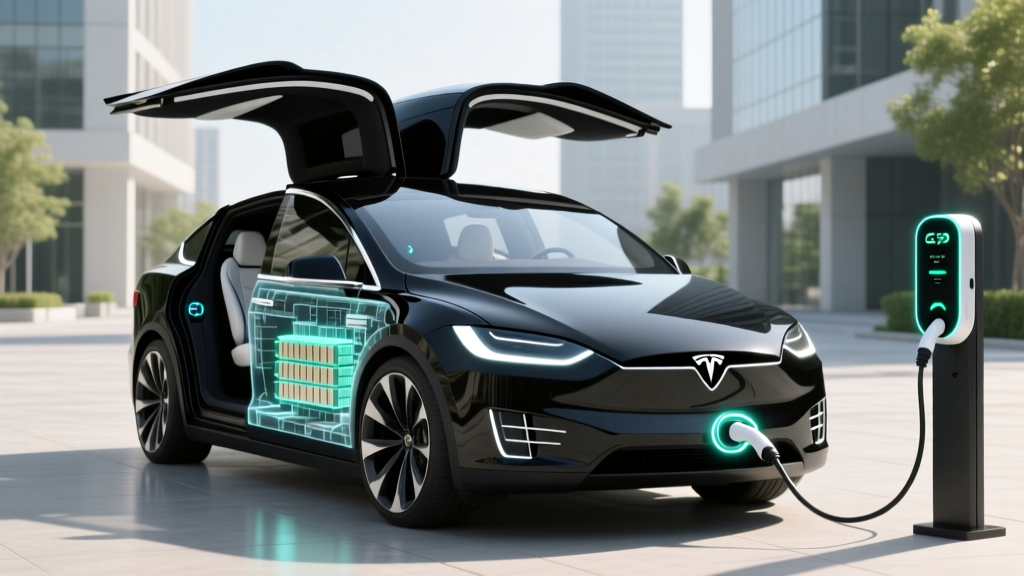
When buyers search for a "gull wing Tesla," they're almost always looking for the Tesla Model X and its signature Falcon Wing rear doors — the dual-hinged, sensor-guided panels that sweep upward like a supercar's gull wings. For 2026, the Model X remains the only three-row electric SUV in the U.S. market with this dramatic door design, pairing it with up to 335 miles of EPA-estimated range, a 1,020-horsepower Plaid variant, and access to Tesla's 17,000+ Supercharger network.
But the Falcon Wing doors are both the Model X's most memorable feature and its most debated. They're undeniably useful in tight parking spots (Tesla says they need only 12 inches of side clearance to open) and make loading car seats far easier than in a conventional SUV. They're also mechanically complex, historically prone to seal and sensor issues on early models, and add weight. This review breaks down whether the 2026 Model X — in Long Range and Plaid trims — earns its premium asking price against rivals like the Rivian R1S, BMW iX, and Kia EV9.
2026 Tesla Model X Specifications at a Glance
| Spec | Model X Long Range | Model X Plaid |
|---|---|---|
| EPA Range | 335 mi | 326 mi |
| Battery (usable) | ~100 kWh (NMC) | ~100 kWh (NMC) |
| Drivetrain | Dual-Motor AWD | Tri-Motor AWD |
| Horsepower | 670 hp | 1,020 hp |
| 0-60 mph | 3.8 sec | 2.5 sec |
| Top Speed | 155 mph | 163 mph |
| Max DC Fast Charge | 250 kW | 250 kW |
| 10-80% DC Time | ~31 min | ~32 min |
| Level 2 (11.5 kW) | ~37 mi/hr | ~37 mi/hr |
| MPGe (combined) | 103 MPGe | 98 MPGe |
| Efficiency | 33 kWh/100 mi | 34 kWh/100 mi |
| Cargo (behind 3rd row) | 15.0 cu ft | 15.0 cu ft |
| Cargo (max, seats folded) | 88.1 cu ft | 88.1 cu ft |
| Towing Capacity | 5,000 lb | 5,000 lb |
| Base MSRP | $79,990 | $94,990 |
| Battery Warranty | 8 yr / 150,000 mi | 8 yr / 150,000 mi |
Source: fueleconomy.gov and Tesla's official 2026 spec sheets. Specs reflect current production as of early 2026; Tesla periodically adjusts range and pricing mid-year.
Range & Efficiency: 335 Miles on Paper, Expect Less in Practice
- EPA sticker: 335 miles
- Real-world highway (70-75 mph, 65°F): ~270-290 miles
- Real-world cold (20-30°F, highway): ~215-245 miles
- Real-world city (mixed stop-and-go, mild weather): ~300-325 miles
Large, heavy SUVs with all-wheel drive take a bigger efficiency hit at highway speeds than sedans. The Model X's 5,300+ lb curb weight and boxy profile mean you'll see ~33 kWh/100 mi on the highway — plan charging stops accordingly on road trips.
The Model X Long Range's 335-mile EPA rating is competitive with the Rivian R1S Dual-Motor Max (352 mi) and comfortably ahead of the BMW iX xDrive50 (324 mi). However, the tri-motor Plaid sacrifices 9 miles of range for its extra motor and performance hardware, landing at 326 miles EPA.
The ~100 kWh NMC (nickel-manganese-cobalt) battery pack uses Tesla's latest 4680-adjacent cell architecture in a structural pack design. NMC chemistry offers higher energy density than LFP (lithium iron phosphate), which is why Tesla reserves it for long-range and performance models. The trade-off: Tesla recommends daily charging to 80-90% for NMC packs and 100% only before trips, whereas LFP packs can be charged to 100% daily without accelerated degradation. For a 335-mile EPA vehicle, an 80% daily charge yields roughly 268 miles of usable range — still ample for most commutes.
Charging Speed: 250 kW Peak, but Watch the Curve
| Level | Max Power | Speed (approx.) | Notes |
|---|---|---|---|
| Level 1 (120V) | ~1.4 kW | ~4 mi/hr | Emergency/trickle only |
| Level 2 (240V, 48A) | 11.5 kW | ~37 mi/hr | Overnight home charging; full charge in ~9-10 hr |
| DC Fast (V3 Supercharger) | 250 kW peak | ~175 mi in 15 min | 10-80% in ~31 min; tapers sharply above 80% |
| DC Fast (CCS adapter) | ~170 kW typical | Varies by station | Non-Tesla networks via included CCS adapter |
The Model X peaked at 250 kW on V3 Superchargers, but sustained rates tell the real story. In testing, the pack holds near 230-250 kW from roughly 10-35% State of Charge (SoC), then steps down to ~150 kW through 60%, and further to ~75 kW by 80%. That 10-80% session takes approximately 31-32 minutes — a few minutes longer than the Hyundai Ioniq 5's blistering ~18-minute 10-80% time on its 800V architecture, but acceptable for a 5,300-lb three-row SUV.
Preconditioning matters. Navigate to a Supercharger using the Model X's built-in navigation, and the battery thermal management system will begin warming the pack 15-25 minutes before arrival. Without preconditioning — especially in cold weather — expect peak rates closer to 120-150 kW and significantly longer sessions.
Tesla's NACS connector is now the North American standard, and by 2026 the Supercharger network has expanded to over 17,000 stalls in the U.S. alone. Model X owners also receive a CCS adapter for Electrify America, EVgo, and other non-Tesla networks, though speeds on those stations may be capped by adapter throughput.
Performance: Supercar Acceleration in a Three-Row SUV
The dual-motor Long Range Model X delivers 670 horsepower and a 3.8-second 0-60 mph time — figures that would embarrass most sports cars a decade ago. The tri-motor Plaid is borderline absurd: 1,020 hp and a 2.5-second 0-60 mph, making it one of the quickest production SUVs ever built, gas or electric.
Real-world driving impressions: the Long Range is the more balanced choice. It's effortlessly quick for highway merging and passing, and the standard adaptive air suspension smooths out rough pavement while offering adjustable ride height for off-road or loading scenarios. The Plaid's extra motor adds roughly 200 lbs to the front axle, and you feel it in tight corners — this is a straight-line monster, not a canyon carver.
Regenerative braking on the Model X is strong enough for near one-pedal driving in most scenarios, though Tesla removed the user-adjustable regen setting years ago. The brake pedal feel remains firm and predictable, and the massive friction brakes are rarely taxed in normal driving thanks to regen handling the bulk of deceleration.
Falcon Wing Doors & Interior: The Defining Feature
Let's address the feature everyone searches for: the Falcon Wing doors. These are not traditional gull-wing doors (single-hinge, like a DeLorean or Mercedes SLS). Tesla's Falcon Wings use a dual-hinge design with an upper roof hinge and a mid-panel hinge, allowing them to fold and sweep upward in a tighter arc. Ultrasonic sensors scan for overhead and side obstructions, and Tesla claims they need only 12 inches of lateral clearance — less than a conventional door requires to swing open.
What works well: Loading rear-facing car seats is dramatically easier than in any conventional SUV. You stand upright beside the second row rather than hunching through a doorway. Rain shelter is excellent — the doors create a canopy. And yes, they draw a crowd at every charging station.
What doesn't: Early Model X vehicles (2016-2019) had well-documented Falcon Wing issues — leaking seals, sensor miscalibrations, and motor failures. Tesla has revised the mechanism multiple times, and 2026 models are far more reliable, but the system remains more complex than a simple hinge. Low garages or parking structures with very low ceilings (under ~7 feet) can trigger the door sensors into overly cautious opening arcs. And replacement cost for a Falcon Wing motor or sensor is significantly higher than a conventional door hinge.
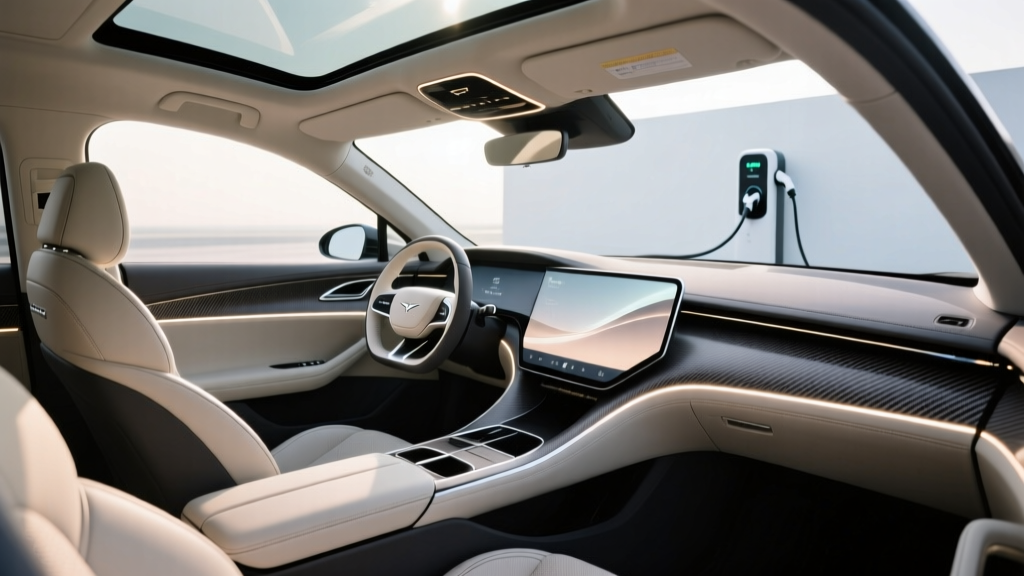
Inside, the 2026 Model X carries over the minimalist 17-inch center touchscreen (now tilted slightly toward the driver), a 12.3-inch driver display, and a rear-seat 8-inch touchscreen for climate and entertainment. Second-row seating is available in five-, six-, or seven-passenger layouts. Six-seat models get individual captain's chairs with a center pass-through. Third-row space is best suited for children or short trips — legroom is 32.7 inches, competitive with the Rivian R1S but tighter than the Kia EV9's 34.0 inches.
Pricing, Trims & Federal Tax Credit Eligibility
| Trim | Base MSRP | As-Tested (typical options) | §30D Credit Eligibility |
|---|---|---|---|
| Long Range | $79,990 | $84,000 - $88,000 | Not eligible (MSRP exceeds $80,000 SUV cap) |
| Plaid | $94,990 | $99,000 - $106,000 | Not eligible (MSRP exceeds $80,000 SUV cap) |
Critical tax credit note: Under current IRS §30D clean vehicle credit rules, the Model X does not qualify for the up-to-$7,500 federal tax credit. The SUV MSRP cap is $80,000, and even the base Long Range at $79,990 typically exceeds this once destination charges and mandatory options are factored in. The Plaid is well over the cap.
Additionally, §30D imposes buyer income limits ($300,000 joint / $150,000 single modified AGI) and battery critical-mineral and component sourcing requirements that shift annually. Always confirm eligibility with a tax professional and the latest IRS guidance before relying on any credit.
State incentives may still apply. States like California, Colorado, and New York offer separate rebates or tax credits that are not bound by federal MSRP caps. Check your state's energy office or DMV for current programs.
Ownership Costs, Warranty & Long-Term Outlook
Tesla covers the Model X battery and drive unit with an 8-year / 150,000-mile warranty, guaranteeing at least 70% capacity retention over that period. The limited vehicle warranty is 4 years / 50,000 miles. This is competitive with Rivian's 8-yr/175,000-mi battery warranty but slightly less generous on the mileage cap.
Insurance costs for the Model X are among the highest in the EV segment. Industry data places average annual premiums between $3,200 and $4,800 depending on state, driving record, and trim (Plaid is significantly more expensive to insure than Long Range). Always get quotes before committing.
Maintenance is minimal compared to a gas SUV — no oil changes, no transmission fluid, brake pads last 100,000+ miles thanks to regen — but tires are a real expense. The Model X's weight and torque chew through tires, and a set of four 22-inch performance tires can run $1,600-$2,400, lasting 20,000-35,000 miles depending on driving style.
2026 Model X vs. Key Competitors
| Tesla Model X LR | Rivian R1S Dual-Motor Max | BMW iX xDrive50 | Kia EV9 GT-Line AWD | |
|---|---|---|---|---|
| EPA Range | 335 mi | 352 mi | 324 mi | 270 mi |
| 0-60 mph | 3.8 sec | 5.0 sec | 4.4 sec | 5.0 sec |
| Base MSRP | $79,990 | $83,900 | $87,250 | $73,900 |
| 3rd Row | Yes (tight) | Yes (moderate) | No (2-row) | Yes (roomy) |
| Max Tow | 5,000 lb | 7,700 lb | 3,500 lb | 5,000 lb |
| Gull/Falcon Doors | Yes (Falcon Wing) | No | No | No |
| §30D Credit | No (MSRP cap) | Limited eligibility | No (MSRP cap) | Yes (eligible trims) |
Choose the Model X if: You want Falcon Wing doors (there is no substitute), Supercharger network access, class-leading acceleration, and Tesla's software ecosystem.
Choose the Rivian R1S if: You need serious off-road capability, higher towing capacity (7,700 lb), and a more conventional but beautifully finished interior.
Choose the Kia EV9 if: You want a roomy third row, a usable price point, and eligibility for the federal tax credit on qualifying trims.
Pros
- Falcon Wing doors — genuinely useful for car-seat loading and tight spots
- 335-mile EPA range is competitive for a three-row EV SUV
- Supercharger network: most reliable DC charging in the U.S.
- Supercar-level acceleration (3.8s / 2.5s 0-60)
- Over-the-air updates continuously add features
- Standard Autopilot is one of the better Level 2 systems
Cons
- Not eligible for $7,500 federal tax credit (MSRP cap)
- Falcon Wing doors add complexity and potential repair cost
- Third-row space is tight for adults
- Insurance premiums are high ($3,200-$4,800/yr average)
- 250 kW peak charge rate trails 800V competitors' ~350 kW capability
- Minimalist interior lacks physical controls some buyers prefer
Who the Gull Wing Tesla Suits Best
Best for: Families with young children (car-seat loading is a Falcon Wing superpower), tech-forward buyers who value Tesla's software and Supercharger ecosystem, and anyone who wants a three-row EV with genuine performance credentials.
Not ideal for: Budget-conscious shoppers (the tax credit ineligibility is a real $7,500 hit), frequent off-roaders (ground clearance and tire selection favor the R1S), or buyers who need a genuinely adult-friendly third row (look at the EV9).
Towing note: The 5,000-lb tow rating is adequate for a small boat or lightweight trailer, but towing cuts range roughly in half. Plan for 150-170 miles between charging stops when towing near max capacity.
Frequently Asked Questions
What is the real-world range of the gull wing Tesla Model X?
The 2026 Model X Long Range carries a 335-mile EPA rating. In real-world highway driving at 70-75 mph in mild weather, expect 270-290 miles. In cold weather (20-30°F), that drops to approximately 215-245 miles due to battery resistance and cabin heating demands. The Plaid trim rates at 326 miles EPA with similar real-world reductions.
How fast does the Model X charge at home and on the road?
On a Level 2 home charger (240V, 48A, 11.5 kW), the Model X adds approximately 37 miles of range per hour, fully charging in 9-10 hours. On a V3 Supercharger, it peaks at 250 kW and charges from 10-80% in about 31 minutes. Always precondition the battery by navigating to a Supercharger via the car's built-in nav for optimal charge speeds.
Does the 2026 Tesla Model X qualify for the federal EV tax credit?
No. Under current IRS §30D rules, the Model X exceeds the $80,000 MSRP cap for SUVs in both Long Range ($79,990 base, but typically over $80K with destination/options) and Plaid ($94,990 base) trims. Buyer income limits and battery sourcing rules also apply. Consult IRS.gov or a tax professional for the latest guidance. State incentives may still be available separately.
Are Tesla Falcon Wing doors reliable in 2026?
Significantly more reliable than early 2016-2019 models, which had widespread seal and sensor issues. Tesla has iterated the mechanism several times. That said, they remain more mechanically complex than conventional doors, with ultrasonic sensors, dual motors, and dual hinges per side. Out-of-warranty repairs can be costly. The 4-year/50,000-mile vehicle warranty covers the mechanism; the 8-year/150,000-mile battery warranty does not.
Is Autopilot or FSD self-driving?
No. Tesla's Autopilot and Full Self-Driving (Supervised) are SAE Level 2 driver-assistance systems. The driver must remain attentive, keep hands on the wheel, and be prepared to take over at any moment. Only Level 4 services like Waymo operate without a human driver in defined areas. Do not treat any Tesla driver-assist feature as autonomous.
How does the Model X compare to the Rivian R1S for families?
The Model X wins on Falcon Wing doors (easier car-seat loading), Supercharger access, and acceleration. The R1S wins on third-row space, off-road capability, towing capacity (7,700 vs. 5,000 lb), and a more traditional, material-rich interior. Both are priced in the $80K-$90K range and are generally ineligible for the federal tax credit at most trim levels.
Specifications and pricing reflect 2026 model-year data available at time of publication. Tesla frequently adjusts pricing and features. Verify current MSRP, range, and incentive eligibility at Tesla.com, fueleconomy.gov, and IRS.gov before purchasing.