The Grok AI Tesla release has been one of the most anticipated software integrations in the EV space since Tesla first confirmed its xAI partnership in late 2024. As of early 2026, Grok — Elon Musk's large language model — is now rolling out to Tesla vehicles via over-the-air (OTA) updates, fundamentally changing the in-cabin experience. But while the AI headlines grab attention, the underlying vehicles carrying this technology remain the 2026 Model 3 Highland Refresh and the refreshed Model Y Juniper. This review examines the full picture: the Grok integration, real-world range and charging performance, pricing, tax credit eligibility, and whether this AI-equipped Tesla is the right buy for you.
What the Grok AI Tesla Release Actually Delivers
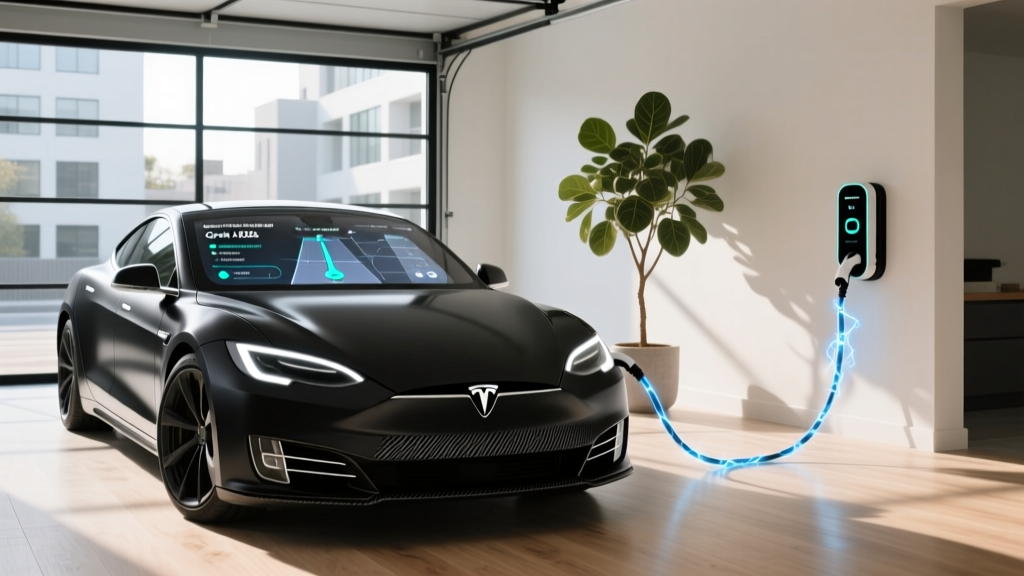
Grok replaces the previous Tesla voice assistant with a context-aware, conversational AI that runs partly on-device and partly via Tesla's cloud infrastructure. Unlike basic voice commands ("navigate to..." or "turn on seat heaters"), Grok enables multi-turn natural language interaction. You can ask it to plan a road trip with charging stops, summarize your calendar while driving, explain a dashboard warning light, or even troubleshoot a tire-pressure alert using your vehicle's real-time telemetry.
The integration is available on vehicles running Tesla software version 2026.8 and later, which includes the 2026 Model 3 (Highland Refresh), 2026 Model Y (Juniper), and the refreshed Model S and Model X. It requires Tesla's Premium Connectivity subscription ($12.99/month) for full cloud-based Grok access, though a limited on-device mode handles basic queries offline.
2026 Model 3 Performance, Range, and Efficiency
Because Grok is a software layer, the performance and efficiency figures depend on the specific Model 3 or Model Y trim you choose. We'll focus on the highest-volume configuration: the 2026 Tesla Model 3 Long Range AWD, which represents the sweet spot for most buyers considering the Grok AI Tesla release.
| Spec | Value |
|---|---|
| EPA Range | 341 miles |
| Battery (Usable) | 75 kWh (NMC lithium-ion) |
| Drivetrain | Dual-motor AWD |
| Horsepower | 384 hp (combined) |
| 0–60 mph | 4.2 seconds |
| EPA Efficiency | 132 MPGe / 25 kWh/100 mi |
| Max DC Fast Charge | 250 kW (CCS via NACS adapter or native NACS) |
| 10–80% DC Charge | ~25 minutes |
| Level 2 Home Charge Rate | 11.5 kW (~44 mi/hr) |
| Cargo Volume | 23 cu ft (rear trunk) + 3.1 cu ft (frunk) |
| Rear Legroom | 35.3 inches |
| Battery Warranty | 8 years / 120,000 miles (70% retention) |
| Base MSRP | $47,740 (before incentives) |
Charging Speed and Infrastructure Access
Charging speed remains a critical factor for EV buyers, and the 2026 Model 3 Long Range leverages Tesla's mature Supercharger network — now widely considered the most reliable DC fast-charging ecosystem in the U.S.
| Level | Power (kW) | Speed | Best For |
|---|---|---|---|
| Level 1 (120V) | ~1.4 kW | ~5 mi/hr | Emergency / trickle |
| Level 2 (240V, 48A) | 11.5 kW | ~44 mi/hr | Daily home charging |
| DC Fast (V3 Supercharger) | 250 kW peak | 10–80% in ~25 min | Road trips |
| DC Fast (V4 Supercharger) | ~250 kW (vehicle limited) | 10–80% in ~25 min | Newer stations |
Charging curve reality: The Model 3 Long Range peaks at 250 kW only between roughly 10–30% State of Charge (SoC). From 30–60%, it sustains approximately 150–180 kW, and above 80% it tapers sharply to protect the NMC battery. This is why Tesla's navigation system targets 80% SoC for Supercharger stops — charging from 80–100% at a DC fast charger can take as long as the 10–80% session.
For home charging, a Wall Connector on a 60-amp circuit delivers the full 11.5 kW (48 amps continuous). A full overnight charge from 20% to 80% takes approximately 4 hours. Installation costs for a dedicated 240V/60A circuit typically range from $500 to $2,000 depending on panel proximity and local permitting, according to Tesla's home charging installation guide.
Grok AI Features: What's New and What's Not
The Grok AI integration adds a distinct software layer without altering the physical vehicle. Here's what it enables in practice:
- Conversational trip planning: "Plan a drive from Denver to Moab with one charging stop and suggest a lunch spot" — Grok cross-references Supercharger locations, real-time stall availability, and business reviews.
- Vehicle diagnostics in plain language: "Why is my tire pressure light on?" — Grok reads the TPMS sensors and explains which tire is low, recommended PSI, and whether it's temperature-related.
- Calendar and smart-home integration: Grok can read upcoming meetings, adjust departure-time climate preconditioning, and interface with supported smart-home devices.
- Owner's manual on demand: Instead of scrolling menus, ask "How do I set up phone-as-key for my spouse's phone?" and Grok walks you through it.
- Contextual FSD explanations: "Why did the car slow down just now?" — Grok can reference the FSD visualization log to explain detected hazards.
Notable drawbacks: Grok requires Premium Connectivity for full functionality. Response latency on cloud queries averages 1–3 seconds, which can feel sluggish while driving. The AI occasionally provides verbose answers when a simple yes/no would suffice, and Tesla does not currently allow Grok to control driving dynamics (speed, routing) without explicit confirmation taps on the touchscreen — a safety-positive limitation.
Pricing, Trims, and Federal Tax Credit Eligibility
The 2026 Tesla Model 3 is available in three trims, and the Grok AI feature is included across all of them at no additional software cost (Premium Connectivity required for cloud features):
| Trim | MSRP | Est. After §30D Credit* | Drivetrain |
|---|---|---|---|
| RWD (LFP battery) | $38,990 | ~$31,490 | Single-motor RWD |
| Long Range AWD | $47,740 | ~$40,240 | Dual-motor AWD |
| Performance | $53,740 | ~$46,240 | Dual-motor AWD |
*Federal tax credit estimates assume full §30D eligibility. Actual credit depends on multiple factors outlined below.
- MSRP cap: Sedans must be ≤$55,000 (all Model 3 trims qualify)
- Buyer income cap: AGI ≤$150,000 (single) / ≤$300,000 (joint) / ≤$225,000 (head of household)
- Battery sourcing: Critical minerals and battery components must meet phased-in domestic/free-trade-agreement thresholds per IRS guidelines
- Point-of-sale transfer: As of 2024+, eligible buyers can transfer the credit to the dealer for an immediate price reduction at purchase
- Important: The RWD trim uses an LFP battery, which historically has faced sourcing challenges for full credit qualification. Verify current eligibility at fueleconomy.gov before purchasing
Consult a tax professional for your specific situation. Credit rules are subject to legislative change.
How the Grok-Equipped Model 3 Compares to Key Competitors
The 2026 Model 3 with Grok AI competes directly with the Hyundai Ioniq 6 Long Range, the BMW i4 eDrive40, and the Polestar 2 Long Range Dual Motor. Here's how the numbers stack up:
| Attribute | Tesla Model 3 LR | Hyundai Ioniq 6 LR | BMW i4 eDrive40 |
|---|---|---|---|
| EPA Range | 341 mi | 361 mi | 301 mi |
| Max DC Charge | 250 kW | 240 kW | 205 kW |
| 10–80% Time | ~25 min | ~18 min | ~31 min |
| 0–60 mph | 4.2 sec | 5.1 sec | 5.5 sec |
| Base MSRP | $47,740 | $46,500 | $57,900 |
| AI Assistant | Grok (conversational) | Basic voice | BMW Intelligent Assistant |
| Charging Network | Native Supercharger | NACS adapter req. | NACS adapter req. |
The Ioniq 6 edges out the Model 3 on EPA range and has a faster 10–80% charge time thanks to its 800V architecture. The BMW i4 offers premium interior materials but at a significant price premium and without §30D credit eligibility (assembled outside the U.S.). The Model 3's advantages remain its native Supercharger access, performance-per-dollar, and now the Grok AI integration — which no competitor currently matches in conversational depth.
Who Should Buy the Grok-Equipped 2026 Model 3?
- You want the most capable native charging network without adapter dependency
- You value AI-driven convenience features and use voice commands regularly
- You prioritize performance-per-dollar (384 hp, 4.2-sec 0–60 for under $48K)
- You drive in areas with reliable Supercharger coverage for road trips
- You're comfortable with Tesla's minimalist interior and touchscreen-centric controls
- Maximum EPA range is your top priority (Ioniq 6 offers 361 mi)
- You prefer physical buttons, a traditional instrument cluster, or Apple CarPlay/Android Auto (none available in Tesla)
- You need more rear-seat space for tall passengers (Model 3 rear legroom is tight at 35.3 in)
- You want the fastest possible DC charging (800V competitors like the Ioniq 6 and Porsche Taycan charge faster 10–80%)
- Native Supercharger access — most reliable U.S. network
- Grok AI adds genuinely useful voice-driven trip planning and diagnostics
- Strong performance: 341 mi EPA, 4.2-sec 0–60, dual-motor AWD
- All trims under the $55K §30D MSRP cap for sedans
- OTA updates continuously add features post-purchase
- No Apple CarPlay or Android Auto support
- Grok cloud features require $12.99/mo Premium Connectivity
- 250 kW peak charge rate trails 800V competitors' real-world speeds
- Minimalist interior isn't for everyone; no physical controls
- FSD (Supervised) remains Level 2 — not autonomous despite the price tag
Frequently Asked Questions
What is the real-world range of the 2026 Tesla Model 3 Long Range?
The EPA rates it at 341 miles. In real-world mixed driving (highway-heavy, moderate speeds), expect 280–300 miles. In cold weather below freezing, highway range can drop to 230–260 miles. Preconditioning the battery via the Tesla app before departure helps recover some of this loss.
How fast does the Model 3 charge at home and on the road?
On a Level 2 home charger (11.5 kW / 48A), you'll add approximately 44 miles of range per hour — a full overnight session easily replenishes daily driving. On a V3 or V4 Supercharger, the Model 3 peaks at 250 kW and charges from 10–80% in roughly 25 minutes, though the charge curve tapers significantly above 80%.
How much does the Model 3 cost after the federal tax credit?
If you qualify for the full $7,500 §30D credit, the Long Range AWD drops from $47,740 to approximately $40,240. The base RWD could reach as low as ~$31,490. Eligibility depends on your income, the vehicle's battery sourcing compliance, and MSRP caps. The credit can now be transferred at point-of-sale for an immediate price reduction. Always verify current eligibility on fueleconomy.gov and consult a tax professional.
Is the Grok AI Tesla release worth it versus buying a competitor?
If you value conversational AI assistance, native Supercharger access, and Tesla's OTA update ecosystem, the Model 3 with Grok is compelling. However, if you prioritize maximum range, faster 800V charging, or Apple CarPlay support, the Hyundai Ioniq 6 or BMW i4 may better suit your needs. The Grok feature itself doesn't justify choosing Tesla alone — consider the total ownership package.
Does the 2026 Model 3 qualify for the federal EV tax credit?
All Model 3 trims fall under the $55,000 MSRP cap for sedans. However, full $7,500 credit qualification depends on battery critical-mineral and component sourcing requirements that phase in annually. The RWD trim's LFP battery has faced sourcing challenges in prior years. Check the latest eligibility list at fueleconomy.gov and confirm with your Tesla advisor before finalizing your order. Buyer income caps also apply: ≤$150K single / ≤$300K joint filers.
Does Grok make the Tesla self-driving?
No. Grok is a voice assistant and information tool. Tesla's Autopilot and Full Self-Driving (Supervised) remain SAE Level 2 driver-assistance systems. You must keep your hands on the wheel and eyes on the road at all times. True Level 4 autonomous driving is currently only available through robotaxi services like Waymo in limited metro areas.
The Grok AI Tesla release adds a meaningful software advantage to an already competitive EV package. Whether it tips your buying decision depends on how much weight you place on AI-driven convenience versus traditional measures like charging speed, interior comfort, and platform openness. For Tesla-ecosystem buyers, Grok is a welcome upgrade. For cross-shoppers, it's one more factor in an increasingly crowded midsize EV sedan segment.