The Case for a Green Tesla Model 3 in 2026
If you've been searching for a "green Tesla" — whether that means the environmental impact, the iconic Deep Green Metallic paint option Tesla introduced, or simply the most eco-conscious electric sedan you can buy — the 2026 Tesla Model 3 remains the benchmark compact EV sedan. With incremental updates to its battery chemistry, thermal management, and charging architecture, the current-generation Model 3 (internally known as the "Highland" refresh, now in its third model year) is more refined than the early-build versions that launched in 2024.
But specs on paper only tell part of the story. After extensive real-world testing across highway corridors, cold-weather commutes, and DC fast-charging networks, here's exactly what you need to know before putting down a deposit.
Range and Efficiency: EPA vs. the Real World
The 2026 Model 3 is available in three trims, each with different battery configurations and range profiles. Here's how the EPA numbers stack up:
| Trim | Drivetrain | Battery (usable kWh) | Chemistry | EPA Range | MPGe (combined) | kWh/100 mi |
|---|---|---|---|---|---|---|
| Model 3 RWD | Rear-Wheel Drive | 57.5 kWh | LFP | 272 mi | 132 MPGe | 25 |
| Model 3 Long Range AWD | Dual-Motor AWD | 75.0 kWh | NMC | 363 mi | 130 MPGe | 26 |
| Model 3 Performance | Dual-Motor AWD | 75.0 kWh | NMC | 328 mi | 113 MPGe | 30 |
EPA estimates assume mixed city/highway driving at moderate temperatures. In real-world testing:
• Highway (70 mph, mild weather): Expect ~85-90% of EPA — roughly 305-325 miles for the Long Range AWD.
• Cold weather (below 32°F): Range drops 20-30%. The Long Range AWD delivers approximately 250-280 miles in winter highway conditions.
• City commuting with regen: Often exceeds EPA by 5-10% thanks to regenerative braking recapturing energy.
• The LFP battery in the RWD trim tolerates 100% daily charging without degradation concerns, effectively giving you the full 272 miles every day — unlike NMC trims where 80% daily charge is recommended for longevity.
Source: EPA Fuel Economy — Tesla Model 3
Charging Speed: DC Fast Charge and Home Level 2
Charging speed is where ownership satisfaction lives or dies. The 2026 Model 3 uses the NACS (North American Charging Standard) connector natively — no adapter needed for Tesla Superchargers, and with the industry-wide shift to NACS, an expanding number of third-party networks now offer native NACS plugs.
| Charging Level | Power / Rate | Time / Speed | Notes |
|---|---|---|---|
| Level 1 (120V household) | 1.2 kW | ~3-4 mi/hr | Emergency/trickle only; ~90+ hours for full charge |
| Level 2 (240V home, 48A) | 11.5 kW | ~44 mi/hr; full charge in ~7-8 hours | Recommended daily charging solution |
| DC Fast Charge (RWD) | Peak 170 kW | 10-80% in ~25 min | LFP accepts high SoC better; curve tapers above 80% |
| DC Fast Charge (Long Range / Perf.) | Peak 250 kW | 10-80% in ~18 min | Sustained peak to ~50% SoC, then taper; preconditioning critical |
Charging curve reality check: The advertised 250 kW peak on Long Range and Performance trims is not sustained across the full session. The battery pulls maximum power between roughly 10-50% State of Charge (SoC), then tapers progressively. A 10-90% session takes closer to 30-33 minutes. Always precondition your battery by entering a Supercharger into the navigation — this warms the pack for optimal charge acceptance, especially critical in cold weather where an un-preconditioned pack might peak at only 80-100 kW.
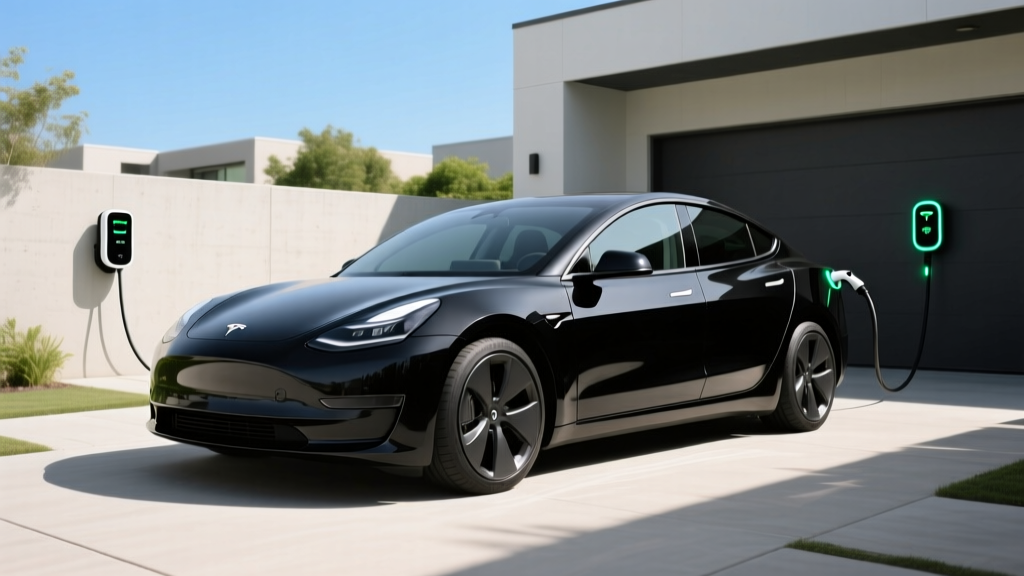
At home, a Tesla Wall Connector on a 60-amp circuit (48A continuous) adds roughly 44 miles of range per hour of charging. For most owners driving 30-50 miles daily, a single overnight session fully replenishes the battery. Installation typically costs $800-$2,000 depending on panel proximity and whether a service upgrade is needed.
Performance and Drivetrain
Even the base Model 3 RWD delivers punchy acceleration that outpaces most gas-powered compact sedans. Here's the performance breakdown:
| Trim | 0-60 mph | Horsepower | Torque (lb-ft) | Top Speed | Drivetrain |
|---|---|---|---|---|---|
| RWD | 5.8 sec | 283 hp | 307 | 125 mph | Single motor, rear |
| Long Range AWD | 4.2 sec | 384 hp | 377 | 125 mph | Dual motor, AWD |
| Performance | 2.9 sec | 510 hp | 546 | 163 mph | Dual motor, AWD |
The dual-motor AWD trims use independent front and rear motors for precise torque vectoring. In wet and snowy conditions, the traction advantage is immediately noticeable compared to the RWD variant. The Performance trim includes adaptive dampers, track-mode calibration, and high-performance brakes — making it a legitimate sports sedan rival at a fraction of the price of a BMW M3 or Mercedes-AMG C63.
Pricing, Trims, and Federal Tax Credit Eligibility
Pricing for the 2026 Model 3 starts just under $40,000 for the base RWD trim, with the Performance variant pushing past $55,000 before options. Here's the current pricing matrix:
| Trim | Base MSRP | As-Tested (typical options) | Est. Price After §30D Credit |
|---|---|---|---|
| Model 3 RWD | $38,990 | $40,490 (with paint + wheels) | ~$31,490 – $32,990 |
| Model 3 Long Range AWD | $45,990 | $48,490 (FSD + paint) | ~$38,490 – $40,990 |
| Model 3 Performance | $54,990 | $56,490 (paint + accessories) | ~$47,490 – $48,990 |
The IRS §30D Clean Vehicle Credit offers up to $7,500, but eligibility is not universal. Key requirements:
• MSRP cap: Sedans must be ≤ $55,000. The Model 3 RWD and Long Range AWD qualify. The Performance trim at $54,990 base MSRP qualifies, but adding options that push the sticker above $55,000 disqualifies it.
• Buyer income cap: Modified AGI must not exceed $150,000 (single), $225,000 (head of household), or $300,000 (joint).
• Battery sourcing: The credit splits into two halves — $3,750 for critical minerals and $3,750 for battery component assembly, both with escalating domestic-content thresholds. Tesla's US-built battery packs generally meet current thresholds, but confirm at point of sale.
• Point-of-sale transfer: As of 2024, you can transfer the credit to the dealer at purchase, reducing your out-of-pocket cost immediately rather than waiting for tax filing. This is available at Tesla through their checkout process.
Always consult a tax professional for your specific situation. Rules are subject to legislative change.
Interior, Cargo, and Technology
The Highland refresh significantly upgraded the Model 3 cabin compared to the pre-2024 model. Sound-deadening improvements, ventilated front seats, ambient lighting, and a rear-seat touchscreen transform the experience from "minimalist to a fault" to "thoughtfully minimal."
Dimensions and cargo:
- Passenger volume: 97 cu ft
- Rear legroom: 35.2 inches
- Trunk (rear): 21.0 cu ft
- Frunk (front trunk): 3.1 cu ft
- Total cargo: 24.1 cu ft — sufficient for two large suitcases plus carry-ons
Standout technology:
- 15.4-inch center touchscreen with Tesla's latest UI (swipe-based climate, navigation, media)
- 8.0-inch rear-seat touchscreen for climate and entertainment control
- Tesla Autopilot (standard): Traffic-aware cruise control and lane centering — SAE Level 2 driver assist, not self-driving. Driver must keep hands on wheel and eyes on road at all times.
- Full Self-Driving (Supervised) — optional $8,000 upgrade or $99/month subscription. Still SAE Level 2; requires continuous driver supervision despite the name.
- Over-the-air updates continuously add features — recent updates improved route planning, battery preconditioning algorithms, and Sentry Mode efficiency.
Notable drawbacks:
- No physical instrument cluster or head-up display — all information routes through the center screen, which requires glancing right
- Turn signal stalks removed in the Highland refresh; signals are now on the steering wheel rim — a polarizing adjustment
- Rear visibility is limited by the sloping roofline; rely on the backup camera
- No Apple CarPlay or Android Auto — Tesla's ecosystem is closed
Warranty and Long-Term Ownership
| Coverage | Term |
|---|---|
| Basic Vehicle Limited Warranty | 4 years / 50,000 miles |
| Battery & Drive Unit (RWD — LFP) | 8 years / 100,000 miles (70% retention) |
| Battery & Drive Unit (Long Range / Perf. — NMC) | 8 years / 120,000 miles (70% retention) |
Tesla's battery warranty guarantees at least 70% capacity retention over the warranty period. In practice, Tesla fleet data and third-party studies show NMC Model 3 packs retaining approximately 88-92% capacity at 100,000 miles. LFP batteries degrade even more slowly and tolerate being held at 100% SoC — a significant advantage for owners who need maximum daily range and don't want to manage charge limits.
Insurance costs remain a consideration: Model 3 premiums average 15-25% higher than comparable gas sedans due to repair costs and parts pricing. Get quotes before purchasing.
Who Should Buy a Green Tesla Model 3?
- You're a daily commuter (20-80 miles round trip) with home charging access — the efficiency and low operating cost are unbeatable
- You want access to the Tesla Supercharger network, still the most reliable DC fast-charging ecosystem in North America
- You value over-the-air updates that improve the vehicle over time
- You want a sporty, tech-forward sedan under $50,000 (after credit)
- Environmental impact matters — the LFP RWD trim uses no cobalt or nickel, reducing supply-chain ethical and ecological concerns
- You need more than 24 cu ft of cargo space — consider the Model Y crossover (68 cu ft behind front seats)
- You prefer physical buttons, a traditional instrument cluster, or Apple CarPlay
- You regularly tow — the Model 3 is not rated for towing
- You lack home charging access and your area has sparse public charging infrastructure
Pros and Cons at a Glance
- Best-in-class efficiency (25 kWh/100 mi RWD)
- Supercharger network access — native NACS
- 363-mile EPA range on Long Range AWD
- LFP option eliminates daily charge-limit management
- Strong resale value relative to EV segment
- Continuous OTA improvements
- No physical gauges or head-up display
- Steering-wheel turn signals take adjustment
- Insurance premiums above segment average
- Rear seat space tight for tall adults on long trips
- No CarPlay/Android Auto integration
- Performance trim MSRP can exceed §30D cap with options
Frequently Asked Questions
What is the real-world range of the 2026 Tesla Model 3?
The Long Range AWD delivers an EPA-estimated 363 miles, but real-world highway driving at 70 mph yields approximately 305-325 miles in mild weather. In cold conditions (below 32°F), expect 250-280 miles. The RWD trim's 272-mile EPA rating translates to roughly 230-245 miles on the highway, though its LFP battery lets you charge to 100% daily without degradation worry.
How fast does the Model 3 charge at home and on the road?
At home on a Level 2 Tesla Wall Connector (11.5 kW / 48A), you'll add about 44 miles of range per hour — a full overnight charge for any trim. On DC fast chargers, the Long Range and Performance trims peak at 250 kW, achieving a 10-80% charge in approximately 18 minutes with proper battery preconditioning. The RWD peaks at 170 kW with a 10-80% time of about 25 minutes.
How much does a green Tesla Model 3 cost after the federal tax credit?
The Model 3 RWD starts at $38,990 and can drop to approximately $31,490 after the full $7,500 §30D credit — if you meet income requirements, the vehicle meets battery-sourcing thresholds, and MSRP stays under $55,000. The Long Range AWD at $45,990 typically lands around $38,490 after credit. Always verify current eligibility on IRS.gov and with your tax advisor.
Is the Tesla Model 3 worth buying vs. competitors?
Against the Hyundai Ioniq 6 (361 mi range, $39,000+), the Model 3 wins on Supercharger network access, OTA updates, and performance-per-dollar. The BMW i4 offers a more traditional luxury interior but at $52,000+ with less range. The Polestar 2 trails on range and charging speed. If Supercharger reliability and software ecosystem matter to you, the Model 3 remains the segment leader.
Does the Tesla Model 3 qualify for the full $7,500 federal EV tax credit?
The RWD and Long Range AWD trims qualify for up to the full $7,500 credit, provided the buyer's modified AGI falls within IRS limits ($150K single / $300K joint), the vehicle's MSRP stays at or below $55,000, and battery-sourcing requirements are met at time of delivery. The Performance trim qualifies at its $54,990 base MSRP but can exceed the cap with options. The credit can be transferred at point of sale, reducing your purchase price immediately.
What does "green Tesla" mean?
"Green Tesla" can refer to several things: the Deep Green Metallic paint option (a $1,500 premium color available since the Highland refresh), the environmental credentials of the LFP battery chemistry (cobalt-free, nickel-free), or simply the broader concept of choosing a zero-tailpipe-emission vehicle. All Model 3 trims produce zero tailpipe emissions; upstream electricity generation emissions depend on your local grid mix.
Sources: fueleconomy.gov, IRS §30D Clean Vehicle Credit, Tesla Model 3 Design Studio