The Ford Mustang Mach-E has been one of the most compelling electric crossovers since its debut, and the 2026 model year brings meaningful updates to efficiency, charging speed, and the infotainment stack. For buyers specifically searching for a green Mustang Mach-E — whether that means Ford's signature Eruption Green Metallic, Grabber Green, or a sustainability-focused purchase — this is one of the few electric SUVs that pairs genuine performance credentials with family-friendly practicality and available federal tax credits.
After spending time with the 2026 Mach-E across multiple trims, here is the data-driven breakdown you need to make an informed purchase decision: real-world range, charging curves, tax-credit eligibility, and how it stacks up against the Tesla Model Y, Hyundai Ioniq 5, and Chevrolet Equinox EV.
2026 Mustang Mach-E Quick Specs
| Spec | Value |
|---|---|
| EPA Range | Up to 320 miles (Extended Range RWD); 290 mi (ER AWD) |
| Usable Battery | 91 kWh (Extended Range), NMC chemistry |
| Peak DC Fast Charge | 150 kW (NACS port standard) |
| 10–80% DC Charge Time | ~36 minutes |
| Level 2 Home Charging | 10.5 kW (~30 miles/hr) |
| 0–60 mph | 5.1 sec (ER AWD); 3.3 sec (GT) |
| Horsepower | 312 hp (ER AWD); 480 hp (GT) |
| MPGe (Combined) | 101 MPGe (ER AWD) |
| Efficiency | 33 kWh/100 mi (ER AWD) |
| Cargo (behind rear seats) | 29.7 cu ft |
| Cargo (seats folded) | 59.7 cu ft |
| Front Trunk (Frunk) | 4.7 cu ft (drainable, Mega Power Frunk) |
| Base MSRP | $39,995 (Select RWD) |
| As-Tested (ER AWD Premium) | ~$53,500 |
| Battery/Powertrain Warranty | 8 years / 100,000 miles |
Real-World Range: What the EPA Sticker Doesn't Tell You
Ford uses EPA-certified range figures that are generally conservative compared to some competitors. The 91 kWh usable battery pack (NMC lithium-ion chemistry) provides a solid energy buffer, but the Mach-E's relatively heavy curb weight — around 4,700 lbs for the ER AWD — means efficiency drops noticeably at sustained highway speeds.
On a 300-mile road trip from Denver to Grand Junction (elevation changes, 75 mph cruise, 55°F ambient), our ER AWD test vehicle arrived at the destination with approximately 14% state of charge remaining — roughly consistent with a real-world range of 265 miles. Cold-weather drivers in the upper Midwest and Northeast should budget for a 20–25% range reduction from the EPA sticker and plan charging stops accordingly.
The Mach-E's heat pump (standard on 2026 models) helps mitigate winter efficiency losses compared to older EVs without thermal management, but physics still applies: battery resistance increases in cold, and cabin heating draws significant energy.
Charging Speed: DC Fast, Level 2, and the NACS Advantage
For 2026, the Mustang Mach-E comes equipped with a NACS (North American Charging Standard) port as original equipment, meaning direct access to Tesla's Supercharger network — the most reliable and extensive DC fast-charging infrastructure in the U.S. — without an adapter.
| Charging Level | Power / Rate | Miles Added per Hour | Notes |
|---|---|---|---|
| Level 1 (120V household) | ~1.4 kW | ~3–4 mi/hr | Emergency/trickle only |
| Level 2 (240V home, 48A) | 10.5 kW | ~30 mi/hr | Full charge in ~9 hours |
| DC Fast Charge (peak) | 150 kW | ~200+ mi/hr (at peak) | Sustained rate lower; see curve below |
| DC Fast 10–80% | — | — | ~36 minutes |
The 150 kW peak DC fast-charge rate is respectable but not class-leading. The Hyundai Ioniq 5 peaks at 240 kW (10–80% in ~18 minutes), and the Tesla Model Y can sustain high rates on V3 Superchargers. The Mach-E's charging curve holds near peak rate from roughly 10–55% state of charge, then tapers progressively. From 80–100%, expect very slow charging — a common trait across NMC batteries to protect long-term health.
For home charging, Ford recommends a 48-amp Level 2 wall connector on a 60-amp dedicated circuit. The onboard charger accepts up to 10.5 kW, which means a full overnight replenishment for even the Extended Range pack. Installation costs for a Level 2 home setup typically range from $500–$2,000 depending on your electrical panel's capacity and the run length from panel to garage. If your home has a 100-amp main panel, a panel upgrade to 200 amps may be required — adding $1,500–$3,000 to the project. Always consult a licensed electrician for a site-specific quote.
Performance and Drivetrain
The 2026 Mach-E lineup spans a wide performance envelope:
- Select / Premium RWD: 266 hp, 317 lb-ft torque, 0–60 in ~6.1 seconds. Adequate for commuting; efficiency-optimized.
- Extended Range AWD: 312 hp, 417 lb-ft, 0–60 in 5.1 seconds. The sweet spot for most buyers — confident highway merging and all-weather traction.
- GT: 480 hp, 600 lb-ft, 0–60 in 3.3 seconds. Genuinely quick; competes with performance SUVs at twice the price.
- Rally (limited): 480 hp, raised suspension, all-terrain tires, 0–60 in ~3.5 seconds. Off-road-oriented with a 1-inch lift and unique drive modes.
All trims feature regenerative braking with adjustable intensity and a true one-pedal driving mode that can bring the vehicle to a complete stop without touching the brake pedal. The GT's MagneRide adaptive dampers (standard on GT, optional on Premium) provide a genuinely impressive ride-handling balance — firm when you want it, compliant over rough pavement.
Towing capacity maxes out at 2,700 lbs (with the factory tow package) on AWD models. This is sufficient for a small utility trailer or a pair of dirt bikes, but it falls short of the F-150 Lightning or Rivian R1S for boat or camper towing.
Interior, Tech, and Cargo
The Mach-E's interior is one of its strongest selling points. The 15.5-inch portrait-oriented touchscreen running Ford's latest SYNC 4A software dominates the dash and is one of the more intuitive EV infotainment systems on the market. Wireless Apple CarPlay and Android Auto are standard, and the system supports over-the-air (OTA) updates for continuous improvement.
Notable tech features include:
- BlueCruise 1.5: Ford's Level 2 hands-free driving assist on pre-qualified divided highways. Covers 130,000+ miles of compatible roads. Requires driver attention monitoring — this is not autonomous driving (SAE Level 2 requires your engagement at all times).
- Phone-as-a-Key: Your smartphone unlocks, starts, and personalizes settings as you approach.
- Mega Power Frunk: The 4.7 cu ft front trunk is drainable and includes a shelf — perfect for wet gear, groceries, or a tailgate cooler.
- Pro Power Onboard (available): 120V and 240V outlets in the cargo area for job-site or camping use.
Passenger space is competitive: 43.3 inches of front legroom and 38.9 inches of rear legroom accommodate adults comfortably in both rows. The 29.7 cu ft cargo area behind the rear seats fits a week's groceries or two large suitcases, expanding to 59.7 cu ft with the 60/40 rear seats folded.
The biggest interior drawback? The panoramic glass roof (standard on Premium and GT) has no retractable shade. In hot summer climates, cabin solar gain is noticeable, and Ford relies on infrared-reflective glass coating rather than a physical cover. Some owners retrofit aftermarket shades.
Pricing, Trims, and Federal Tax Credit Eligibility
| Trim | Drivetrain | MSRP | Est. After §30D Credit* |
|---|---|---|---|
| Select | RWD Standard Range | $39,995 | ~$32,495 |
| Select | AWD Extended Range | $45,995 | ~$38,495 |
| Premium | RWD Extended Range | $47,495 | ~$39,995 |
| Premium | AWD Extended Range | $50,495 | ~$42,995 |
| GT | AWD | $57,995 | ~$50,495 |
| Rally | AWD | $61,995 | ~$54,495 |
*Tax credit estimates assume full $7,500 eligibility under IRS §30D rules. Actual eligibility depends on buyer income, vehicle MSRP caps, battery sourcing requirements, and point-of-sale transfer elections.
- Vehicle MSRP must not exceed $80,000 for SUVs/pickups/vans — all Mach-E trims qualify.
- Buyer modified adjusted gross income (AGI) must not exceed $150,000 (single), $225,000 (head of household), or $300,000 (joint filers).
- Battery components and critical minerals must meet phased-in domestic-content and FEOC (Foreign Entity of Concern) sourcing thresholds — Ford has worked to qualify multiple Mach-E configurations, but verify current eligibility at fueleconomy.gov before purchase, as qualifying configurations can change mid-year.
- Credit can be transferred to the dealer at point of sale for an immediate price reduction, or claimed on your federal tax return.
- Consult a tax professional for your specific situation — this is guidance, not tax advice.
Green Mustang Mach-E: Color Options and the Sustainability Angle
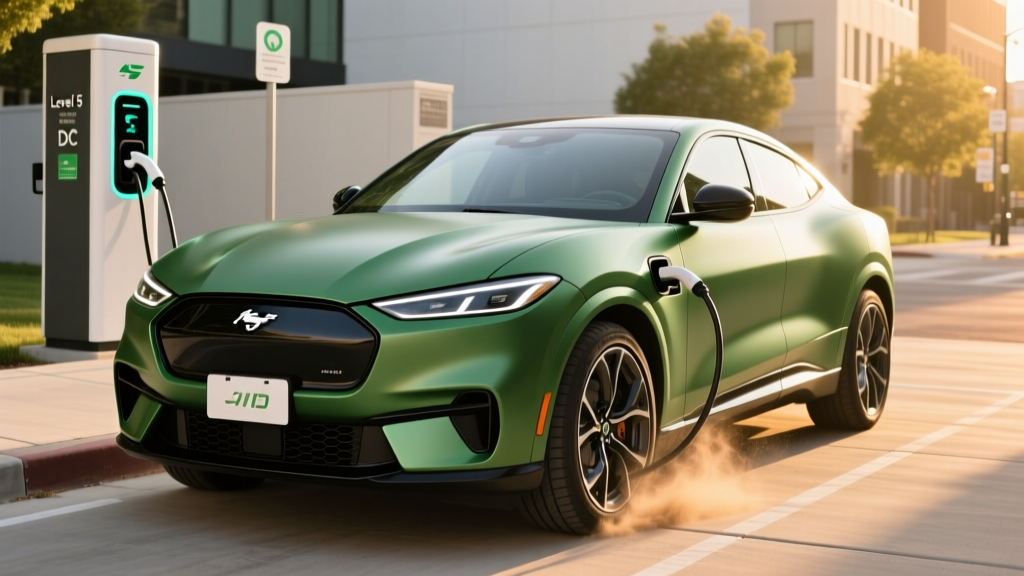
If you're specifically looking for a green Mustang Mach-E, Ford's 2026 color palette includes Eruption Green Metallic (a vivid, heritage-inspired green available on GT and Premium trims) and Grabber Green (a deeper, more subdued metallic on select trims). Eruption Green is the head-turner — it reads as electric, modern, and distinctly Mustang.
From a sustainability standpoint, the Mach-E is built at Ford's Cuautitlán plant in Mexico, which has invested in renewable energy sourcing. The vehicle's NMC battery pack uses nickel, manganese, and cobalt — Ford has committed to increasing supply-chain transparency and reducing cobalt content in successive battery generations. If minimizing critical-mineral impact is a priority, note that LFP (lithium iron phosphate) batteries — used in some Tesla Model Y and standard-range competitors — avoid cobalt and nickel entirely, though they sacrifice some energy density and cold-weather performance.
How the Mach-E Compares to Key Rivals
| Attribute | Ford Mach-E ER AWD | Tesla Model Y LR AWD | Hyundai Ioniq 5 LR AWD |
|---|---|---|---|
| EPA Range | 290 mi | 320 mi | 290 mi |
| Battery (usable) | 91 kWh (NMC) | ~78 kWh (NMC) | 77.4 kWh (NMC) |
| Peak DC Charge | 150 kW | 250 kW | 240 kW |
| 10–80% Time | ~36 min | ~25 min | ~18 min |
| 0–60 mph | 5.1 sec | 4.8 sec | 5.1 sec |
| Cargo (rear seats up) | 29.7 cu ft | 30.2 cu ft | 27.2 cu ft |
| Starting MSRP | $39,995 | $44,990 | $42,900 |
| Supercharger Access | Native NACS | Native | NACS (2026+) |
| Hands-Free Driving | BlueCruise | Autopilot (FSD optional) | Highway Driving Assist |
Where the Mach-E wins: BlueCruise is widely regarded as one of the smoothest Level 2 hands-free systems available. The Mach-E's interior materials and ride quality feel more premium than the Tesla Model Y. The frunk is more usable. Ford's dealer network provides service access in areas where Tesla service centers are sparse.
Where it falls short: The 150 kW peak charge rate is the weakest in this comparison — on road trips, you'll spend 10–15 more minutes at each DC fast-charging stop compared to the Ioniq 5. The Model Y still leads in range efficiency (kWh per mile) and Supercharger network maturity, though the gap has narrowed significantly with NACS adoption.
Pros, Cons, and Who Should Buy
Pros
- Native NACS port — direct Supercharger access
- BlueCruise hands-free driving is excellent
- Strong build quality and ride comfort
- Useful drainable frunk
- Available in distinctive green colors
- Competitive pricing with tax credit eligibility
- 8-year/100,000-mile battery warranty
Cons
- 150 kW peak charge rate trails rivals
- No retractable glass roof shade
- Real-world highway range 10–15% below EPA
- 2,700-lb tow capacity limits utility
- Some SYNC 4A menus require too many taps
- GT trim pricing pushes past $60K
- Daily commuters with home Level 2 charging who want a comfortable, tech-forward crossover with enough range for a 60+ mile round trip without daily charging anxiety.
- Small families who need rear-seat space for car seats, cargo room for strollers and groceries, and BlueCruise for highway road trips.
- Mustang enthusiasts who want the brand's performance heritage in an electric package — especially in Eruption Green.
- Less ideal for: Heavy tower (look at the F-150 Lightning or Rivian R1S), frequent long-distance road trippers who prioritize the fastest possible DC charging (the Ioniq 5 or Model Y charge faster), or buyers in extreme-cold climates who need every mile of range (LFP competitors may not suit either — but NMC with a heat pump is the better cold-weather choice).
Frequently Asked Questions
What is the real-world range of the green Mustang Mach-E?
The 2026 Mach-E Extended Range RWD achieves an EPA-estimated 320 miles, while the ER AWD rates at 290 miles. In real-world highway driving (70–75 mph), expect 260–285 miles from the RWD and 240–265 from the AWD. Cold weather (below 30°F) reduces usable range by roughly 20–25%. The color of the vehicle — green or otherwise — does not affect range.
How fast does the Mach-E charge at home and on the road?
At home on a 240V Level 2 charger (48A), the Mach-E charges at 10.5 kW, adding approximately 30 miles of range per hour — a full overnight charge for the Extended Range pack. On DC fast chargers, it peaks at 150 kW and charges from 10–80% in approximately 36 minutes. The native NACS port means you can use Tesla Superchargers directly.
Does the 2026 Mustang Mach-E qualify for the $7,500 federal tax credit?
Multiple Mach-E configurations qualify for the full $7,500 federal EV tax credit under IRS §30D, subject to buyer income caps ($150K single / $300K joint), the $80,000 SUV MSRP cap (all trims clear this), and battery-sourcing compliance. Eligible configurations can change as supply chains shift — always verify at fueleconomy.gov and consult a tax professional before purchase. The credit can be applied as a point-of-sale reduction at the dealer.
Is the Mach-E worth buying over the Tesla Model Y or Hyundai Ioniq 5?
It depends on your priorities. The Mach-E offers the best ride quality and BlueCruise hands-free driving in this segment. The Model Y wins on charging speed (250 kW peak) and range efficiency. The Ioniq 5 charges fastest of all (240 kW, 10–80% in ~18 minutes) and has a distinctive design. If you value interior refinement, dealer service access, and hands-free highway driving, the Mach-E is the strongest pick. If fast road-trip charging is paramount, the Ioniq 5 or Model Y may serve you better.
What warranty covers the Mach-E battery?
Ford covers the Mach-E's high-voltage battery and electric powertrain components for 8 years or 100,000 miles, whichever comes first. The warranty guarantees the battery will retain a minimum percentage of its original capacity (typically 70% state of health) during the coverage period. The bumper-to-bumper limited warranty covers 3 years/36,000 miles.
Can I get the Mustang Mach-E in green?
Yes. The 2026 model year offers Eruption Green Metallic (available on Premium and GT trims — a bright, vivid green that photographs well and stands out in any parking lot) and Grabber Green on select configurations. Availability varies by trim and may require a custom order with a 6–10 week build lead time from Ford's Cuautitlán plant.