The Short Answer on the Grand Cherokee Electric
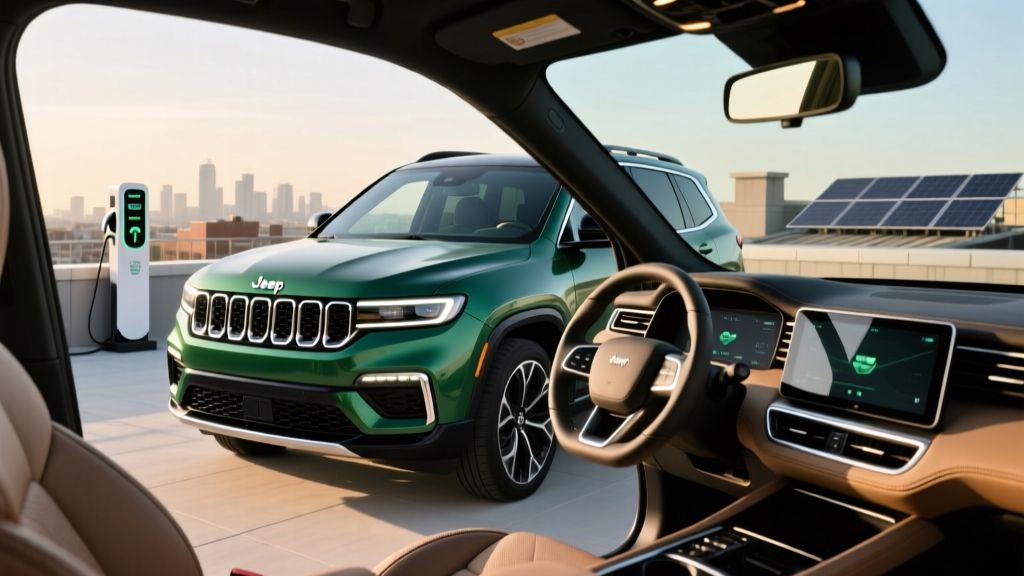
The 2026 Jeep Grand Cherokee Electric is an all-electric, three-row midsize SUV built on Stellantis' STLA Large platform. It targets buyers who want Grand Cherokee comfort and off-road credibility with zero tailpipe emissions. Expect an EPA-estimated range near 300–330 miles (depending on trim and battery pack), DC fast charging that peaks around 200–250 kW, and a starting MSRP in the low-to-mid $50,000s before incentives. It competes directly with the Kia EV9, Hyundai Ioniq 9, and Rivian R1S. Whether it makes financial sense depends heavily on your home charging access, local electricity rates, and whether you qualify for the federal §30D tax credit.
What We Know About the 2026 Grand Cherokee Electric
Stellantis confirmed the Grand Cherokee Electric as part of its STLA Large BEV rollout. The vehicle is expected to share its underpinnings with the upcoming electric Dodge Charger and other STLA Large products, meaning an 800-volt electrical architecture and battery packs in the 85–105 kWh (usable) range using NMC (nickel manganese cobalt) chemistry for energy density. Jeep has signaled dual-motor all-wheel-drive layouts with output in the 400–500 horsepower range, keeping the Grand Cherokee nameplate's towing and trail capability intact.
Because final EPA certification numbers are pending at the time of this writing, treat the range and efficiency figures below as preliminary estimates based on platform data and segment benchmarks. We will update this article once official fueleconomy.gov listings go live.
| Spec | Estimated Figure |
|---|---|
| Battery Capacity (usable) | ~95–105 kWh, NMC |
| EPA Range (est.) | 300–330 mi (AWD) |
| Real-World Highway Range | ~250–280 mi (70–80 mph) |
| Cold-Weather Range (20°F) | ~220–260 mi |
| Peak DC Fast Charge | ~200–250 kW |
| 10–80% DC Charge Time (est.) | ~22–28 minutes |
| Level 2 Charge Rate | ~11–19 kW (48A) |
| Horsepower (AWD est.) | 400–500 hp |
| 0–60 mph (est.) | ~4.5–5.5 sec |
| Towing Capacity (est.) | ~5,000–6,000 lbs |
| Starting MSRP (est.) | $52,000–$56,000 |
| Battery/Powertrain Warranty | 8 yr / 100,000 mi (est.) |
Real-World Range vs. EPA Sticker
The EPA sticker is a combined-cycle estimate. On a sustained highway trip at 75+ mph, expect to use roughly 80–85% of the EPA figure. In freezing temperatures (below 30°F), cabin heating and battery resistance can drop usable range by 20–30%. If the Grand Cherokee Electric achieves a 320-mile EPA rating, plan for ~260 miles of real-world highway range in mild weather and ~230 miles in deep winter. Preconditioning the battery while plugged in helps recover some of that loss.
Grand Cherokee Electric vs. Gas Grand Cherokee: The Cost Breakdown
The most common question from Jeep loyalists: does going electric actually save money compared to the familiar 3.6L V6 or 4xe plug-in hybrid Grand Cherokee? Let's run the numbers over a 5-year, 75,000-mile ownership period.
| Cost Category | GC Electric (est.) | GC Gas V6 (AWD) | GC 4xe PHEV |
|---|---|---|---|
| Purchase Price (MSRP) | $54,000 | $44,000 | $56,000 |
| Federal Tax Credit (§30D) | Up to $7,500* | $0 | Up to $3,750* |
| Effective Purchase Price | $46,500 | $44,000 | $52,250 |
| Fuel / Electricity (75k mi) | $3,400** | $9,400*** | $5,200**** |
| Maintenance (5 yr) | $1,800 | $4,200 | $3,600 |
| Insurance (5 yr avg) | $9,500 | $7,800 | $8,600 |
| Estimated 5-Yr Total Cost | $61,200 | $65,400 | $69,650 |
* §30D credit eligibility depends on MSRP caps, buyer income limits, and battery component/critical mineral sourcing requirements. Always verify current rules at IRS.gov. Point-of-sale transfer is available for qualified buyers.
** Assumes $0.14/kWh national average, 3.0 mi/kWh efficiency, 80% home charging.
*** Assumes $3.50/gal, 21 MPG combined.
**** Blended electric + gas driving for a 25-mile electric range PHEV.
The electric Grand Cherokee closes the gap with the gas model primarily through fuel and maintenance savings — no oil changes, no transmission fluid service, fewer brake replacements thanks to regenerative braking. Insurance remains higher for EVs in most states, which partially offsets those gains.
Charging the Grand Cherokee Electric: Home and Public
Charging access is the single biggest factor in EV satisfaction. Here's what Grand Cherokee Electric owners should plan for.
| Level | Power (kW) | Miles Added per Hour | Use Case |
|---|---|---|---|
| Level 1 (120V outlet) | ~1.4 kW | ~3–4 mi/hr | Overnight top-up only |
| Level 2 (240V, 48A) | ~11.5 kW | ~30–35 mi/hr | Daily home charging |
| DC Fast Charge | ~200–250 kW peak | ~600+ mi/hr (peak) | Road trips, 10–80% in ~25 min |
Home charging setup: Most Grand Cherokee Electric owners will want a Level 2 wall connector on a 60-amp circuit (delivering 48 amps continuous). Budget $800–$1,500 for the charger hardware and $600–$2,500 for electrician installation, depending on whether your panel needs an upgrade. A 200-amp panel is usually sufficient; older homes with 100-amp service may need a $2,000–$4,000 panel upgrade. Always get a quote from a licensed electrician before purchasing equipment.
Public fast charging: The 800V architecture should allow the Grand Cherokee Electric to use both Electrify America's CCS-equipped stations and, via adapter or native NACS port (depending on Stellantis' final connector decision for 2026), Tesla Superchargers. Peak charging speed matters less than the sustained charge curve — expect the vehicle to hold near-peak rates to roughly 40–50% SoC, then taper progressively. A typical 10–80% session should take 22–28 minutes at a 350 kW-capable station.
Federal Tax Credit: Will You Qualify?
The §30D Clean Vehicle Credit can reduce your effective purchase price by up to $7,500, but eligibility is far from guaranteed. Here's the current checklist:
- MSRP cap: SUVs must be priced at or below $80,000 (the Grand Cherokee Electric should clear this).
- Buyer income cap: AGI must not exceed $150,000 (single), $225,000 (head of household), or $300,000 (joint).
- Battery sourcing: A percentage of critical minerals and battery components must be sourced from the U.S. or free-trade-agreement countries. These thresholds increase annually.
- Final assembly: Vehicle must be assembled in North America.
- Point-of-sale transfer: Qualified buyers can transfer the credit to the dealer at purchase, reducing the out-of-pocket price immediately.
Stellantis' battery sourcing and manufacturing location will determine whether the Grand Cherokee Electric qualifies for the full $7,500, a partial $3,750, or nothing at all. Check the latest eligibility list on fueleconomy.gov before signing a purchase agreement.
Common Misconceptions About the Grand Cherokee Electric
| Myth | Fact |
|---|---|
| "It can't tow like a real Grand Cherokee." | Electric motors deliver instant torque. The EV platform targets 5,000+ lbs towing — comparable to the V6 gas model. Range will drop 30–50% while towing heavy loads, however. |
| "The battery will need replacing in 5 years." | Modern NMC packs are engineered for 1,000–1,500+ charge cycles before reaching 70–80% capacity. The 8-year/100,000-mile federally mandated battery warranty provides a floor. Most owners will never need a replacement. |
| "Charging takes hours on road trips." | A 10–80% DC fast charge takes roughly 25 minutes — comparable to a rest stop with food and a bathroom break. Proper trip planning with preconditioning minimizes wait times. |
| "It won't handle off-road trails." | Jeep has confirmed trail-rated ambitions for its electric SUVs. Instant torque vectoring and the absence of a mechanical drivetrain can actually improve low-speed rock crawling. Ground clearance and approach/departure angles will be the real test. |
| "I need solar panels to make it worthwhile." | Grid electricity at $0.14/kWh already delivers a per-mile cost roughly 60% below gasoline. Solar further reduces cost but is not required for savings. |
Decision Framework: Should You Buy the Grand Cherokee Electric?
Choose the Grand Cherokee Electric If:
- You have access to Level 2 home charging (garage or driveway with a 240V circuit).
- Your daily commute is under 80 miles round-trip, meaning you'll rarely need public charging.
- You want a three-row SUV with Jeep brand identity and electric drivetrain smoothness.
- You qualify for the §30D tax credit, bringing the effective price close to the gas Grand Cherokee.
- You take road trips 3–5 times per year and can plan around DC fast charging stops.
Stick With the Gas Grand Cherokee or 4xe PHEV If:
- You live in an apartment or condo without charging access and public infrastructure is sparse in your area.
- You regularly tow over 4,000 lbs — the range penalty on an EV while towing is significant.
- You live in an extreme cold climate (frequent sub-10°F winters) and cannot garage the vehicle.
- Your budget is tight and you cannot absorb the higher upfront cost, even with incentives.
- You prefer the 4xe plug-in hybrid's 25-mile electric commute plus unlimited gas range for flexibility.
Frequently Asked Questions
When will the 2026 Grand Cherokee Electric be available to order?
Stellantis has targeted a 2025–2026 launch window for its STLA Large electric SUVs. Exact order-bank opening dates vary by market. Check Jeep's official site or your local dealer for the most current availability.
Will it use NACS (Tesla) or CCS charging connectors?
Stellantis has announced a transition to NACS for its North American vehicles, but the exact model-year switchover varies. The 2026 Grand Cherokee Electric may launch with CCS and a NACS adapter, or with a native NACS port. Confirm with your dealer before purchase, as this determines which public networks you can use natively.
How does insurance compare to the gas Grand Cherokee?
EV insurance premiums run 15–25% higher on average, driven by higher repair costs for battery-adjacent damage and specialized parts. Expect $1,800–$2,200/year depending on your state, driving record, and coverage level. Get quotes from multiple insurers before committing.
What happens to the battery after 10 years?
Based on degradation data from similar NMC packs, expect 85–90% capacity retention after 100,000 miles or 8–10 years. The federal warranty mandates at least 70% capacity retention over 8 years/100,000 miles. Full battery replacement, if ever needed, currently costs $10,000–$18,000 depending on pack size — but most packs outlast the vehicle's useful life.
Is the Grand Cherokee Electric a good first EV?
It can be, if your lifestyle supports home charging and your road-trip frequency is moderate. First-time EV buyers should prioritize installing a Level 2 home charger before delivery day. The learning curve is minimal — plug in at night, wake up "full," and enjoy the instant torque and quiet cabin. The biggest adjustment is planning longer road trips around charging stops rather than gas stations.
How does it compare to the Kia EV9 or Rivian R1S?
The Kia EV9 starts lower (~$55,000) and offers similar three-row practicality with proven 800V fast charging. The Rivian R1S is more capable off-road and more powerful but starts significantly higher (~$75,000+). The Grand Cherokee Electric's differentiator will be Jeep brand loyalty, expected trail capability, and Stellantis' dealer network for service. Wait for independent comparison reviews once all three are on sale simultaneously.