Quick Verdict: Is the GMC Sierra EV Worth It in 2026?
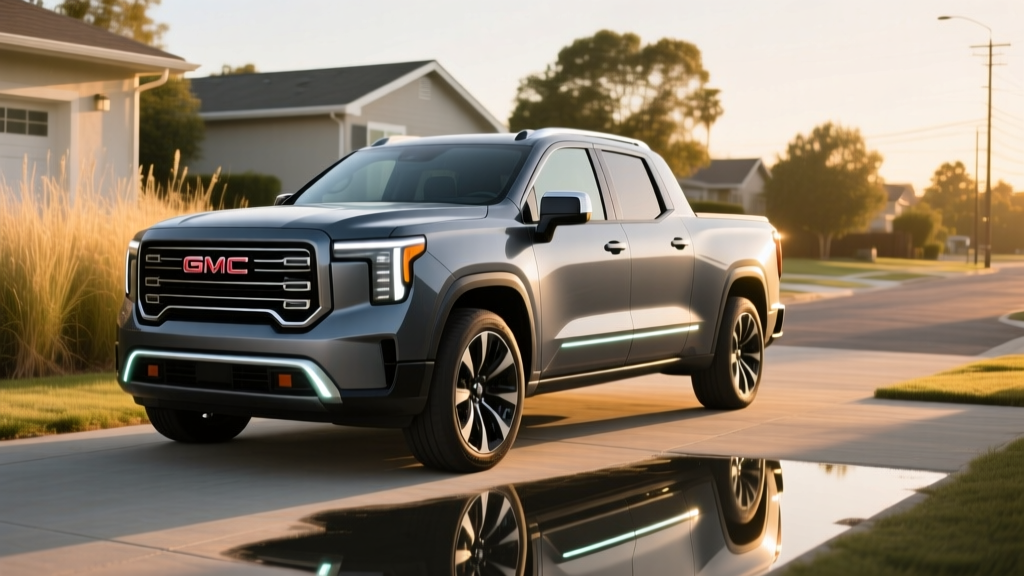
The GMC Sierra EV delivers up to 390 miles of EPA-estimated range on the Denali Edition 1 and 380 miles on the Elevation trim, with an 800-volt architecture enabling 10–80% DC fast charging in approximately 20 minutes at up to 350 kW. Starting at roughly $57,000 for the Elevation and $87,000 for the Denali, it undercuts the Rivian R1T and matches the Ford F-150 Lightning on range while offering superior towing capacity (up to 12,500 lbs when properly equipped). It makes sense for truck buyers with home Level 2 charging access and moderate daily drives. If you tow heavy loads long-distance frequently, expect real-world range to drop 40–55% under trailer load.
Range and Efficiency: EPA Sticker vs. Real-World Miles
The Sierra EV's Ultium-based battery pack delivers class-leading range among electric pickups, but the EPA sticker tells only part of the story. The Denali Edition 1 carries approximately 200 kWh of usable battery capacity (NMC chemistry), while the Elevation uses a smaller pack estimated at 118 kWh usable.
| Spec | Elevation (2026) | Denali Edition 1 (2026) |
|---|---|---|
| EPA Range | ~380 mi | ~390 mi |
| Battery (usable) | ~118 kWh (NMC) | ~200 kWh (NMC) |
| Efficiency (combined) | ~2.0 kWh/mi | ~2.1 kWh/mi |
| MPGe (combined) | ~65 MPGe | ~63 MPGe |
| Real-World Highway (70 mph) | ~290–310 mi | ~300–320 mi |
| Real-World Cold (30°F) | ~250–280 mi | ~270–300 mi |
| Real-World Towing (5,000 lb trailer) | ~170–210 mi | ~180–230 mi |
Real-World Range Reality: The EPA 390-mile figure for the Denali assumes mixed driving at moderate speeds and temperatures. Expect 300–320 miles on a flat highway at 70 mph, and as low as 170–230 miles when towing a mid-weight trailer. Cold weather (below freezing) knocks 15–25% off range even without towing. If your daily commute is under 80 miles round-trip and you charge at home, the Sierra EV handles daily use with massive overhead — but plan road trips and towing runs around DC fast-charger stops.
Charging Speed and Infrastructure
The Sierra EV uses GM's Ultium platform with an 800-volt architecture, which is the critical enabler of its fast charging. Here's what charging looks like across all three levels:
| Level | Power | Charge Rate (mi/hr added) | Time (10–80%) |
|---|---|---|---|
| Level 1 (120V outlet) | ~1.4 kW | ~2–3 mi/hr | Days (impractical for full charge) |
| Level 2 (240V home) | 11.5 kW (onboard max) | ~23 mi/hr | ~13–15 hours (Elevation) ~16–18 hours (Denali) |
| DC Fast Charge | Up to 350 kW peak | ~200+ mi/hr (peak) | ~20 minutes (10–80%) |
A few critical notes for first-time EV truck buyers:
- kW vs. kWh: kW (kilowatts) measures the rate of energy transfer — how fast you're charging. kWh (kilowatt-hours) measures total energy stored — the battery's tank size. A 350 kW charger fills the battery fast, but the rate tapers significantly above 80% State of Charge to protect the cells.
- Charge curve taper: The Sierra EV peaks near 350 kW at low SoC, but expect the rate to drop to ~150 kW around 50% and below 80 kW past 80%. The 10–80% time of ~20 minutes reflects this averaged curve. A 10–100% session will take closer to 40–45 minutes.
- Preconditioning: Use the EV route planning in the infotainment system to precondition the battery before arriving at a DC fast charger. This warms the pack to optimal temperature and can shave 5–8 minutes off your charge session, especially in cold weather.
- Connector: The 2026 Sierra EV uses the NACS (Tesla-style) charging port, giving access to Tesla Superchargers via the North American network, plus Electrify America, EVgo, and other CCS stations using a NACS-to-CCS adapter (included with some trims).
For home charging, a 48-amp Level 2 wallbox on a 60-amp circuit delivers the full 11.5 kW. Installation typically costs $800–$2,500 depending on panel proximity and whether your home needs a 200-amp service upgrade (older homes with 100-amp panels will need this — budget an additional $1,500–$3,000 for a panel upgrade).
Performance, Towing, and Utility
| Spec | Elevation | Denali Edition 1 |
|---|---|---|
| Horsepower | 510 hp | 754 hp |
| Torque | 615 lb-ft | 785 lb-ft |
| 0–60 mph | ~4.5 sec | ~3.7 sec |
| Max Towing | 10,000 lbs (est.) | 12,500 lbs (w/ Max Tow pkg) |
| Payload | ~1,800 lbs | ~1,600 lbs |
| Bed Length | 5'11" (MultiPro tailgate) | 5'11" (MultiPro tailgate) |
| Frunk (eTrunk) | ~10.9 cu ft | ~10.9 cu ft |
| ProPower-style outlet | Yes (up to 7.2 kW) | Yes (up to 7.2 kW) |
The Denali's 754 hp and sub-4-second 0–60 time make it one of the quickest pickups on the road, rivaling the Rivian R1T Quad-Motor. But the practical story is the torque delivery: electric motors produce maximum torque from 0 RPM, which transforms low-speed trail maneuvering and trailer launches. The 7.2 kW onboard power outlet can run job-site tools, tailgate setups, or serve as emergency home backup for essentials during outages.
Towing is where every EV truck hits physics. Aerodynamic drag and trailer weight crush efficiency. The Sierra EV's 12,500-lb max tow rating is impressive on paper, but real-world range at that load drops dramatically. For frequent heavy towing beyond 200 miles between stops, a diesel or gas Sierra HD still holds an advantage in total trip time.
Pricing, Trims, and Tax Credit Eligibility
| Trim | Base MSRP (2026) | Est. Federal Credit | Effective Price |
|---|---|---|---|
| Elevation | ~$57,000 | Up to $7,500* | ~$49,500 |
| AT4 (expected late 2026) | ~$72,000 (est.) | Up to $7,500* | ~$64,500 |
| Denali Edition 1 | ~$87,000 | Up to $7,500* | ~$79,500 |
§30D Federal Tax Credit — Key Rules for 2026:
- MSRP cap: Trucks, vans, and SUVs must have an MSRP at or below $80,000. The Denali Edition 1 at ~$87,000 exceeds this cap and does NOT qualify. The Elevation qualifies.
- Buyer income limits: AGI must not exceed $150,000 (single), $225,000 (head of household), or $300,000 (joint).
- Battery sourcing: Increasing percentages of critical minerals and battery components must be sourced from the U.S. or FTA partners. GM's Ultium packs are assembled in the U.S., but specific credit amounts depend on the model year's sourcing thresholds. Verify on IRS.gov §30D page.
- Point-of-sale transfer: You can transfer the credit to the dealer at purchase, reducing the sale price directly — you don't need to wait until tax filing.
*Credit eligibility varies by buyer and specific vehicle build. Consult a tax professional and verify at fueleconomy.gov before purchasing.
Total Cost of Ownership: Sierra EV vs. Gas Sierra 1500
| Cost Category (5 years / 75,000 mi) | Sierra EV Elevation | Gas Sierra 1500 (V8, 4WD) |
|---|---|---|
| Purchase Price (after credit) | ~$49,500 | ~$52,000 |
| Fuel / Electricity | ~$4,500 (home L2 @ $0.14/kWh) | ~$11,250 (gas @ $3.50/gal, 18 MPG) |
| Maintenance | ~$1,500 (no oil, fewer brake pads) | ~$4,000 (oil, filters, brakes, spark plugs) |
| Insurance (est.) | ~$9,000 | ~$7,500 |
| Depreciation (est.) | ~$18,000 | ~$17,000 |
| Total 5-Year Cost | ~$82,500 | ~$91,750 |
The Sierra EV Elevation saves an estimated $9,000+ over five years compared to a similarly priced gas Sierra 1500 V8, driven primarily by fuel and maintenance savings. However, three caveats apply:
- Insurance is higher for EVs — typically 15–25% more due to higher repair costs and battery replacement risk.
- Depreciation uncertainty: EV resale values have been volatile. The long-term residual value of the Sierra EV is unproven compared to the gas Sierra's well-established depreciation curve.
- Public DC fast-charging costs more: At $0.35–$0.50/kWh at public chargers, road-trip fueling costs approach or exceed gas. Home charging is where the savings live.
Common Misconceptions — Fact vs. Fiction
| Myth | Fact |
|---|---|
| "EV batteries need replacing every 5 years" | GM covers the Ultium battery for 8 years / 100,000 miles against defects and excessive capacity loss (below 70% retention). Industry data from Recurrent shows most EV batteries retain 90%+ capacity at 100,000 miles. |
| "You can't tow with an electric truck" | You can — the Sierra EV tows up to 12,500 lbs. The limitation is range under load, not capability. Plan charging stops on long towing trips. |
| "Charging takes hours on road trips" | At a 350 kW DC fast charger, 10–80% takes ~20 minutes. Combined with preconditioning and route planning, road trips add roughly 30–40 minutes of charging per 250 miles driven. |
| "The Sierra EV won't work in cold climates" | It works, but range drops 15–25% below freezing. The heat pump and battery preconditioning mitigate this. Owners in northern states report 270–300 miles of real winter range on the Denali — usable for most daily needs. |
| "All Sierra EVs qualify for the $7,500 tax credit" | Only trims under the $80,000 MSRP cap qualify (the Elevation does; the Denali Edition 1 does not). Buyer income limits and battery-sourcing rules also apply. |
Decision Framework: Is the Sierra EV Right for You?
Choose the Sierra EV if:
- You have access to Level 2 home charging (garage or driveway with a 240V circuit)
- Your daily driving is under 150 miles round-trip
- You tow occasionally but not long-distance frequently
- You want instant torque, low running costs, and onboard power for job sites or tailgating
- You qualify for the §30D tax credit (check income and MSRP caps)
Stick with a gas Sierra 1500 or consider the Sierra Hybrid if:
- You tow heavy loads (8,000+ lbs) over long distances regularly
- You live in an apartment or lack home charging access and public charging is sparse in your area
- You frequently drive in extreme cold (below 10°F) for long stretches
- You need the lowest possible upfront purchase price and can't wait for fuel savings to offset the premium
Consider the Ford F-150 Lightning instead if:
- You need a lower entry price (Lightning starts around $55,000) and a proven, mature platform
- You prefer CCS charging compatibility (though NACS adoption is expanding rapidly)
Battery Warranty and Long-Term Ownership
GM provides an 8-year / 100,000-mile battery and powertrain warranty on the Sierra EV, covering defects and capacity degradation below 70% of original capacity. For context, the Ultium platform uses NMC (nickel manganese cobalt) chemistry, which offers high energy density but is slightly more prone to calendar degradation than LFP (lithium iron phosphate) batteries found in some competitors' standard-range models.
Best practices for maximizing battery longevity:
- Charge to 80% for daily use; reserve 100% charges for road trips
- Avoid leaving the truck at very high or very low SoC for extended periods in extreme heat
- Use Level 2 home charging as your primary method; frequent DC fast charging accelerates degradation slightly, though GM's thermal management system mitigates this
- Monitor State of Health (SoH) through the infotainment system or the myGMC app
If the battery does need replacement outside warranty, current estimates for a pack this size run $15,000–$25,000, though prices are declining as recycling and refurbishment scale. This is a worst-case scenario — the vast majority of EV batteries outlast the vehicle's useful life.
Frequently Asked Questions
Can I charge the GMC Sierra EV at a Tesla Supercharger?
Yes. The 2026 Sierra EV comes with a native NACS port, providing direct access to Tesla's Supercharger network (V3 and V4 stations) without an adapter. This significantly expands your fast-charging options on road trips.
How much does it cost to charge the Sierra EV at home?
At the U.S. average residential rate of ~$0.14/kWh, fully charging the Elevation's ~118 kWh battery costs about $16.50. The Denali's ~200 kWh pack costs roughly $28 for a full charge. Most owners charge partially overnight, spending $50–$80/month on electricity — versus $200–$250/month on gas for a comparable V8 Sierra.
Does the Sierra EV qualify for the $7,500 federal tax credit?
The Elevation trim (~$57,000 MSRP) qualifies if you meet income limits ($150K single / $300K joint AGI) and the vehicle meets battery-sourcing requirements for that model year. The Denali Edition 1 (~$87,000) exceeds the $80,000 MSRP cap for trucks and does NOT qualify. Always verify current eligibility at IRS.gov.
What's the real-world towing range?
Expect 170–230 miles when towing a 5,000-lb trailer at highway speeds, depending on terrain, speed, and temperature. A heavy 10,000-lb trailer can reduce range to 120–170 miles. Plan charging stops accordingly and use the truck's built-in route planner, which factors in trailer load.
How does the Sierra EV compare to the Ford F-150 Lightning?
The Sierra EV offers more range (380–390 mi vs. Lightning's ~320 mi on extended-range), faster peak charging (350 kW vs. Lightning's ~150 kW), and higher max towing (12,500 vs. 10,000 lbs). The Lightning counters with a lower starting price, a more mature platform with years of real-world ownership data, and a larger frunk. Both are strong choices — your preference depends on range/charging priority vs. price/platform maturity.
Do I need to upgrade my electrical panel for home charging?
Possibly. A Level 2 charger requires a dedicated 60-amp circuit (for 48-amp charging). Homes with 200-amp service typically handle this without issue. Older homes with 100-amp panels may need a service upgrade ($1,500–$3,000). Have a licensed electrician evaluate your panel before purchasing a wallbox.