The GMC Sierra EV has carved out a unique niche in the electric truck market — combining GM's Ultium platform with a midgate system, serious towing capability, and a starting price that undercuts several rivals. But before you chase the most attractive GMC Sierra EV lease deals on the board, the real question is what this truck costs to live with over five years. Lease payments are only the beginning. Charging costs, insurance premiums, maintenance savings, depreciation trajectory, and federal tax credit eligibility all shape the true financial picture.
We ran the numbers on the 2026 Sierra EV lineup — from the base 3X trim to the Denali Edition 1 — to give you a clear-eyed ownership cost analysis backed by EPA data, IRS incentive rules, and real-world driving assumptions. Here's what the math actually looks like.
2026 GMC Sierra EV: Lease Pricing and Trim Breakdown
For the 2026 model year, GMC offers the Sierra EV in several configurations. Lease deals vary by dealer and region, but here's where the trims stand on MSRP, which anchors any lease calculation:
| Trim | MSRP (approx.) | Battery (usable) | EPA Range | Peak DC Charge | 0-60 mph | HP |
|---|---|---|---|---|---|---|
| 3X Standard Range | $57,700 | ~100 kWh (NMC) | ~285 mi | ~200 kW | ~5.8 sec | ~510 |
| 3X Extended Range | $67,200 | ~200 kWh (NMC) | ~390 mi | ~350 kW | ~4.5 sec | ~655 |
| Denali Edition 1 | $99,495 | ~200 kWh (NMC) | ~390 mi | ~350 kW | ~4.3 sec | ~754 |
Lease payments are heavily influenced by residual value (what the truck is projected to be worth at lease end), the money factor (essentially the interest rate), and your negotiated selling price. A realistic 36-month lease on a 3X Standard Range might land between $650–$850/month depending on your credit tier, down payment, and local incentives. The Denali Edition 1, pushing $100K, will command significantly higher monthly payments — often $1,200+ with comparable terms.
Real-world range note: The EPA range figures above assume mixed driving. Expect highway-only trips at 70-80 mph to reduce range by roughly 10-15%. In freezing temperatures, range can drop 20-30% due to cabin heating demands and battery chemistry limitations. A 285-mile EPA truck may realistically deliver 200-230 miles on a cold winter highway run.
EPA Sticker: 285 mi (Standard Range) / 390 mi (Extended Range)
Highway at 75 mph: ~245 mi / ~335 mi
Cold weather (below 32°F), mixed: ~200 mi / ~280 mi
Preconditioning the battery while plugged in before departure mitigates some cold-weather loss.
Five-Year Total Cost of Ownership: Sierra EV vs. Gas Truck
To understand whether those Sierra EV lease deals pencil out, we need a full five-year picture. Below, we compare the Sierra EV 3X Extended Range against a similarly equipped gas-powered GMC Sierra 1500 Denali (6.2L V8, 4WD, ~16 MPG combined). We assume 15,000 miles driven per year (75,000 total), home charging at the national average electricity rate, and regular gas prices at $3.50/gallon.
| Category | Sierra EV 3X Extended Range | Gas Sierra 1500 Denali (V8) |
|---|---|---|
| Purchase / Lease Total (5 yr) | ~$48,000 (lease payments, 60 mo @ ~$800/mo) | ~$52,800 (lease payments, 60 mo @ ~$880/mo) |
| Fuel / Charging | ~$5,625 (75,000 mi @ $0.075/mi) | ~$16,406 (4,688 gal @ $3.50/gal) |
| Insurance (5 yr total) | ~$14,500 (~$2,900/yr avg) | ~$11,000 (~$2,200/yr avg) |
| Maintenance | ~$1,800 (cabin filters, wipers, tire rotation, fluid top-offs) | ~$5,200 (oil changes, transmission fluid, belts, spark plugs, brake pads) |
| Depreciation (est. if purchased) | ~$32,000 (higher EV depreciation curve) | ~$28,000 |
| Federal Tax Credit | Up to -$7,500 (if eligible — see below) | $0 |
| Estimated 5-Year Total (lease scenario) | ~$62,425 | ~$85,406 |
The EV wins on fuel and maintenance by a wide margin — saving roughly $14,200 combined over five years. Insurance partially offsets those gains at about $3,500 more. On a lease, you don't directly absorb depreciation (that's baked into the residual value and your monthly payment), but it does influence how aggressively the manufacturer prices the lease.
Federal Tax Credit: Do You Qualify on a Lease?
The federal EV tax credit under IRS §30D offers up to $7,500 for qualifying new electric vehicles. But eligibility is layered, and not every Sierra EV buyer will qualify. Here's the checklist as of 2026:
- MSRP Cap: Trucks/SUVs/vans must have an MSRP at or below $80,000. This means the 3X Standard Range ($57,700) and 3X Extended Range ($67,200) qualify on price. The Denali Edition 1 at ~$99,495 does not.
- Buyer Income Limits: Modified adjusted gross income (MAGI) must not exceed $150,000 (single), $225,000 (head of household), or $300,000 (married filing jointly).
- Battery Sourcing: The credit splits into two halves — $3,750 for meeting critical minerals requirements and $3,750 for battery component sourcing. Both thresholds tighten annually. Vehicles with battery components from a "foreign entity of concern" are disqualified entirely.
- Point-of-Sale Transfer: As of 2024, you can transfer the credit to the dealer at the point of sale, reducing your purchase price or down payment immediately — rather than waiting to claim it on your tax return.
- Lease Loophole (Commercial Credit §45W): When you lease an EV, the leasing company (the legal owner) may claim the commercial clean vehicle credit under §45W, which has fewer sourcing restrictions. Many automakers pass this savings through as a "lease cash" incentive, effectively giving you the $7,500 benefit regardless of your income or the battery sourcing rules. Confirm with your dealer whether GM Financial is passing through this credit on Sierra EV leases.
Bottom line: If you purchase a 3X Extended Range outright and meet all income and sourcing requirements, you could claim up to $7,500. If you lease, the §45W commercial credit pathway often makes the full $7,500 available as a lease incentive regardless of personal income caps — but verify this with your dealer, as pass-through policies vary by manufacturer and change over time.
Charging vs. Gas: The Per-Mile Cost Reality
This is where the Sierra EV makes its strongest financial case. The Extended Range model's battery holds roughly 200 kWh of usable energy. With an EPA efficiency rating around 48 MPGe (or about 70 kWh per 100 miles for a truck this size), the cost per mile depends entirely on where you charge.
| Scenario | Cost per kWh / Gallon | Cost per Mile (Sierra EV) | Cost per Mile (Gas Sierra V8 @ 16 MPG) |
|---|---|---|---|
| Home Level 2 (national avg electricity) | $0.16/kWh | $0.112/mi | $0.219/mi |
| Home with solar / off-peak utility rate | $0.08/kWh | $0.056/mi | $0.219/mi |
| Public DC fast charging (avg) | $0.35/kWh | $0.245/mi | $0.219/mi |
| Public DC fast charging (peak pricing) | $0.50/kWh | $0.350/mi | $0.219/mi |
Key takeaway: If you charge primarily at home — which the vast majority of EV owners do — the Sierra EV costs roughly half what the gas Sierra costs per mile. Over 75,000 miles, that's a savings of $8,000-$12,000 depending on your electricity rate. However, if you rely exclusively on public DC fast charging at premium rates, the EV can actually cost more per mile than gas. Home charging access is the single biggest variable in EV ownership economics.
For charging speed context: the Extended Range Sierra EV can accept up to 350 kW on a compatible DC fast charger, meaning a 10-80% charge in approximately 20-25 minutes under optimal conditions. In reality, charge curves taper significantly above 80%, so plan for 30-35 minutes for a 10-90% session on a road trip. The Standard Range model peaks around 200 kW, yielding roughly 25-30 minutes for 10-80%.
Maintenance Savings: What You Keep in Your Pocket
EVs have dramatically fewer moving parts than internal combustion vehicles. The Sierra EV eliminates oil changes, transmission fluid flushes, spark plug replacements, timing belt services, and exhaust system repairs. Here's a realistic comparison:
| Service Item | Sierra EV | Gas Sierra V8 |
|---|---|---|
| Oil changes (every 7,500 mi) | $0 | ~$900 |
| Transmission fluid service | $0 (single-speed reduction gear) | ~$350 |
| Brake pad replacement | $0–$200 (regen braking saves pads) | ~$800 |
| Spark plugs / ignition | $0 | ~$400 |
| Coolant / belts / hoses | ~$300 (coolant check) | ~$600 |
| Cabin air filter (every 20K mi) | ~$250 | ~$250 |
| Tire rotation / replacement | ~$1,200 (EVs wear tires faster due to weight & torque) | ~$800 |
| Wiper blades, fluids, misc. | ~$350 | ~$350 |
| Total (5 yr) | ~$1,800–$2,300 | ~$4,450–$5,200 |
The Sierra EV saves roughly $2,500-$3,000 in maintenance over five years. One caveat: EV tires wear faster. The Sierra EV weighs over 8,500 pounds in Extended Range trim, and instant electric torque accelerates tread wear. Budget for a tire replacement around 35,000-45,000 miles. EV-specific tires (like the Michelin Defender LTX with EV-optimized compound) cost more per set but last longer under heavy-vehicle conditions.
Insurance Costs: The Expense Most Buyers Underestimate
Insurance is consistently the line item that surprises EV buyers. The Sierra EV costs more to insure than its gas counterpart for several reasons:
- Higher repair costs: EV-specific components (battery packs, power electronics, the Ultium platform architecture) are expensive to repair or replace after a collision. Body shops need specialized EV training and equipment.
- Higher vehicle value: The Sierra EV's MSRP is generally higher than a comparably equipped gas Sierra, so comprehensive and collision coverage costs more.
- Limited claims history: Insurers have decades of actuarial data on gas trucks. The Sierra EV is still building its claims profile, and insurers price in uncertainty.
- Towing complexity: A disabled Sierra EV requires a flatbed tow (you cannot flat-tow or dolly-tow most EVs without drivetrain damage), which increases roadside assistance claim costs.
Based on national averages and quotes from major carriers, expect Sierra EV insurance to run $2,500–$3,200 per year for a driver with a clean record, compared to $1,900–$2,500 for a gas Sierra 1500 Denali. That's roughly $500-$700 more annually, or $2,500-$3,500 over five years.
How to reduce this: Shop quotes from at least four insurers. Some carriers (notably State Farm, GEICO, and USAA) have become more competitive on EV premiums. Bundling home and auto, maintaining a clean record, and opting for higher deductibles can narrow the gap. Ask specifically about EV discounts — some insurers offer them.
Depreciation and Resale Value: The EV Wildcard
EV depreciation has been volatile. In 2023-2024, Tesla's aggressive price cuts caused a cascade of used EV value declines across the industry. By 2025-2026, the market has largely stabilized, but electric trucks still face questions that gas trucks don't:
- Battery health uncertainty: Used buyers want to know the battery's state of health (SoH). GM's Ultium battery warranty covers 8 years/100,000 miles with a capacity retention threshold of 70%, which provides a safety net.
- Rapid tech advancement: Newer EVs with faster charging, longer range, and NACS connectors make older models feel dated faster than gas trucks do.
- Tax credit impact: When new EVs qualify for $7,500 in incentives, it effectively lowers the "real" new price, which compresses used values. A buyer can get a new Sierra EV 3X for an incentive-adjusted price that makes a 3-year-old used unit look expensive.
Current projections suggest the Sierra EV will retain approximately 45-55% of its MSRP after 5 years / 75,000 miles, compared to 55-65% for a gas Sierra Denali. On a $67,200 Extended Range model, that means roughly $30,000-$37,000 in depreciation. On a lease, this is already factored into your monthly payment via the residual value.
The silver lining: if battery longevity data continues to show minimal degradation on the Ultium platform (early data from Cadillac Lyriq and Chevy Blazer EV owners is promising), resale confidence should improve through the late 2020s.
State, Local, and Utility Incentives
Beyond the federal §30D credit, many states, municipalities, and electric utilities offer additional EV incentives. These can include:
- State rebates: California (CVRP, up to $2,000+ for income-qualified buyers), Colorado (up to $5,000 state tax credit), Massachusetts (MOR-Ev, up to $3,500), and others.
- Utility rebates: Many utilities offer $500-$1,500 rebates for home Level 2 charger installation, or discounted off-peak electricity rates for EV owners.
- HOV lane access: States like California, Colorado, and Virginia offer single-occupant HOV lane access for EVs — a significant time savings for commuters.
- Registration fee offsets: Some states charge higher EV registration fees (to replace lost gas tax revenue), but others waive them or offer initial registration discounts.
Frequently Asked Questions
How much does it really cost to own a GMC Sierra EV over 5 years?
For a Sierra EV 3X Extended Range on a 60-month lease, expect a total five-year outlay of approximately $60,000-$70,000 including lease payments, charging, insurance, and maintenance — before applying any federal, state, or utility incentives. This is roughly $15,000-$25,000 less than a comparably equipped gas Sierra Denali over the same period, primarily due to fuel and maintenance savings.
Do I qualify for the $7,500 federal tax credit on a Sierra EV lease?
When you lease, the legal owner (GM Financial) can claim the commercial clean vehicle credit under §45W, which has fewer restrictions than the consumer §30D credit. Many leasing companies pass this savings to the lessee as reduced monthly payments or a capitalized cost reduction. Confirm with your dealer that GM Financial is passing through the full $7,500 on the specific Sierra EV lease you're considering. If you purchase instead, you must meet income caps ($150K single / $300K joint), the truck must be under $80K MSRP (excluding the Denali Edition 1), and the battery must meet critical-mineral and component sourcing thresholds per IRS guidelines.
How much do I save on fuel and maintenance with the Sierra EV?
If you charge primarily at home at the national average electricity rate ($0.16/kWh), you'll spend roughly $0.11 per mile on electricity versus $0.22 per mile on gas for the V8 Sierra. Over 75,000 miles, that's about $8,000 in fuel savings. Combined with $2,500-$3,000 in maintenance savings, the Sierra EV saves roughly $10,500-$11,000 over five years on operating costs alone.
Are Sierra EVs more expensive to insure than gas trucks?
Yes. Expect to pay $500-$700 more per year for insurance on a Sierra EV versus a gas Sierra 1500 — roughly $2,500-$3,500 more over five years. Higher repair costs, specialized parts, and limited claims history drive the premium. Shop multiple insurers and ask about EV-specific discounts.
How well does the GMC Sierra EV hold its value?
Current projections estimate 45-55% value retention after five years and 75,000 miles, which trails the gas Sierra Denali's 55-65%. EV depreciation is influenced by rapid technology advancement, new model introductions, and federal incentive effects on effective new pricing. GM's 8-year/100,000-mile battery warranty provides some floor for used values. On a lease, depreciation is embedded in your monthly payment and you don't bear the resale risk directly.
Can I tow with the Sierra EV without destroying my range?
The Sierra EV is rated to tow up to 10,000 pounds (Extended Range, properly equipped). However, towing at capacity can cut range by 40-50%. A 390-mile EPA range truck towing a heavy trailer may realistically deliver 200-230 miles before needing a charge. For frequent heavy towing, plan your routes around DC fast charging infrastructure and expect longer trip times.
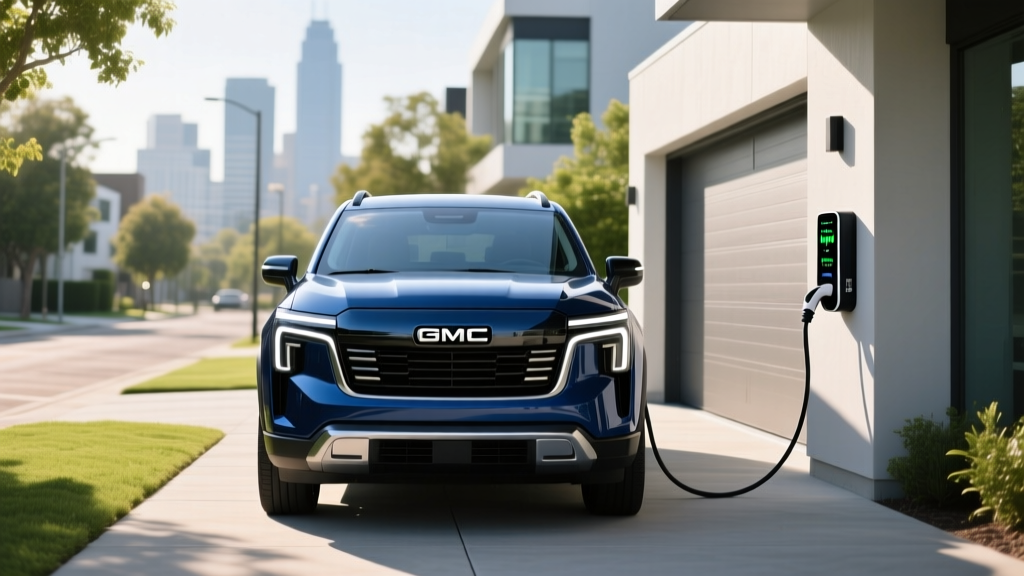
What home charging setup do I need for the Sierra EV?
The Sierra EV accepts up to 19.2 kW on Level 2 AC charging (with the available upgraded onboard charger). A 48-amp Level 2 home charger on a 240V/60A circuit will add roughly 35-40 miles of range per hour — enough to fully replenish the Extended Range battery overnight. Installation costs typically range from $800-$2,500 depending on your electrical panel capacity and the distance from panel to charger location. A panel upgrade to 200A service (if needed) can add $1,500-$3,000. Check with a licensed electrician for a site-specific quote.