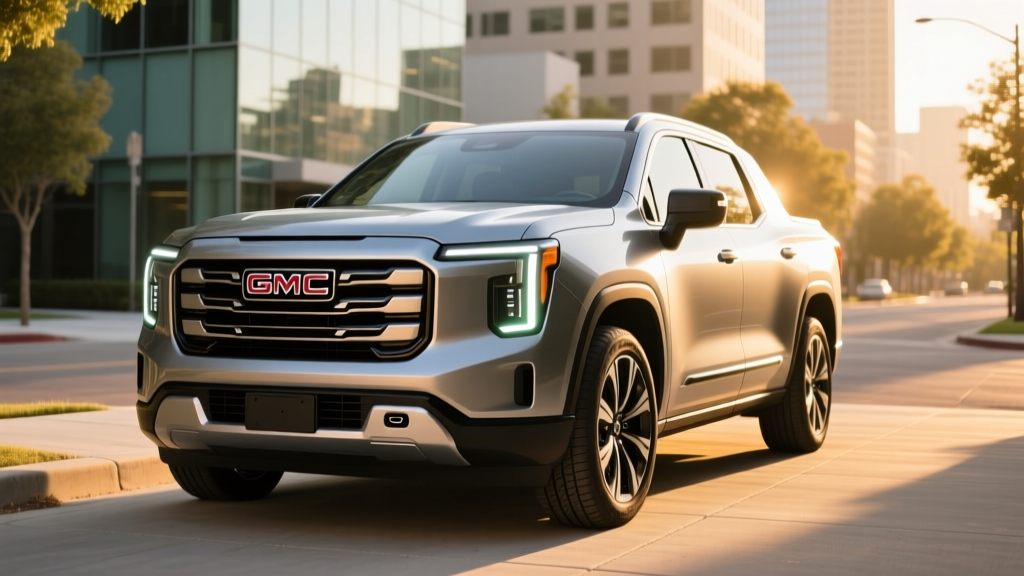
If you've been searching for competitive GMC Sierra EV lease deals, the sticker price is only the beginning of the math. The full-size electric pickup sits in a unique ownership bracket: heavy enough to consume more electricity per mile than a sedan, powerful enough to rival diesel towing figures, and expensive enough to push right up against the edges of federal incentive rules. For the 2026 model year, GMC has streamlined the Sierra EV lineup around the Denali Edition 1 and the more accessible Elevation trim, but the ownership equation still requires a hard look at electricity costs, insurance premiums, depreciation curves, and which tax incentives you can actually claim.
This guide walks through the real numbers behind owning or leasing a 2026 GMC Sierra EV over five years — including the federal §30D credit mechanics, state-level incentives, and the fuel-versus-electricity math that determines whether the Sierra EV actually saves you money compared to a gas or diesel Silverado 1500.
2026 GMC Sierra EV: Core Specs That Drive Ownership Costs
Before calculating costs, here are the baseline specifications that feed directly into the ownership math. The 2026 Sierra EV is offered primarily in two configurations:
| Specification | Elevation (Extended Range) | Denali Edition 1 |
|---|---|---|
| Base MSRP | $69,900 | $99,495 |
| Battery Capacity (usable) | ~200 kWh (NMC) | ~200 kWh (NMC) |
| EPA Range | ~390 miles | ~440 miles |
| Real-World Range (highway/cold) | ~310–340 miles | ~350–390 miles |
| Peak DC Fast Charge Rate | 350 kW | 350 kW |
| 10–80% DC Charge Time | ~22 minutes (preconditioned) | ~22 minutes (preconditioned) |
| Level 2 AC Charge Rate | 19.2 kW | 19.2 kW |
| Horsepower | 510 hp | 754 hp (Max Power Mode) |
| 0–60 mph | ~5.5 sec | ~4.3 sec |
| Max Towing Capacity | 10,000 lbs (est.) | 10,000 lbs (est.) |
| Battery/Powertrain Warranty | 8 yr / 100,000 mi | 8 yr / 100,000 mi |
| EPA Efficiency (MPGe) | ~62 MPGe combined | ~60 MPGe combined |
5-Year Total Cost of Ownership Breakdown
The following table models five years and 75,000 miles of ownership for the Sierra EV Elevation (the more commonly leased trim) compared to a comparably equipped 2026 GMC Sierra 1500 gas crew cab (~$58,000 MSRP, 19 MPG combined). Both vehicles are assumed to be financed/leased in a state with average electricity and fuel costs.
| Cost Category (5 yr / 75,000 mi) | Sierra EV Elevation | Sierra 1500 Gas (AWD) |
|---|---|---|
| Purchase/Lease Base Cost | $69,900 (or ~$699/mo lease) | $58,000 (or ~$619/mo lease) |
| Federal Tax Credit (§30D) | Up to $7,500 (see eligibility below) | $0 |
| Net Effective Purchase Price | ~$62,400 | $58,000 |
| Fuel / Electricity (75,000 mi) | ~$5,625 (home charging avg.) | ~$12,630 (gasoline) |
| Maintenance | ~$1,800 | ~$4,200 |
| Insurance (5 yr total) | ~$14,500 | ~$10,800 |
| Depreciation (est. 5 yr) | ~$38,500 (55%) | ~$24,400 (42%) |
| Total 5-Year Cost | ~$60,425 | ~$51,230 |
Federal Tax Credit: Do You Qualify for §30D?
The federal clean vehicle credit under IRS §30D offers up to $7,500 for qualifying new EVs, but the Sierra EV's eligibility depends on several moving targets. For 2026, the credit is split into two halves — $3,750 for battery component sourcing and $3,750 for critical mineral sourcing — and the vehicle must meet both requirements to qualify for the full amount.
- Vehicle MSRP Cap: Trucks, vans, and SUVs must have an MSRP at or below $80,000. The Sierra EV Elevation ($69,900) qualifies. The Denali Edition 1 ($99,495) does not qualify for the new-vehicle credit.
- Buyer Income Limits: Modified adjusted gross income (MAGI) must not exceed $150,000 (single), $225,000 (head of household), or $300,000 (joint filers). These thresholds apply to either the current or prior tax year, whichever is lower.
- Battery Component Sourcing: A specified percentage of battery components must be manufactured or assembled in North America. This threshold has been tightening annually.
- Critical Minerals Sourcing: A specified percentage of critical minerals must be sourced from the U.S. or a free-trade-agreement partner. GM's Ultium cells use a mix of domestic and imported materials — the exact qualification status for the 2026 Sierra EV should be verified on fueleconomy.gov at time of purchase.
- Point-of-Sale Transfer: Under current rules, you can transfer the credit to the dealer at the point of sale, receiving it as an immediate price reduction rather than waiting to claim it on your tax return. For leases, the lessor claims the credit and may pass savings through.
- Assembly Requirement: Final assembly must occur in North America. The Sierra EV is assembled at GM's Factory ZERO in Detroit-Hamtramck, Michigan, which satisfies this requirement.
Charging vs. Gasoline: The Per-Mile Cost Reality
The Sierra EV's massive ~200 kWh battery means it consumes significantly more energy per mile than a compact EV. Here's the concrete math based on the EPA-rated efficiency of approximately 62 MPGe (roughly 54 kWh per 100 miles for the Elevation trim):
| Scenario | Rate | Cost per Mile | Cost per 1,000 Miles |
|---|---|---|---|
| Home Level 2 Charging (national avg.) | $0.17/kWh | $0.092 | $91.80 |
| Home Charging (low-cost utility, e.g., $0.10/kWh) | $0.10/kWh | $0.054 | $54.00 |
| Public DC Fast Charging (avg. $0.40/kWh) | $0.40/kWh | $0.216 | $216.00 |
| Gas Sierra 1500 (19 MPG, $3.20/gal) | $3.20/gal | $0.168 | $168.40 |
| Gas Sierra 1500 (19 MPG, $4.00/gal) | $4.00/gal | $0.211 | $210.50 |
The takeaway: If you charge primarily at home on a standard residential rate, the Sierra EV costs roughly 45% less per mile to fuel than the gas Sierra 1500. Over 75,000 miles, that's a savings of approximately $5,000–$7,000. However, if you rely heavily on public DC fast charging — say, for apartment dwellers without home charging access — the cost per mile can actually exceed gasoline. The Sierra EV's 200 kWh battery makes this dynamic more pronounced than with smaller EVs. A full DC fast charge from 10–80% on a 350 kW charger adds roughly 140 kWh at ~$0.40/kWh, costing about $56 and taking approximately 22 minutes when preconditioned.
For home charging, GM recommends a hardwired Level 2 wall connector on a 100-amp circuit to take advantage of the Sierra EV's 19.2 kW onboard charger. At that rate, a full charge takes roughly 10.5 hours — practical for overnight replenishment. Installation typically runs $800–$2,500 depending on your electrical panel capacity and distance from the panel to the garage.
Maintenance Savings: Where the Sierra EV Wins Clearly
Electric pickups eliminate several recurring maintenance items that add up significantly on a full-size gas truck over five years:
| Maintenance Item | Sierra 1500 Gas (5 yr / 75K mi) | Sierra EV (5 yr / 75K mi) |
|---|---|---|
| Oil Changes (~$75 each, every 7,500 mi) | ~$750 (10 changes) | $0 |
| Transmission Fluid Service | ~$300 | $0 (single-speed reduction gear) |
| Spark Plugs / Ignition | ~$400 | $0 |
| Brake Pads & Rotors | ~$1,200 (1–2 replacements) | ~$300 (regen braking extends life 2–3x) |
| Engine Air Filter | ~$150 | $0 |
| Coolant Flush / Misc. | ~$400 | ~$200 |
| Cabin Air Filter / Wipers / Tires | ~$1,000 | ~$1,100 (tires may wear faster due to weight) |
| Total Maintenance | ~$4,200 | ~$1,800 |
The Sierra EV saves roughly $2,400 in maintenance over five years. One area where costs may be slightly higher: tire replacement. The Sierra EV weighs over 9,000 pounds and delivers instant torque, which accelerates tire wear. Budget for a premium all-season or all-terrain tire set (~$1,400–$1,800 for four) potentially once during the five-year window, compared to every 40,000–50,000 miles on the lighter gas model.
Insurance Cost Reality: The Hidden Ownership Premium
EV insurance premiums are typically 15–25% higher than equivalent gas vehicles, and the Sierra EV is no exception. Several factors drive this:
- Higher repair costs: The Ultium battery pack and specialized structural components require trained technicians and OEM parts. Collision repair on a 9,000+ lb EV with a 200 kWh battery is fundamentally more expensive than on a conventional truck.
- Total-loss risk: Battery damage in a collision can push repair costs past the vehicle's actual cash value more quickly, increasing insurer exposure.
- Vehicle value: The Sierra EV Elevation's ~$70,000 MSRP is higher than many gas Sierra 1500 trims, driving up comprehensive and collision premiums.
- Specialized labor: High-voltage system repairs require EV-certified body shops, which are still less common than traditional facilities.
Expect annual premiums of $2,600–$3,200 for the Sierra EV Elevation (depending on your state, driving record, and coverage levels), compared to $2,000–$2,400 for a gas Sierra 1500. Over five years, that's an additional $3,000–$4,000 in insurance costs — a significant offset to fuel and maintenance savings.
Mitigation strategies: Shop quotes from insurers with dedicated EV programs (some offer discounts for home chargers or safe-driving telematics). Bundling with homeowners insurance and maintaining a clean record remain the most effective levers.
Depreciation and Resale Value Trends
EV depreciation has been steeper than gas vehicles in recent years, driven by rapid technology advancement, battery cost declines, and market oversupply in some segments. For full-size electric pickups specifically:
- The Ford F-150 Lightning has seen 35–50% depreciation over three years depending on trim and mileage, partly due to initial overpricing and aggressive incentive corrections.
- The Rivian R1T has held value somewhat better (~30–40% over three years) due to limited production volume and strong demand.
- GM's Ultium-based trucks (Silverado EV, Sierra EV) entered the market with more conservative production targets, which may support residual values.
For the Sierra EV Elevation at ~$69,900, expect 50–60% depreciation over five years — a residual value of roughly $28,000–$35,000. This is steeper than a gas Sierra 1500, which typically retains 55–62% of its value over the same period. The primary risk factors are continued battery cost reductions (making today's pack seem expensive by 2031 standards) and potential warranty concerns as early models age.
State, Local, and Utility Incentives
Beyond the federal §30D credit, your actual ownership cost may be further reduced by regional incentives. These vary significantly by location and change frequently, so always verify current availability:
- State EV rebates: States like California (CVRP, up to $2,000–$7,000 depending on income), Colorado (up to $5,000 for trucks), and Massachusetts (MOR-EV, up to $3,500) offer direct purchase or lease rebates. Many states have income-based tiers.
- Utility rebates: Many electric utilities offer $250–$1,500 rebates for purchasing an EV and/or installing a Level 2 home charger. Examples include PG&E ($800), Con Edison ($500), and Xcel Energy ($550–$1,200 depending on program).
- HOV lane access: Several states grant solo HOV lane access to EVs — a non-monetary benefit that can save significant commute time in congested metro areas.
- Registration fee offsets: A few states charge higher EV registration fees (to offset lost gas tax revenue), which slightly increases annual ownership cost. Check your state's DMV for specifics.
These incentives can collectively shave $1,000–$8,000+ off your effective cost, depending on where you live. Check the Alternative Fuels Data Center for a state-by-state incentive database.
Is a GMC Sierra EV Lease Deal Worth It in 2026?
The ownership math for the Sierra EV depends heavily on your specific situation. Here's a decision framework based on the data above:
- You have reliable home Level 2 charging access (garage or driveway with a 240V circuit)
- You drive 12,000–18,000 miles per year (high mileage maximizes fuel savings)
- You qualify for the §30D credit (or lease, where the lessor claims it and passes savings through)
- You live in a state with additional EV incentives that stack on top of the federal credit
- You value instant torque, quiet operation, and the ability to "refuel" at home
- You plan to keep the truck 3 years or less via lease (avoiding long-term depreciation risk)
- You live in an apartment or lack home charging access (public DC charging erases the cost advantage)
- You tow frequently at or near max capacity (range drops 40–50% under load)
- Your annual mileage is under 8,000 miles (fuel savings won't offset higher insurance and depreciation)
- You plan to keep the truck 7+ years and are concerned about out-of-warranty battery replacement costs ($20,000–$30,000+ for a 200 kWh pack)
- You exceed the §30D income caps and are purchasing (not leasing)
Frequently Asked Questions
How much does it really cost to own a GMC Sierra EV over 5 years?
Based on our analysis, approximately $60,000–$65,000 over five years and 75,000 miles for the Elevation trim — including purchase price (net of federal credit), electricity, insurance, maintenance, and depreciation. This compares to roughly $51,000–$55,000 for a gas Sierra 1500. The gap narrows if you qualify for state incentives, charge at low residential rates, or lease with the §30D credit passed through as a cap-cost reduction.
Does the GMC Sierra EV Denali Edition 1 qualify for the $7,500 federal tax credit?
No. The Denali Edition 1's MSRP of ~$99,495 exceeds the §30D cap of $80,000 for trucks, vans, and SUVs. Only the Elevation trim (MSRP ~$69,900) is potentially eligible, subject to income limits, battery sourcing requirements, and other current-year rules. Always verify on IRS.gov before purchasing.
How much do I save on fuel and maintenance with the Sierra EV?
Approximately $5,000–$7,000 on fuel over five years (assuming mostly home charging at ~$0.17/kWh) and roughly $2,400 on maintenance. Combined savings of $7,400–$9,400 — though this is partially offset by $3,000–$4,000 in additional insurance costs and steeper depreciation.
Are EVs more expensive to insure than gas trucks?
Yes, typically 15–25% more. For the Sierra EV, expect $2,600–$3,200 per year versus $2,000–$2,400 for a gas Sierra 1500. Higher repair costs, battery replacement risk, and the vehicle's higher MSRP all contribute. Shop multiple insurers and ask about EV-specific discounts.
How well does the Sierra EV hold its value?
Expect 50–60% depreciation over five years for the Elevation trim, which is steeper than the gas Sierra 1500's ~38–45% depreciation. Leasing transfers this risk to the lessor. Long-term residual values will depend on battery health data as these trucks accumulate real-world mileage.
Can I claim the tax credit if I lease the Sierra EV?
Under current IRS rules, the lessor (finance company) claims the §30D credit on a leased vehicle. However, many lessors pass the credit through as a capitalized-cost reduction, which lowers your effective monthly payment. This also means the credit is available regardless of your personal income level, since the lessor — not you — is the legal owner. Confirm this arrangement with your dealer before signing.