The GMC Sierra EV Lease Question: What Does Ownership Actually Cost?
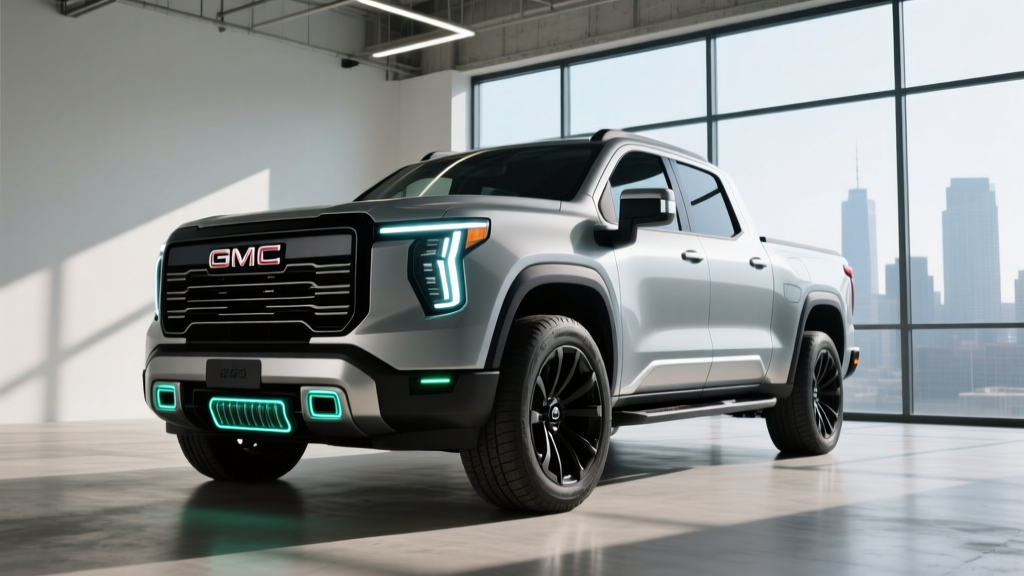
If you've been watching the electric truck segment mature, the GMC Sierra EV has likely crossed your radar. With up to 440 miles of EPA-estimated range on the Denali Edition 1 trim and a 200+ kWh Ultium battery platform, it's one of the longest-range electric pickups on the market. But the sticker price — starting around $58,000 for the base Elevation trim and climbing past $97,000 for the Denali — makes the financial math critical before you sign anything.
Many buyers are turning to a GMC Sierra EV lease as a way to access the truck's capability without absorbing the full depreciation hit of a six-figure EV. Leasing also opens a unique pathway to capture the federal tax credit even when you might not qualify under a purchase scenario. This guide breaks down the real numbers: what a Sierra EV costs to own over five years, how the IRS §30D credit applies, where you save versus a gas truck, and where costs sneak up on you.
EPA Range: 390-440 mi (trim-dependent) | Battery: ~200 kWh usable (NMC Ultium) | Max DC Charge: 350 kW peak | 10-80%: ~25 min | 0-60 mph: ~4.5 sec (Denali, 754 hp) | Towing: up to 12,000 lbs | Starting MSRP: ~$58,000 (Elevation)
5-Year Total Cost of Ownership: Sierra EV vs. Gas Sierra
To understand whether a GMC Sierra EV lease — or purchase — makes financial sense, we need to compare it against its internal-combustion sibling. The gas GMC Sierra 1500 (5.3L V8, 4WD) serves as the baseline. We're using a 5-year/75,000-mile ownership horizon, which aligns with a typical lease-plus-extension or standard loan term.
| Category | GMC Sierra EV (Elevation) | GMC Sierra 1500 Gas (5.3L V8) |
|---|---|---|
| Purchase/Lease Cost (net of incentives) | $50,500 (after $7,500 credit) | $48,000 |
| Fuel / Charging (75k mi) | $5,625 (home + public mix) | $11,250 |
| Maintenance | $1,800 | $4,200 |
| Insurance (5-year total) | $12,500 | $9,800 |
| Depreciation (est. 5-year) | $22,000 | $18,500 |
| Estimated Resale Value | $28,500 | $29,500 |
| Net 5-Year Cost (purchase minus resale) | $42,425 | $43,750 |
Key takeaway: The Sierra EV edges ahead on total 5-year cost primarily through fuel and maintenance savings that offset higher insurance and depreciation. However, this assumes you qualify for the full $7,500 federal credit and charge predominantly at home. Public-charging-heavy drivers will see the fuel-cost advantage shrink significantly.
Federal Tax Credit Eligibility: The §30D Rules That Determine Your Savings
The federal EV tax credit under IRS §30D can knock up to $7,500 off the effective cost of a GMC Sierra EV — but eligibility is far from automatic. The rules have tightened substantially, and several conditions must be met simultaneously.
- MSRP Cap: Pickup trucks/vans must have an MSRP at or below $80,000. The Sierra EV Elevation (~$58,000) qualifies; the Denali Edition 1 (~$97,000) does not.
- Buyer Income Limits: Modified AGI must not exceed $300,000 (joint filers), $225,000 (head of household), or $150,000 (single). You can use the lower of your current or prior tax year's income.
- Battery Sourcing: $3,750 of the credit requires a minimum percentage of critical minerals sourced from the U.S. or free-trade-agreement partners. The remaining $3,750 requires battery components manufactured or assembled in North America. These percentages increase annually.
- Foreign Entity of Concern (FEOC): Vehicles with battery components from a FEOC (primarily Chinese entities) are disqualified entirely, regardless of other criteria.
- Point-of-Sale Transfer: As of 2024, you can transfer the credit to the dealer at purchase, receiving it as an immediate price reduction rather than waiting for a tax refund. This applies to purchases only — not traditional leases.
- One Credit Per Vehicle, Per Taxpayer: You cannot claim the credit more than once every three years for the same buyer.
The Lease Loophole: Why a GMC Sierra EV Lease Can Capture the Credit Differently
Here's where the lease math gets interesting. Under the IRS "commercial clean vehicle credit" (§45W), a leasing company (the lessor) can claim the $7,500 commercial credit on the vehicle — and many automakers pass this savings to the lessee as a capitalized-cost reduction (effectively lowering your monthly payment). This pathway does not have the same buyer income caps or MSRP caps that §30D imposes.
So if you're eyeing a Sierra EV Denali at $97,000 — well above the $80,000 §30D MSRP cap for purchase — a lease may still deliver $7,500 in savings through the lessor's commercial credit. Always confirm with the dealer and your tax professional whether GMC Financial is passing through the commercial credit on your specific lease agreement. Rules and manufacturer policies can shift.
Charging vs. Gas: The Real Cost-Per-Mile Math
The Sierra EV's efficiency hovers around 2.0–2.2 kWh/mile in mixed driving, which is reasonable for a truck of this mass (over 9,000 lbs GVWR on some trims). Let's run the actual numbers against a gas Sierra 1500 getting a combined 17 MPG.
| GMC Sierra EV (home charging) | $0.13/kWh × 2.1 kWh/mi = $0.074/mile |
| GMC Sierra EV (public DC fast charging) | $0.40/kWh × 2.1 kWh/mi = $0.155/mile |
| GMC Sierra 1500 Gas (5.3L V8) | $3.50/gal ÷ 17 MPG = $0.206/mile |
Assumptions: National average residential electricity $0.13/kWh (EIA data), public DC fast charging at $0.40/kWh, regular unleaded at $3.50/gal. Your actual costs will vary by region and utility rate plan.
At 15,000 miles per year, home-charging the Sierra EV costs roughly $1,110 annually versus $3,090 for gas. That's nearly $2,000 per year in fuel savings — but only if you can charge at home consistently. If you're relying on public DC fast chargers for most of your miles (apartment dwellers, frequent road-trippers), the gap narrows to about $760 per year. And when towing, expect the Sierra EV's efficiency to drop to 3.0+ kWh/mile, cutting range by nearly half and raising per-mile costs substantially.
Charging Speed Reality Check
The Sierra EV supports up to 350 kW peak DC fast charging on 800V-capable architecture. In practice, you'll see peak rates sustained only in the 10–30% state-of-charge window. By 50% SoC, the rate tapers to around 200 kW, and above 80% it drops below 80 kW. A 10–80% session takes approximately 25 minutes at a compatible 350 kW station. For Level 2 home charging, the onboard charger accepts up to 19.2 kW (80A), which replenishes roughly 37 miles of range per hour — enough to fully recharge the massive ~200 kWh pack in about 11 hours overnight.
Maintenance Savings: Where EVs Genuinely Cost Less
Electric powertrains eliminate a long list of routine service items that gas trucks require. The Sierra EV has no engine oil, no transmission fluid (in the conventional sense), no spark plugs, no timing belt, no exhaust system, and no catalytic converter. Regenerative braking significantly extends brake pad and rotor life — many EV owners report original brake pads lasting 80,000+ miles.
| Service Item | Sierra EV | Gas Sierra 1500 |
|---|---|---|
| Oil changes (5-7 intervals) | $0 | $560 |
| Transmission fluid service | $0 | $300 |
| Brake pads/rotors | $200 (rear only, if needed) | $900 |
| Coolant flush | $150 | $200 |
| Tire rotation/replacement | $1,000 (heavier wear from torque/weight) | $800 |
| Cabin air filter, wipers, misc. | $250 | $250 |
| Spark plugs, belts, exhaust | $0 | $650 |
| Total Estimated (5 years) | $1,600 – $1,800 | $3,660 – $4,200 |
One area where the Sierra EV costs more: tires. The truck's 9,000+ lb curb weight and instant electric torque accelerate tire wear. Budget for a set of four premium all-terrain or all-season tires (roughly $1,200–$1,600 installed) every 30,000–40,000 miles. That's still less than the combined savings from eliminated oil, transmission, and brake services.
Insurance Costs: The Expense Most EV Buyers Underestimate
Here's the uncomfortable truth: insuring a GMC Sierra EV typically costs 20–35% more than insuring an equivalent gas Sierra 1500. Based on aggregated quote data, expect annual premiums of $2,200–$2,800 for the Sierra EV versus $1,700–$2,100 for the gas version, depending on your driving record, location, and coverage levels.
Several factors drive this gap:
- Higher repair costs: EV-specific components (battery pack, power electronics, 800V wiring harness) are expensive to replace after a collision. Repair shops need specialized EV certification.
- Higher vehicle value: The Sierra EV's MSRP is significantly above the gas Sierra's average transaction price, raising comprehensive and collision exposure.
- Specialized labor: Fewer body shops are equipped to handle high-voltage system repairs, which can extend rental-car reimbursement periods and increase claim costs.
- Total-loss thresholds: Even minor battery enclosure damage can trigger a total-loss declaration, which insurers price into premiums.
Some insurers now offer EV-specific policies with discounts for home charging or low annual mileage. Shop quotes from at least three carriers — and ask specifically about EV discounts — before finalizing your lease or purchase.
Depreciation and Resale Value: What History Tells Us
EV depreciation has been volatile. Between 2022 and 2024, several EVs experienced steeper-than-expected depreciation driven by aggressive price cuts from Tesla, rapid improvements in new-model range and charging speed, and general market correction after pandemic-era price inflation. According to iSeeCars data, the average EV lost approximately 49% of its value over three years, compared to about 39% for the average vehicle.
For the Sierra EV specifically, several factors influence its projected resale trajectory:
- Trim matters: The Elevation trim (closer to $60,000) will likely hold value better as a percentage than the Denali ($97,000+), simply because the used-truck buyer pool is more price-sensitive.
- Battery health perception: GM's Ultium battery warranty covers 8 years/100,000 miles against defects and excessive capacity loss (below 60% retention). A transferable warranty supports resale value.
- Charging standard: The Sierra EV ships with NACS (Tesla connector), which is now the dominant North American standard. This future-proofs access to the broadest charging network, a positive for long-term desirability.
- Market saturation risk: As more electric trucks enter the used market (Rivian R1T, Ford F-150 Lightning, Chevy Silverado EV), supply could pressure resale values downward.
Our working assumption: expect the Sierra EV to retain roughly 45–55% of its net-after-incentive value at the 5-year mark. That's competitive with gas trucks in percentage terms, but because the initial outlay is higher, the absolute dollar depreciation can be larger.
Beyond the federal §30D credit, many states and utilities offer additional savings. Examples include California's CVRP rebate (income-dependent), Colorado's state EV tax credit, and various utility-company rebates for home Level 2 charger installation ($250–$1,000+). Time-of-use electricity rates can further reduce charging costs if you charge during off-peak hours.
These incentives vary significantly by jurisdiction, utility provider, and current-year legislation. Check afdc.energy.gov for a state-by-state database and contact your local utility for current EV programs.
Should You Lease or Buy the GMC Sierra EV?
The lease-versus-buy decision for the Sierra EV comes down to a few concrete factors:
- You want the Denali trim ($97,000+) and need the commercial-credit lease pathway to capture $7,500 in savings (bypassing the §30D MSRP cap).
- You prefer lower monthly payments and plan to upgrade in 36–48 months as battery/charging tech continues evolving.
- You want to avoid long-term depreciation risk on a rapidly evolving vehicle segment.
- Your annual mileage fits within typical lease limits (10,000–15,000 mi/yr).
- You're buying the Elevation trim (under $80,000 MSRP), qualify for §30D, and can use the point-of-sale credit transfer for an immediate $7,500 price reduction.
- You drive high annual miles (15,000+) that would make lease overage penalties costly.
- You plan to keep the truck 7+ years, amortizing the higher upfront cost over a longer ownership period.
- You want to modify the truck (lift kits, aftermarket wheels, wraps) without lease restriction concerns.
Frequently Asked Questions
How much does it really cost to own a GMC Sierra EV over 5 years?
Based on our analysis, the net 5-year cost (purchase price minus resale, plus fuel, maintenance, insurance, and depreciation) lands around $42,000–$45,000 for the Elevation trim after the federal tax credit. This is modestly less than a comparably equipped gas Sierra 1500 over the same period, primarily due to fuel and maintenance savings. Your actual number depends heavily on electricity rates, driving habits, insurance costs in your state, and whether you qualify for incentives.
Do I qualify for the $7,500 federal EV tax credit on the Sierra EV?
You may, but it depends on three conditions: (1) the trim's MSRP must be at or below $80,000 — the Elevation qualifies, the Denali does not under §30D purchase rules; (2) your modified adjusted gross income must be under $300,000 (joint), $225,000 (head of household), or $150,000 (single); and (3) the vehicle's battery must meet current-year critical-mineral and component-sourcing thresholds. The leasing pathway (§45W commercial credit) may offer an alternative if you don't qualify under §30D. Consult a tax professional and review the latest rules at irs.gov.
How much do I save on fuel and maintenance with the Sierra EV?
At 15,000 miles per year with predominantly home charging ($0.13/kWh), expect to spend about $1,110/year on electricity versus $3,090/year on gasoline for the V8 Sierra — a savings of roughly $1,980 annually, or nearly $10,000 over five years. Maintenance savings add another $2,000–$2,400 over five years from eliminated oil changes, fewer brake replacements, and no exhaust or emissions service. Combined, fuel and maintenance savings typically total $12,000–$14,000 over five years.
Are EVs more expensive to insure than gas trucks?
Yes, typically 20–35% more. For the Sierra EV, expect annual premiums of $2,200–$2,800 compared to $1,700–$2,100 for a gas Sierra 1500. Higher repair costs for battery and power electronics, fewer qualified body shops, and the vehicle's higher MSRP all contribute. Some insurers offer EV-specific discounts, so comparing quotes is essential.
How well does the GMC Sierra EV hold its value?
Early data on full-size electric trucks is limited, but industry averages suggest EVs depreciate roughly 45–55% over five years — somewhat steeper than comparable gas trucks. The Sierra EV's NACS connector, Ultium battery warranty (8 yr/100,000 mi), and strong range figures (390–440 mi EPA) are positive signals for long-term desirability. However, rapid advances in EV technology and increasing competition in the electric truck segment create downward pressure on used values. Leasing transfers this depreciation risk to the lessor.
What is the real-world range of the Sierra EV versus the EPA estimate?
The EPA rates the Sierra EV Denali at up to 440 miles and the Elevation at around 390 miles. In real-world highway driving at 70–75 mph, expect roughly 80–85% of the EPA figure — so about 340–375 miles for the Denali and 310–330 miles for the Elevation. In cold weather (below 30°F), range can drop an additional 15–25% due to battery chemistry limitations and cabin heating demands. Towing at max capacity will cut range roughly in half. Always plan road trips around the conservative real-world number, not the sticker.
Does the Sierra EV use NACS or CCS for charging?
The GMC Sierra EV is equipped with the NACS (North American Charging Standard) connector — the Tesla-derived plug that has been adopted by nearly every major automaker for the North American market. This gives you native access to Tesla Superchargers (with V4 stalls offering NACS cables), Electrify America, and other networks transitioning to NACS. For older CCS-only public chargers, an adapter may be needed, though the industry is rapidly standardizing on NACS.