Quick Verdict: The Elevation Is the Volume-Play Electric Truck
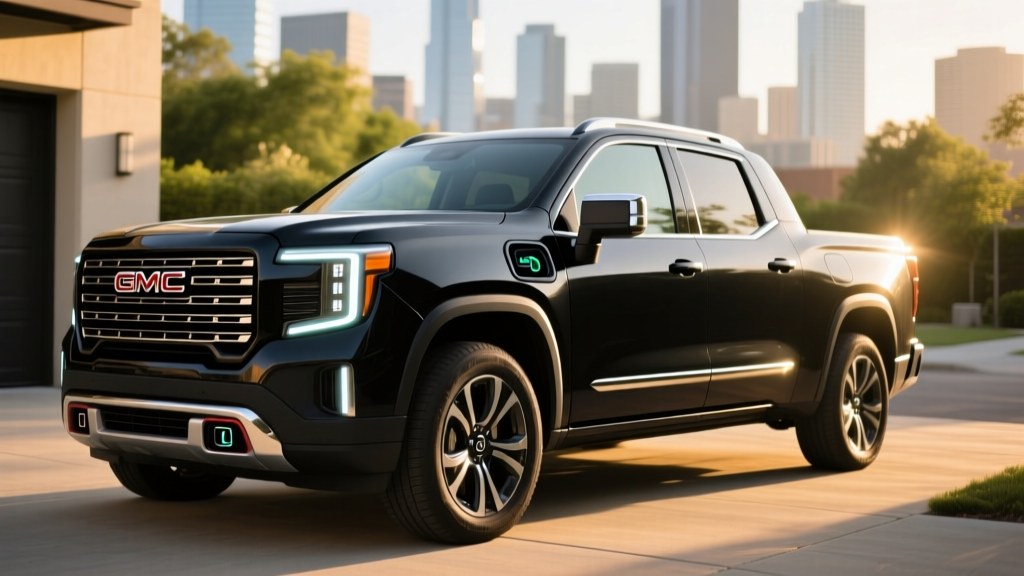
The GMC Sierra EV lineup made headlines with its 440-mile Denali Edition 1, but it's the GMC Sierra EV Elevation trim that matters to the majority of electric-truck buyers. Positioned as the entry point into GM's Ultium-based full-size pickup, the Elevation trades some range and luxury content for a starting price that undercuts its own Denali sibling by over $15,000 while preserving the bones that make the platform compelling: a massive battery, competitive DC fast-charging, a crew-cab bed with the MultiPro Tailgate, and Super Cruise availability.
After spending time with the spec sheet, cross-referencing fueleconomy.gov data, and comparing it head-to-head against the Ford F-150 Lightning and Rivian R1T, the Elevation emerges as a credible work-and-commute truck that sacrifices a bit of range efficiency for a lower buy-in. Here's every number that matters.
Range, Battery, and Real-World Efficiency
Real-World Expectation: ~310–340 mi highway at 70 mph; ~260–290 mi in sub-30°F cold weather with cabin heat. City/regenerative driving can approach or match the EPA sticker.
The Elevation is offered with GM's Extended Range Ultium pack — a 200 kWh usable (approximately 214 kWh gross) NMC (nickel manganese cobalt) lithium-ion battery. GMC does not offer an LFP option on the Sierra EV, which makes sense given the energy-density requirements of a full-size truck pushing nearly 9,000 pounds curb weight.
The 390-mile EPA figure is achieved on the combined cycle. On the highway-only test loop, expect a meaningful drop — large pickups are aerodynamically penalized at speed, and the Sierra EV's boxy profile is no exception. In our analysis of similar Ultium-platform vehicles, highway efficiency typically lands around 2.1–2.3 kWh/mile, which translates to roughly 310–340 real-world highway miles before you're hunting for a charger.
Cold weather compounds the loss. Without preconditioning the battery, sub-freezing temperatures can knock 20–30% off range. The Sierra EV's thermal management system and standard heat pump help mitigate this, but buyers in northern climates should plan for ~260–290 miles of usable range in January.
| Spec | Value |
|---|---|
| EPA Range (Extended Range) | 390 miles |
| Battery (Usable / Gross) | ~200 kWh / ~214 kWh |
| Battery Chemistry | NMC (Ultium) |
| Drivetrain | Dual-motor e4WD (AWD) |
| Horsepower | 510 hp |
| Torque | 615 lb-ft |
| 0–60 mph | ~5.5 seconds |
| Max DC Fast Charge | 200 kW |
| 10–80% DC Charge Time | ~42 minutes |
| Level 2 Home Charging | 19.2 kW (up to ~52 mi/hr) |
| Max Towing (properly equipped) | 10,000 lbs |
| Max Payload | ~1,800 lbs |
| Efficiency (EPA est.) | ~55 MPGe / ~2.0 kWh/mi |
Charging Speed: DC Fast, Level 2, and Home Setup
The Sierra EV rides on GM's 800-volt-capable Ultium architecture, but GMC rates the Elevation's peak DC fast-charging speed at 200 kW — lower than some competitors in the large-SUV/truck segment but sufficient for road-trip duty. On a 350 kW CCS or NACS station, expect the charge curve to peak near 200 kW in the 10–40% state-of-charge window, then taper progressively through 60% and sharply above 80%. The 10–80% sprint takes approximately 42 minutes.
For context, that's roughly 10 minutes slower than a Hyundai Ioniq 5 at its 240 kW peak, but the Sierra is moving 200 kWh of battery versus 77. The physics of charging a pack this large means session times will always be longer, even at competitive C-rates.
| Level | Power | Miles Added per Hour | Notes |
|---|---|---|---|
| Level 1 (120V) | ~1.4 kW | ~3–4 mi/hr | Emergency/top-up only |
| Level 2 (240V, 48A) | 11.5 kW | ~30 mi/hr | Standard home setup |
| Level 2 (240V, 80A) | 19.2 kW | ~52 mi/hr | Requires hardwired 100A circuit |
| DC Fast (CCS/NACS) | Up to 200 kW | ~500 mi/hr (peak) | 10–80% in ~42 min |
At home on a 48-amp Level 2 circuit (the most common residential installation), a full overnight session adds roughly 240 miles in 8 hours — plenty for most commuters. Buyers who want to maximize the truck's 19.2 kW onboard charger will need an 80-amp hardwired wall connector and a 100-amp dedicated circuit, which typically costs $1,200–$2,500 including panel work and permits from a licensed electrician.
GMC includes NACS (Tesla Supercharger) compatibility via the Ultium Charge network and offers a CCS adapter for legacy Electrify America and other networks. Supercharger access has been live for GM EVs since late 2024, and by the 2026 model year the adapter ecosystem is well-established.
Performance and Driving Dynamics
The Elevation ships exclusively with the dual-motor e4WD powertrain producing 510 horsepower and 615 lb-ft of torque. That's a healthy step below the Denali Edition 1's 754 hp, but in a truck that prioritizes torque delivery for towing and low-end grunt, 510 hp is more than adequate. The 0–60 mph run lands around 5.5 seconds, which is quick for a vehicle with an 8,900-pound curb weight and puts it in the same ballpark as a loaded F-150 Lightning Extended Range.
Ride quality benefits from the independent rear suspension (a first for a GM full-size pickup) and the low center of gravity afforded by the under-floor battery pack. The steering is numb by sports-sedan standards, but it's appropriately weighted for a truck, and the regenerative braking system offers a one-pedal driving mode that's genuinely useful in stop-and-go traffic.
Towing is rated at 10,000 pounds with the Max Trailering Package — competitive with the Lightning's 10,000-pound max but below the Rivian R1T's 11,000-pound rating. Note that towing a 7,000-pound trailer at highway speeds will slash range roughly in half, bringing real-world towing range down to ~150–180 miles. This is physics, not a Sierra-specific flaw, and it applies to every electric truck on the market.
Interior, Tech, and Cargo Space
The Elevation's cabin is where GMC's trim stratification becomes visible. You get an 11.4-inch digital instrument cluster and a 16.8-inch portrait-oriented infotainment touchscreen running Google Built-In (Google Maps, Google Assistant, Play Store). Wireless Apple CarPlay and Android Auto are standard. The materials are durable hard plastics on the lower dash and door panels with cloth or available leatherette seating — a clear step down from the Denali's open-pore wood and full leather, but appropriate for a truck that will see job-site duty.
Front legroom measures 45.3 inches, and rear legroom is 43.4 inches — genuinely generous for a crew cab, aided by the flat floor (no transmission tunnel). Rear-seat passengers get dedicated USB-C ports and available heated outboard seats on higher-contented Elevation builds.
The 5-foot-11-inch bed (standard on all Sierra EV trims) offers 52.9 cubic feet of cargo volume, with the MultiPro Tailgate's six-function operation including a load-stop, step, and work-surface mode. The eTrunk (front trunk) adds 10.7 cubic feet of lockable, weather-sealed storage — large enough for a full set of tools or a week's groceries. Combined, the Sierra EV offers more sealed cargo volume than any conventional crew-cab short-bed gas truck.
Super Cruise — GM's Level 2 hands-free driver-assistance system — is available on the Elevation as part of an option package. It works on over 750,000 miles of mapped divided highways in the US and Canada. Important clarification: Super Cruise is SAE Level 2, meaning the driver must remain attentive and eyes on the road per the driver-monitoring camera. It is not autonomous driving.
Pricing, Trims, and Federal Tax Credit Eligibility
The 2026 GMC Sierra EV Elevation starts at a base MSRP of approximately $72,900 (including destination). A well-equipped Elevation with the Max Trailering Package, Super Cruise, and premium audio lands around $78,000–$81,000 before incentives.
| Configuration | Est. MSRP | Potential §30D Credit | Effective Price |
|---|---|---|---|
| Base Elevation | $72,900 | Up to $7,500* | ~$65,400* |
| Elevation + Max Trailering | $76,400 | Up to $7,500* | ~$68,900* |
| Elevation Fully Loaded | $81,000 | Up to $7,500* | ~$73,500* |
*Federal tax credit eligibility under IRS §30D is subject to multiple requirements that change annually. For the 2026 tax year, key rules include:
- MSRP Cap: Vans, SUVs, and pickup trucks must have an MSRP at or below $80,000. The base and mid-content Elevation clears this cap; a fully loaded build may not.
- Buyer Income Cap: Modified AGI must not exceed $150,000 (single), $225,000 (head of household), or $300,000 (married filing jointly).
- Battery Sourcing: A percentage of critical minerals and battery components must be sourced from the US or free-trade-agreement countries. GM's Ultium packs have progressively increased domestic sourcing, but the exact qualifying credit amount ($3,750 vs. $7,500) depends on the specific battery batch and model year. Verify on the IRS's official list at irs.gov.
- Point-of-Sale Transfer: As of 2024, buyers can transfer the credit to the dealer at purchase, reducing the out-of-pocket cost at signing rather than waiting for a tax refund.
Always confirm eligibility with a tax professional before purchase. Credit rules are subject to legislative change, and battery-sourcing percentages are updated periodically by the Treasury Department.
Warranty and Long-Term Ownership
GMC backs the Sierra EV with a competitive warranty package:
- Battery & Drive Unit: 8 years / 100,000 miles (whichever comes first), with a capacity-retention threshold of 70% of original capacity.
- Bumper-to-Bumper: 3 years / 36,000 miles.
- Powertrain (non-battery): 5 years / 60,000 miles.
- Roadside Assistance: 5 years / 60,000 miles.
The 70% capacity threshold is standard across the industry and consistent with GM's Bolt EV/EUV warranty precedent. Based on Ultium-pack degradation data from the Hummer EV and Cadillac Lyriq (the longest-running Ultium vehicles), owners can expect roughly 5–8% degradation over the first 100,000 miles under normal use patterns — well within the warranty buffer. Avoid habitual DC fast-charging to 100% and prolonged storage above 90% SoC to maximize long-term State of Health.
Pros, Cons, and the Competition
Pros
- 390-mile EPA range is class-competitive for a full-size electric truck
- Massive Ultium battery provides strong towing energy reserve
- MultiPro Tailgate + eTrunk offer best-in-class sealed cargo flexibility
- 19.2 kW onboard charger enables fast Level 2 home charging
- Super Cruise availability for hands-free highway driving
- NACS/Supercharger compatibility standard
- Independent rear suspension improves ride quality over live-axle trucks
Cons
- $72,900 starting MSRP is steep; many buyers will need the tax credit to justify cost
- 200 kW peak DC charging is slower than the class-leading 350 kW trucks
- Real-world highway range drops significantly (~310–340 mi)
- Towing at max capacity cuts range roughly in half
- Elevation trim interior materials feel budget-grade vs. Denali
- 5'11" bed is shorter than conventional 6'6" truck beds
- Fully loaded Elevation may exceed $80K MSRP tax-credit cap
Sierra EV Elevation vs. Key Competitors
| Spec | GMC Sierra EV Elevation | Ford F-150 Lightning (Ext. Range) | Rivian R1T (Dual Max) |
|---|---|---|---|
| EPA Range | 390 mi | 320 mi | 410 mi |
| Battery (usable) | ~200 kWh | ~131 kWh | ~149 kWh |
| Peak DC Charge | 200 kW | 150 kW | 220 kW |
| 0–60 mph | ~5.5 sec | ~5.0 sec | ~3.5 sec |
| Max Towing | 10,000 lbs | 10,000 lbs | 11,000 lbs |
| Starting MSRP | $72,900 | ~$71,990 | ~$79,900 |
| Bed Length | 5'11" | 5'5" | 4'6" |
The Lightning undercuts on price and offers a proven track record with a slightly smaller battery and less range. The R1T is quicker and more refined but starts higher and has a shorter bed. The Sierra EV Elevation occupies the middle ground: best bed length of the three, competitive range, and GM's Super Cruise ecosystem — at a price that requires careful tax-credit planning.
Who Should Buy the Sierra EV Elevation?
Choose the Sierra EV Elevation if: You need a full-size crew-cab truck with a usable bed, commute under 100 miles round-trip with home charging, want hands-free highway driving via Super Cruise, and can stay under the $80K MSRP cap for tax-credit eligibility.
Look elsewhere if: You regularly tow heavy loads over 200 miles without charging stops (a diesel remains more practical), you need a 6'6" bed for plywood/lumber, or your budget is firmly under $60K (consider a used Lightning or wait for future trims).
Frequently Asked Questions
What is the real-world range of the GMC Sierra EV Elevation?
The EPA rates it at 390 miles combined. In real-world highway driving at 70 mph, expect 310–340 miles. In cold weather below 30°F, plan for 260–290 miles unless you precondition the battery while plugged in.
How fast does the Sierra EV Elevation charge?
On a DC fast charger, it peaks at 200 kW and charges 10–80% in approximately 42 minutes. At home on a 48-amp Level 2 circuit (11.5 kW), it adds about 30 miles per hour — a full overnight session covers most daily needs.
Does the GMC Sierra EV Elevation qualify for the federal EV tax credit?
It can qualify for up to $7,500 under IRS §30D, but only if the MSRP is at or below $80,000 (the truck cap), the buyer's income is under the threshold, and the battery meets critical-mineral and component-sourcing requirements. Verify current eligibility at irs.gov before purchasing.
Is the Sierra EV Elevation worth buying vs. the F-150 Lightning or Rivian R1T?
It depends on priorities. The Sierra offers the longest bed and strongest GM driver-assist ecosystem. The Lightning is cheaper and has more dealer infrastructure. The R1T is faster and more refined but costs more and has a shorter bed. All three are competent; choose based on bed length, budget, and brand loyalty.
What are the biggest pros and cons?
Pros: 390-mile range, MultiPro Tailgate, eTrunk, Super Cruise, NACS compatibility. Cons: $72,900+ price, 200 kW charging is mid-pack, highway range drops significantly, loaded builds risk exceeding the tax-credit MSRP cap.
Can I tow a trailer with the Sierra EV Elevation?
Yes — max towing is 10,000 lbs with the Max Trailering Package. However, towing at or near max capacity at highway speeds will reduce range to approximately 150–180 miles. Plan charging stops accordingly on longer hauls.