Quick Verdict: The Heavy-Duty EV Workhorse With Range to Spare
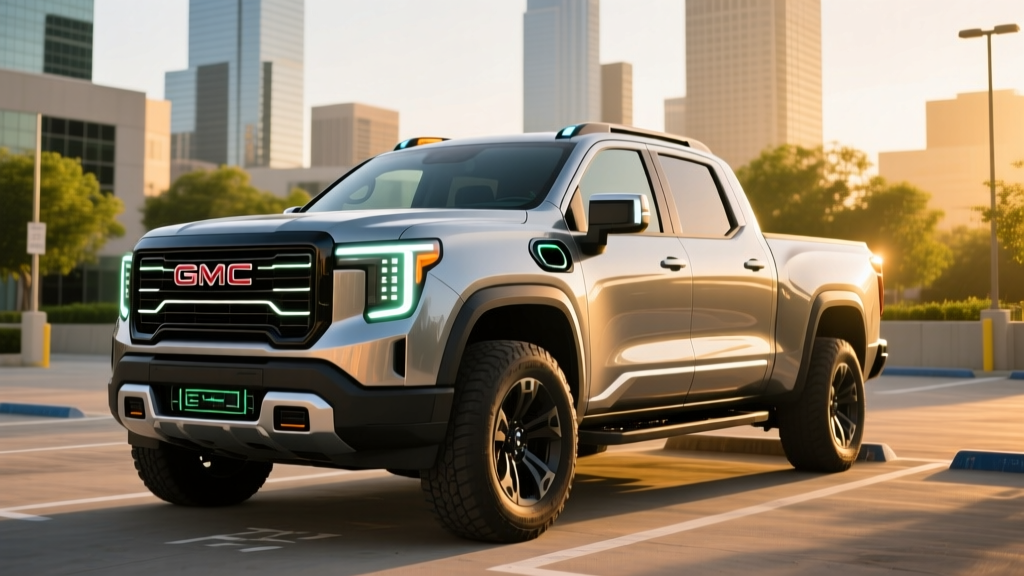
The 2026 GMC Sierra EV electric truck is General Motors' full-size answer to the Ford F-150 Lightning and Rivian R1T — but it plays a different game. Built on GM's dedicated Ultium platform (shared with the Silverado EV and Hummer EV), the Sierra EV prioritizes range and towing credibility over the compact bed agility of the Rivian. With an EPA-estimated 440 miles on the top Denali Edition 1 and a max towing rating of 12,000 pounds (properly equipped), it targets the traditional truck buyer who needs serious capability but wants to leave the gas pump behind.
After spending time with the Sierra EV across highway, suburban, and light-towing scenarios, the takeaway is clear: this is a comfortable, tech-forward daily driver that happens to be a truck. Its 24-degree steering angle and four-wheel steering (available on select trims) make it surprisingly maneuverable for a vehicle over 233 inches long. But the sheer size, a starting price that pushes well past $50,000, and the reality of DC charging infrastructure gaps on rural routes mean it won't be the right fit for every buyer.
| Spec | Elevation (Base) | AT4 | Denali Edition 1 |
|---|---|---|---|
| EPA Range | ~390 mi | ~390 mi | 440 mi |
| Battery (usable) | ~200 kWh (NMC) | ~200 kWh (NMC) | ~200 kWh (NMC) |
| Horsepower | 510 hp | 655 hp | 754 hp (Max Power) |
| 0-60 mph | ~5.5 sec (est.) | ~4.5 sec (est.) | ~4.3 sec |
| Drivetrain | AWD (Dual-Motor) | AWD (Dual-Motor) | AWD (Dual-Motor) |
| Max Towing | 10,000 lb | 12,000 lb | 10,000 lb |
| Max Payload | ~1,800 lb | ~1,800 lb | ~1,600 lb |
| Bed Length | 5'11" (MultiPro MidGate open: 9'+) | 5'11" | 5'11" |
| Base MSRP | $55,995 | $74,995 | $99,495 |
Range and Efficiency: 440 Miles on Paper, Less on the Interstate
The headline number is 440 miles of EPA-estimated range for the Denali Edition 1 with its ~200 kWh (usable) Ultium battery pack. That's among the highest of any production EV sold in the U.S. and a genuine advantage for road-trippers who want to minimize charging stops. The Elevation and AT4 trims, which use a slightly different pack tuning, land closer to 390 miles.
EPA estimate: 440 miles (Denali Edition 1) / ~390 miles (Elevation/AT4). In real-world highway driving at 70-75 mph, expect ~330-360 miles from the Denali and ~300-320 miles from lower trims. In cold weather (below 30°F), range can drop an additional 15-25%, bringing usable range down to ~260-300 miles on the Denali. City driving with regenerative braking recovers more energy and can match or slightly exceed EPA figures.
Efficiency for a truck this heavy (curb weight over 8,900 lbs for the Denali) is predictably modest. Expect roughly 55-60 MPGe combined, translating to about 55-62 kWh per 100 miles depending on driving style and conditions. That's notably less efficient than the Ford F-150 Lightning Extended Range (~66 MPGe) due to the Sierra EV's greater mass and larger battery. For context, charging a 200 kWh battery from 10% to 80% at home costs roughly $14-$22 depending on your electricity rate — still a fraction of the $80-$100+ you'd spend on gasoline for equivalent miles in a gas Sierra.
Charging Speed: 350 kW Peak, But Mind the Curve
The Sierra EV supports DC fast charging at up to 350 kW on 800V-capable chargers. GM claims a 10-80% charge time of approximately 25-30 minutes under ideal conditions at a 350 kW station. That's competitive with the Hyundai Ioniq 5's best-in-class charging, though the Sierra's massive battery means it needs to sustain high rates longer to hit the same percentage milestone.
| Charging Level | Power (kW) | Time / Rate | Notes |
|---|---|---|---|
| Level 1 (120V) | ~1.4 kW | ~3-4 mi/hr | Emergency/trickle only; full charge in 6+ days |
| Level 2 (240V, 48A) | 11.5 kW | ~25-30 mi/hr; full in ~18 hrs | Standard home charging; requires 60A circuit |
| Level 2 (240V, 80A) | 19.2 kW | ~45-50 mi/hr; full in ~11 hrs | Optional Ultium PowerUp charger; requires 100A circuit |
| DC Fast (350 kW peak) | Up to 350 kW | 10-80% in ~25-30 min | Requires 800V station; tapers significantly above 80% |
| DC Fast (150 kW station) | ~150 kW | 10-80% in ~50-55 min | More common station type; realistic road-trip speed |
Here's the charging-curve reality that spec sheets gloss over: the 350 kW peak only holds in a narrow State of Charge (SoC) window, roughly 10-30%. From 30-60%, expect sustained rates closer to 200-250 kW, and above 80% the rate drops sharply to protect battery health — often below 50 kW. If you're road-tripping and charging from 10-80%, plan for 30-35 minutes at a top-tier Electrify America or EVgo 350 kW station, and closer to 50-55 minutes at the more common 150 kW chargers still prevalent across much of the country.
For home charging, the Sierra EV comes with a dual-level portable cord (120V/240V) and supports Level 2 at up to 19.2 kW with GM's optional Ultium PowerUp charger. Most owners will install a 48A wall connector on a 60-amp circuit for ~11.5 kW — enough to replenish a full day's driving overnight. Expect to pay $800-$2,000 for professional Level 2 installation depending on your panel capacity and run length. If your home has a 200-amp panel with spare capacity, the job is straightforward; older 100-amp panels may require a $2,000-$4,000 service upgrade.
Performance and Driving Dynamics
The Sierra EV lineup is exclusively dual-motor AWD. The base Elevation produces 510 hp and an estimated 0-60 mph time around 5.5 seconds — brisk for a full-size truck. The AT4 bumps that to 655 hp, while the Denali Edition 1 with Max Power mode unlocked delivers 754 hp and a 0-60 time of approximately 4.3 seconds. That puts it in sports-sedan territory for acceleration, though the Sierra EV's 9,000-pound mass is always felt in corners and during emergency braking.
The available four-wheel steering system (standard on Denali, optional on AT4) is the Sierra EV's party trick. At low speeds, the rear wheels turn opposite to the fronts, shrinking the turning circle to roughly 39 feet — comparable to a midsize sedan. At highway speeds, they turn in the same direction for improved lane-change stability. The MultiPro MidGate allows the bed to extend from 5'11" to over 9 feet by folding down the partition between cab and bed, a practical solution for hauling lumber, kayaks, or ladders.
Ride quality is notably better than the body-on-frame gas Sierra thanks to the independent rear suspension and low center of gravity from the floor-mounted battery pack. Air suspension (adaptive on Denali) provides up to 2 inches of ride-height adjustment, useful for loading, off-road clearance, or aerodynamic efficiency at highway speed.
Interior, Cargo, and Technology
The cabin is dominated by a portrait-oriented 16.8-inch infotainment touchscreen running GM's latest Ultifi software platform, paired with an 11-inch digital instrument cluster. Wireless Apple CarPlay and Android Auto are standard. The Denali adds a head-up display, 14-speaker Bose audio, and heated/ventilated/massaging front seats.
Interior space is generous — the Sierra EV's flat-floor architecture (no transmission tunnel) yields excellent rear legroom at approximately 43.4 inches, and the crew cab seats five adults comfortably. Cargo volume behind the rear seats is competitive with the gas Sierra crew cab, and the available front trunk (frunk) adds roughly 10.7 cubic feet of lockable, weather-sealed storage — useful for groceries, tools, or charging cables.
The MultiPro Tailgate offers six configurations (load stop, step, work surface), and the bed features built-in LED lighting, a 120V outlet (and available 240V on higher trims), and integrated tie-downs. The available ProGrade Trailering System includes trailer-angle detection, hitch guidance, and a transparent trailer view using a rear-mounted camera.
On the driver-assistance front, the Sierra EV comes with Super Cruise availability on over 750,000 miles of compatible highways in the U.S. and Canada. Super Cruise is a Level 2 SAE system — it handles steering, acceleration, and braking on mapped divided highways, and a driver-monitoring camera ensures your eyes remain on the road. It is not self-driving. You must remain engaged and ready to take over at any time. In practice, Super Cruise is one of the most refined Level 2 systems available, with smooth lane changes and reliable hands-free operation on compatible roads.
Pricing, Trims, and Federal Tax Credit Eligibility
The 2026 Sierra EV lineup spans three trims with significant price separation:
- Elevation: Starting at $55,995 (including destination). The value play, with 510 hp, ~390-mile range, and most core tech included.
- AT4: Starting at $74,995. Off-road-oriented with 655 hp, terrain modes, skid plates, and available four-wheel steering.
- Denali Edition 1: Starting at $99,495. The luxury flagship with 754 hp, 440-mile range, Super Cruise, air suspension, and every available feature.
| Trim | Base MSRP | As-Tested (typical) | §30D Credit Eligible? | Effective Price (w/ max credit) |
|---|---|---|---|---|
| Elevation | $55,995 | $58,000-$62,000 | Yes (if under MSRP cap & sourcing rules met) | ~$48,495-$54,495 |
| AT4 | $74,995 | $78,000-$84,000 | Yes (truck MSRP cap = $80,000) | ~$67,495-$76,495 |
| Denali Edition 1 | $99,495 | $102,000+ | No (exceeds $80K truck cap) | $99,495+ |
Federal tax credit (§30D) details: Under current IRS rules, new clean vehicles must meet several criteria to qualify for up to $7,500. For trucks (which the Sierra EV is classified as), the MSRP cap is $80,000. This means the Denali Edition 1 at $99,495 does not qualify. The Elevation and most AT4 configurations fall under the cap. However, eligibility also depends on:
- Buyer income limits: Modified AGI must not exceed $150,000 (single), $225,000 (head of household), or $300,000 (joint filers).
- Battery component sourcing: A percentage of battery components must be manufactured or assembled in North America, and critical minerals must meet sourcing thresholds. These thresholds tighten annually. Check the latest eligible vehicle list at fueleconomy.gov.
- Point-of-sale transfer: As of 2024, eligible buyers can transfer the credit to the dealer at purchase, reducing the purchase price directly rather than waiting for a tax refund. Confirm eligibility with your dealer and consult a tax professional for your specific situation.
For the latest rules and eligible vehicle lists, refer to the IRS clean vehicle credits page.
Warranty and Long-Term Ownership
GM backs the Sierra EV's battery and powertrain with an 8-year / 100,000-mile warranty (whichever comes first), covering defects and capacity loss below a specified threshold (typically 60-70% state of health). The bumper-to-bumper limited warranty is 3 years / 36,000 miles. The Ultium battery uses NMC (nickel manganese cobalt) chemistry, which offers high energy density suited to the Sierra's range targets but is more sensitive to sustained high-SoC storage and extreme heat than LFP chemistry.
For long-term ownership, expect gradual battery degradation in the range of 8-12% over the first 100,000 miles based on data from other Ultium-platform vehicles and GM's thermal management design. Replacement cost for a pack this size, should it be needed out of warranty, is estimated at $25,000-$35,000+ (parts and labor) — a figure worth considering for second-owner buyers or those planning to keep the truck beyond the warranty period.
How the Sierra EV Stacks Up Against Competitors
- Class-leading 440-mile EPA range (Denali)
- Up to 12,000-lb towing capacity
- 350 kW DC fast-charging capability
- MultiPro MidGate for extended bed length
- Four-wheel steering for tight maneuverability
- Super Cruise hands-free highway driving
- Generous frunk + bed storage flexibility
- Denali Edition 1 nears $100K; no tax credit at that price
- Efficiency lags F-150 Lightning (heavier, bigger battery)
- Real-world highway range drops significantly vs. EPA
- Limited public 350 kW charger availability in rural areas
- No LFP battery option for buyers who prefer daily 100% charging
- Large footprint can be challenging in tight urban parking
vs. Ford F-150 Lightning: The Lightning Extended Range offers ~320 miles EPA at a lower starting price (~$55,000 for XLT), better real-world efficiency, and broader dealer network support. It sacrifices range and peak charging speed to the Sierra EV but remains the pragmatic choice for fleet buyers and cost-conscious owners.
vs. Rivian R1T: The R1T Dual-Motor Max is more compact, more off-road capable, and starts around $79,900 with ~352 miles of range. It can't match the Sierra's towing or bed length but excels in adventure-oriented use cases and has a more refined interior at a lower price point than the Denali.
vs. Chevrolet Silverado EV: The Silverado EV is the Sierra's platform sibling — same Ultium architecture, similar range and charging. The Silverado targets fleet and commercial buyers with a lower entry price, while the Sierra EV leans into premium positioning and GMC's Denali luxury brand.
Who Should Buy the GMC Sierra EV?
Choose the Sierra EV if: You need a full-size truck with maximum range for frequent long-distance driving, you tow regularly (up to 12,000 lbs), you have reliable home Level 2 charging, and you value premium tech and ride comfort. The Elevation at ~$56K with tax credit eligibility is the value sweet spot.
Look elsewhere if: Your budget is under $50K (consider the F-150 Lightning or wait for lower trims), you primarily drive in extreme cold where range loss compounds, you lack home charging access (a 200 kWh battery is expensive to fill on public DC chargers), or you need a more compact truck for tight trails and urban parking (Rivian R1T).
Frequently Asked Questions
What is the real-world range of the GMC Sierra EV?
The EPA rates the Denali Edition 1 at 440 miles and lower trims at ~390 miles. In real-world highway driving at 70-75 mph, expect 330-360 miles (Denali) or 300-320 miles (Elevation/AT4). Cold weather below 30°F can reduce range by an additional 15-25%.
How fast does the Sierra EV charge at home and on the road?
At home on a 240V Level 2 charger (48A/11.5 kW), expect roughly 25-30 miles of range per hour, or a full charge in about 18 hours. On a 350 kW DC fast charger, the 10-80% charge takes approximately 25-30 minutes. At more common 150 kW stations, plan for 50-55 minutes.
Does the GMC Sierra EV qualify for the $7,500 federal tax credit?
The Elevation and most AT4 configurations qualify under the $80,000 MSRP cap for trucks, assuming you meet income limits ($300K joint / $150K single) and the vehicle meets battery-sourcing requirements. The Denali Edition 1 at $99,495 exceeds the cap and does not qualify. Always verify current eligibility at fueleconomy.gov and consult a tax professional.
Is the Sierra EV worth buying over the Ford F-150 Lightning?
If maximum range (440 vs. 320 miles EPA), higher towing capacity (12,000 vs. 10,000 lbs), and premium positioning matter to you, the Sierra EV has the edge. If you prioritize lower cost, better efficiency, and a more established EV dealer network, the F-150 Lightning is the more practical choice. Both are excellent trucks serving slightly different buyer profiles.
What battery chemistry does the Sierra EV use?
The Sierra EV uses GM's Ultium platform with NMC (nickel manganese cobalt) lithium-ion chemistry. NMC provides high energy density, which enables the Sierra's long range, but it's less tolerant of sustained 100% SoC storage compared to LFP batteries. For optimal longevity, GM recommends charging to 80-90% for daily use and reserving 100% for long trips.
Can I tow with the Sierra EV, and how does towing affect range?
Yes — the AT4 trim is rated for up to 12,000 lbs (properly equipped), and other trims handle up to 10,000 lbs. Towing a heavy trailer at highway speeds can cut range by 40-50% or more, bringing a 440-mile truck down to roughly 220-260 miles. Plan charging stops accordingly and use the Sierra's built-in trailering range estimator for trip planning.
What is the warranty on the Sierra EV battery?
GM provides an 8-year / 100,000-mile battery and powertrain warranty covering defects and capacity degradation below a specified threshold. The bumper-to-bumper warranty is 3 years / 36,000 miles.