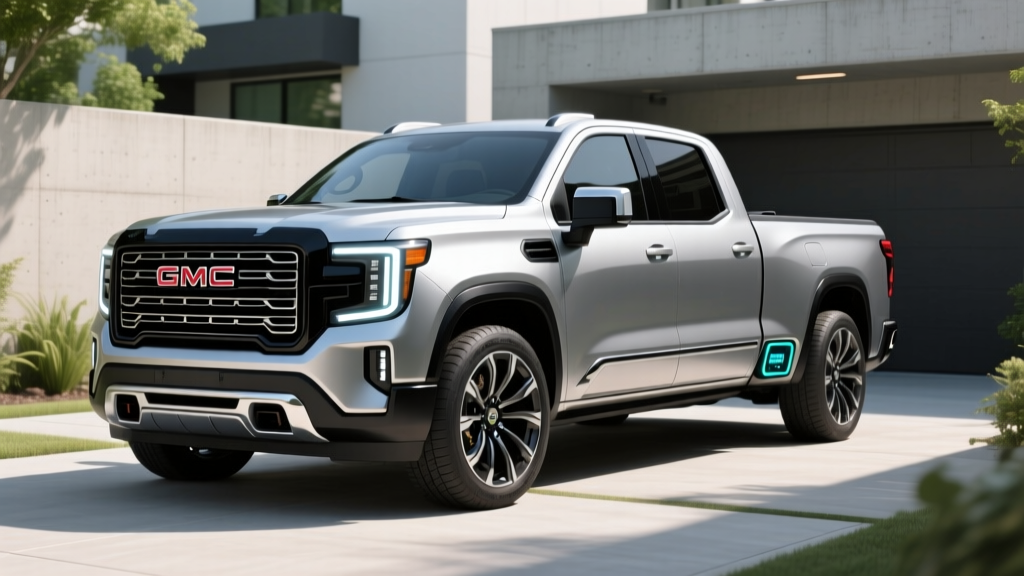
Quick Verdict: Is the GMC Sierra EV Denali Worth It?
The 2026 GMC Sierra EV Denali Edition 1 is a premium full-size electric truck delivering an EPA-estimated 440 miles of range, 754 horsepower, and peak DC fast charging at 350 kW (10-80% in roughly 19 minutes). Starting at approximately $97,000 before incentives, it targets luxury-truck buyers who tow occasionally, commute daily, and have reliable Level 2 home charging access. Real-world highway range drops to approximately 330-370 miles; towing a 7,000-lb trailer can cut that to under 200 miles. The federal §30D tax credit may apply, but eligibility hinges on MSRP caps (trucks capped at $80,000), buyer income limits, and battery-sourcing requirements — meaning the Denali Edition 1 at $97,000 likely does not qualify. Lower trims (Elevation, AT4) starting closer to $58,000-$75,000 may be credit-eligible.
Range and Efficiency: EPA Sticker vs. Real-World Driving
The Sierra EV Denali Edition 1 carries a massive Ultium-based NMC battery pack with approximately 200 kWh of usable capacity. The EPA rates it at 440 miles combined — among the highest of any production pickup. Efficiency lands around 45 kWh/100 miles, which is expected for a heavy, aerodynamically challenged full-size truck.
Real-World Range Expectations
| Scenario | Estimated Range |
|---|---|
| EPA Combined (sticker) | 440 miles |
| Highway cruising (70-75 mph, 70°F) | ~340-370 miles |
| Cold weather (20°F, mixed driving) | ~280-320 miles |
| Towing 7,000-lb trailer (flat terrain) | ~170-200 miles |
| Towing 9,000-lb trailer (rolling hills) | ~130-160 miles |
Source: fueleconomy.gov | Real-world estimates based on EV towing tests and cold-weather degradation data from independent testing.
Buyers who regularly tow heavy trailers long distances should treat the Sierra EV as a 150-mile towing rig and plan charging stops accordingly. For daily commuting and light hauling, the 440-mile pack provides genuine one-charge flexibility for most trips under 300 miles round-trip.
Charging Speed: 350 kW Peak, but Sustained Rates Matter More
GMC equips the Sierra EV with an 800-volt architecture enabling peak DC fast charging at 350 kW on compatible CCS or NACS stations (with the Tesla Supercharger adapter). Here's what charging actually looks like:
| Charging Level | Power / Rate | Time / Miles Added |
|---|---|---|
| Level 1 (120V household) | ~1.4 kW | ~3 miles per hour |
| Level 2 (240V, 48A home charger) | ~11.5 kW | ~25 miles per hour; 0-100% in ~18 hours |
| Level 2 (240V, 80A hardwired) | ~19.2 kW | ~42 miles per hour; 0-100% in ~10 hours |
| DC Fast (peak 350 kW) | 350 kW → tapers to ~150 kW above 60% | 10-80% in ~19 minutes; 80-100% adds ~25 min |
Charging-curve reality: The 350 kW peak only holds from roughly 10-40% State of Charge. Above 60%, the rate tapers significantly to protect the NMC cells. On a road trip, expect 10-80% in about 19 minutes under ideal battery preconditioning, but 10-100% will take closer to 45 minutes. Always precondition the battery via navigation routing to a charger for optimal speeds.
Performance, Towing, and Capability
The Denali Edition 1's dual-motor AWD powertrain produces 754 horsepower and 785 lb-ft of torque, launching 0-60 mph in approximately 4.5 seconds — remarkable for a truck with a curb weight near 8,900 lbs. Maximum towing capacity is rated at 9,500 lbs (with the Max Tow package), with payload around 1,300 lbs.
| Specification | GMC Sierra EV Denali Edition 1 |
|---|---|
| Horsepower | 754 hp |
| Torque | 785 lb-ft |
| 0-60 mph | ~4.5 seconds |
| Battery (usable) | ~200 kWh, NMC (Ultium) |
| Max Towing | 9,500 lbs |
| Payload | ~1,300 lbs |
| Ground Clearance | ~10.8 inches |
| Bed Length | 5'11" (with MultiPro Tailgate) |
The eTrunk (front trunk) adds approximately 10.7 cubic feet of lockable, weatherproof storage — useful for charging cables, tools, or gear you want separated from the bed. GMC's MultiPro Tailgate and available 4-wheel steering (crab walk mode) add practical utility in tight job-site or trail conditions.
Cost Breakdown: Purchase, Charging, and Total Ownership
| Cost Factor | Sierra EV Denali (2026) | GMC Sierra 1500 Denali Gas (2026) |
|---|---|---|
| Base MSRP | ~$97,000 | ~$72,000 |
| Federal §30D Tax Credit | $0 (exceeds $80K truck cap) | N/A |
| Estimated Out-the-Door | ~$100,000+ | ~$75,000 |
| Fuel/Energy Cost (per mile) | ~$0.06-$0.10 (home L2) | ~$0.18-$0.24 (gasoline, 17 MPG) |
| Annual Fuel/Energy (15K mi) | ~$1,050-$1,500 | ~$2,700-$3,600 |
| Annual Maintenance | ~$300-$500 | ~$800-$1,200 |
| Insurance (annual avg) | ~$2,800-$3,500 | ~$2,200-$2,800 |
| 5-Year Total Cost (est.) | ~$121,000-$127,500 | ~$105,500-$114,000 |
The Sierra EV Denali commands a significant premium over its gas counterpart. Energy and maintenance savings recoup roughly $8,000-$12,000 over five years, but the higher purchase price and insurance premiums mean the gas Denali remains cheaper on a pure TCO basis for most buyers. The EV makes financial sense if you value the performance, instant torque, quiet operation, and home-charging convenience — not purely as a cost-saving measure at this trim level.
Tax credit note: The IRS §30D credit caps truck MSRP eligibility at $80,000. The Denali Edition 1 at ~$97,000 exceeds this. However, the Sierra EV Elevation (base ~$58,000) and potentially AT4 trims may fall under the cap and qualify for up to $7,500, subject to buyer income limits ($300K joint / $150K single), battery critical-mineral sourcing, and North American assembly requirements. Always verify current-year eligibility with a tax professional.
EV vs. Gas Sierra Denali: Which Truck Fits Your Life?
Common Misconceptions
| Myth | Fact |
|---|---|
| "EV trucks can't tow." | The Sierra EV tows up to 9,500 lbs — competitive with half-ton gas trucks. But range drops 50-65% while towing heavy loads. |
| "The battery won't last." | GM's Ultium battery warranty covers 8 years / 100,000 miles against degradation below 70% capacity. NMC packs in large vehicles typically retain 85-90% after 100K miles based on current fleet data. |
| "I'll save money going electric." | At the Denali trim, you won't — the $25K+ premium over gas takes 10+ years to recoup through fuel savings. Lower trims (Elevation) shift this math significantly. |
| "Charging takes too long." | 10-80% in ~19 minutes at a 350 kW station is competitive with a gas fill-up + rest stop. But you must plan routes around DC fast chargers for trips beyond ~300 miles. |
Decision Framework: Which Sierra Should You Buy?
Choose the Sierra EV Denali if:
- You have Level 2 home charging (240V/48A minimum) and wake up to a full "tank" daily
- Your typical drive is under 300 miles round-trip, or you're willing to plan DC fast-charge stops
- You want 754 hp, instant torque, and a near-silent highway experience
- You tow under 5,000 lbs most of the time (occasional heavier loads are fine with range planning)
- The $97K+ price fits your budget without relying on tax credits
Choose the gas Sierra Denali if:
- You regularly tow 7,000+ lbs over distances beyond 150 miles without charging infrastructure
- You lack access to reliable home or workplace Level 2 charging
- You live in an area with sparse DC fast-charging networks (rural routes, cross-country towing)
- Total cost of ownership is a primary concern and the EV premium doesn't justify the experience
Consider the Sierra EV Elevation (lower trim) if:
- You want EV benefits with an MSRP under the $80,000 §30D tax credit cap
- You can sacrifice Denali luxury features for a ~$39,000 lower entry price
First-Time EV Buyer Essentials: What to Know Before You Sign
If the Sierra EV is your first electric vehicle, these practical realities shape daily ownership:
- Home charging is non-negotiable for truck owners. A 200 kWh battery on Level 1 (120V) adds only ~3 miles per hour — effectively useless for daily recharging. Budget $800-$2,500 for a professionally installed Level 2 home charger (240V, 48-80A). If your electrical panel is older or at capacity, a panel upgrade can add $1,500-$3,500.
- Cold weather reduces range 20-35%. NMC batteries lose efficiency below freezing. If you live in sub-30°F climates, precondition the battery while plugged in and garage the truck when possible to preserve range and charging speed.
- Insurance costs 15-30% more. EV trucks carry higher repair costs (battery replacement, aluminum body panels). Get quotes before purchasing — premiums on a $97K EV truck often exceed $3,000/year.
- Public charging reliability varies. Electrify America, EVgo, and Tesla Superchargers (with NACS adapter) are expanding, but 50-150 kW chargers in rural areas remain common. Use apps like PlugShare and A Better Routeplanner for trip planning.
- Tire costs are higher. The Sierra EV's weight (~8,900 lbs) accelerates tire wear. Expect replacement every 25,000-35,000 miles at $300-$500 per tire for the 24-inch Denali wheels.
Warranty, Battery Longevity, and Resale Considerations
GM backs the Sierra EV's Ultium battery and electric powertrain with an 8-year / 100,000-mile warranty, covering defects and capacity loss below 70% of original capacity. The limited vehicle warranty is 3 years / 36,000 miles — standard for the segment.
Long-term battery degradation data for the Ultium platform is still maturing (the Sierra EV launched for the 2024 model year). However, GM's larger Ultium packs in the Hummer EV and Cadillac Escalade IQ show early degradation rates of approximately 1-2% per year under normal use, suggesting 85-90% State of Health at 100,000 miles. Out-of-warranty battery replacement for a 200 kWh pack would likely exceed $25,000-$35,000 — a worst-case scenario, but one worth understanding.
Resale value for premium EV trucks remains uncertain. Early depreciation on the Hummer EV and Rivian R1T suggests 40-55% value retention at 3 years, though the Sierra nameplate and GM dealer network may provide a floor. Monitor used-market trends before committing.
Frequently Asked Questions
Does the GMC Sierra EV qualify for the $7,500 federal tax credit?
The Denali Edition 1 at ~$97,000 exceeds the IRS §30D truck MSRP cap of $80,000 and does not qualify. Lower trims like the Elevation (~$58,000) may qualify, subject to buyer income limits, battery sourcing rules, and point-of-sale transfer availability. Always check current IRS guidance and consult a tax professional.
How long does it take to charge the Sierra EV at home?
On a 48A Level 2 charger (240V), expect roughly 18 hours from 0-100% for the full 200 kWh battery. Most owners charge from 20-80% overnight (approximately 10-11 hours), which is practical for daily use. An 80A hardwired charger cuts this to about 10 hours for a full charge.
Can I tow a camper with the Sierra EV?
Yes — the max tow rating is 9,500 lbs. However, towing a 7,000-lb camper reduces range to approximately 170-200 miles. For long-distance towing, you'll need DC fast-charging stops every 150-180 miles, and not all charging stations accommodate truck-trailer combinations. Plan routes carefully using EV towing-specific route planners.
Is the Sierra EV Denali a good daily driver?
Excellent, if you have home charging. The 440-mile range means most commuters charge just 2-3 times per week. The ride quality, Super Cruise (Level 2 hands-free driving on compatible highways), and cabin quietness surpass the gas Sierra. The trade-off is higher upfront cost, insurance, and the need to plan road trips around charging.
What's the difference between the Sierra EV Denali and the Elevation trim?
The Elevation starts around $58,000 with a smaller battery (~150 kWh, ~330-mile range), 510 hp, fewer luxury features, and cloth/leatherette seating. It may qualify for the federal tax credit. The Denali Edition 1 at $97,000 adds the full 200 kWh pack, 754 hp, premium leather, 16.8-inch infotainment display, adaptive air suspension, Super Cruise, and 24-inch wheels. The Elevation is the value play; the Denali is the luxury flagship.