The Quick Answer on the GMC Sierra EV Denali
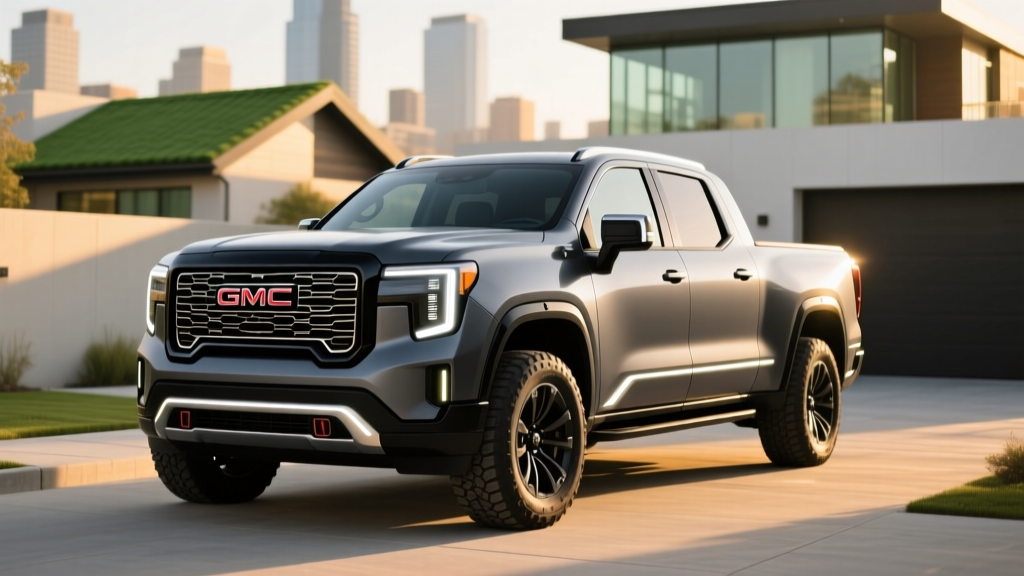
The 2026 GMC Sierra EV Denali is a full-size electric pickup built on GM's Ultium platform with an EPA-estimated 440 miles of range (Edition 1 trim), 664 horsepower, and a max towing capacity of 10,000 lbs. Pricing starts around $97,000 for the Denali Edition 1, placing it in the luxury truck segment. It charges at up to 350 kW on DC fast chargers via its 800V architecture (10–80% in roughly 22 minutes) and comes with a NACS port for native Tesla Supercharger access. The federal §30D tax credit eligibility is limited — the Sierra EV exceeds the $80,000 MSRP cap for trucks, so most buyers will not qualify for the full $7,500 credit. This is a premium electric work-and-lifestyle truck aimed at buyers who want flagship luxury, serious range, and don't need to tow heavy fifth-wheel loads daily.
Range and Real-World Efficiency
The headline number for the Sierra EV Denali Edition 1 is its 24-module Ultium battery pack with approximately 200+ kWh of usable capacity — one of the largest battery packs in any production vehicle. That pack delivers an EPA-estimated 440 miles of range, which is exceptional for a full-size truck. The lower Denali trims with smaller battery options are expected to deliver around 340–390 miles EPA, depending on final configuration.
EPA Range vs. Real-World Expectation: The 440-mile EPA figure is measured under mixed driving conditions. Expect real-world highway range at 70 mph to be closer to 360–390 miles in moderate temperatures. In cold weather (below 30°F), battery chemistry and cabin heating can reduce range by 15–25%, bringing effective range down to approximately 330–370 miles. For city and suburban driving with regenerative braking, you may match or slightly exceed the EPA number.
Efficiency is rated at approximately 48–52 MPGe combined depending on trim. That translates to roughly 2.0–2.2 kWh per mile — a significant figure when calculating home charging costs. The truck's massive frontal area and 8,500+ lb curb weight mean efficiency drops noticeably at sustained highway speeds above 75 mph.
Charging Speed, Connectors, and Infrastructure
The Sierra EV Denali's 800-volt architecture is one of its most practical features. Here's how charging breaks down across levels:
| Charging Level | Power (kW) | Miles Added Per Hour | Notes |
|---|---|---|---|
| Level 1 (120V) | 1.4 kW | ~3–4 mi/hr | Emergency/top-up only with this battery size |
| Level 2 (240V, 48A) | 11.5 kW | ~28–32 mi/hr | Full overnight charge in ~17–18 hours |
| Level 2 (240V, 80A) | 19.2 kW | ~48–52 mi/hr | Requires hardwired 100A circuit; ~10–11 hr full charge |
| DC Fast Charge | Up to 350 kW (peak) | ~800+ mi/hr (peak) | 10–80% in ~22 min; tapers above 80% SoC |
A critical detail for buyers: the Sierra EV comes equipped with the NACS (North American Charging Standard) connector, giving it native access to Tesla's Supercharger network — over 25,000 stalls across the U.S. as of early 2026. It can also use CCS1 stations via adapter. On a 350 kW charger, the charge curve peaks around 350 kW up to roughly 25–30% SoC, then steps down through the 200–250 kW range before tapering more aggressively above 80%. That 10–80% time of approximately 22 minutes is among the fastest for any full-size electric truck.
Home charging reality: With a 200+ kWh battery, a standard 48A Level 2 charger (the most common home install) will need a full 17–18 hours for a 10–100% charge. Most owners will charge from 20–80% overnight, which takes roughly 10–12 hours on a 48A circuit. If you want faster home replenishment, an 80A hardwired charger (like the ChargePoint Home Flex or Tesla Wall Connector on a 100A breaker) cuts that significantly — but requires a 200A electrical panel minimum. Budget $1,200–$2,500 for a professional Level 2 installation, and potentially $3,000–$5,000 if your panel needs an upgrade.
Performance and Capability
| Specification | Sierra EV Denali Edition 1 |
|---|---|
| Horsepower | 664 hp |
| Torque | ~780 lb-ft (estimated) |
| 0–60 mph | ~4.5 seconds |
| Battery Capacity | ~200+ kWh usable (NMC, Ultium) |
| EPA Range | 440 miles (Edition 1) |
| Max DC Charge Rate | 350 kW (800V architecture) |
| 10–80% DC Charge Time | ~22 minutes |
| Max Towing | 10,000 lbs |
| Max Payload | ~1,800 lbs |
| Bed Length | 5'11" (MultiPro tailgate + MidGate) |
| Base MSRP | ~$97,000 (Edition 1) |
| Battery/Powertrain Warranty | 8 years / 100,000 miles |
The 664 hp dual-motor AWD setup makes this the quickest Sierra GMC has ever sold. The 4.5-second 0–60 time is remarkable for a truck weighing over 8,500 lbs. More importantly for daily driving, the instant torque makes merging and passing effortless without the downshift lag of a turbocharged V8.
Towing maxes out at 10,000 lbs — competitive with half-ton gas trucks but below heavy-duty diesel territory. One critical EV towing reality: range drops by 40–50% when towing near max capacity at highway speeds. That 440-mile range becomes roughly 220–260 miles with a heavy trailer, so plan charging stops accordingly on long hauls.
The MidGate is the Sierra EV's signature utility feature — the rear cabin wall folds down to extend the bed into the cab, allowing items up to roughly 11 feet long with the tailgate down. It's a genuine functional advantage over conventional truck beds, though it replaces the traditional rear-window configuration.
Sierra EV Denali vs. Gas Trucks: Cost of Ownership
The Sierra EV Denali competes with the GMC Sierra 1500 Denali (gas), Ford F-150 Lightning, Rivian R1T, and the Chevrolet Silverado EV. Here's how the EV stacks up against the gas Sierra 1500 Denali on five-year costs:
| Cost Category (5 Years) | Sierra EV Denali (~$97K) | Sierra 1500 Denali Gas (~$68K) |
|---|---|---|
| Purchase Price (MSRP) | $97,000 | $68,000 |
| Federal Tax Credit | $0 (exceeds $80K MSRP cap) | $0 |
| Fuel / Electricity | $4,800 (at $0.14/kWh avg) | $12,500 (at $3.50/gal, 17 MPG avg) |
| Maintenance | $1,500 (no oil, fewer brake jobs) | $4,200 (oil, plugs, trans fluid, brakes) |
| Insurance (est.) | $12,000 ($2,400/yr avg) | $8,500 ($1,700/yr avg) |
| Estimated Depreciation | $38,800 (40%) | $27,200 (40%) |
| 5-Year Total | ~$154,100 | ~$120,400 |
Key takeaway: The Sierra EV saves roughly $10,400 on fuel and maintenance over five years, but the $29,000 higher purchase price (plus higher insurance and depreciation on a pricier vehicle) means the gas Sierra 1500 Denali remains cheaper to own in total at this price tier. The EV math improves significantly if you have access to cheap overnight electricity (under $0.10/kWh), drive more than 15,000 miles per year, or if your state offers additional purchase incentives. According to fueleconomy.gov, electricity costs vary enormously by region — check your local utility rates before projecting savings.
Tax Credit Eligibility: The §30D Reality
Federal §30D EV Tax Credit Requirements (2026):
- MSRP Cap: Trucks, vans, and SUVs must be under $80,000 MSRP. The Sierra EV Denali Edition 1 (~$97,000) exceeds this cap — it does not qualify for the $7,500 federal credit.
- Buyer Income Cap: Modified AGI must not exceed $150,000 (single), $225,000 (head of household), or $300,000 (joint). Even if a lower Sierra EV trim eventually prices under $80K, buyers above these thresholds are excluded.
- Battery Sourcing: Critical minerals and battery components must meet escalating domestic/free-trade-partner sourcing thresholds per IRS §30D rules. GM's Ultium batteries use a mix of domestic and imported cells — verify the specific trim's sourcing status at purchase.
- Point-of-Sale Transfer: If eligible, the credit can be transferred to the dealer at purchase for an immediate price reduction rather than waiting for a tax refund.
The bottom line: at its current pricing, the Sierra EV Denali is ineligible for the federal tax credit. This is a meaningful cost factor compared to the Ford F-150 Lightning XLT, which starts well under the MSRP cap and can qualify. Always consult a tax professional and check the latest IRS guidance before purchase, as sourcing rules and eligible model lists update periodically.
Who Should Buy the Sierra EV Denali — Decision Framework
Choose the Sierra EV Denali if:
- You want a luxury electric truck with 400+ mile range and don't need to tow over 10,000 lbs regularly
- You have reliable home Level 2 charging (or can install it) and access to DC fast chargers on your common routes
- You value instant torque, quiet operation, and V2L (vehicle-to-load) capability for job-site or camping power
- You drive in a region with moderate winters — cold-weather range loss is manageable with preconditioning and a heat pump
- You're cross-shopping the Rivian R1T or Tesla Cybertruck and prefer a traditional truck layout with a luxury interior
Look elsewhere if:
- You need the $7,500 federal tax credit to make the math work — consider the F-150 Lightning or a lower Sierra EV trim if one prices under $80K
- You tow heavy loads (12,000+ lbs) regularly — a diesel heavy-duty truck still outperforms here, and range loss while towing is severe
- You live in an apartment or lack home charging access and your area has sparse DC fast-charging infrastructure
- You need a sub-$60,000 truck — this is a six-figure vehicle in most configurations
Common Misconceptions About the Sierra EV Denali
| Myth | Fact |
|---|---|
| "Electric trucks can't tow anything useful." | The Sierra EV tows up to 10,000 lbs — comparable to many gas half-ton trucks. The limitation is range while towing, not capability. |
| "The battery will need replacing in 5 years." | GM's Ultium NMC batteries are warrantied for 8 years/100,000 miles at 70%+ capacity retention. Industry data shows most EV batteries degrade 10–15% over 150,000+ miles — not a cliff. |
| "Charging takes hours on road trips." | At a 350 kW DC fast charger, 10–80% takes about 22 minutes. Plan stops around rest breaks and you'll barely notice the difference vs. gas. |
| "The SuperCruise system drives itself." | Super Cruise is an SAE Level 2 driver-assist system. It handles steering and speed on mapped highways, but you must remain attentive — it is not autonomous driving. The system uses a driver-monitoring camera to enforce this. |
| "I'll save money vs. a gas Sierra Denali." | Operating costs are lower, but the $29,000+ price premium means total 5-year cost is higher. The EV is a luxury and environmental choice at this price, not a pure cost-saver. |
Interior, Tech, and Driver Assistance
The Denali trim brings GMC's flagship interior: a 16.8-inch diagonal infotainment touchscreen, 11-inch digital instrument cluster, and available Google Built-in with native Google Maps navigation (critical for EV route planning with charger locations). The Denali Edition 1 includes premium leather, heated and ventilated front and rear seats, a panoramic fixed glass roof, and a 12-speaker Bose audio system.
Super Cruise is standard on the Denali — GM's hands-off-wheel Level 2 system that works on over 750,000 miles of compatible highways in the U.S. and Canada. It's one of the best Level 2 systems available, with smooth lane-keeping and automatic lane changes. But it requires the driver to keep eyes on the road at all times. For safety ratings, check the latest results from NHTSA and IIHS as they become available for the Sierra EV platform.
The eTrunk (front trunk) offers roughly 10.7 cubic feet of lockable, weather-sealed storage — a practical advantage gas trucks simply can't match. Combined with the 5'11" bed and MidGate pass-through, total cargo versatility is excellent.
Frequently Asked Questions
Does the GMC Sierra EV Denali qualify for the $7,500 federal tax credit?
No. The Sierra EV Denali Edition 1's MSRP of approximately $97,000 exceeds the $80,000 truck MSRP cap set by the IRS under §30D. Even if a lower Denali trim eventually prices under $80,000, buyer income limits and battery-sourcing requirements may further restrict eligibility. Always verify current rules on IRS.gov before purchasing.
What is the real-world range of the Sierra EV Denali?
The Edition 1's EPA-estimated 440 miles drops to roughly 360–390 miles in real-world highway driving at 70 mph in moderate weather. Cold weather (below 30°F) can reduce range to 330–370 miles. Towing near max capacity can cut range by 40–50%.
Can I charge the Sierra EV at Tesla Superchargers?
Yes. The Sierra EV comes with a native NACS charge port, giving it direct access to Tesla's Supercharger network without an adapter. It can also charge at CCS1 stations with the appropriate adapter.
How long does it take to charge at home?
On a standard 48A Level 2 home charger (240V), a full charge from empty takes approximately 17–18 hours due to the large 200+ kWh battery. Most owners charging from 20–80% will need 10–12 hours. An 80A hardwired charger reduces this to roughly 10–11 hours for a full charge but requires a 100A circuit and a 200A electrical panel.
Is the Sierra EV Denali good for towing?
It tows up to 10,000 lbs, which covers most boat, camper, and utility trailer needs. However, range drops significantly while towing — expect 220–260 miles from the 440-mile-rated Edition 1 when towing near max on the highway. For frequent heavy towing over long distances, a diesel truck remains more practical.
What is the battery warranty?
GM covers the Ultium battery pack for 8 years or 100,000 miles, whichever comes first, against defects and capacity loss below 70% of original capacity. This is standard for the industry and provides reasonable long-term protection.