Quick Verdict: The Premium Electric Truck That Goes the Distance
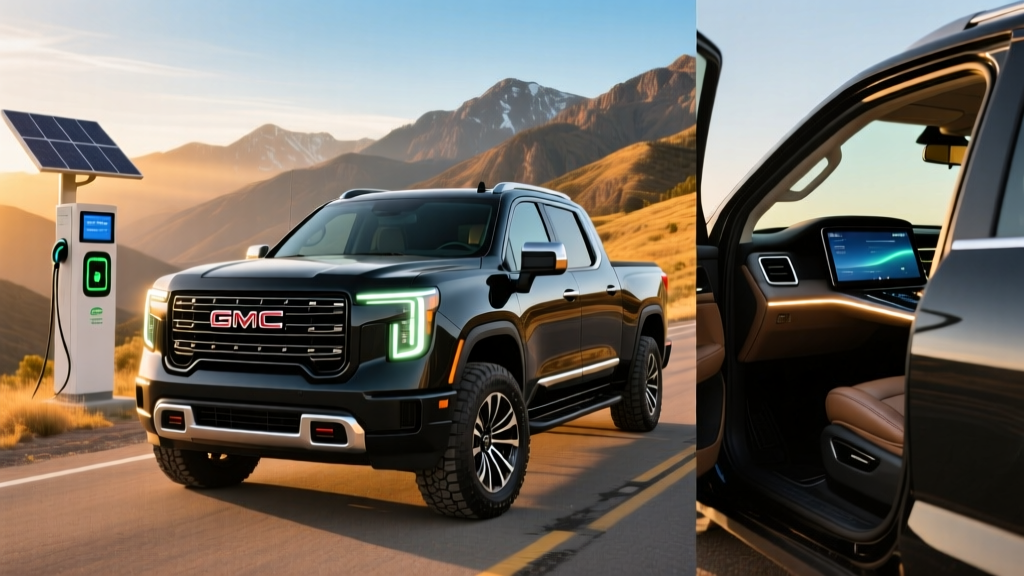
The 2026 GMC Sierra EV Denali positions itself as the luxury flagship of GM's electric truck lineup, pairing a massive Ultium battery with a 440-mile EPA range estimate and premium appointments that justify its six-figure price tag. But beyond the headline numbers, the Sierra EV Denali is a study in trade-offs: extraordinary range and towing capability come at the cost of curb weight, charging infrastructure demands, and a price that pushes past most buyers' budgets even after federal incentives. After examining GM's published specifications, EPA data, and real-world driving variables, here's what prospective buyers need to know before writing a check.
| Spec | Value |
|---|---|
| EPA Estimated Range | 440 miles (Denali Edition 1, 24-module pack) |
| Battery Capacity | ~200 kWh usable (Ultium, NMC chemistry) |
| Drivetrain | Dual-motor AWD (e4WD) |
| Horsepower | 754 hp (max output with Velocity Max) |
| Torque | 785 lb-ft |
| 0-60 mph | ~4.4 seconds (Velocity Max mode) |
| Max DC Fast Charge | 350 kW (peak) |
| 10-80% DC Charge Time | ~34 minutes (estimated) |
| Level 2 Home Charging | 19.2 kW onboard charger (~52 mi/hr) |
| Max Towing Capacity | 12,000 lbs (properly equipped) |
| Bed Length | 5 ft 11 in (with MultiPro MidGate closed) |
| EPA Efficiency | ~56 MPGe combined / ~60 kWh/100mi (estimated) |
| Battery Warranty | 8 years / 100,000 miles |
| Base MSRP (Denali Edition 1) | $99,495 (incl. destination) |
Range and Efficiency: 440 Miles on Paper, Less in Practice
GM targets a 440-mile EPA-estimated range for the Sierra EV Denali Edition 1 equipped with the available 24-module Ultium battery pack. That figure, if validated by the EPA upon final certification, would place the Sierra EV among the longest-range electric vehicles on the market and the longest-range electric pickup currently announced. The standard Denali trim with the smaller battery pack is expected to deliver roughly 350-370 miles EPA, though GM has not published final figures for all configurations.
Real-World Range Reality Check
EPA Estimate: 440 miles (Denali Edition 1, 24-module pack)
Expect in real-world driving:
- City / moderate-speed suburban: ~400-430 miles — regenerative braking recovers energy in stop-and-go traffic
- Highway (70-75 mph sustained): ~330-370 miles — aerodynamic drag on a large truck body is punishing at speed
- Cold weather (below 32°F): ~290-340 miles — battery chemistry resistance increases, cabin heating draws significant energy; preconditioning helps but doesn't eliminate the loss
- Towing (loaded trailer ~8,000 lbs): ~180-240 miles — towing roughly halves range; plan charging stops accordingly
The Sierra EV's enormous frontal area and ~9,000-pound curb weight mean highway efficiency suffers disproportionately compared to smaller EVs. Buyers whose primary use case involves frequent 75+ mph interstate driving should budget for roughly 25% less range than the EPA sticker suggests.
Efficiency for a truck of this mass will land in the neighborhood of 56 MPGe combined (roughly 60 kWh per 100 miles), per preliminary estimates. That's significantly less efficient than a sedan like the Hyundai Ioniq 6 (140 MPGe) but competitive with the Ford F-150 Lightning (~66 MPGe) and Rivian R1T (~70 MPGe for the Standard battery). For context, charging 60 kWh at the national average residential electricity rate of $0.17/kWh costs roughly $10.20 — still dramatically cheaper per mile than a gas truck averaging 17 MPG at $3.50/gallon ($20.59 per 100 miles).
Charging Speed: 350 kW Peak, but Mind the Curve
The Sierra EV Denali supports DC fast charging at up to 350 kW on compatible stations — a figure enabled by GM's Ultium platform's 800-volt-capable architecture. At peak rate, GM claims the truck can add approximately 100 miles of range in roughly 10 minutes. However, peak charge rate and sustained charge rate are very different things, and this distinction matters enormously for road-trip planning.
| Charge Level | Power | Speed (Approx.) | Use Case |
|---|---|---|---|
| Level 1 (120V household) | 1.4 kW | ~3-4 mi/hr | Emergency top-up only; impractical for daily use on a 200 kWh pack |
| Level 2 (240V home, 19.2 kW onboard) | 19.2 kW | ~52 mi/hr | Primary home charging; full 0-100% in ~11 hours |
| Level 2 (240V, 48A/11.5 kW common home charger) | 11.5 kW | ~31 mi/hr | Most common home setup; full charge in ~18 hours |
| DC Fast Charge (peak) | 350 kW | ~100 mi in 10 min | Road-trip charging; requires 350 kW-capable station |
| DC Fast Charge (150 kW station) | 150 kW | ~43 mi/hr sustained | More common public DC stations; 10-80% in ~60 min |
The charging curve matters. The 350 kW peak is available only at low state-of-charge (typically 10-25% SoC) and at stations capable of delivering that power. As the battery fills past 50-60% SoC, charge rate tapers significantly — a physical limitation of lithium-ion NMC chemistry to protect cell longevity. Expect the 10-80% charge to average closer to 200-250 kW sustained, yielding the ~34-minute estimate. Charging from 80-100% on DC is dramatically slower and should generally be avoided on road trips; plan your stops around the 10-80% window for maximum efficiency.
Home charging is the daily reality. The Sierra EV's 19.2 kW onboard charger is among the most powerful in any production EV, meaning a properly equipped home (240V / 100A dedicated circuit) can add roughly 52 miles of range per hour — enough to fully replenish the massive pack overnight. However, most homes require an electrical panel upgrade to support a 100A circuit. Budget $2,000-$4,500 for a full Level 2 installation including panel work, permitting, and a hardwired 80A EVSE. Always have a licensed electrician assess your panel capacity before purchase.
Performance and Drivetrain: 754 HP in a 9,000-lb Truck
The Sierra EV Denali Edition 1 uses a dual-motor all-wheel-drive configuration (GM calls it e4WD) producing a combined 754 horsepower and 785 lb-ft of torque when Velocity Max mode is engaged — a launch-control-style feature that temporarily maximizes output. The result is a 0-60 mph time of approximately 4.4 seconds, which is extraordinary for a vehicle with the towing capacity of a heavy-duty diesel truck.
Standard Denali trims with the smaller battery pack produce less output (GM has indicated figures in the 510-600 hp range depending on configuration), still delivering brisk acceleration that outpaces most gas-powered half-ton pickups. All Sierra EV models use a single-speed reduction gear — there's no traditional multi-speed transmission, which simplifies the drivetrain and reduces maintenance.
The available 4-Wheel Steer system (similar to the Hummer EV's CrabWalk-adjacent tech) reduces the turning circle and aids low-speed maneuverability — a genuine benefit given the Sierra EV's 245+ inch overall length. Air suspension is standard on the Denali, providing up to 2 inches of ride-height adjustment for ground clearance off-road or aero efficiency on the highway.
Towing: The Sierra EV Denali is rated for up to 12,000 lbs of conventional towing when properly equipped with the available Max Tow package. Real-world towing range, as noted above, drops precipitously — expect 180-240 miles before needing a charge stop. GM's trailering tech suite includes integrated trailer brake control, trailer camera integration, and a transparent-trailer view on the infotainment screen.
Interior, Tech, and the MultiPro MidGate
The Sierra EV Denali's cabin leans heavily into premium materials and screen real estate. The centerpiece is a portrait-oriented 16.8-inch infotainment touchscreen running GM's latest Ultifi-based software, supplemented by an 11-inch digital instrument cluster and an available head-up display. Wireless Apple CarPlay and Android Auto are standard, along with a Wi-Fi hotspot.
The Denali trim includes standard leather seating surfaces, heated and ventilated front seats, heated rear seats, a heated steering wheel, and a panoramic fixed glass roof. The 14-speaker Bose premium audio system and active noise cancellation aim to deliver a luxury-car quiet experience despite the truck's size.
Driver assistance: Super Cruise — GM's hands-free highway driving system — is available on the Sierra EV Denali on mapped divided highways (over 750,000 miles of compatible roads in North America as of 2026). Super Cruise is an SAE Level 2 system: it controls steering, acceleration, and braking on compatible roads, but the driver must remain attentive and is monitored by a camera-based attention system. It is not autonomous driving. The system remains one of the most capable Level 2 implementations available, but it does not handle construction zones, unmapped roads, or complex urban environments without driver takeover.
The MultiPro MidGate is the Sierra EV's signature utility feature. The MidGate is a partition behind the rear seats that can fold down, extending the 5-foot-11-inch bed into the cabin to accommodate items up to roughly 9 feet long (with the tailgate down) while still seating one rear passenger on the opposite side. Combined with the available MultiPro Tailgate (six configurations), it offers genuine versatility for hauling lumber, kayaks, or ladders without a roof rack. A front trunk (frunk) provides approximately 10.7 cubic feet of lockable, weatherproof storage — useful for charging cables, tools, or groceries.
Passenger and cargo space:
- Front legroom: ~44.5 inches
- Rear legroom: ~43.4 inches (Crew Cab)
- Bed volume: ~57 cu ft (MidGate closed)
- Frunk: ~10.7 cu ft
- Max payload: ~1,600 lbs (varies by configuration)
Pricing, Trims, and Federal Tax Credit Eligibility
The 2026 GMC Sierra EV Denali lineup is structured across multiple trim and battery configurations, with pricing that firmly positions it in the luxury truck segment:
- Sierra EV Denali (standard battery, ~350-370 mi range): Starting MSRP ~$79,995 (est., pending final GM announcement for lower trims)
- Sierra EV Denali Edition 1 (24-module battery, 440 mi range): $99,495 (incl. $1,995 destination)
- As-tested pricing: Fully loaded Edition 1 with available packages (Max Tow, premium wheels, advanced trailering tech) can reach $105,000-$110,000 before incentives
| Scenario | Edition 1 Price |
|---|---|
| Base MSRP (incl. destination) | $99,495 |
| Federal §30D EV Tax Credit | Up to $7,500 (see eligibility below) |
| Effective Price (if credit applies) | ~$91,995 |
| With common state incentives (varies) | ~$87,000-$91,000 (e.g., CA, CO, NY programs) |
Federal tax credit eligibility (§30D) requires careful attention:
- MSRP cap: For trucks and vans, the vehicle MSRP must not exceed $80,000 to qualify. The Denali Edition 1 at $99,495 exceeds this cap and does NOT qualify for the federal credit. Lower Sierra EV trims priced below $80,000 may qualify, depending on final pricing.
- Buyer income limits: Modified AGI must not exceed $300,000 (joint filers), $225,000 (head of household), or $150,000 (single filers).
- Battery sourcing: Increasing percentages of critical minerals and battery components must be sourced from the U.S. or FTA partners. GM's Ultium batteries are assembled in the U.S. (Lansing, MI and Spring Hill, TN plants), but critical-mineral sourcing compliance varies by model year and must be verified at point of sale via the dealer's IRS compliance report.
- Point-of-sale transfer: As of 2024+, eligible buyers can transfer the credit to the dealer at purchase, receiving the $7,500 as an immediate price reduction rather than waiting to claim it on their tax return. This requires the dealer to be registered with the IRS Energy Credits portal.
Always verify current eligibility at IRS.gov's clean vehicle credit page and confirm the specific VIN's compliance with your dealer before purchase. Tax rules are subject to legislative change and this analysis reflects 2025-2026 guidelines.
Battery, Warranty, and Long-Term Ownership
The Sierra EV uses GM's Ultium battery platform with NMC (nickel manganese cobalt) lithium-ion chemistry in the 24-module pack. NMC offers higher energy density than LFP (lithium iron phosphate), which is necessary to achieve 440 miles in a truck this size, but it comes with trade-offs: NMC cells are more sensitive to sustained high state-of-charge and extreme temperatures, and they generally have a slightly shorter cycle life than LFP.
GM's battery warranty: 8 years or 100,000 miles, whichever comes first, covering defects and capacity loss below a specified retention threshold (typically 70% of original capacity, though GM's exact retention guarantee for the Sierra EV should be confirmed in the owner's manual). For a $99,000+ vehicle, this warranty is standard for the segment but shorter than some competitors' bumper-to-bumper coverage.
Degradation expectations: Based on real-world data from other Ultium-based vehicles and NMC chemistry generally, expect approximately 8-12% capacity loss over 8 years / 100,000 miles under normal use. Best practices for longevity include:
- Charge to 80-90% for daily use; reserve 100% charges for road trips
- Use preconditioning before DC fast charging (warms the battery for optimal charge acceptance and reduced stress)
- Avoid leaving the truck at 100% SoC in extreme heat for extended periods
- Level 2 home charging is gentler on cells than frequent DC fast charging
Battery replacement cost: Should the pack need replacement out of warranty, current estimates for a 200 kWh Ultium pack fall in the $25,000-$35,000 range based on industry cell-cost trajectories. This is a significant long-term ownership consideration, though most packs outlast the vehicle's useful life under normal conditions.
General warranty: GM provides a 3-year/36,000-mile limited bumper-to-bumper warranty and a 5-year/60,000-mile powertrain warranty (in addition to the 8-year battery warranty). These terms are average for the segment; Ram and Ford offer comparable coverage.
Pros and Cons
Pros
- Class-leading 440-mile EPA range eliminates most range anxiety for daily driving and moderate road trips
- 754 hp / 4.4-second 0-60 provides supercar-rivaling acceleration in a full-size truck
- MultiPro MidGate and frunk offer versatile cargo solutions unique to the Sierra EV platform
- 19.2 kW onboard AC charger is best-in-class, enabling fast overnight home replenishment
- 350 kW DC fast-charge capability (at compatible stations) enables practical long-distance travel
- Super Cruise hands-free driving on 750,000+ miles of mapped highways reduces fatigue on long hauls
- 12,000-lb towing capacity with integrated trailering tech rivals heavy-duty gas trucks
- Pro-grade power: available ProGrade Power system turns the truck into a mobile generator (up to 9.6 kW output for job-site or home backup use)
Cons
- Denali Edition 1 at $99,495 exceeds the $80,000 federal tax credit MSRP cap — no $7,500 credit for the flagship trim
- Massive ~200 kWh battery means extremely long Level 2 charge times on standard 48A home chargers (~18 hours for full charge)
- Curb weight approaching 9,000 lbs hurts highway efficiency and increases tire wear
- Real-world highway and cold-weather range drops 20-35% from the EPA sticker — a significant delta for trip planning
- 350 kW charging requires specific high-power stations; most public DC chargers deliver 50-150 kW, dramatically extending stop times
- Towing cuts range roughly in half — long-distance towing requires meticulous charge planning in areas with sparse DC infrastructure
- No access to Tesla Supercharger network with native NACS port (GM's NACS transition for the Sierra EV has been announced but adapter/port availability varies by model year)
- Size and weight make it impractical for tight urban parking and narrow streets
Who Should Buy the GMC Sierra EV Denali?
The Sierra EV Denali is a niche vehicle that excels for specific buyers:
- The home-charging-enabled truck owner who drives 50-150 miles daily and can charge overnight on Level 2. The 440-mile range means most owners will charge every 2-3 days, not daily.
- The job-site professional who values the ProGrade Power onboard generator capability to run tools, lights, or equipment without a separate generator.
- The luxury truck buyer who currently cross-shops the Ford F-150 Lightning Platinum, Rivian R1T, or RAM 1500 REV and wants maximum range with premium appointments.
- The occasional tower who tows a boat or camper 5-10 times per year within a 150-mile radius — the 12,000-lb capacity and integrated trailering tech are excellent, but long-distance towing in a BEV remains infrastructure-dependent.
Who should look elsewhere: Budget-conscious buyers (the F-150 Lightning XLT starts under $55,000 and qualifies for the federal credit), those without home charging access (a 200 kWh battery is painful to charge on public infrastructure alone), and frequent long-distance towers in rural areas with sparse DC fast-charging coverage.
Frequently Asked Questions
What is the real-world range of the GMC Sierra EV Denali?
The EPA-estimated range for the Denali Edition 1 is 440 miles with the 24-module battery. In real-world driving, expect approximately 400-430 miles in city conditions, 330-370 miles on the highway at 70-75 mph, 290-340 miles in freezing temperatures, and 180-240 miles when towing a loaded trailer. These figures assume moderate climate-control use and a healthy battery.
How fast does the Sierra EV Denali charge at home and on the road?
On DC fast charging, the Sierra EV Denali peaks at 350 kW and can add ~100 miles in about 10 minutes at a compatible station, with a 10-80% charge taking approximately 34 minutes. At home on a 240V/100A circuit with the 19.2 kW onboard charger, it adds roughly 52 miles per hour (full charge in ~11 hours). On a more common 48A Level 2 charger (11.5 kW), expect ~31 miles per hour and a full charge in ~18 hours.
Does the GMC Sierra EV Denali qualify for the federal EV tax credit?
The Denali Edition 1 at $99,495 MSRP exceeds the $80,000 MSRP cap for trucks under IRS §30D and does not qualify for the $7,500 federal credit. Lower-priced Sierra EV trims (if MSRP falls under $80,000) may qualify, subject to buyer income limits ($300K joint / $150K single), battery sourcing requirements, and dealer IRS registration for point-of-sale transfer. Verify the specific VIN's eligibility with your dealer and the IRS before purchase.
Is the Sierra EV Denali worth buying over the F-150 Lightning or Rivian R1T?
It depends on priorities. The Sierra EV Denali Edition 1 offers significantly more range (440 vs. ~320 miles for the Lightning Extended Range) and more towing capacity (12,000 vs. 10,000 lbs for the Lightning). However, the F-150 Lightning is substantially cheaper ($55,000-$97,000 range), qualifies for the federal credit on most trims, and has broader availability. The Rivian R1T offers superior off-road capability, a quad-motor option, and a more compact footprint, but with less range (~352 miles max) and a smaller bed. Choose the Sierra EV for maximum range and towing; choose the Lightning for value and the R1T for adventure versatility.
What is the biggest drawback of the Sierra EV Denali?
The combination of price and tax-credit ineligibility is the most significant barrier. At nearly $100,000 without the $7,500 federal offset, the Denali Edition 1 is a luxury purchase that demands either high income or strong commitment to the electric-truck lifestyle. The secondary concern is charging logistics: a 200 kWh battery requires either a robust home charging setup (100A circuit) or patience at public chargers, and towing long distances in a BEV truck remains challenging outside well-served corridors.
Can the Sierra EV Denali power my home during an outage?
GM has announced vehicle-to-home (V2H) capability for the Sierra EV via the available ProGrade Power system and a compatible home energy management system (sold separately, installation by a licensed electrician required). With up to 9.6 kW of output, the Sierra EV could theoretically power an average home's essential circuits for multiple days given its 200 kWh battery. However, V2H requires specific bidirectional charging equipment and home electrical integration — it is not a simple plug-and-play feature. Confirm equipment availability and compatibility with your electrician before relying on this capability.
Sources: GMC Sierra EV official specifications, EPA Fuel Economy / fueleconomy.gov, IRS Clean Vehicle Credit (§30D). Specifications reflect manufacturer-published data and preliminary EPA estimates as of the 2026 model year; final EPA certification figures may vary. Tax credit eligibility is subject to change; consult IRS.gov and a tax professional for your specific situation.