Quick Verdict: The Off-Road Electric Truck That Actually Delivers
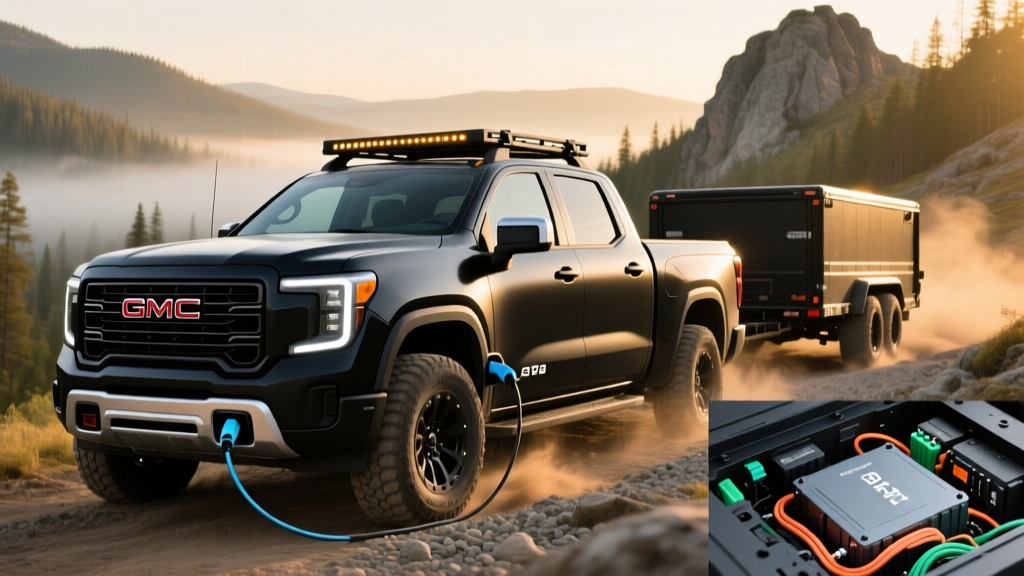
The 2026 GMC Sierra EV AT4 occupies a rare position in the electric truck market: it's a body-on-frame-style BEV pickup that takes off-road capability seriously while offering over 390 miles of EPA-estimated range and genuine towing utility. Built on GM's Ultium platform with a dual-motor AWD powertrain producing up to 754 horsepower, the Sierra EV AT4 targets buyers who want electric torque on the trail without sacrificing daily-driver comfort. But at a starting MSRP that pushes well past $80,000 before incentives, the question isn't whether this truck is capable — it's whether the capability justifies the premium over rivals like the Rivian R1T and Ford F-150 Lightning.
In this review, we break down the Sierra EV AT4's real-world range, charging behavior on DC fast chargers and Level 2 home setups, towing and payload practicality, and where it lands under the current IRS §30D federal tax credit rules. All specs reflect the 2026 model year as sold in the US market.
Range and Efficiency: EPA Sticker vs. Real-World Miles
Real-World Expectation: Plan for approximately 310–340 miles on mixed highway driving at 70 mph. In cold weather (below 32°F), expect a 20–30% reduction, dropping effective range to roughly 275–310 miles before needing to charge.
The Sierra EV AT4 uses a large Ultium lithium-ion battery pack — GM's modular architecture employing NMC (nickel manganese cobalt) chemistry for high energy density. The usable capacity sits at approximately 200 kWh (gross capacity slightly higher, with a buffer to protect long-term cell health). This is one of the largest battery packs in any production passenger vehicle, and it's the reason the AT4 trim can hit nearly 400 miles despite its aggressive off-road tires and heavier suspension hardware.
On the efficiency side, the Sierra EV AT4 returns an EPA-estimated 56 MPGe combined, which translates to roughly 57 kWh per 100 miles. That's thirsty by EV sedan standards but competitive for a full-size electric truck with AWD and all-terrain rubber. For context, the Ford F-150 Lightning Extended Range achieves about 66 MPGe combined, while the Rivian R1T Dual-Motor Max Pack sits around 53 MPGe.
The real-world range callout matters here because truck buyers use their vehicles differently than sedan commuters. If you're towing a 5,000-pound trailer on the highway, expect range to drop to roughly 180–220 miles. The Sierra EV's large battery gives it a towing-range advantage over smaller-pack competitors, but physics still applies: aerodynamic drag and rolling resistance scale with speed and weight.
| Specification | Value |
|---|---|
| EPA Range | 392 miles |
| Battery (usable) | ~200 kWh, NMC (Ultium) |
| Drivetrain | Dual-motor AWD (e4WD) |
| Horsepower | 754 hp (with Max Power mode) |
| Torque | 785 lb-ft |
| 0–60 mph | ~4.5 seconds |
| Max DC Fast Charge | 350 kW (peak) |
| 10–80% DC Charge Time | ~37 minutes |
| Level 2 Home Charge Rate | 19.2 kW / ~52 mi/hr |
| Towing Capacity | 10,000 lbs (est.) |
| Payload Capacity | ~1,800 lbs (est.) |
| MPGe (combined) | 56 MPGe |
| Efficiency | ~57 kWh/100 mi |
| Base MSRP | ~$87,300 (incl. destination) |
| Battery/Powertrain Warranty | 8 years / 100,000 miles |
Charging Speed: DC Fast Charging and Home Level 2 Setup
The Sierra EV AT4 supports peak DC fast charging at 350 kW via the standard NACS (North American Charging Standard) connector — GM completed its transition to NACS for the 2025 model year, meaning this truck plugs directly into Tesla Superchargers (V4 stalls with NACS cables) and Electrify America's latest 350-kW dispensers without an adapter.
However, peak kW is not sustained kW. The Sierra EV's charge curve ramps quickly to around 300–350 kW between 10–30% state of charge, then gradually tapers as the battery management system protects cell temperatures. From 10% to 80%, expect approximately 37 minutes at a capable 350-kW station. The 80–100% top-off slows significantly — plan on an additional 40+ minutes if you need a full pack, which is standard behavior for NMC chemistry at high SoC.
| Charging Level | Power | Miles Added per Hour | Typical Use Case |
|---|---|---|---|
| Level 1 (120V) | ~1.4 kW | ~2–3 mi/hr | Emergency/trickle only |
| Level 2 (240V, 48A) | 11.5 kW | ~28 mi/hr | Standard home (NEMA 14-50) |
| Level 2 (240V, 80A) | 19.2 kW | ~52 mi/hr | Hardwired home (requires 100A circuit) |
| DC Fast (350 kW peak) | Up to 350 kW | ~700+ mi/hr (peak) | Road trips, 10–80% in ~37 min |
At home, the Sierra EV's 19.2 kW onboard charger is a standout. Most EVs cap at 11.5 kW on Level 2, but the Sierra EV can accept nearly double that — if your home electrical panel supports it. To unlock 19.2 kW charging, you'll need a hardwired Level 2 EVSE rated for 80 amps on a dedicated 100-amp circuit. Many homes require a panel upgrade (from 100A to 200A service) to support this, which adds $1,500–$3,500 to installation costs according to licensed electricians. On a standard 48-amp NEMA 14-50 circuit (the most common home setup), the Sierra EV charges at 11.5 kW, adding roughly 28 miles per hour — still enough to fully replenish the pack overnight in about 17 hours from empty.
For daily driving, most owners will rarely deplete below 30% SoC, meaning a typical overnight session on a 48-amp Level 2 charger easily restores the 150–200 miles used during a normal day.
Performance and Drivetrain: 754 HP of Electric Torque
The Sierra EV AT4 uses GM's e4WD dual-motor configuration — one permanent-magnet motor on the front axle and one on the rear, providing true all-wheel drive with independent torque delivery. In Max Power mode, the system produces 754 horsepower and 785 lb-ft of torque, launching this 9,000+ pound truck to 60 mph in approximately 4.5 seconds.
That acceleration figure is impressive on paper, but the real advantage of electric torque in an off-road truck shows up at low speeds. The instant, linear torque delivery gives the AT4 exceptional rock-crawling control and trail responsiveness without the lag or gear-hunting of a turbocharged gas engine. GMC equips the AT4 trim with a dedicated Terrain mode that modulates throttle and regen mapping for precise low-speed maneuvering.
The AT4 trim includes specific off-road hardware: a 2-inch factory lift over standard Sierra EV trims, Multimatic DSSV (Dynamic Suspensions Spool Valve) dampers, underbody skid plates, 35-inch all-terrain tires on 18-inch wheels, and a front locker-style torque management system. Ground clearance sits at approximately 11.0 inches, competitive with the Rivian R1T's adjustable air suspension at its max height setting.
One note on regenerative braking: the Sierra EV offers adjustable regen levels including a one-pedal driving mode that brings the truck to a complete stop without touching the brake pedal. On the trail, heavy regen can be used for downhill descent control — a feature off-road EV adopters quickly learn to appreciate.
Pricing, Trims, and Federal Tax Credit Eligibility
The 2026 GMC Sierra EV AT4 starts at an MSRP of approximately $87,300 including destination charges. This positions it as a premium offering — roughly $20,000 above the base Sierra EV Work Truck and about $10,000 above the mid-range Elevation trim. Fully optioned with the Premium Package (adaptive air ride, advanced trailering system, premium audio), expect as-tested pricing to approach $95,000–$98,000.
| Item | Amount |
|---|---|
| Base MSRP (AT4) | $87,300 |
| Federal §30D EV Tax Credit (if eligible) | Up to $7,500 |
| Effective Price After Max Credit | ~$79,800 |
| Estimated 5-Year Fuel Savings vs. Gas Sierra AT4 | $6,000–$9,000 |
Federal tax credit eligibility requires careful attention. Under current IRS §30D rules, the Sierra EV AT4 must meet several criteria for the buyer to claim the credit (which can now be transferred to the dealer as a point-of-sale discount):
- MSRP Cap: Pickup trucks must have an MSRP at or below $80,000 to qualify. The Sierra EV AT4 at $87,300 exceeds this cap, meaning it does not qualify for the new-vehicle §30D credit at its base MSRP. Some buyers have used dealer-negotiated pricing to bring the effective sale price below $80,000, but IRS guidance ties the cap to MSRP (the manufacturer's suggested retail price on the window sticker), not the negotiated transaction price.
- Buyer Income Cap: Modified adjusted gross income must not exceed $150,000 (single), $225,000 (head of household), or $300,000 (joint filers).
- Battery Sourcing: Critical minerals and battery components must meet phased-in domestic-content thresholds that tighten annually through 2030.
- Assembly: Final assembly must occur in North America (the Sierra EV is assembled at GM's Factory ZERO in Detroit-Hamtramck, MI — this requirement is met).
Given the MSRP cap issue, most Sierra EV AT4 buyers will not qualify for the $7,500 federal credit on a new purchase. However, the used EV credit (up to $4,000 or 30% of the sale price, whichever is less) may become available once these trucks enter the secondary market. Always verify current eligibility with a tax professional and consult the IRS clean vehicle credit page for the latest rules.
Cargo, Passenger Space, and the MultiPro Midgate
The Sierra EV uses GM's dedicated BT1 electric truck platform, which enables a flat floor and a longer wheelbase than the gas Sierra. The result is a crew cab with generous interior volume and a 5-foot-11-inch bed — shorter than a traditional 6.5-foot bed, but the available MultiPro Midgate extends usable cargo length into the cabin by folding down the rear wall between the bed and the back seats.
With the Midgate open and the tailgate closed, the Sierra EV can carry items up to approximately 9 feet long. With the Midgate open and the MultiPro tailgate extended, that stretches to nearly 11 feet — enough for lumber, kayaks, or a pair of dirt bikes without a trailer.
Interior dimensions are generous:
- Front legroom: ~45.5 inches
- Rear legroom: ~44.0 inches
- Front headroom: ~42.5 inches
- Rear cargo volume (behind second row): standard crew-cab storage; bed volume ~57 cu ft (with Midgate closed)
The front trunk (frunk) offers approximately 10.7 cubic feet of lockable, weather-sealed storage — useful for charging cables, tools, or groceries. The frunk also features a power-operated open/close function and a drain plug for use as a cooler at the campsite.
Technology, Driver Assists, and the Ultifi Platform
The Sierra EV AT4 features a 16.8-inch diagonal infotainment touchscreen running GM's Ultifi software platform — an Android-based, over-the-air-updatable system that separates the vehicle's core controls from the infotainment layer for faster updates. A 12.3-inch digital instrument cluster and an available head-up display round out the driver's view.
Standard driver-assistance features include:
- Super Cruise (SAE Level 2): GM's hands-free highway driving system, operational on over 750,000 miles of mapped roads in the US and Canada. Super Cruise uses a driver-facing camera to monitor attention and requires the driver to remain engaged — this is not a self-driving system (Level 4/5) but rather an advanced adaptive cruise + lane-centering system that allows hands-off operation on compatible highways.
- Automatic emergency braking with pedestrian detection
- Lane-keep assist with lane departure warning
- Adaptive cruise control with stop-and-go
- HD surround vision (360-degree camera system)
- Trailer camera integration and trailer-side blind-zone monitoring
The AT4 also includes GMC's ProGrade Trailering System with Hitch View, Trailer Light Test, and an integrated trailer brake controller — essential for buyers planning to tow near the truck's rated capacity.
Warranty and Battery Longevity
GMC backs the Sierra EV AT4 with the following warranty coverage:
- Battery & Drive Unit Warranty: 8 years / 100,000 miles (whichever comes first), covering defects and capacity loss below 60% of original capacity
- Bumper-to-Bumper: 3 years / 36,000 miles
- Powertrain (non-battery): 5 years / 60,000 miles
- Corrosion: 6 years / 100,000 miles
The 60% capacity retention threshold in the battery warranty is industry-standard but worth noting: GMC will replace or repair battery modules if your pack degrades below 60% of its original 200-kWh capacity within the warranty period. Based on NMC chemistry degradation curves from other Ultium vehicles and GM's active liquid thermal management system, most owners should expect to retain 85–90% capacity after 100,000 miles under normal use. Avoiding routine DC fast charging above 90% SoC and minimizing exposure to extreme heat will help preserve long-term battery health.
If out-of-warranty battery replacement becomes necessary, current Ultium pack replacement estimates range from $15,000 to $25,000 depending on the extent of module replacement needed — a significant cost, though one that is expected to decline as the Ultium platform matures and the supply chain scales.
Who Should Buy the GMC Sierra EV AT4?
- You need genuine off-road capability (trail riding, overlanding, remote job sites) in an electric truck
- You want maximum range in an electric pickup — 392 miles EPA is best-in-class
- You value GM's Super Cruise for highway commuting and road trips
- You need the MultiPro Midgate for hauling long cargo without a trailer
- You can charge at home with a Level 2 setup and don't rely solely on public charging
- Your budget is below $75,000 — consider the Ford F-150 Lightning XLT or Lariat
- You need the maximum possible towing capacity — the F-150 Lightning and Silverado EV offer higher max tow ratings in certain configurations
- You want a smaller, more maneuverable electric truck — the Rivian R1T is significantly shorter and lighter
- Federal tax credit eligibility is a dealbreaker — the AT4's MSRP exceeds the §30D truck cap
Pros
- 392-mile EPA range — longest of any electric pickup
- 350-kW DC fast charging with NACS native compatibility
- Genuine off-road hardware: DSSV dampers, 35-inch tires, skid plates
- MultiPro Midgate extends cargo length to ~11 feet
- Super Cruise hands-free highway driving included
- 19.2-kW Level 2 onboard charger (fastest home charging in class)
- 754 hp / 785 lb-ft with instant torque for trail and towing
Cons
- $87,300+ MSRP exceeds the §30D federal credit truck cap ($80,000)
- Heavy: ~9,000+ lbs curb weight impacts tire wear and efficiency
- Real-world highway range drops to ~310–340 miles, much less when towing
- Large battery means long Level 2 charge times on a standard 48A circuit (~17 hrs from empty)
- Bed is shorter than traditional 6.5-foot beds without Midgate deployed
- Premium pricing vs. F-150 Lightning and Silverado EV base trims
Frequently Asked Questions
What is the real-world range of the 2026 GMC Sierra EV AT4?
The EPA rates the Sierra EV AT4 at 392 miles. In real-world mixed highway driving at 70 mph, expect approximately 310–340 miles. In cold weather below freezing, plan for 275–310 miles. When towing a 5,000-lb trailer, range drops to roughly 180–220 miles depending on terrain and speed.
How fast does the Sierra EV AT4 charge?
On a 350-kW DC fast charger, the Sierra EV AT4 charges from 10% to 80% in approximately 37 minutes, adding roughly 250+ miles of range. At home on a 48-amp Level 2 charger (11.5 kW), it adds about 28 miles per hour, requiring roughly 17 hours for a full charge from empty. On an 80-amp hardwired Level 2 (19.2 kW), that drops to about 10 hours.
Does the GMC Sierra EV AT4 qualify for the federal EV tax credit?
Under current IRS §30D rules, new electric pickup trucks must have an MSRP at or below $80,000 to qualify. The Sierra EV AT4's base MSRP of approximately $87,300 exceeds this cap, so most buyers will not qualify for the $7,500 new-vehicle credit. The used EV credit (up to $4,000) may apply when these trucks enter the secondary market. Always consult the IRS clean vehicle credits page and a tax professional for your specific situation.
Is the Sierra EV AT4 worth buying vs. the Rivian R1T and Ford F-150 Lightning?
It depends on your priorities. The Sierra EV AT4 offers the longest EPA range (392 miles vs. the R1T Max Pack's ~352 miles and the Lightning Extended Range's ~320 miles) and GM's Super Cruise. The Rivian R1T is lighter, more agile, and has a quad-motor option with 1,025 hp but costs more and has less range. The Ford F-150 Lightning is more affordable (starting under $55,000 for base trims) and qualifies for the tax credit in some configurations but offers less range and less off-road hardware in comparable trims. For off-road-focused buyers who want maximum range, the Sierra EV AT4 is the strongest option.
Can the Sierra EV AT4 tow, and how does towing affect range?
The Sierra EV AT4 has an estimated maximum towing capacity of 10,000 pounds. When towing near that limit, expect range to drop by 40–55%, reducing effective range to approximately 180–220 miles depending on trailer aerodynamics, weight, and terrain. The ProGrade Trailering System with integrated brake controller and Hitch View camera helps manage heavy loads safely.
What battery chemistry does the Sierra EV AT4 use?
The Sierra EV AT4 uses GM's Ultium platform with NMC (nickel manganese cobalt) lithium-ion chemistry. NMC offers higher energy density than LFP (lithium iron phosphate), which is why the Sierra EV achieves nearly 400 miles of range in such a large, heavy vehicle. The trade-off is that NMC degrades slightly faster than LFP over thousands of cycles and prefers not to be held at 100% SoC for extended periods.
What is the warranty on the Sierra EV battery?
GMC provides an 8-year / 100,000-mile warranty on the Ultium battery pack and drive units, covering defects and capacity loss below 60% of original capacity. The bumper-to-bumper warranty covers 3 years / 36,000 miles.