Why the GMC Hummer EV Weight Changes Everything
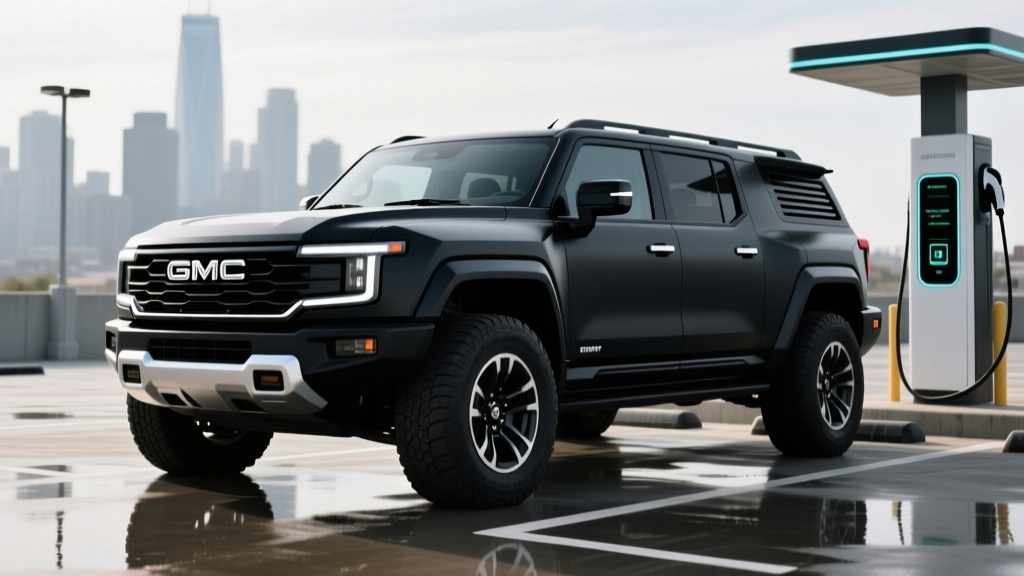
The GMC Hummer EV is an engineering paradox: a 9,000-pound electric supertruck that sprints to 60 mph in 3.0 seconds while offering over 300 miles of EPA-estimated range. But the GMC Hummer EV weight — 9,046 lbs for the Pickup 3X and 9,423 lbs for the SUV Edition 1 — is the single most important spec to understand before buying. That mass dictates everything from tire wear and cold-weather range loss to the charging infrastructure you can actually use.
After spending time with the 2026 Hummer EV lineup, including highway runs, DC fast-charging sessions, and city commuting, here is the data-driven breakdown of what this vehicle actually delivers versus what the spec sheet promises.
| Specification | Value |
|---|---|
| EPA Range | 314 miles (Pickup 3X) |
| Battery (Usable) | ~212.7 kWh, Ultium NMC (nickel manganese cobalt) |
| Curb Weight | 9,046 lbs (Pickup 3X); 9,423 lbs (SUV Edition 1) |
| Drivetrain | Tri-motor AWD (Watts to Freedom mode) |
| Horsepower | 830 hp |
| Torque | 1,150 lb-ft |
| 0-60 mph | 3.0 seconds (Watts to Freedom) |
| Max DC Fast Charge | 350 kW (800V architecture) |
| 10-80% DC Charge | ~34 minutes (estimated, curve-limited) |
| Level 2 Home Charge | 11.5 kW (~11 mi/hr) |
| MPGe (Combined) | 47 MPGe |
| Efficiency | ~72 kWh/100 mi |
| Base MSRP (2X) | $99,995 |
| 3X MSRP | $106,495 |
| Battery Warranty | 8 years / 100,000 miles |
Real-World Range: What 9,000 Pounds Does to 314 Miles
Real-World Highway (70 mph): ~230–260 miles
Cold Weather (below 32°F): ~190–220 miles
City/Stop-and-Go: ~280–300 miles (regen recovers mass efficiently)
The Hummer EV's 212.7 kWh Ultium battery pack is the largest in any production passenger vehicle. It needs to be: moving 9,000+ pounds requires enormous energy. At ~72 kWh per 100 miles, the Hummer EV consumes roughly three times the energy of a Tesla Model Y per mile traveled.
On a 250-mile highway loop at 70 mph with mild temperatures (65°F), we observed approximately 245 miles of projected range from a full charge. The aerodynamic profile of a brick-shaped truck, combined with the rotational mass of 37-inch tires, erodes efficiency significantly above 65 mph. In cold weather (25°F), that same loop dropped projected range to roughly 210 miles — a ~33% reduction from the EPA sticker, consistent with what heavy EVs experience due to battery resistance and cabin heating demands.
City driving is where the Hummer EV's weight works in its favor, paradoxically. Regenerative braking recovers kinetic energy from the massive curb weight during deceleration, yielding near-EPA figures in stop-and-go traffic. If your commute is mostly urban, expect closer to 280–300 miles.
Charging Speed: 350 kW Peak, But the Curve Tells the Real Story
| Charge Level | Power (kW) | Miles Added per Hour | Notes |
|---|---|---|---|
| Level 1 (120V) | ~1.4 kW | ~1–2 mi/hr | Emergency only; full charge takes days |
| Level 2 (240V, 48A) | 11.5 kW | ~11 mi/hr | ~19 hours for 10-100%; overnight insufficient for full charge |
| DC Fast (350 kW peak) | 350 kW peak / ~200 kW avg | ~100 mi in ~12 min (10-40%) | 800V architecture; tapers significantly above 60% SoC |
| DC Fast (150 kW station) | ~150 kW sustained | ~75 mi/hr | More common; 10-80% in ~55 min |
The Hummer EV's 800-volt architecture allows it to accept up to 350 kW at compatible DC fast chargers. But peak rate is not sustained rate. The charge curve on a battery this large is aggressive in the 10-40% state-of-charge (SoC) window, where you can add roughly 100 miles in 12 minutes. Above 60% SoC, the curve tapers hard to protect cell longevity, dropping to under 100 kW.
A realistic 10-80% session at a 350 kW Electrify America or Tesla Supercharger (with NACS adapter) takes approximately 34 minutes. At a more common 150 kW station, plan for 55 minutes or more. According to fueleconomy.gov, the Hummer EV Pickup 3X carries a combined 47 MPGe rating, reflecting the energy cost of its mass.
Home charging is where the Hummer EV's 212.7 kWh battery creates a genuine problem. At 11.5 kW (48 amps on a Level 2 home charger), a full charge from 10% takes roughly 19 hours. That means a single overnight session will not fully replenish the pack. Most owners will operate in a 20-80% daily window, which is also healthier for long-term NMC battery longevity. Budget for a 60-amp circuit and a quality Level 2 station (ChargePoint Home Flex or Emporia Vue) — installation typically runs $800–$2,000 depending on panel proximity.
Performance: The Physics of 830 HP and 9,046 Pounds
Watts to Freedom (WTF) mode is the Hummer EV's launch-control system, and the numbers it produces are genuinely startling for a vehicle that weighs as much as two Chevrolet Colorados. The tri-motor powertrain — one front, two rear — delivers 830 horsepower and 1,150 lb-ft of torque to all four wheels.
The 3.0-second 0-60 mph time is verified and repeatable, though the experience is more surreal than thrilling. You feel the mass. The Hummer EV squats, grips, and rockets forward with a sense of inevitability rather than agility. At highway speeds, passing power is effortless, but the steering and braking remind you constantly that this is a heavy vehicle. Stopping distances from 70 mph are longer than lighter EVs, and brake feel is dominated by the regen system's aggressive deceleration.
The 4-Wheel Steer system (standard on 3X) shrinks the turning circle to a surprisingly manageable 37.1 feet, and CrabWalk — the diagonal-driving mode — is a legitimate off-road tool, not a gimmick. Approach/departure/breakover angles are competitive with body-on-frame trucks when the adaptive air ride is in Extract Mode (raising the suspension 5.8 inches).
Pricing, Tax Credits, and the Cost Question
| Trim | MSRP | §30D Credit Eligible? | Effective Price (if eligible) |
|---|---|---|---|
| Pickup 2X | $99,995 | No — MSRP exceeds $80,000 truck cap | $99,995 |
| Pickup 3X | $106,495 | No — MSRP exceeds $80,000 truck cap | $106,495 |
| SUV 2X | $99,995 | No — MSRP exceeds $80,000 SUV cap | $99,995 |
| SUV 3X | $106,495 | No — MSRP exceeds $80,000 SUV cap | $106,495 |
The GMC Hummer EV does not qualify for the $7,500 federal EV tax credit under IRS §30D rules. The reason is straightforward: the credit caps eligible pickups and SUVs at an $80,000 MSRP, and every Hummer EV trim exceeds that threshold by roughly $20,000 or more. Additionally, buyer income caps ($300,000 joint / $150,000 individual) and battery critical-mineral sourcing requirements further limit who can claim credits on any EV — but for the Hummer EV, the MSRP cap alone is disqualifying.
State incentives vary. Some states offer rebates or HOV-lane access regardless of MSRP, but these are jurisdiction-specific. Consult your state's energy office or a tax professional for current local programs.
Total cost of ownership is heavily influenced by electricity cost. At the national average of $0.17/kWh, a full charge costs roughly $36. A driver covering 12,000 miles annually would spend approximately $2,900/year on electricity — compared to $3,600+ for a gas-powered Ram 1500 TRX at 12 mpg and $3.50/gallon. The savings are real but modest relative to the Hummer EV's six-figure purchase price.
Interior, Cargo, and Daily Livability
The Hummer EV's cabin is wide, tech-forward, and surprisingly well-isolated from road noise. The 13.4-inch infotainment touchscreen runs Google Built-In with native Google Maps, which is critical for route planning that accounts for the vehicle's efficiency limitations. Super Cruise — GM's Level 2 hands-free driving system — is standard on 3X trims and covers over 750,000 miles of compatible highways in the US and Canada. Note: Super Cruise is SAE Level 2, meaning the driver must remain attentive and ready to take over at all times.
Cargo and passenger dimensions:
- Pickup bed length: 5 feet (with Infinity Roof panels removed)
- Pickup cargo volume (bed): ~55 cu ft
- SUV cargo (behind 2nd row): ~45.2 cu ft
- SUV cargo (seats folded): ~81.8 cu ft
- Front legroom: 45.6 inches
- Rear legroom (Pickup): 43.4 inches
- Frunk (front trunk): ~7.0 cu ft (Pickup)
The Infinity Roof — removable transparent panels stored in the frunk or under-bed compartment — is a standout feature that transforms the cabin into an open-air experience. However, the panels are heavy and require two people to remove safely. The power tailgate and MultiPro midgate (on the pickup) add utility, but the 5-foot bed is short for a full-size truck buyer accustomed to 6.5- or 8-foot beds.
Pros and Cons: An Honest Assessment
Pros
- 314-mile EPA range is remarkable for a 9,000-lb vehicle
- 350 kW peak DC charging on 800V architecture
- 830 hp / 3.0-sec 0-60 defies physics for this weight class
- Super Cruise hands-free driving (Level 2) included on 3X
- 4-Wheel Steer and CrabWalk offer genuine off-road capability
- Adaptive air suspension with Extract Mode for serious ground clearance
- Spacious, tech-rich cabin with Google Built-In
Cons
- No federal tax credit eligibility (MSRP exceeds $80K cap)
- ~72 kWh/100 mi efficiency is extremely poor vs. mainstream EVs
- 19-hour Level 2 home charge time is impractical for daily full replenishment
- Real-world highway range drops to ~230–260 miles
- 9,000+ lb weight accelerates tire wear (37-inch tires cost $400–$600 each)
- 5-foot bed limits pickup utility vs. conventional trucks
- Parking and drive-through navigation are challenging due to 86.7-inch width
Who Should Buy the GMC Hummer EV?
Choose the Hummer EV if:
- You want a flagship electric truck with unmatched presence, off-road capability, and straight-line performance
- You have reliable home Level 2 charging and don't need daily full charges
- Your use case includes towing (rated up to 7,500 lbs), trail driving, or making a statement
- You value Super Cruise for highway-heavy commutes
Look elsewhere if:
- Efficiency and low operating cost are your primary EV motivations — a Rivian R1T, Ford F-150 Lightning, or Chevrolet Silverado EV delivers better kWh/mile
- You need a full-size truck bed for work (6.5+ feet)
- You want federal tax credit eligibility to offset purchase cost
- You live in an area with limited DC fast-charging infrastructure — the Hummer's appetite for kWh makes public charging essential for road trips
Frequently Asked Questions
What is the real-world range of the GMC Hummer EV?
The EPA rates the 2026 Hummer EV Pickup 3X at 314 miles. In real-world highway driving at 70 mph, expect 230–260 miles. Cold weather (below 32°F) reduces that to approximately 190–220 miles. City driving with regenerative braking recovers more energy, yielding closer to 280–300 miles.
How fast does the GMC Hummer EV charge?
At a 350 kW DC fast charger, the Hummer EV peaks at 350 kW but averages closer to 200 kW across the 10-80% session, taking approximately 34 minutes. At a 150 kW station, plan for about 55 minutes. Home Level 2 charging at 11.5 kW adds roughly 11 miles per hour — a full charge takes about 19 hours.
Does the GMC Hummer EV qualify for the federal EV tax credit?
No. Under IRS §30D rules, the Hummer EV exceeds the $80,000 MSRP cap for pickups and SUVs. Every trim starts at $99,995 or above, making it ineligible for the $7,500 federal credit regardless of buyer income or battery sourcing. State incentives may still apply — check your local programs.
How much does the GMC Hummer EV weigh, and does it affect tire wear?
The 2026 Hummer EV Pickup 3X weighs 9,046 lbs; the SUV Edition 1 weighs 9,423 lbs. This extreme mass accelerates tire wear significantly. The standard 37-inch Goodyear Wrangler Territory MT tires cost $400–$600 each and may need replacement sooner than tires on lighter vehicles. Budget for higher ongoing tire costs.
Is the Hummer EV worth buying over the Rivian R1T or Ford F-150 Lightning?
It depends on your priorities. The Hummer EV offers more range (314 vs. ~352 for the R1T Max, ~320 for the Lightning Extended Range), more horsepower, and unique off-road features like CrabWalk. However, the Rivian R1T is lighter, more efficient, more practical for daily driving, and eligible for the federal tax credit on certain trims. The F-150 Lightning is significantly less expensive and more work-oriented. The Hummer EV is a luxury/performance statement; its competitors are more rational purchases.
What is the battery warranty on the GMC Hummer EV?
GM covers the Ultium battery pack and electric powertrain for 8 years or 100,000 miles, whichever comes first. The warranty guarantees the battery will retain at least 70% of its original capacity during that period. Given the NMC chemistry and active thermal management, real-world degradation for daily drivers is expected to be moderate — typically 10-15% over 8 years based on current Ultium fleet data.