The GMC Hummer EV remains one of the most polarizing vehicles on the road — a 9,000-pound electric supertruck that promises supercar acceleration alongside genuine work-truck utility. For buyers researching the GMC Hummer EV towing capacity, the headline number is 7,500 pounds (pickup) or 5,000 pounds (SUV), but the real story involves how towing affects range, charging logistics, and total cost of ownership. This profile covers the 2026 model year with exact specs, real-world caveats, and the data you need before signing a six-figure purchase order.
Quick Verdict: Who the Hummer EV Is Actually For
The Hummer EV is a niche flagship — not a mass-market truck. It suits buyers who want maximum electric presence, Watts to Freedom launch mode (0-60 in roughly 3.0 seconds), and enough towing capability for a medium boat or camper trailer. It does not suit fleet buyers, budget-conscious commuters, or anyone who needs to tow 10,000+ pounds regularly. If your primary use case is daily commuting under 50 miles with occasional weekend towing, the Hummer EV delivers. If you need max tow ratings or efficient highway road trips, look at the Rivian R1T or Ford F-150 Lightning instead.
Spec Table: 2026 GMC Hummer EV Pickup (2X Trim)
| Spec | Value |
|---|---|
| EPA Range | ~350 miles (pickup, 2X) |
| Battery (usable) | ~212 kWh, NMC (Ultium) |
| Horsepower | 625 hp (2X) / up to 1,000 hp (3X) |
| 0-60 mph | ~3.0 sec (3X, WTF mode) |
| Drivetrain | Dual-motor AWD (2X) / Tri-motor AWD (3X) |
| Max DC Fast Charge | ~350 kW (800V architecture) |
| 10-80% DC Time | ~35-45 minutes (taper above 80%) |
| Level 2 Home Charge | 11.5 kW onboard (~22 mi/hr) |
| MPGe (combined) | ~47 MPGe / 72 kWh/100mi |
| Towing Capacity (pickup) | 7,500 lbs |
| Towing Capacity (SUV) | 5,000 lbs |
| Payload | ~1,300 lbs |
| Base MSRP (2X Pickup) | ~$106,400 |
| Battery/Powertrain Warranty | 8 yr / 100,000 mi |
Real-World Range: What the EPA Sticker Doesn't Tell You
Real-World Highway (70 mph): Expect ~260-290 miles
Cold Weather (below 32°F): Expect ~220-260 miles
While Towing (5,000+ lb trailer): Expect ~150-180 miles
The Hummer EV's 212 kWh Ultium battery is the largest in any production passenger vehicle, but the truck's aerodynamic profile (a brick-shaped frontal area) and 9,000-pound curb weight crush highway efficiency. In fueleconomy.gov testing, the combined cycle yields roughly 47 MPGe, but sustained 70+ mph driving drops effective range by 20-25%. Cold weather compounds this — the battery's thermal management system draws energy to maintain cell temperature, and cabin heating (even with a heat pump on newer trims) further reduces range.
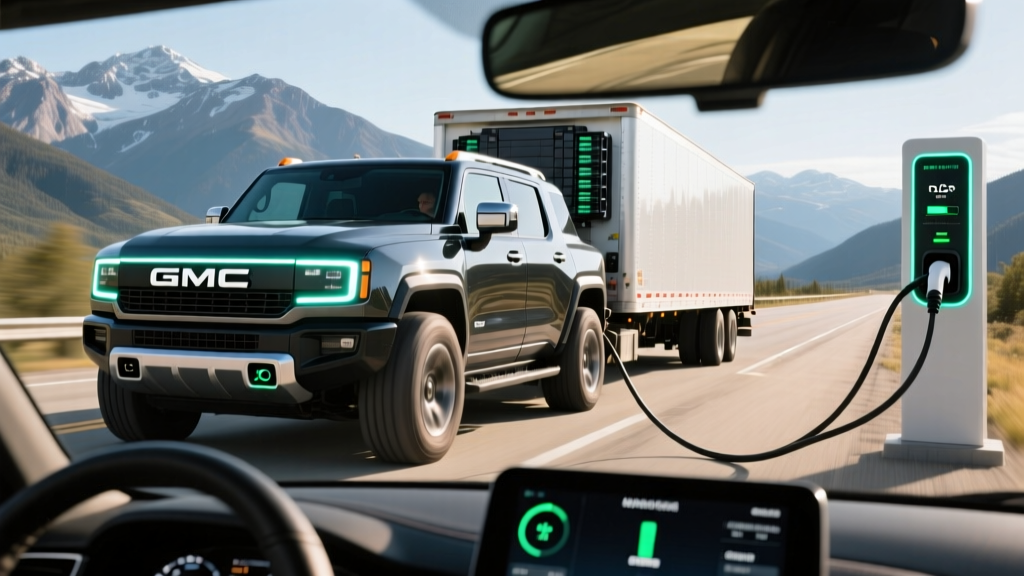
Towing is the real range killer. At 7,500 pounds (max rated capacity), expect range to roughly halve. This makes long-distance towing impractical without careful DC fast-charger planning. For a 200-mile trip with a loaded trailer, you'll need at least one mid-route charge stop at a 350 kW-capable station.
Charging Speed: DC Fast, Level 2, and the 212 kWh Problem
The Hummer EV uses GM's 800V Ultium architecture, enabling peak DC fast-charge rates near 350 kW at compatible stations (Electrify America, EVgo, and select Tesla Superchargers with NACS adapter on 2025+ models). However, peak rate is not sustained rate. The charge curve tapers significantly above 50% state of charge, and the massive 212 kWh pack means even a "fast" 10-80% session takes 35-45 minutes — longer than most EVs with smaller batteries.
| Charging Level | Power | Miles Added per Hour | Notes |
|---|---|---|---|
| Level 1 (120V) | ~1.4 kW | ~3 mi/hr | Emergency only; full charge takes days |
| Level 2 (240V, 48A) | 11.5 kW | ~22 mi/hr | Full charge: ~18-20 hours (0-100%) |
| DC Fast (350 kW peak) | Up to 350 kW | ~600+ mi/hr (peak) | 10-80% in ~35-45 min; tapers above 50% |
Home charging on a Level 2 station adds roughly 22 miles of range per hour. For a daily commuter driving 40-60 miles round trip, an overnight charge easily replenishes daily use. But a full 0-100% charge on Level 2 takes 18-20 hours — plan accordingly if you drain the pack on a road trip and return home empty. Most owners will keep state of charge between 20-80% for daily use, which preserves battery health (NMC chemistry prefers partial cycles over deep discharges).
Performance and Drivetrain: Watts to Freedom and Then Some
The Hummer EV 2X uses a dual-motor AWD setup producing 625 horsepower and 7,400 lb-ft of wheel torque (GM's measurement, not motor output). The 3X tri-motor variant pushes output to an estimated 1,000 horsepower, enabling a 0-60 mph time near 3.0 seconds in Watts to Freedom (WTF) launch mode. This is absurd performance for a vehicle that weighs as much as two Ford F-150s, and it never stops being startling.
Off-road, the Hummer EV offers Extract Mode (suspension raises 6 inches for extreme clearance), four-wheel steer (CrabWalk diagonal movement), and underbody armor. These features are genuinely capable, not just marketing. But the truck's width (over 96 inches including mirrors) makes tight trails and narrow garage entries a constant concern. Ground clearance in normal mode is 10.1 inches; approach/departure angles are competitive with purpose-built off-roaders.
Towing Capacity: 7,500 Pounds, With Caveats
The GMC Hummer EV towing capacity for the pickup variant is 7,500 pounds when properly equipped (factory tow package, integrated trailer brake controller). The SUV variant is rated at 5,000 pounds. These numbers trail the Ford F-150 Lightning (up to 10,000 lbs) and Rivian R1T (11,000 lbs), reflecting the Hummer's emphasis on performance and off-road capability over pure work-truck duty.
Towing at max capacity demands realistic expectations:
- Range drops sharply: Expect 150-180 miles at 7,500 lbs on flat terrain, less on inclines or in wind.
- Charging takes longer: You may need to unhitch at destination chargers, as many pull-through DC fast-charger spots are limited.
- Regen braking helps: One-pedal driving and strong regenerative braking reduce trailer brake wear on descents, but the truck's mass means stopping distances are still long.
- Trailer sway control: Standard on equipped models, and effective in crosswinds and passing-semi scenarios.
For buyers who tow a 5,000-pound boat or 6,000-pound travel trailer on weekend trips under 150 miles, the Hummer EV handles the job capably. For daily commercial towing or long-distance hauling, the F-150 Lightning or a diesel truck remains more practical.
Pricing, Trims, and Federal Tax Credit Eligibility
The 2026 GMC Hummer EV lineup starts near $106,400 for the 2X pickup and climbs past $140,000 for a fully optioned 3X SUV. Trim levels include 2X (dual-motor), 3X (tri-motor), and the limited-edition Edition 1 (sold out). Options like the Extreme Off-Road Package, Infinity Roof (removable panels), and Super Cruise hands-free driving add $5,000-$15,000 to the sticker.
Without the federal credit, the Hummer EV's total cost of ownership leans heavily on fuel savings (electricity vs. gasoline for a 12-MPG equivalent gas Hummer) and lower maintenance (no oil changes, fewer brake replacements due to regen). Insurance premiums are high — expect $3,000-$5,000 annually depending on your profile. Depreciation is steep in the first three years, typical for six-figure luxury EVs.
Interior, Cargo, and Daily Usability
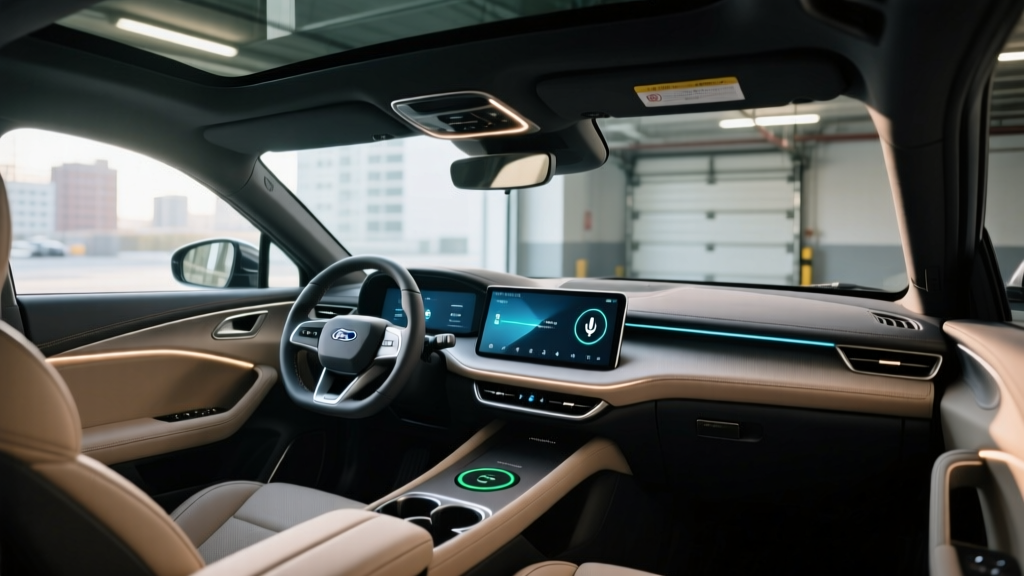
The Hummer EV's cabin is spacious but utilitarian — GM prioritized durability and washability over luxury materials. The 13.4-inch infotainment touchscreen runs Google Built-In (Maps, Assistant, Play Store), and a 12.3-inch driver cluster provides range, power flow, and off-road telemetry. Super Cruise (Level 2 driver assist, not self-driving) is available on mapped divided highways and remains one of the best hands-free systems on the market, though the driver must keep eyes on the road.
Cargo space in the pickup includes a 5-foot bed (shorter than full-size trucks) and a front trunk (frunk) with roughly 11.3 cubic feet — enough for charging cables and a small cooler. The SUV offers 81.8 cubic feet behind the front seats with rows folded. Rear legroom is generous (over 40 inches), and the flat floor (no transmission tunnel) makes the middle seat usable for adults. However, the truck's sheer height (over 81 inches) means most parking garages are a no-go, and the width demands wide lanes and careful mirror management.
Pros, Cons, and Competitor Comparison
- 7,500-lb towing (pickup) with integrated brake controller
- 350-mile EPA range (largest battery in production)
- 3.0-sec 0-60 (3X) — supercar acceleration in a truck
- CrabWalk, Extract Mode, genuine off-road capability
- Super Cruise hands-free driving on highways
- 8 yr / 100,000 mi battery warranty
- $106,400+ starting price; no federal tax credit
- Range halves while towing at max capacity
- Massive size limits garage/parking options
- Level 2 charging takes 18-20 hours (0-100%)
- Efficiency poor vs. Rivian R1T or F-150 Lightning
- Short 5-foot bed limits cargo for a full-size truck
Versus the Rivian R1T (11,000-lb tow, 350+ mi range, ~$80,000), the Hummer EV trades towing capacity and efficiency for performance and presence. Versus the Ford F-150 Lightning (10,000-lb tow, ~$55,000 base, eligible for tax credit), the Hummer is a luxury toy where the Lightning is a work tool. Choose the Hummer if you want a statement vehicle with genuine capability; choose the R1T or Lightning if utility and value matter more.
Frequently Asked Questions
What is the real-world range of the GMC Hummer EV?
EPA-estimated at ~350 miles for the 2X pickup, but expect 260-290 miles on the highway at 70 mph, and as low as 150-180 miles while towing at max capacity. Cold weather (below freezing) can drop range to 220-260 miles without a trailer.
How fast does the Hummer EV charge at home and on the road?
On a Level 2 home charger (11.5 kW), expect ~22 miles of range per hour and a full 0-100% charge in 18-20 hours. On a 350 kW DC fast charger, 10-80% takes roughly 35-45 minutes, but the charge curve tapers significantly above 50% state of charge.
Does the GMC Hummer EV qualify for the federal EV tax credit?
No. Under IRS §30D rules, new pickup trucks must have an MSRP under $80,000 to qualify for the $7,500 credit. The Hummer EV starts above $106,000, making it ineligible. State incentives may still apply — check local programs.
Is the Hummer EV worth buying vs. the Rivian R1T or F-150 Lightning?
It depends on your priorities. The Hummer EV wins on performance (3.0-sec 0-60), off-road features (CrabWalk, Extract Mode), and sheer presence. The R1T wins on towing (11,000 lbs) and efficiency. The Lightning wins on value and tax-credit eligibility. For most buyers, the R1T or Lightning is the rational choice; the Hummer is for those who want maximum electric excess.
Can the Hummer EV tow a travel trailer long distances?
Technically yes, but range drops to 150-180 miles at max tow, requiring frequent DC fast-charger stops. Plan routes carefully using apps like A Better Routeplanner, and confirm charger pull-through availability. For trips over 300 miles with a trailer, a diesel or the F-150 Lightning (with its higher tow rating and better efficiency) may be more practical.
What is the battery warranty on the Hummer EV?
GM covers the Ultium battery and powertrain for 8 years or 100,000 miles, whichever comes first, against defects and excessive capacity loss (typically below 70% state of health). This is standard for the EV industry and aligns with NHTSA-referenced best practices.