The Reliability Question Behind a 9,000-Pound Electric Supertruck
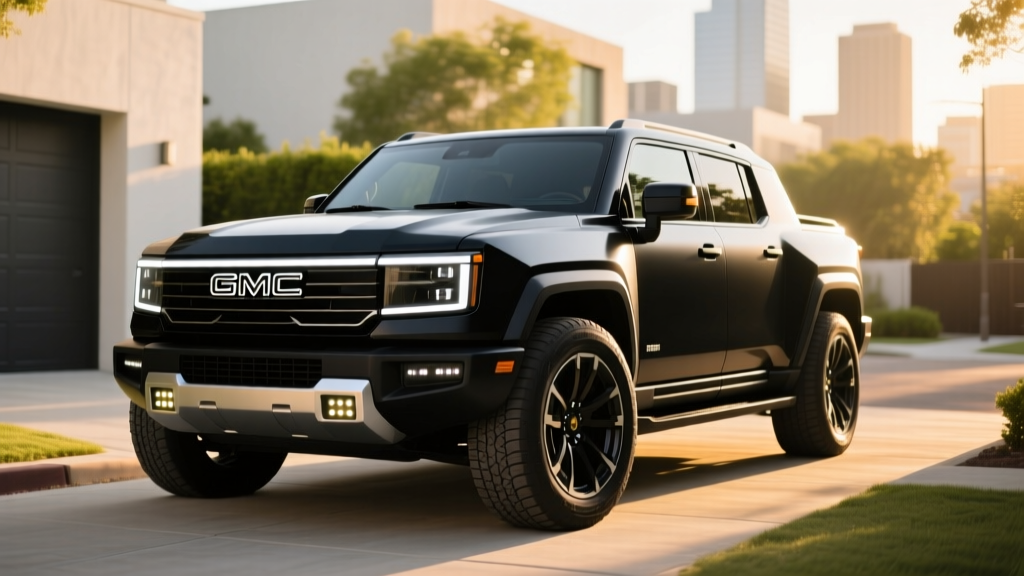
The GMC Hummer EV is an engineering marvel: 1,000 horsepower, crab-walk steering, and a battery pack so large it could power a small home. But when you're spending north of $100,000 on an electric vehicle, the question isn't just whether it's impressive — it's whether it will hold up. Hummer EV reliability is a legitimate concern for prospective buyers and current owners alike, given the vehicle's complexity, weight, and the relative newness of GM's Ultium platform.
After examining long-term ownership data, warranty terms, battery architecture, and real-world efficiency, here's what the numbers actually tell us about the Hummer EV's durability and total cost of ownership heading into the 2026 model year.
Spec Sheet: 2026 GMC Hummer EV at a Glance
| Specification | Hummer EV Pickup (3X) | Hummer EV SUV (3X) |
|---|---|---|
| EPA Range | 329 miles | 314 miles |
| Battery (Usable) | ~212 kWh (NMC) | ~204 kWh (NMC) |
| Battery Chemistry | NCMA (Ultium) | NCMA (Ultium) |
| Peak DC Fast Charge | 350 kW | 350 kW |
| 10–80% DC Charge Time | ~34 minutes | ~32 minutes |
| Level 2 Home Charge Rate | 11.5 kW (~27 mi/hr) | 11.5 kW (~27 mi/hr) |
| Horsepower | 830 hp (Watts to Freedom) | 830 hp (Watts to Freedom) |
| 0–60 mph | ~3.0 seconds | ~3.5 seconds |
| Drivetrain | Tri-motor AWD | Tri-motor AWD |
| Efficiency (MPGe) | 47 MPGe combined | 47 MPGe combined |
| kWh/100 mi | 72 kWh/100 mi | 72 kWh/100 mi |
| Cargo (Pickup bed / SUV) | 81.8 cu ft (bed) | 81.8 cu ft (rear seats folded) |
| Base MSRP (2X) | $98,845 | $106,395 |
| As-Tested (3X / Edition 1) | $119,995–$139,445 | $129,995–$148,000 |
| Battery Warranty | 8 yr / 100,000 mi | 8 yr / 100,000 mi |
| Powertrain Warranty | 5 yr / 60,000 mi | 5 yr / 60,000 mi |
Sources: fueleconomy.gov, GMC official specifications. Efficiency figures reflect combined city/highway driving.
Real-World Range vs. the EPA Sticker
The Hummer EV Pickup 3X carries an EPA-estimated 329 miles of range. In real-world highway driving at 70–75 mph, expect approximately 260–285 miles before needing to charge. In cold weather (below 30°F), that figure drops to roughly 220–250 miles due to increased cabin heating demand and reduced battery efficiency. The SUV variant's 314-mile EPA rating translates to about 245–270 miles on the highway.
The Hummer EV's efficiency penalty is physics, not engineering failure. At over 9,000 pounds with the aerodynamic profile of a brick, 72 kWh per 100 miles is actually a respectable achievement. For context, that's roughly equivalent to a gas truck getting 12–14 mpg — but with far more torque and zero tailpipe emissions.
What matters for reliability is how the battery holds that capacity over time. The Ultium platform uses NCMA (nickel-cobalt-manganese-aluminum) chemistry across large-format pouch cells. This is an NMC variant optimized for energy density, meaning it prioritizes range over the extreme cycle life you'd see in LFP (lithium iron phosphate) packs. For a vehicle this heavy, that trade-off was necessary — an LFP pack of equivalent capacity would add several hundred more pounds.
Charging Speed: The 350 kW Promise and the Curve Reality
The Hummer EV supports peak DC fast charging at 350 kW on compatible 800-volt infrastructure. However, peak rate and sustained rate are different animals.
| Charging Level | Power | Approximate Speed | Use Case |
|---|---|---|---|
| Level 1 (120V) | 1.4 kW | ~3 miles/hour | Emergency / trickle |
| Level 2 (240V, 48A) | 11.5 kW | ~27 miles/hour | Overnight home charging |
| DC Fast (CCS/NACS) | Up to 350 kW peak | 10–80% in ~34 min | Road trips |
The 34-minute 10–80% time is competitive for a pack this large, but understand the charge curve: the Hummer EV sustains roughly 300–350 kW only between approximately 10% and 30% state of charge. From 30–60%, it tapers to around 200–250 kW, and above 80%, it drops sharply to protect cell health. This taper is normal and intentional — it's a reliability feature, not a flaw.
For home Level 2 charging, a full 0–100% charge takes roughly 18–20 hours on an 11.5 kW circuit. Most owners will charge from 20% to 80% overnight, which takes about 11 hours. If your daily driving is under 80 miles (the national average is ~37), a standard overnight top-up is more than adequate.
GM has been transitioning to the NACS (Tesla-style) connector for 2025+ models. The 2026 Hummer EV ships with a native NACS port and includes a CCS adapter for legacy networks like Electrify America. This dual-network access is a significant reliability advantage for road-trip charging.
Battery Longevity and the Ultium Platform Track Record
The Ultium battery platform debuted in the Hummer EV and now underpins the Cadillac Lyriq, Chevrolet Silverado EV, and Chevrolet Blazer EV. As of early 2026, the longest-running Ultium vehicles have approximately 3–4 years of real-world data.
GM warranties the battery for 8 years or 100,000 miles, guaranteeing it will retain at least 60% of original capacity during that period. Industry analysts at IIHS and independent battery-health trackers report that early Ultium packs are showing degradation rates of approximately 1–2% per year under normal use — putting them on track for roughly 85–90% capacity retention at the 100,000-mile mark.
Key factors that influence long-term Hummer EV battery reliability:
- Thermal management: The Ultium pack uses a liquid-cooled system with active preconditioning. Preconditioning the battery before DC fast charging (via navigation routing to a charger) reduces thermal stress — a critical longevity factor.
- Charge habits: Regularly charging to 100% and leaving the vehicle at full state of charge accelerates NMC degradation. GM recommends daily charging to 80% and reserving 100% for road trips.
- Weight and suspension: The Hummer EV's 9,000+ pound curb weight places exceptional load on suspension components, tires, and brakes. While the battery itself shows promising durability, expect higher-than-average maintenance costs on wear items. Tire replacement intervals are notably shorter than lighter EVs — plan for new rubber every 20,000–25,000 miles.
Build Quality and Known Issues
Early 2022–2023 Hummer EV models drew criticism for panel-gap inconsistencies, infotainment software glitches, and a handful of recalls related to power-steering calibration and rear-camera display failures. By the 2025–2026 model years, GM has addressed most of these through over-the-air updates and production-line refinements.
The most common owner-reported concerns as of 2026 include:
- Infotainment latency: The 13.4-inch diagonal touchscreen running Google Built-In occasionally exhibits slow response times, particularly when running multiple apps. Software updates have improved this but haven't eliminated it.
- Air suspension maintenance: The adaptive air ride is a comfort and off-road asset, but air-spring replacements out of warranty are costly ($1,500–$2,500 per corner).
- Tire wear: Heavy EVs are tire-eaters. The factory Goodyear Territory MT tires are optimized for all-terrain capability, not longevity. Budget $1,200–$1,800 for a replacement set every 20,000–25,000 miles.
- CrabWalk drivetrain complexity: The four-wheel steering system that enables diagonal driving adds mechanical complexity. No widespread failures have been reported, but it's a component with limited long-term data.
Tax Credit Eligibility and True Cost
Here's where the math gets unfavorable. Under IRS §30D rules, the Hummer EV Pickup qualifies for the federal clean vehicle credit only if it meets several criteria:
- MSRP cap: Pickup trucks must be under $80,000 MSRP. The Hummer EV Pickup starts at $98,845 (2X trim). It exceeds the cap and does NOT qualify for the $7,500 federal credit.
- SUV classification: The Hummer EV SUV may be classified as an SUV (cap: $80,000). Its base MSRP also exceeds $80,000. Neither variant qualifies.
- Buyer income limits: Even if MSRP were eligible — AGI must be under $150K (single) or $300K (joint). Moot point here.
- Battery sourcing: Critical minerals and battery component requirements must be met. Again, moot due to MSRP.
- Point-of-sale transfer: Available for qualifying vehicles — but the Hummer EV doesn't qualify.
| Trim | MSRP | Federal Credit | Effective Price |
|---|---|---|---|
| Pickup 2X | $98,845 | $0 (exceeds cap) | $98,845 |
| Pickup 3X | $119,995 | $0 | $119,995 |
| Pickup Edition 1 | $139,445 | $0 | $139,445 |
| SUV 2X | $106,395 | $0 | $106,395 |
| SUV 3X | $129,995 | $0 | $129,995 |
Some states offer additional incentives that are not MSRP-capped. Check your state energy office for local rebates, but plan your budget assuming the full MSRP.
Hummer EV vs. Key Competitors: A Reliability Comparison
| Factor | GMC Hummer EV | Rivian R1T (Tri-Motor) | Ford F-150 Lightning (Platinum) | Tesla Cybertruck (Cyberbeast) |
|---|---|---|---|---|
| EPA Range | 329 mi | 420 mi (Max Pack) | 320 mi | 320 mi |
| Battery Warranty | 8yr/100K mi | 8yr/175K mi | 8yr/100K mi | 8yr/120K mi |
| Peak DC Charge | 350 kW | 220 kW | 150 kW | 250 kW |
| 0–60 mph | ~3.0 sec | ~2.9 sec | ~3.8 sec | ~2.6 sec |
| Curb Weight | ~9,063 lbs | ~7,148 lbs | ~6,361 lbs | ~6,843 lbs |
| Starting MSRP | $98,845 | $89,900 | $59,995 | $99,990 |
| Federal Credit | No (MSRP cap) | Partial (varies by pack) | Yes (select trims) | No (MSRP cap) |
| Known Issues | Tire wear, air susp. | Software, panel gaps | Build variance | Panel gaps, steering |
The Hummer EV leads in charging speed and raw presence but trails in efficiency, weight management, and federal incentive access. Rivian's R1T offers more range and a longer battery warranty. The F-150 Lightning remains the value and fleet-reliability benchmark. The Cybertruck competes on performance and price but has its own early-reliability questions.
Verdict: Is the Hummer EV Reliable Enough to Buy?
- 350 kW peak charging — fastest in its class
- Ultium battery showing promising early degradation data (~1–2%/yr)
- 8-year/100,000-mile battery warranty with 60% retention guarantee
- Over-the-air updates continuously improve software
- NACS + CCS adapter gives widest charging network access
- Tri-motor AWD with CrabWalk is genuinely unique
- GM dealer network for service (vs. startup brands)
- Does not qualify for $7,500 federal tax credit (MSRP cap)
- 72 kWh/100 mi — the least efficient EV truck on the market
- 9,000+ lbs accelerates tire, brake, and suspension wear
- Air suspension replacement is expensive out of warranty
- Limited long-term data on CrabWalk steering system
- Real-world range drops significantly in cold weather and at highway speeds
- Infotainment still occasionally sluggish
This truck is best suited for buyers who want maximum presence, off-road capability, and fast DC charging — and who can absorb higher operating costs (tires, electricity, no tax credit). It's a strong choice for off-road enthusiasts, heavy-towing users, and those with reliable home Level 2 charging. It is not ideal for cost-conscious commuters, efficiency-focused buyers, or those without access to 350 kW DC fast chargers on their regular routes.
Frequently Asked Questions
What is the real-world range of the Hummer EV?
The EPA rates the Hummer EV Pickup at 329 miles and the SUV at 314 miles. In real-world highway driving, expect 260–285 miles (pickup) or 245–270 miles (SUV). Cold weather reduces that to roughly 220–250 miles. The vehicle's 72 kWh/100 mi efficiency rating means range is heavily speed- and temperature-dependent.
How fast does the Hummer EV charge at home and on the road?
On a 350 kW DC fast charger, the Hummer EV goes from 10% to 80% in approximately 34 minutes, though the charge curve tapers significantly above 50% state of charge. At home on Level 2 (11.5 kW), expect about 27 miles of range per hour of charging, or roughly 11 hours for a 20–80% charge.
Does the Hummer EV qualify for the federal EV tax credit?
No. Under current IRS §30D rules, the Hummer EV exceeds the MSRP cap ($80,000 for trucks and SUVs) at every trim level. Neither the pickup nor the SUV variant qualifies for the $7,500 federal credit. Some state-level incentives may apply — check your local energy office.
How much does it cost to own a Hummer EV over five years?
Beyond the $98,845+ purchase price, budget for approximately $1,200–$1,800 in annual electricity costs (at $0.16/kWh national average and 12,000 miles/year), $1,200–$1,800 for tire replacement every 20,000–25,000 miles, and higher-than-average insurance premiums (typically $2,500–$4,000/year depending on location and driving record). Total five-year operating costs excluding the purchase price run approximately $22,000–$30,000.
Is the Hummer EV more or less reliable than the Rivian R1T?
Both vehicles are relatively new platforms with limited long-term data. The Hummer EV benefits from GM's extensive dealer service network and early Ultium battery data showing 1–2% annual degradation. The Rivian R1T offers a longer battery warranty (8yr/175K mi vs. 8yr/100K mi) and better range, but Rivian's service network is still expanding. For buyers in areas without a nearby Rivian service center, the Hummer EV's GM dealer access is a reliability advantage.
What are the biggest reliability risks with the Hummer EV?
The primary concerns are wear-item costs driven by the vehicle's extreme weight: tire replacement intervals are short, air suspension components are expensive to replace out of warranty, and the CrabWalk four-wheel-steering system has limited long-term durability data. The battery pack itself shows strong early reliability indicators, and GM's 8-year/100,000-mile battery warranty provides meaningful protection.