Quick Answer: The 2026 GMC Hummer EV is a battery-electric supertruck/SUV built on GM's Ultium platform, offering an EPA-estimated range up to 350 miles (Pickup Edition 1), a massive 24-module Ultium battery pack (~246 kWh total / ~212 kWh usable, NMC chemistry), up to 830 hp in Watts to Freedom mode, and 350 kW peak DC fast charging (10–80% in roughly 30 minutes). Base pricing starts around $98,545 for the 2X Pickup trim, climbing past $145,000 for fully loaded editions. It does not qualify for the federal §30D new EV tax credit due to its MSRP exceeding the $80,000 truck cap. Real-world highway range drops to roughly 270–300 miles, and cold-weather loss of 20–30% is expected. Home Level 2 charging is essential for practical ownership.
What Exactly Is the Hummer Electric Car?
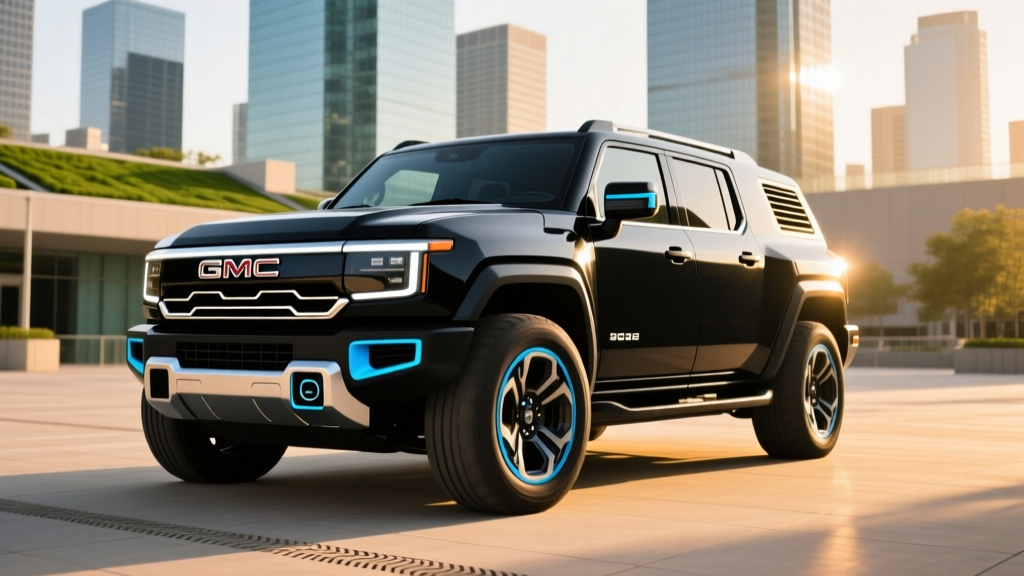
The "Hummer electric car" that shoppers search for is officially the GMC Hummer EV, sold in two body styles: the Pickup and the SUV. Revived by General Motors in 2022 after the original H2/H3 gas guzzlers were discontinued in 2010, the Hummer EV is a low-volume halo vehicle designed to showcase GM's Ultium battery architecture and prove that a 9,000-pound electric truck can deliver supercar-level acceleration.
For the 2026 model year, GMC continues the lineup with the 2X and 3X trims for both body styles, plus limited-edition variants. The powertrain uses a three-motor setup (one front, two rear) on top trims, producing up to 830 horsepower and 11,500 lb-ft of wheel torque. The 2X trim uses a two-motor dual-motor configuration producing approximately 655 hp.
This is a full battery-electric vehicle (BEV)—not a plug-in hybrid, not a range-extended EV. There is no gasoline engine, no backup generator. Every mile is driven on battery energy alone.
| Spec | 2X Pickup | 3X Pickup | 3X SUV |
|---|---|---|---|
| EPA Range | ~314 mi | ~350 mi | ~314 mi |
| Battery (total / usable) | ~246 / ~212 kWh | ~246 / ~212 kWh | ~246 / ~212 kWh |
| Chemistry | NMC (Ultium) | NMC (Ultium) | NMC (Ultium) |
| Horsepower | 655 hp | 830 hp (WTF mode) | 830 hp (WTF mode) |
| 0–60 mph | ~4.5 sec | ~3.0 sec | ~3.5 sec |
| Peak DC Fast Charge | 350 kW (800V) | 350 kW (800V) | 350 kW (800V) |
| 10–80% DC Charge | ~30 min | ~30 min | ~30 min |
| Level 2 Charge Rate | 11.5 kW | 11.5 kW | 11.5 kW |
| Towing Capacity | 7,500 lb | 7,500 lb | 7,500 lb |
| Curb Weight | ~9,046 lb | ~9,063 lb | ~9,000 lb |
| Base MSRP | ~$98,545 | ~$119,995 | ~$119,995 |
| Battery Warranty | 8 yr / 100,000 mi | 8 yr / 100,000 mi | 8 yr / 100,000 mi |
Sources: GMC Hummer EV official page, fueleconomy.gov. Specs reflect 2025–2026 model year data; verify with dealer for exact current-year figures.
Real-World Range: What the EPA Sticker Doesn't Tell You
EPA Range vs. Reality: The 3X Pickup's 350-mile EPA estimate assumes a mix of city and moderate-speed driving in temperate conditions. In real-world ownership:
- Highway at 75 mph: Expect 270–300 miles. The Hummer EV's 9,000+ lb curb weight and brick-like aerodynamics crush highway efficiency.
- Cold weather (below 32°F): Plan for 20–30% range loss, dropping effective range to roughly 210–280 miles depending on cabin heating use.
- Towing: With a 7,500-lb trailer, range can fall below 150 miles. This truck is not a long-distance tow rig.
- City / stop-and-go: Regenerative braking helps; you may meet or slightly exceed the EPA figure in urban driving.
The 24-module Ultium pack is among the largest ever fitted to a production vehicle. Its NMC (nickel manganese cobalt) chemistry offers high energy density but is heavier than the LFP (lithium iron phosphate) packs found in some competitors. The Hummer EV carries a massive weight penalty to achieve its range—you're hauling nearly five tons of truck, and a significant portion of that is battery mass.
Efficiency, measured in MPGe, sits around 47–51 MPGe combined depending on trim. That translates to roughly 62–68 kWh/100 miles. For context, a Tesla Model Y achieves about 28 kWh/100mi. The Hummer EV uses more than twice the energy per mile of a mid-size electric crossover. That's the physics cost of a 9,000-lb supertruck.
Charging Speed, Connectors, and Home Setup
The Hummer EV uses GM's 800-volt Ultium architecture, enabling peak DC fast charging at 350 kW on compatible stations. On a 350 kW Electrify America or EVgo stall, you can add roughly 100 miles of range in about 10 minutes and charge from 10% to 80% in approximately 30 minutes. However, the charge curve tapers significantly above 80% SoC—a full 10–100% session can take 50+ minutes. This is normal for large NMC packs and protects long-term battery health.
For the 2026 model year, GM has transitioned new Ultium vehicles to the NACS (North American Charging Standard) connector, granting native access to Tesla's Supercharger network. Earlier 2022–2024 Hummer EV models shipped with CCS1 and require a GM-provided NACS adapter for Supercharger use. Confirm your model year's native connector with the dealer before purchase.
| Level | Power (kW) | Miles of Range Per Hour | Full Charge Time (0–100%) |
|---|---|---|---|
| Level 1 (120V household) | ~1.4 kW | ~2–3 mi/hr | ~7+ days |
| Level 2 (240V home, 48A) | 11.5 kW | ~18–21 mi/hr | ~19–22 hours |
| DC Fast (350 kW peak) | Up to 350 kW | ~600+ mi/hr (peak) | 10–80% in ~30 min |
Home charging is non-negotiable. A Level 1 standard outlet adds roughly 2–3 miles of range per hour. To replenish even 100 miles overnight would require 35+ hours of continuous charging—completely impractical for a pack this size. You need a Level 2 home charger (240V, 48-amp circuit) to add roughly 100 miles in a 5-hour overnight session.
Home Level 2 installation cost breakdown:
| Component | Cost Range |
|---|---|
| Level 2 charger (hardwired, 48A) | $400–$700 |
| Electrician labor (standard install) | $500–$1,500 |
| Electrical permit | $50–$200 |
| Panel upgrade (if needed, 100A→200A) | $1,500–$3,500 |
| Total (no panel upgrade) | $950–$2,400 |
| Total (with panel upgrade) | $2,450–$5,900 |
The Hummer EV's 11.5 kW onboard charger is modest for a pack this large. While competitors like the Lucid Air accept up to 19.2 kW on Level 2, the Hummer EV will take 19–22 hours from a true 0% to 100% on Level 2. In practice, most owners charge between 20% and 80% daily, which takes about 11–13 hours at 11.5 kW—adequate for overnight replenishment but slow for back-to-back long trip days.
Hummer EV vs. Gas Hummer H2 vs. Electric Rivals
Understanding the Hummer EV's value means comparing it against both its gasoline ancestor and its current electric competitors.
| Metric | 2026 GMC Hummer EV 3X | 2009 Hummer H2 (Final Year) | 2026 Rivian R1T Tri-Motor |
|---|---|---|---|
| EPA Range | 350 mi | ~310 mi (12 mpg × 26 gal) | ~420 mi (Max Pack) |
| Energy/Fuel Cost per Mile | ~$0.07–$0.14 | ~$0.30–$0.40 | ~$0.06–$0.12 |
| 0–60 mph | ~3.0 sec | ~9.5 sec | ~2.9 sec |
| Horsepower | 830 hp | 393 hp | 850 hp |
| Curb Weight | ~9,063 lb | ~6,400 lb | ~7,100 lb |
| Towing Capacity | 7,500 lb | 6,700 lb | 11,000 lb |
| Base MSRP | ~$119,995 | ~$50,000 (2009) | ~$99,900 |
| Federal EV Tax Credit | $0 (exceeds MSRP cap) | N/A | $7,500 (if eligible) |
The Hummer EV obliterates the old H2 on performance and per-mile energy cost. Electricity at $0.14/kWh costs roughly $0.09 per mile to drive the Hummer EV, versus $0.35+ per mile for the H2 at $3.50/gallon and 12 mpg. Over 15,000 annual miles, that's roughly $3,900 in annual fuel savings.
However, the Rivian R1T (Tri-Motor Max Pack) delivers comparable performance, better range, higher towing capacity, and a significantly lower curb weight at a lower starting price. The Ford F-150 Lightning, while less powerful, offers superior practicality, a lower price point (~$55,000 base), and broader tax-credit eligibility. The Hummer EV's competitive advantage is its sheer presence, CrabWalk diagonal driving, Extract Mode suspension, and removable roof panels—not efficiency or value.
Total Cost of Ownership: The Honest Numbers
| Cost Category | Hummer EV 3X (5 yrs) | Gas Truck (~$120K, 15 mpg) |
|---|---|---|
| Purchase Price (MSRP) | $119,995 | $120,000 |
| Federal Tax Credit | $0 (MSRP exceeds $80K cap) | $0 |
| Fuel / Electricity (75K mi) | $6,500–$10,500 | $17,500–$22,500 |
| Maintenance (5 yrs) | $2,000–$3,000 | $4,500–$6,000 |
| Insurance (5 yrs) | $15,000–$20,000 | $10,000–$14,000 |
| Estimated Depreciation | $40,000–$55,000 | $35,000–$45,000 |
| 5-Year Total (est.) | $143,000–$198,000 | $152,000–$203,000 |
Key ownership cost realities:
- No federal tax credit. The IRS §30D credit caps eligible trucks at $80,000 MSRP (source: IRS). Every Hummer EV trim exceeds this. You will pay full sticker price minus any state-level incentives (which vary widely by jurisdiction—check your state's energy office for current programs).
- Insurance is expensive. A $120K+ vehicle with 830 hp, 9,000-lb weight, and expensive battery components commands premiums of $3,000–$4,000+ annually. Get quotes before committing.
- Tires are a recurring cost. The 35-inch Goodyear Wrangler Territory MT tires wear faster under 9,000 lbs and 11,500 lb-ft of wheel torque. Budget $2,000–$2,800 for a replacement set every 20,000–30,000 miles.
- Maintenance is lower than gas. No oil changes, no spark plugs, no transmission fluid. Brake wear is reduced thanks to regenerative braking. But suspension components bear extreme weight and may need earlier service.
- Depreciation is uncertain. Low-volume halo EVs have unpredictable resale trajectories. Early Hummer EVs saw dealer markups above $200K; as production scales, expect values to normalize, potentially with significant depreciation in years 2–4.
Common Misconceptions About the Hummer EV
| Myth | Fact |
|---|---|
| "It gets the $7,500 federal tax credit." | It does not. All trims exceed the $80,000 MSRP cap for trucks under IRS §30D rules. |
| "350-mile range means 350 miles on the highway." | Real-world highway range at 75 mph is closer to 270–300 miles due to aerodynamic drag and weight. |
| "I can charge it on a regular wall outlet." | Level 1 (120V) adds ~2 mi/hr. You absolutely need a 240V Level 2 home charger for practical daily use. |
| "It's basically self-driving with Super Cruise." | Super Cruise is SAE Level 2 driver assistance. You must remain attentive and keep your eyes on the road at all times. It is not autonomous driving. |
| "It's just as efficient as other EVs." | At ~62–68 kWh/100mi, the Hummer EV uses more than double the energy per mile of a Tesla Model Y (~28 kWh/100mi). It's electric, but it's not efficient. |
| "The battery will need replacing in 5 years." | GM warranties the Ultium battery for 8 years/100,000 miles against dropping below 60% capacity. Real-world degradation for NMC packs is typically 10–15% over 8 years with normal use. |
Super Cruise = Level 2, Not Self-Driving: GMC's Super Cruise enables hands-free driving on over 750,000 miles of mapped highways in the U.S. and Canada. However, it is classified as SAE Level 2 automation. The driver must continuously monitor the road, and the system will disengage if the driver attention camera detects you are not looking ahead. This is fundamentally different from Level 4 robotaxi services like Waymo, which operate without any human driver. Never treat Super Cruise as a substitute for active driving.
Who Should (and Shouldn't) Buy the Hummer EV
Buy the Hummer EV if:
- You want a head-turning, one-of-a-kind electric truck with unmatched presence and features like CrabWalk, Extract Mode, and removable infinity roof panels.
- You have reliable home Level 2 charging and your daily driving is under 150 miles round-trip.
- Performance matters: 0–60 in ~3 seconds in a 9,000-lb truck is genuinely astonishing.
- You understand the total cost of ownership (insurance, tires, depreciation) and accept it.
- You live in a temperate climate or accept cold-weather range reductions.
Look elsewhere if:
- You need maximum range per dollar—a Rivian R1T Max Pack (~420 mi, ~$99K) or a Ford F-150 Lightning Extended Range (~320 mi, ~$70K) delivers better efficiency and value.
- You lack home charging access. Public-only charging for a 212 kWh usable pack is expensive and time-consuming.
- You tow frequently over long distances. Range with a trailer drops below 150 miles.
- You're counting on the federal tax credit. You won't receive it on this vehicle.
- You prioritize energy efficiency or environmental impact per mile. The Hummer EV consumes 2–3× the electricity per mile of lighter EVs.
First-Time EV Buyer Checklist for the Hummer EV
If the Hummer EV would be your first electric vehicle, work through this checklist before signing:
- Confirm home charging feasibility. Do you have a garage or driveway where a 240V/48A circuit can be installed? Get a quote from a licensed electrician before purchasing. Budget $1,000–$5,900 depending on whether your panel needs upgrading.
- Map your typical routes. If your daily round-trip exceeds 200 miles, you'll need to rely on DC fast charging regularly. Check PlugShare or the Electrify America/EVgo apps for reliable 350 kW stations along your routes.
- Get insurance quotes now. Contact your insurer with the exact trim and MSRP. Expect $250–$350+/month for comprehensive coverage.
- Understand your state incentives. While the federal credit doesn't apply, some states offer rebates for EV purchases or home charger installation. Check AFDC's state incentive database for current programs.
- Test drive in conditions you'll actually use. Drive it on the highway, in stop-and-go traffic, and if possible, in cold weather. Pay attention to ride quality at 9,000 lbs—some owners note a firm, heavy ride on rough surfaces.
- Verify Super Cruise coverage. Confirm that your regular commute routes are on GM's Super Cruise-compatible road network.
- Plan for tire replacement costs. Budget $2,000–$2,800 every 25,000 miles for tires. This is a significant recurring ownership cost.
Frequently Asked Questions
Does the GMC Hummer EV qualify for any tax credits in 2026?
No. Under current IRS §30D rules, the federal new clean vehicle credit caps eligible pickup trucks at $80,000 MSRP. All Hummer EV trims start well above $98,000, making them ineligible. Some state-level incentives may apply depending on your jurisdiction—consult your state energy office or a tax professional for specifics.
How long does it take to fully charge the Hummer EV at home?
On a Level 2 (240V, 48A) home charger delivering 11.5 kW, a full 0–100% charge takes approximately 19–22 hours. In practice, most owners charge between 20–80%, which takes about 11–13 hours—sufficient for overnight replenishment. Level 1 (standard 120V outlet) is not practical for daily use and would take over a week for a full charge.
What is the real-world range on the highway?
Expect roughly 270–300 miles at 75 mph in temperate conditions, versus the 3X Pickup's 350-mile EPA estimate. In cold weather (below freezing), plan for 210–250 miles. If towing, range drops to roughly 120–150 miles depending on trailer weight and terrain.
Is the Hummer EV reliable for daily driving?
Yes, for commutes within its range. With home Level 2 charging, most owners wake up to a full battery daily. The truck's size (217 inches long, 96 inches wide with mirrors) can be challenging in tight urban parking. Ride quality is firm due to the extreme weight. For daily commuting under 100 miles round-trip, it works well.
How does the Hummer EV compare to the Tesla Cybertruck?
The Cybertruck (Cyberbeast trim: ~845 hp, ~320 mi EPA range, ~$99,990) is lighter (~6,800 lb), more aerodynamic, and more energy-efficient. The Hummer EV offers more off-road hardware (CrabWalk, Extract Mode, underbody armor), a more traditional (if massive) truck design, and GM's Super Cruise. Both are niche, high-cost electric trucks aimed at enthusiasts rather than efficiency-focused buyers.
What happens if the Ultium battery degrades?
GM warranties the battery pack for 8 years or 100,000 miles against capacity dropping below 60% of original. Real-world NMC battery degradation typically averages 10–15% over 8 years with normal charging habits (avoiding frequent 100% charges and DC fast charging). A full battery replacement, if ever needed out of warranty, would likely cost $20,000–$30,000+ given the pack's size, though module-level repairs may be possible at lower cost.
Can the Hummer EV charge at Tesla Superchargers?
For 2025–2026 model year Hummer EVs equipped with the native NACS charge port, yes—direct Supercharger access is available. For 2022–2024 models with CCS1 ports, GM provides a NACS adapter that enables Supercharger use. Always confirm adapter compatibility and check the Supercharger stall's power output (V3 stalls deliver up to 250 kW, V4 may support higher rates).
Editorial note: Pricing, tax credit eligibility, and specifications are based on 2025–2026 model year data available at time of publication. Federal and state incentive rules change frequently. Verify all figures with your GMC dealer and consult IRS.gov and fueleconomy.gov for the most current information before purchasing.