Quick Verdict: The Hummer EV Pickup in 2026
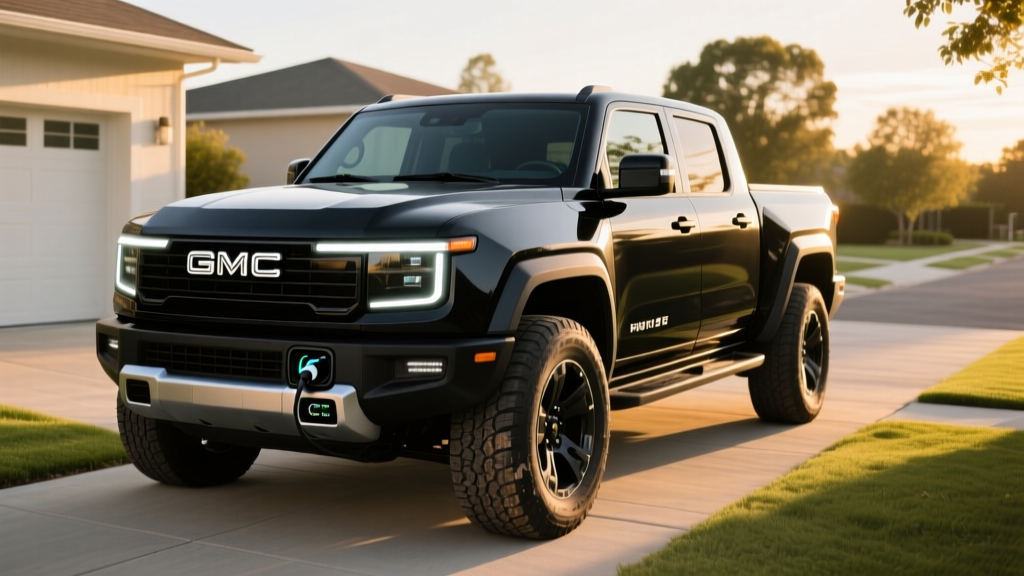
The GMC Hummer EV Pickup remains one of the most physically imposing and technically ambitious electric vehicles on the road. Built on GM's Ultium platform, the 2026 model year carries forward with the 24-module double-stacked battery pack, tri-motor Watt to Freedom (WTF) powertrain producing up to 1,000 horsepower, and an EPA-estimated range of up to 350 miles on the Edition 1 and 3X trims. It's a vehicle designed to make a statement — about electric capability, about off-road performance, and about sheer presence.
But at a starting MSRP above $98,000 and with real-world efficiency that reflects its 9,000+ pound curb weight, the Hummer EV Pickup is a niche product. It excels as a luxury electric truck with genuine off-road chops and surprising acceleration for its mass. It falls short on charging infrastructure compatibility in some rural areas, energy efficiency per mile, and — critically — federal tax credit eligibility for many buyers. Here's every number you need to make an informed decision.
Range, Battery, and Efficiency: The Real Numbers
EPA-estimated range: 350 miles (Edition 1 / 3X with 24-module pack). Real-world highway driving at 70-75 mph typically yields 280–310 miles due to the Hummer EV's poor aerodynamic drag coefficient and heavy curb weight. In cold weather (below 32°F), expect a further 15–25% reduction, bringing effective range to approximately 220–260 miles on a full charge without preconditioning.
The 2026 Hummer EV Pickup uses GM's Ultium battery platform with a 24-module double-stacked pack providing approximately 212.7 kWh of usable capacity (gross capacity is higher). The cell chemistry is NMC (nickel manganese cobalt), which offers higher energy density than LFP at the cost of slightly faster long-term degradation and a lower thermal runaway threshold — though GM's active thermal management system mitigates this in normal operation.
| Specification | Value |
|---|---|
| EPA Range (Edition 1 / 3X) | 350 miles |
| Battery Usable Capacity | ~212.7 kWh (NMC chemistry) |
| Drivetrain | Tri-motor AWD (Watt to Freedom) / Dual-motor AWD (2X) |
| Horsepower | Up to 1,000 hp (tri-motor) |
| 0–60 mph | ~3.0 seconds (WTF mode, tri-motor) |
| MPGe (Combined) | 47 MPGe (EPA est.) |
| Efficiency | ~72 kWh/100 mi |
| Max DC Fast Charge | 350 kW (800V architecture) |
| 10–80% DC Charge Time | ~35 minutes (at capable station) |
| Level 2 Home Charge Rate | 19.2 kW (est. ~35 mi/hr) |
| Towing Capacity | 7,500 lbs |
| Curb Weight | ~9,046 lbs |
| Bed Length | 5 ft (with tailgate down, extends to ~8 ft w/ midgate) |
| Cargo Volume (bed) | ~40 cu ft (bed); additional frunk storage |
| Base MSRP (2X trim) | $98,545 |
| Edition 1 MSRP | ~$110,295 (limited allocation) |
| Battery/Powertrain Warranty | 8 years / 100,000 miles |
At 47 MPGe combined and roughly 72 kWh per 100 miles, the Hummer EV Pickup is among the least efficient EVs on the market. For context, a Rivian R1T achieves roughly 70 MPGe combined, and the Ford F-150 Lightning sits around 66–70 MPGe depending on battery pack. The Hummer's mass — over 9,000 pounds — and brick-like aerodynamics are the primary culprits. This matters for your electricity cost: at the national average of $0.16/kWh, you'll spend roughly $11.50 per 100 miles driven, compared to about $8–9/100 mi in an F-150 Lightning.
Charging Performance: DC Fast, Level 2, and Curve Reality
The Hummer EV Pickup's 800-volt Ultium architecture supports DC fast charging at up to 350 kW peak. However, as with every EV, peak rate is not sustained rate. The charge curve on the 24-module pack is aggressive in taper:
| Charge Level | Power / Rate | Estimated Time or Miles/Hour |
|---|---|---|
| Level 1 (120V, 12A) | ~1.4 kW | ~2 mi/hr — impractical for daily use |
| Level 2 (240V, 48A) | ~11.5 kW | ~16 mi/hr — full charge in ~18 hours |
| Level 2 (240V, 80A) | ~19.2 kW | ~27–35 mi/hr — full charge in ~11 hours |
| DC Fast (50 kW station) | 50 kW | 10–80% in ~2.5 hours |
| DC Fast (150 kW station) | ~150 kW sustained | 10–80% in ~55 minutes |
| DC Fast (350 kW station) | Up to 350 kW peak | 10–80% in ~35 minutes |
At a 350 kW-capable station (such as newer Electrify America or EVgo stalls), the Hummer EV can accept peak charge rates for the first portion of the session — roughly 10–40% SoC. Beyond 50% SoC, the battery management system progressively tapers the rate to protect cell longevity. Expect the rate to drop to approximately 150 kW around 60% SoC and below 75 kW past 80%. This is standard behavior for large NMC packs but means that the final 20% of a charge session takes disproportionately longer.
For home charging, the 19.2 kW Level 2 rate (requiring an 80-amp circuit and hardwired EVSE like the ChargePoint Home Flex or Emporia Vue) is strongly recommended. Given the massive 212+ kWh battery, a standard 48-amp Level 2 charger adding only ~16 miles per hour means an overnight charge from 20% to 80% takes approximately 10–12 hours. If you regularly drive more than 100 miles per day, the 80-amp setup is nearly essential. Note that many residential electrical panels (especially 100-amp main panels) will require a panel upgrade to 200 amps to support an 80-amp EV circuit — budget $1,500–$3,500 for this electrical work, per licensed electrician estimates.
Performance and Driving Dynamics
The tri-motor Watt to Freedom powertrain in the Hummer EV Pickup delivers numbers that defy physics for a vehicle of this mass: 1,000 horsepower, ~1,000 lb-ft of torque, and a 0–60 mph time of approximately 3.0 seconds in WTF launch mode. This is supercar acceleration in a truck that weighs more than two Ford F-150s. The dual-motor 2X trim produces a still-potent ~625 horsepower with a 0–60 time around 5.5 seconds.
All trims feature all-wheel drive. The tri-motor setup uses one front motor and two rear motors, enabling torque vectoring across the rear axle for improved cornering traction — useful both on-road and in off-road scenarios. The available CrabWalk feature (4-wheel steering that angles all four wheels in the same direction) allows the truck to move diagonally, which is genuinely useful on tight off-road trails and in parking situations. Ground clearance reaches up to 15.9 inches in Extract Mode (the adaptive air suspension raises the body for obstacle clearance), with approach/departure/breakover angles that rival dedicated off-road vehicles.
Driving dynamics on pavement are surprisingly composed for the weight, thanks to the low center of gravity from the underfloor battery pack and the adaptive air suspension. However, you will feel the mass under hard braking and during rapid directional changes. This is a grand-touring truck, not a sports truck — it's most comfortable cruising at highway speeds with the suspension in its normal ride height.
Interior, Tech, and Cargo Practicality
The 2026 Hummer EV Pickup's cabin uses a 13.4-inch diagonal infotainment touchscreen running GM's latest Ultifi-based software with Google Built-In (Google Maps, Google Assistant, and access to the Play Store). A 12.3-inch driver instrument cluster provides range, power flow, and off-road telemetry. The available Super Cruise hands-free driver assistance system covers over 400,000 miles of compatible highways in the US and Canada — this is an SAE Level 2 system requiring the driver to remain attentive, not a self-driving system.
Super Cruise is an SAE Level 2 hands-free driving assistance system. It requires the driver to remain attentive, keep eyes on the road (monitored by an infrared camera), and be prepared to take over at any time. It does not operate on non-mapped roads, in construction zones without updated mapping, or in severe weather. It is not autonomous driving.
Passenger space is generous: front legroom measures approximately 45.6 inches and rear legroom is approximately 42.1 inches in the crew cab configuration, which seats five. The cabin materials on the Edition 1 and 3X trims are premium, with available leather, heated and ventilated front and rear seats, and a panoramic fixed glass roof (with a removable panel option on some trims).
Cargo practicality is where the Hummer EV Pickup's size creates both opportunity and limitation. The standard bed is approximately 5 feet long, which is short for a full-size truck. However, the available Infinity Roof with removable panels and the midgate (a pass-through between bed and cabin) allow longer items to extend into the cabin with the rear seats folded. The bed offers approximately 40 cubic feet of volume, and there is additional enclosed storage in the front trunk (e-trunk/frunk) area. The 7,500-pound towing capacity is adequate for most boat and camper trailers but trails the F-150 Lightning's max of 10,000 pounds. Expect range to drop by 35–50% when towing at or near maximum capacity, depending on trailer aerodynamics and terrain.
Pricing, Trims, and Federal Tax Credit Eligibility
| Trim | Base MSRP | Est. As-Tested (w/ options) | Federal §30D Credit Eligible? |
|---|---|---|---|
| 2X (dual-motor) | $98,545 | $102,000–$108,000 | Unlikely (see below) |
| 3X (tri-motor) | $105,595 | $112,000–$125,000 | Unlikely (see below) |
| Edition 1 (tri-motor, loaded) | ~$110,295 | $110,295 (fully equipped) | Unlikely (see below) |
The 2026 Hummer EV Pickup faces a significant challenge with the IRS §30D federal clean vehicle credit. Several rules work against it:
- MSRP Cap: The §30D credit applies only to trucks with an MSRP at or below $80,000. Every Hummer EV Pickup trim exceeds this cap, making it ineligible for the new-vehicle credit regardless of other factors.
- Buyer Income Cap: Even if MSRP were within range, the credit phases out for buyers with modified AGI above $150,000 (single), $225,000 (head of household), or $300,000 (married filing jointly).
- Battery Sourcing Requirements: The credit requires that a specified percentage of critical minerals and battery components are sourced from the US or free-trade-agreement countries. GM's Ultium cells (built with LG Energy Solution in US plants) meet many sourcing thresholds, but the MSRP cap is the binding constraint here.
- Point-of-Sale Transfer: For eligible vehicles, the credit can be transferred to the dealer at purchase, reducing the purchase price directly. This does not apply to the Hummer EV due to MSRP ineligibility.
The practical result: the 2026 Hummer EV Pickup does not qualify for the $7,500 federal tax credit under current §30D rules because every trim exceeds the $80,000 MSRP cap for trucks. Some state-level incentives may still apply (check your state's energy office), and the used EV credit (up to $4,000) could apply if you purchase a qualifying pre-owned Hummer EV from a dealer, subject to its own MSRP, income, and vehicle-age requirements.
Ownership Costs and Warranty Coverage
GMC provides an 8-year / 100,000-mile warranty on the Ultium battery pack and electric powertrain components, with a capacity retention guarantee that the battery will not fall below 70% of original capacity during the warranty period. The bumper-to-bumper limited warranty covers 3 years / 36,000 miles.
Estimated 5-year ownership costs for the Hummer EV Pickup reflect its premium positioning:
| Cost Category | Estimated Amount |
|---|---|
| Purchase Price (3X, before incentives) | $112,000 |
| Federal Tax Credit | $0 (MSRP exceeds cap) |
| Home Level 2 Charger + Installation | $1,800–$3,500 |
| Electricity (75,000 mi at $0.16/kWh avg) | ~$8,640 |
| Insurance (5-year total, est.) | $14,000–$18,000 |
| Maintenance (5-year, tires, cabin filter, fluid) | $2,500–$4,000 |
| Estimated Depreciation (5-year) | $45,000–$55,000 |
| Estimated 5-Year TCO | ~$140,000–$155,000 |
Insurance premiums for the Hummer EV Pickup are notably high — among the highest of any EV — due to the vehicle's repair costs (specialized Ultium battery components, aluminum body panels, air suspension), high MSRP, and performance capability. Expect annual premiums of $3,000–$4,500 depending on your state, driving record, and coverage level. Always get insurance quotes before purchasing.
Competitor Comparison: Hummer EV vs. Rivian R1T vs. F-150 Lightning
| Spec | GMC Hummer EV (3X) | Rivian R1T (Tri-Motor) | Ford F-150 Lightning (Platinum) |
|---|---|---|---|
| EPA Range | 350 mi | ~328 mi (Max Pack) | ~320 mi (Ext. Range) |
| Battery (usable kWh) | ~212.7 kWh (NMC) | ~149 kWh (NMC) | ~131 kWh (NMC) |
| Horsepower | 1,000 hp | ~850 hp | ~580 hp |
| 0–60 mph | ~3.0 sec | ~3.0 sec | ~3.8 sec |
| Max DC Charge | 350 kW | ~200 kW | ~150 kW |
| Towing Capacity | 7,500 lbs | 11,000 lbs | 10,000 lbs |
| Base MSRP | $105,595 | ~$99,900 | ~$62,000 |
| §30D Credit Eligible | No (MSRP cap) | No (MSRP cap on Tri) | Yes (select trims) |
| MPGe (Combined) | 47 MPGe | ~70 MPGe | ~66 MPGe |
Choose the Hummer EV Pickup if: You want maximum presence, off-road capability with CrabWalk and Extract Mode, supercar-level acceleration, and don't prioritize efficiency or federal tax credits. It's the statement truck.
Choose the Rivian R1T if: You want a more balanced package — strong off-road capability, better efficiency, higher towing capacity, and a more practical bed with the Gear Tunnel. The R1T is the adventurer's choice.
Choose the F-150 Lightning if: You want the best value, federal tax credit eligibility on multiple trims, a full-size bed, higher towing capacity, and proven fleet/owner reliability data. It's the pragmatic workhorse.
Pros, Cons, and Who Should Buy
- Unmatched presence and road presence — nothing else looks or feels like it
- 1,000 hp tri-motor acceleration is staggering for a 9,000-lb vehicle
- CrabWalk and 4-wheel steering genuinely useful off-road and in tight spaces
- 350 kW DC fast-charge capability — among the fastest-charging EVs available
- Super Cruise hands-free driving on 400,000+ miles of mapped highways
- Adaptive air suspension with up to 15.9 inches of ground clearance
- 8-year / 100,000-mile battery and powertrain warranty
- No federal tax credit eligibility — all trims exceed $80,000 MSRP cap
- Poor energy efficiency: ~72 kWh/100 mi makes it expensive to fuel
- Short 5-foot bed limits cargo utility vs. conventional full-size trucks
- 9,000+ lb curb weight impacts tire wear, braking distance, and efficiency
- Insurance premiums are among the highest of any EV
- Real-world highway range drops significantly (280–310 mi) vs. EPA sticker
- Towing capacity (7,500 lbs) trails both Rivian R1T and F-150 Lightning
- Massive battery means very long Level 2 home charge times
Who this EV suits best: The Hummer EV Pickup is built for buyers who want a luxury electric truck with extreme performance and off-road capability, who have reliable home charging access (ideally 80-amp Level 2), and who don't need class-leading towing or bed utility. It works well as a weekend adventure vehicle, a luxury daily driver in areas with mild winters (cold range loss is significant), and a statement piece. It is not the right choice for fleet buyers, budget-conscious shoppers, or anyone who regularly tows heavy trailers or needs a full-size work bed.
Frequently Asked Questions
What is the real-world range of the Hummer EV Pickup?
The EPA rates the Hummer EV Pickup (Edition 1 / 3X) at 350 miles. In real-world highway driving at 70–75 mph, expect approximately 280–310 miles. In cold weather below freezing, range can drop to 220–260 miles without preconditioning. City driving with regenerative braking recovers more energy and may approach or slightly exceed the EPA figure.
How fast does the Hummer EV charge at home and on the road?
On a 350 kW DC fast charger, the Hummer EV charges from 10–80% in approximately 35 minutes, though the rate tapers significantly above 50% SoC. At home on a 19.2 kW Level 2 charger (80-amp circuit), it adds roughly 27–35 miles per hour, taking about 11 hours for a full charge. On a standard 48-amp Level 2, expect ~16 miles per hour and an 18-hour full charge.
Does the Hummer EV Pickup qualify for the federal EV tax credit?
No. Under current IRS §30D rules, the new clean vehicle credit is limited to trucks with an MSRP at or below $80,000. Every 2026 Hummer EV Pickup trim starts above $98,000, making it ineligible regardless of buyer income or battery sourcing. Some state incentives may still apply — check your state's energy office or DSIRE database.
How much does the Hummer EV Pickup cost to own over 5 years?
Estimated 5-year total cost of ownership (75,000 miles) for a 3X trim is approximately $140,000–$155,000, factoring in purchase price, electricity, insurance ($3,000–$4,500/year), maintenance, and depreciation. The lack of a federal tax credit and high insurance costs push the TCO higher than the F-150 Lightning or Rivian R1T.
Is the Hummer EV Pickup worth buying over the Rivian R1T or F-150 Lightning?
It depends on your priorities. The Hummer EV offers unmatched presence, 1,000 hp performance, and unique features like CrabWalk. However, the Rivian R1T provides better efficiency, higher towing (11,000 lbs), and the Gear Tunnel for storage. The F-150 Lightning offers the best value, tax credit eligibility, and a practical full-size bed. Choose the Hummer EV for exclusivity and performance; choose the R1T or Lightning for practicality and value.
What is the towing range loss when towing with the Hummer EV?
When towing at or near the 7,500-pound maximum capacity, expect range to decrease by approximately 35–50%, depending on trailer aerodynamics, weight distribution, terrain, and speed. A 350-mile EPA range could drop to 175–225 miles when towing a large enclosed trailer at highway speeds. Always plan charging stops conservatively when towing.
Sources: EPA Fuel Economy (fueleconomy.gov) for range and MPGe data; GMC Hummer EV official specifications; IRS §30D Clean Vehicle Credit rules (irs.gov). Pricing and specifications reflect 2026 model year data available at time of publication; always verify with your local GMC dealer.