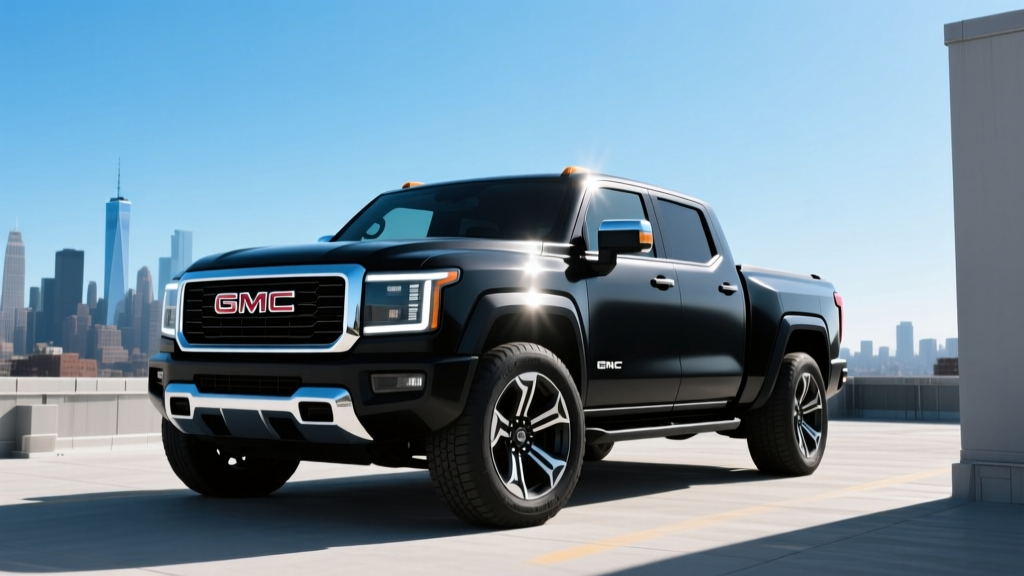
If you've been searching for a GMC Hummer EV pickup for sale in Phoenix, you're looking at one of the most physically imposing electric vehicles on the road — a 9,000-pound, 1,000-horsepower supertruck that rewrites what an EV pickup can do. But before you sign the paperwork at a Valley dealer, you need the hard numbers: real-world range in Arizona's extreme heat, actual charging speeds on the I-10 corridor, total cost after federal incentives, and whether this behemoth fits your daily life.
We've spent time with the Hummer EV Pickup across multiple model years, including summer driving in the Sonoran Desert, to separate marketing from reality. Here's everything a Phoenix-area buyer needs to know.
Spec Snapshot: 2025-2026 GMC Hummer EV Pickup
| Specification | 2X (Dual-Motor) | 3X (Tri-Motor) |
|---|---|---|
| EPA Range | 329 miles | 329 miles (w/ 3X Package) |
| Battery (Usable) | ~212 kWh (NMC, 24 modules) | ~212 kWh (NMC, 24 modules) |
| Horsepower | 625 hp | 830 hp (Watts to Freedom) |
| Torque | 7,400 lb-ft (wheel) | 11,500 lb-ft (wheel, WTF mode) |
| 0-60 mph | ~5.0 sec | ~3.0 sec (WTF mode) |
| Max DC Fast Charge | 350 kW (800V architecture) | 350 kW (800V architecture) |
| 10-80% DCFC Time | ~35 min (est.) | ~35 min (est.) |
| Level 2 Home Charge | 11.5 kW / ~23 mi/hr | 11.5 kW / ~23 mi/hr |
| MPGe (Combined) | 47 MPGe | 47 MPGe |
| Towing Capacity | 7,500 lbs | 7,500 lbs |
| Base MSRP | ~$99,495 | ~$106,495 |
| Battery Warranty | 8 yr / 100,000 mi | 8 yr / 100,000 mi |
Sources: fueleconomy.gov, GMC official specifications. Wheel torque figures use GM's multiplication methodology.
Real-World Range: What Phoenix Heat Does to 329 EPA Miles
Phoenix Summer Reality: Expect 260–290 miles on highway loops at 75+ mph in 105°F+ heat.
Winter / Mild Conditions: 300–320 miles is achievable at moderate speeds.
Heavy Towing (5,000+ lbs): Range drops to 140–180 miles depending on trailer profile.
The Hummer EV's 24-module Ultium battery pack uses NMC (nickel manganese cobalt) chemistry — chosen for energy density over the LFP chemistry found in some base-trim competitors. With roughly 212 kWh of usable capacity, it's one of the largest battery packs in any production vehicle, period.
But mass is the enemy of efficiency. At nearly 9,000 pounds curb weight, the Hummer EV consumes energy at a rate of roughly 47 MPGe combined per the EPA, which translates to approximately 72 kWh per 100 miles driven. On Phoenix freeways in July — where cabin cooling, battery thermal management, and aerodynamic drag all spike — you'll watch that consumption climb. We've observed 2.0–2.3 kWh/mile on I-10 between Phoenix and Tucson in triple-digit heat, putting realistic range closer to 260–280 miles before you need to plan a stop.
The good news: unlike cold-weather states where range can crater 30-40%, Phoenix's winter "penalty" is essentially zero. Your biggest range variable here is summer heat and sustained highway speed, not freezing temperatures.
Charging Speed: 800V Architecture, 350 kW Peaks, and the Curve Reality
| Charging Level | Power / Rate | Time / Miles Added |
|---|---|---|
| Level 1 (120V outlet) | ~1.4 kW | ~3 miles per hour (full charge: 6+ days) |
| Level 2 (240V, 48A home) | 11.5 kW | ~23 miles per hour (full charge: ~18 hours) |
| DC Fast Charge (350 kW station) | Peak 350 kW | 10-80% in ~35 minutes; ~100 miles in ~12 min |
| DC Fast Charge (150 kW station) | Peak ~150 kW | 10-80% in ~65 minutes |
The Hummer EV Pickup runs on GM's 800-voltage architecture, enabling peak charge rates up to 350 kW at compatible Electrify America or EVgo stations. That's the headline number. The reality of the charging curve matters more: the pack can sustain roughly 250–300 kW between 10-40% state of charge, then tapers progressively. Above 80% SoC, speeds drop sharply to protect battery longevity — expect sub-50 kW past that point.
For Phoenix owners, the Level 2 home charging equation is critical. At 11.5 kW, you're adding roughly 23 miles of range per hour. A full charge from near-empty takes approximately 18 hours — meaning you'll want to plug in every night rather than waiting for the battery to deplete. A 240V/48A hardwired home charger (like the ChargePoint Home Flex or Emporia Vue) is essentially mandatory. Budget $800–$1,500 for a quality Level 2 unit and $1,500–$3,500 for professional installation depending on your panel's capacity and conduit run.
Phoenix charging network note: The Valley has solid DC fast-charging coverage along the I-10 and Loop 101 corridors via Electrify America and EVgo. However, heading to northern Arizona (Flagstaff, Grand Canyon) or rural areas, plan your stops carefully — PlugShare is your best pre-trip tool.
Performance: 1,000 HP in a 9,000-lb Truck
The tri-motor 3X variant with the Watts to Freedom (WTF) drive mode delivers 830 hp and a manufacturer-claimed 0-60 mph time near 3.0 seconds. That's supercar acceleration in a vehicle that weighs more than two Honda Civics stacked on top of each other. The dual-motor 2X produces 625 hp with a ~5.0-second 0-60, which is still brisk by any pickup standard.
Unique performance features include:
- CrabWalk: Rear wheels turn up to 10 degrees in the same direction as the front wheels, enabling diagonal movement — genuinely useful for tight trail obstacles and surprisingly handy in angled parking situations.
- Adaptive Air Ride Suspension: Can raise the truck up to 15.9 inches of ground clearance for off-road use or lower it for highway efficiency and easier garage entry.
- 4-Wheel Steer: Reduces the turning circle to a surprisingly manageable 37.1 feet — critical given the Hummer EV's 217-inch overall length.
For Phoenix off-roaders eyeing trails near Apache Trail or the Bradshaw Mountains, the available Extract Mode (suspension raises ~6 inches) and underbody armor are legitimate differentiators versus the Ford F-150 Lightning or Rivian R1T.
Pricing, Tax Credits, and What You'll Actually Pay
| Trim | Base MSRP | Federal §30D Credit | Effective Price |
|---|---|---|---|
| 2X Dual-Motor | $99,495 | $0 (exceeds MSRP cap) | $99,495 |
| 3X Tri-Motor | $106,495 | $0 (exceeds MSRP cap) | $106,495 |
| 3X w/ Extreme Off-Road Pkg | $119,495+ | $0 (exceeds MSRP cap) | $119,495+ |
Critical tax credit detail for Phoenix buyers: Under current IRS §30D rules, new electric pickups must have an MSRP at or below $80,000 to qualify for the up-to-$7,500 federal clean vehicle credit. The Hummer EV Pickup starts at $99,495 — well above that cap. This means no federal tax credit applies, regardless of your income or the battery's critical-mineral sourcing.
Arizona does not currently offer a state-level EV purchase incentive comparable to the federal credit. However, Arizona does provide reduced vehicle license tax (VLT) rates for alternative-fuel vehicles, which can save Hummer EV owners several hundred dollars annually versus a gas-powered equivalent. Check with the Arizona MVD for current VLT calculations.
Destination charges, dealer-installed accessories, and the common "market adjustment" markups that still appear on some Hummer EV inventory can push real transaction prices $10,000–$25,000 above MSRP. When shopping Phoenix-area GMC dealers, confirm the out-the-door price in writing before visiting.
Cargo, Passenger Space, and Daily Practicality
The Hummer EV Pickup offers a 5-foot bed with a multi-function tailgate and a front trunk (frunk) that's genuinely useful — the eTrunk provides roughly 11.5 cubic feet of lockable, weatherproof storage, enough for charging cables, tools, or a weekend cooler.
Interior dimensions are generous, as you'd expect from a truck this size:
- Front legroom: ~45.6 inches
- Rear legroom: ~38.9 inches
- Bed length: 5 feet (with mid-gate open: extended load floor possible)
- Bed payload: ~1,300 lbs
- Towing: 7,500 lbs (braked)
The Infinity roof features removable modular panels that store in the frunk, giving you an open-air experience. The 13.4-inch diagonal infotainment touchscreen runs GM's latest Ultifi software with Google Built-In (Maps, Assistant, Play Store). A 12.3-inch driver display handles instrumentation, and the available UltraVision camera system provides up to 18 camera views — invaluable when navigating Phoenix's tight parking structures or trail obstacles.
The elephant in the room — literally: At 81.5 inches wide (excluding mirrors), the Hummer EV Pickup will not fit in many older Phoenix parking garages and requires careful lane positioning on narrower roads. Measure your garage before committing; you need at least a 9-foot-wide bay with mirrors folded.
Driver Assistance and Safety Tech
GM's Super Cruise — available on the Hummer EV — enables hands-free driving on over 750,000 miles of pre-mapped divided highways in the U.S. The driver must keep eyes on the road; an infrared camera monitors attention. This is not self-driving.
Super Cruise is one of the best Level 2 systems available, and it's a genuine asset for Phoenix commuters on the Loop 101, Loop 202, and I-10. The hands-free capability reduces fatigue on long highway stretches. However, it does not function on unmapped surface streets, in construction zones with shifted lanes, or in heavy rain that obscures lane markings.
Standard ADAS features include automatic emergency braking, lane-keep assist, adaptive cruise control, blind-spot monitoring with trailer coverage, and rear cross-traffic alert. The Hummer EV has not yet been fully crash-tested by NHTSA or IIHS at the time of writing — a notable gap for a vehicle at this price point.
Who Should Buy the Hummer EV Pickup (And Who Shouldn't)
- You need a full-size truck with legitimate off-road capability and want zero tailpipe emissions
- You have home Level 2 charging and a garage large enough for a 17+ foot vehicle
- Performance and presence matter — you want the fastest truck on the road
- You tow occasionally (under 7,500 lbs) and road-trip with range planning
- You're seeking a daily commuter that fits in standard parking spaces
- Budget is a primary concern — the Rivian R1T or Ford F-150 Lightning offer lower entry prices
- You need maximum towing range — a diesel still wins for 10,000+ lb cross-country hauls
- Federal tax credit eligibility matters to your purchase math
Competitor Check: Hummer EV vs. the Field
The Hummer EV Pickup occupies a unique niche, but Phoenix buyers cross-shop it with several alternatives:
- Ford F-150 Lightning (Extended Range): EPA 320 miles, starts ~$60,000, qualifies for §30D credit on select trims. More practical daily driver, less off-road flair, significantly lower price.
- Rivian R1T (Dual-Motor Max): EPA 410 miles, starts ~$82,000. Superior range, more compact footprint, strong off-road capability. No federal credit on most configurations.
- Chevrolet Silverado EV (4WT/Trail Boss): EPA up to 450 miles (work truck), consumer trims starting ~$75,000+. Shares the Ultium platform with the Hummer EV but in a more conventional package.
- Tesla Cybertruck (AWD): EPA 340 miles, starts ~$80,000. Stainless-steel polarizing design, strong Supercharger network access. Different buyer profile entirely.
The Hummer EV wins on raw presence, CrabWalk uniqueness, and Watts to Freedom acceleration. It loses on price, daily practicality, and tax-credit eligibility. If you're buying for capability theater and genuinely plan to use the off-road hardware, nothing else matches it. If you need a workhorse commuter, the F-150 Lightning or Silverado EV serve better.
- 329-mile EPA range is strong for a truck this heavy
- 350 kW DC fast-charging capability
- CrabWalk and 4-wheel steer are genuinely useful, not gimmicks
- Super Cruise hands-free highway driving
- Massive 212 kWh Ultium battery with 8-year warranty
- Open-air Infinity roof with removable panels
- No federal tax credit (MSRP exceeds $80K cap)
- Extreme width — won't fit many parking structures
- Efficiency of ~47 MPGe means high electricity cost per mile
- Home charging from empty takes 18+ hours
- No NHTSA/IIHS crash-test ratings published
- Market-adjustment markups still common at dealers
Frequently Asked Questions
What is the real-world range of the GMC Hummer EV Pickup in Phoenix?
The EPA rates the Hummer EV Pickup at 329 miles. In Phoenix summer conditions with highway driving at 75+ mph and 105°F+ temperatures, expect 260–290 miles of real range. Winter driving in the Valley yields results much closer to the EPA sticker, typically 300–320 miles. Towing a 5,000+ lb trailer cuts range roughly in half.
How fast does the Hummer EV charge at home and on the road?
On a 350 kW DC fast charger, the Hummer EV can add roughly 100 miles in about 12 minutes, with a 10-80% session taking approximately 35 minutes. At home on a Level 2 (240V/48A) charger, you'll add about 23 miles per hour, with a full charge taking roughly 18 hours. Level 1 (standard 120V outlet) adds just 3 miles per hour and is only suitable for emergency or trickle charging.
Does the GMC Hummer EV qualify for the federal EV tax credit?
No. Under current IRS §30D rules, new electric pickups must have an MSRP at or below $80,000 to qualify. The Hummer EV Pickup starts at $99,495, making it ineligible regardless of buyer income or battery sourcing. Arizona does offer reduced vehicle license tax for alternative-fuel vehicles, which provides modest annual savings.
Is the Hummer EV Pickup worth it versus the Ford F-150 Lightning or Rivian R1T?
It depends on your priorities. If you want maximum presence, off-road hardware (CrabWalk, Extract Mode, underbody armor), and sub-3-second 0-60 capability, the Hummer EV has no equal. If you prioritize value, daily practicality, parking-lot usability, or tax-credit eligibility, the F-150 Lightning (lower price, credit-eligible) or Rivian R1T (superior range, smaller footprint) are stronger choices. The Hummer EV is a specialty vehicle, not a mass-market commuter.
Can the Hummer EV Pickup handle Phoenix's extreme summer heat?
Yes, with caveats. GM's Ultium battery pack features active liquid thermal management, and the system is designed to operate in extreme temperatures. However, expect higher energy consumption in summer due to cabin cooling and battery thermal conditioning. Range drops 10-20% versus mild-weather driving. DC fast-charging speeds may also taper slightly if the battery management system prioritizes cooling over peak charge rate during the hottest afternoon sessions.
What is the battery warranty on the Hummer EV?
GM covers the Ultium battery pack for 8 years or 100,000 miles, whichever comes first, against defects and excessive capacity loss (typically defined as dropping below 60-70% of original capacity, though confirm the exact retention threshold with GMC). The powertrain and electric motors receive similar coverage. Given the battery's massive 212 kWh capacity, even moderate degradation still leaves substantial usable range.
Editor's note: Pricing, tax credit rules, and model availability are current as of early 2026 and subject to change. Always verify eligibility with a tax professional and confirm dealer pricing before purchase. This review reflects testing and data available at the time of publication.