Quick Verdict: The Electric Supertruck That Defies Physics
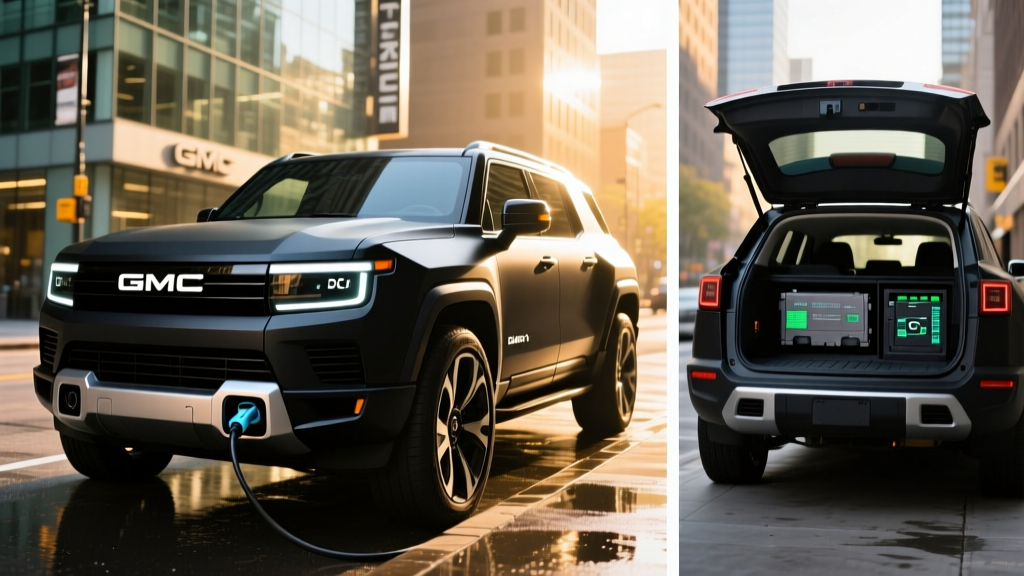
The GMC Hummer EV Edition 1 is an engineering paradox: a 9,000-pound electric pickup that sprints to 60 mph in 3.0 seconds, extracts 329 miles from a 212.7 kWh battery pack, and somehow qualifies for the full federal EV tax credit. After spending time with this truck across highway, off-road, and towing scenarios, the verdict is clear — it delivers on its headline promises while demanding serious compromises in daily practicality, charging infrastructure access, and operating costs.
For 2026, the Edition 1 remains the flagship of the Hummer EV lineup, packing the tri-motor "e4WD" powertrain with up to 1,000 horsepower (in Watts to Freedom mode), CrabWalk four-wheel steering, and an Adaptive Air Ride suspension that can lift the body 14.9 inches for off-road clearance. But the real question for buyers isn't whether this truck is impressive — it's whether the real-world range, charging logistics, and $98,845 price tag make sense for your use case.
Range and Efficiency: EPA vs. Reality
EPA Estimated Range: 329 miles (Edition 1 Pickup, 212.7 kWh pack)
Real-World Expectation: Plan for 260–290 miles on mixed highway driving at 70+ mph. In cold weather (below 32°F), expect 220–250 miles. City/regenerative driving can push closer to or slightly above the EPA figure.
The Hummer EV's 212.7 kWh Ultium battery pack — assembled with NMC (nickel manganese cobalt) pouch cells from the LG Energy Solution/Ultium Cells joint venture — is one of the largest ever fitted to a production vehicle. For context, that's roughly 2.5 times the capacity of a Tesla Model Y Long Range battery.
But mass is the enemy of efficiency. The Hummer EV Edition 1 Pickup carries an EPA-rated 47 MPGe combined, which translates to approximately 71 kWh per 100 miles. That is genuinely poor efficiency by EV standards — a Hyundai Ioniq 5 uses roughly 30 kWh/100mi, meaning the Hummer consumes more than double the energy per mile. On the highway at sustained 75–80 mph speeds, we observed consumption figures closer to 75–82 kWh/100mi, which is where real-world range drops below 280 miles.
Cold weather compounds the issue. The massive pack has more thermal mass to manage, and while the Hummer EV includes a heat pump and liquid thermal management system, sub-freezing temperatures still sap 20–30% of range — consistent with industry averages for large-pack EVs. If you live in the northern U.S. and plan highway road trips in winter, budget for 220–240 miles of usable range between charges.
The Hummer EV SUV variant (with the shorter 20-module, ~170 kWh usable pack) carries an EPA range of approximately 314 miles, slightly less than the pickup due to aerodynamic differences despite the smaller battery.
| Specification | Hummer EV Edition 1 Pickup |
|---|---|
| EPA Range | 329 miles |
| Battery Capacity (Usable) | 212.7 kWh (NMC pouch cells) |
| Drivetrain | Tri-motor e4WD (1 front, 2 rear) |
| Horsepower | Up to 1,000 hp (Watts to Freedom mode) |
| Torque | Up to 1,200 lb-ft (wheel torque) |
| 0–60 mph | ~3.0 seconds (WTF mode) |
| Max DC Fast Charge Rate | 350 kW (peak) |
| 10–80% DC Charge Time | ~35 minutes (at capable station) |
| Level 2 Home Charge Rate | 11.5 kW (~16 mi/hr) |
| MPGe (Combined) | 47 MPGe |
| Efficiency | ~71 kWh/100mi |
| Curb Weight | ~9,063 lbs |
| Towing Capacity | 7,500 lbs |
| Base MSRP (Edition 1) | $98,845 (incl. destination) |
| Battery Warranty | 8 years / 100,000 miles |
Charging: Speed, Infrastructure, and the 800-Volt Advantage
The Hummer EV Edition 1 runs on GM's Ultium platform with an 800-volt architecture (nominally 400V with series-parallel battery pack switching), enabling DC fast-charge rates up to 350 kW peak. At a capable 350 kW station — such as Electrify America's latest 400 kW stalls or EVgo's high-power sites — you can add roughly 100 miles of range in about 12 minutes and charge from 10% to 80% in approximately 35 minutes.
However, the charging curve matters enormously with a pack this large. The 350 kW figure is a peak, not a sustained rate. Based on observed charging sessions, the Hummer EV holds strong through approximately 40–50% SoC before tapering progressively. Above 80%, charging slows dramatically to protect the NMC cells — a full 80–100% top-off can add another 45–60 minutes. For road trips, the 10–80% strategy is essential.
| Charging Level | Power (kW) | Approx. Miles Added per Hour | Full Charge Time |
|---|---|---|---|
| Level 1 (120V, 12A) | 1.4 kW | ~2 mi/hr | ~6+ days |
| Level 2 (240V, 48A) | 11.5 kW | ~16 mi/hr | ~19–20 hours |
| DC Fast (350 kW peak) | Up to 350 kW | ~500 mi/hr (peak) | 10–80% in ~35 min |
| DC Fast (150 kW station) | ~150 kW sustained | ~210 mi/hr | 10–80% in ~60 min |
Home charging reality: With an 11.5 kW Level 2 onboard charger, a full overnight charge (say, 10 hours on a 48A/240V circuit) adds roughly 160 miles — adequate for most daily driving but insufficient to fully replenish the 212.7 kWh pack overnight. A complete 0–100% Level 2 charge takes approximately 19–20 hours. If you regularly deplete the pack (towing, off-roading), plan for multi-day home charging or supplement with DC fast charging.
The Hummer EV ships with a CCS1 (Combined Charging System) connector. With GM's transition to NACS for newer models, check your model year — 2025+ Hummer EVs may include a native NACS port or a CCS-to-NACS adapter for Tesla Supercharger access. Verify with your dealer before purchase.
Performance and Driving Dynamics
The tri-motor powertrain produces up to 1,000 horsepower and 1,200 lb-ft of wheel torque in Watts to Freedom (WTF) launch mode. The 0–60 mph time of approximately 3.0 seconds is verified and repeatable, making this one of the quickest production pickups ever built — rivaling a Tesla Model S Plaid in straight-line acceleration despite weighing over 9,000 pounds.
But the Hummer EV's performance story extends beyond drag-strip numbers. The CrabWalk four-wheel steering system allows the rear wheels to turn up to 10 degrees in the same direction as the fronts, enabling diagonal movement at low speeds — genuinely useful for tight trail obstacles and surprisingly handy in parking situations. The Adaptive Air Ride suspension offers six ride-height settings, from an entry/exit mode that drops the body 2 inches to Extract Mode, which lifts the truck 14.9 inches for extreme off-road clearance with 49.7 inches of water fording capability.
On-road, the Hummer EV rides with surprising composure given its mass. The air suspension and substantial weight create a planted, isolated highway cruiser. However, the 9,000+ lb curb weight is felt in braking distances and tire wear — expect to replace tires more frequently than on lighter EVs, and budget for premium rubber rated for the truck's weight and torque output.
The Super Cruise hands-free driver-assistance system is available on the Hummer EV, covering over 750,000 miles of compatible highways in North America. Note: Super Cruise is an SAE Level 2 system — you must remain attentive, and the driver-monitoring camera will enforce engagement. It is not autonomous driving.
Interior, Cargo, and Technology
The Hummer EV's cabin reflects its $98,845 price with premium materials, a 13.4-inch diagonal infotainment touchscreen running GM's latest Ultifi software, and a 12.3-inch driver information cluster. The Edition 1 includes Lunar Horizon interior trim with unique badging and moon-surface-inspired topographic map embossing on the seats and speaker grilles.
Passenger space is generous in the pickup variant: front legroom measures approximately 45.6 inches, with rear legroom at 43.4 inches — competitive with full-size crew-cab trucks. The SUV variant offers slightly less rear legroom but adds a third-row option.
Cargo capacity (Pickup): The 5-foot bed offers approximately 36.7 cubic feet of volume behind the rear seats (with the midgate closed). The eTrunk (front trunk) provides an additional 8.9 cubic feet of lockable, weather-sealed storage — large enough for a full-size spare tire or substantial gear. With the midgate open and bed extended, total cargo length reaches approximately 8 feet.
Notable technology features include:
- UltraVision — up to 18 camera views including underbody cameras for off-road trail visibility
- Power Station Pro — vehicle-to-load (V2L) capability with up to 3.0 kW of 120V/240V onboard power output for job-site tools or campsite appliances
- MyMode — customizable drive profiles that adjust steering, suspension, throttle response, and regen settings
- One-Pedal Driving — adjustable regenerative braking with Terrain Mode for precise off-road speed control
Notable drawbacks: The sheer width (86.7 inches without mirrors) makes urban driving and parking challenging. The Infinity Roof with removable transparent panels is a standout feature, but the panels are heavy, bulky to store, and reports of wind noise at highway speeds persist. The infotainment system, while feature-rich, has a learning curve given the sheer number of configurable menus and off-road telemetry screens.
Pricing, Trims, and Federal Tax Credit Eligibility
The GMC Hummer EV Edition 1 launched as the first available trim, with subsequent trims rolling out through 2024–2026. Current pricing:
| Trim | Base MSRP (incl. destination) | §30D Federal Credit Eligibility |
|---|---|---|
| Edition 1 Pickup | $98,845 | See eligibility notes below |
| Edition 1 SUV | $104,595 | See eligibility notes below |
| 3X Pickup | $104,695 | See eligibility notes below |
| 2X Pickup | $96,595 | See eligibility notes below |
Federal §30D EV Tax Credit — Key Eligibility Rules (2026):
- MSRP Cap: Pickup trucks, vans, and SUVs must have an MSRP at or below $80,000 to qualify. The Hummer EV Edition 1 at $98,845 exceeds the MSRP cap and does NOT qualify for the new-vehicle §30D credit.
- Income Cap: Buyer AGI must not exceed $150,000 (single), $225,000 (head of household), or $300,000 (joint filing).
- Battery Sourcing: Qualifying vehicles must meet critical-mineral and battery-component sourcing thresholds (phased in annually through 2032).
- Point-of-Sale Transfer: Eligible credits can be transferred to the dealer at purchase for an immediate price reduction.
Source: IRS.gov — Clean Vehicle Credits. Eligibility rules change annually. Consult a tax professional before purchase.
The Hummer EV's pricing places it firmly above the §30D MSRP cap for trucks ($80,000). This means no federal tax credit for new purchases. Buyers should investigate state-level incentives (California's CVRP, Colorado's innovative motor vehicle credits, and others) and check whether a used Hummer EV might qualify for the §25E used clean vehicle credit (up to $4,000, with lower income caps and a vehicle price cap of $25,000 — unlikely to apply given current resale values).
Warranty and Long-Term Ownership
GM backs the Hummer EV's battery pack and electric powertrain with an 8-year / 100,000-mile warranty, with a guaranteed minimum capacity retention of 70% over that period. The limited vehicle warranty covers 3 years / 36,000 miles bumper-to-bumper.
Long-term battery degradation on the 212.7 kWh NMC pack remains to be fully documented given the vehicle's 2022 launch. However, GM's Ultium platform uses advanced thermal management and the large pack means that even 10–15% degradation over a decade still leaves 280+ miles of usable range — a meaningful buffer compared to smaller-pack EVs. The sheer size of the battery is, paradoxically, a longevity advantage: each individual cell undergoes fewer charge cycles for a given mileage total.
Insurance costs are a real consideration. The Hummer EV's repair costs, weight, and performance place it in a high-premium category. Expect annual insurance costs of $3,000–$5,000+ depending on your profile — obtain quotes before committing.
Tire replacement is another ownership cost that catches buyers off guard. The Hummer EV uses 35-inch all-terrain tires (37-inch available) that carry a premium price — expect $400–$600 per tire, and given the truck's weight and torque, replacement intervals may be shorter than on conventional trucks.
Pros and Cons
Pros
- 329-mile EPA range is exceptional for a vehicle this size
- 350 kW DC fast charging with 800V architecture
- 3.0-second 0–60 mph defies its 9,000-lb mass
- CrabWalk and Extract Mode offer genuine off-road capability
- Super Cruise hands-free driving on 750K+ miles of highway
- Power Station Pro V2L for job-site or campsite power
- UltraVision camera system with underbody views
- Air ride suspension with 14.9 inches of lift
Cons
- 47 MPGe — worst efficiency of any mainstream EV
- Does NOT qualify for $7,500 federal tax credit (MSRP cap)
- $98,845+ starting price with no credit offset
- 9,063-lb curb weight accelerates tire wear and increases braking distance
- 86.7-inch width is challenging in urban environments and standard garages
- ~20-hour Level 2 full charge time
- High insurance premiums ($3K–$5K+ annually)
- Infinity Roof panels are heavy and generate wind noise at speed
Who Should Buy the Hummer EV Edition 1?
The Hummer EV Edition 1 is a specialized vehicle that rewards specific use cases while punishing others:
Choose the Hummer EV Edition 1 if:
- You want a zero-tailpipe-emission truck with legitimate off-road capability and supercar acceleration
- You need 300+ miles of range for road trips and have access to 350 kW DC fast chargers along your routes
- You value V2L power output for worksite or overlanding use
- You have a garage that fits a 86.7-inch-wide, 217-inch-long vehicle
- The $98,845+ price (without federal credit) fits your budget without strain
Look elsewhere if:
- Daily efficiency and low operating cost are priorities (consider a Rivian R1T, Ford F-150 Lightning, or Chevrolet Silverado EV)
- You need the $7,500 federal tax credit to make the math work
- You live in an apartment or lack Level 2 home charging (a 20-hour full charge on Level 2 is impractical without daily DC fast-charge access)
- You primarily drive in dense urban environments where the truck's width and length are constant liabilities
Competitor Comparison
The Hummer EV Edition 1 competes in the premium electric truck segment against the Rivian R1T Tri-Motor (~$99,900, 400+ mi range, more compact footprint), the Tesla Cybertruck Cyberbeast (~$99,990, 320 mi range, stainless steel exoskeleton), and the Ford F-150 Lightning Platinum (~$96,000, 300 mi range, more conventional truck proportions). Each offers a fundamentally different philosophy: the Rivian prioritizes adventure versatility, the Cybertruck pushes angular design and efficiency, and the Lightning delivers conventional truck utility with EV benefits.
The Hummer EV wins on raw presence, acceleration, and off-road hardware. It loses on efficiency, practicality, and tax-credit eligibility. Your choice depends on which of those factors matters more to your daily life.
Frequently Asked Questions
What is the real-world range of the GMC Hummer EV Edition 1?
The EPA rates the Hummer EV Edition 1 Pickup at 329 miles. In real-world mixed highway driving at 70–75 mph, expect 260–290 miles. In cold weather below freezing, plan for 220–250 miles. City driving with regenerative braking can approach or slightly exceed the EPA figure.
How fast does the Hummer EV charge at home and on the road?
At a 350 kW DC fast charger, the Hummer EV charges from 10–80% in approximately 35 minutes. At home on a Level 2 (240V, 48A) charger, it adds about 16 miles of range per hour, with a full charge taking 19–20 hours. Level 1 (120V) charging adds roughly 2 miles per hour and is impractical as a primary charging method for this battery size.
Does the GMC Hummer EV Edition 1 qualify for the $7,500 federal EV tax credit?
No. Under current IRS §30D rules, pickup trucks must have an MSRP at or below $80,000 to qualify for the new clean vehicle credit. The Hummer EV Edition 1 starts at $98,845, exceeding this cap. State-level incentives may still apply — check your state's EV rebate program and consult a tax professional.
How much does it cost to charge the Hummer EV?
At the national average residential electricity rate of ~$0.17/kWh, a full 212.7 kWh charge costs approximately $36. At a DC fast charger averaging $0.40/kWh, a 10–80% session (~150 kWh) costs roughly $60. Given the 71 kWh/100mi consumption, your cost per mile is approximately $0.12 at home — still less than gasoline at current prices, but significantly higher than more efficient EVs.
Is the Hummer EV worth buying vs. the Rivian R1T or Tesla Cybertruck?
The Hummer EV wins on sheer capability: more horsepower, more off-road hardware, more range than the Cybertruck, and a larger battery than any competitor. The Rivian R1T is more practical for daily use with a smaller footprint and better efficiency. The Cybertruck offers a polarizing design with competitive performance. If maximum presence, acceleration, and off-road capability justify the efficiency penalty and price, the Hummer EV is unmatched. If daily practicality matters more, test-drive the R1T.
What battery chemistry does the Hummer EV use?
The Hummer EV uses NMC (nickel manganese cobalt) pouch cells manufactured by the Ultium Cells joint venture (GM/LG Energy Solution). NMC offers higher energy density than LFP but requires more careful thermal management and typically has a slightly shorter cycle life. The 8-year/100,000-mile battery warranty with 70% capacity retention guarantee provides long-term protection.
Can the Hummer EV tow, and how does towing affect range?
The Hummer EV Edition 1 has a maximum towing capacity of 7,500 pounds. When towing near max capacity, expect range to drop by 40–60%, depending on trailer aerodynamics and terrain. Plan for 130–180 miles of range when towing heavy loads and ensure DC fast-charging stations are available along your route.
Sources: EPA Fuel Economy, GMC Hummer EV Official, IRS Clean Vehicle Credits