Quick Answer: What Is the Electric Hummer CrabWalk?
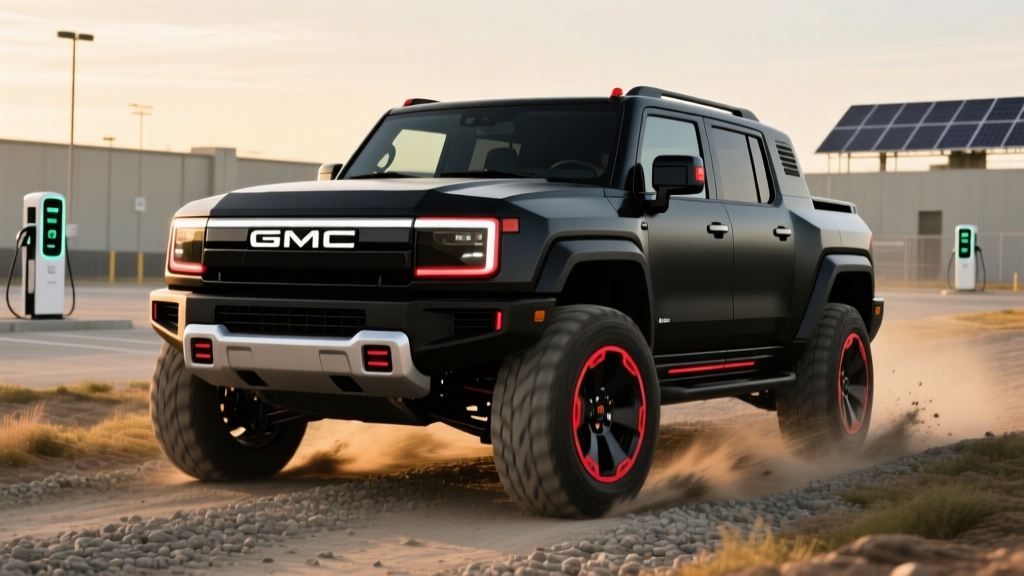
CrabWalk is a four-wheel steering feature on the 2026 GMC Hummer EV that turns the rear wheels up to 10 degrees in the same direction as the front wheels, allowing the truck to move diagonally — like a crab — to navigate tight trails, slide around obstacles, and reduce its turning radius. It is available exclusively on the 2X and 3X trims (not the base 2X without the Extreme Off-Road package). The Hummer EV pickup starts at approximately $101,400 (including destination) for the 2X, with the top 3X reaching roughly $122,000 before options. The SUV variant is priced similarly. CrabWalk is a software-and-hardware-driven feature tied to the available four-wheel steer system, and it works at speeds up to roughly 25 mph.
Hummer EV CrabWalk: How It Actually Works on the Trail
CrabWalk is not a parlor trick — it solves a genuine off-road geometry problem. On a narrow trail with a rock shelf on one side and a drop-off on the other, a conventional truck must approach head-on or reverse. With CrabWalk engaged, the Hummer EV shifts diagonally at up to a 10-degree rear-axle angle, letting you slide laterally past obstacles without needing a multi-point turn.
The system pairs with GMC's Extract Mode, which raises the adaptive air suspension by approximately 6 inches (total ground clearance reaches roughly 15.9 inches in the pickup), and the UltraVision camera array (up to 18 views including underbody cameras) so you can see exactly where each tire is placed. In real trail use, CrabWalk is most valuable in:
- Tight switchbacks: The diagonal movement cuts the effective turning radius and reduces scrubbing on rocks.
- Side-hill traversal: Diagonal movement helps maintain a more favorable approach angle on uneven terrain.
- Obstacle avoidance: Slide sideways around a boulder or tree without a K-turn.
- Trailer alignment: Small diagonal adjustments make hitching easier in confined spaces.
The limitation: CrabWalk only functions below approximately 25 mph. Above that speed, the rear wheels return to conventional steering or switch to a slight counter-steer mode for highway stability. This is an off-road and low-speed maneuvering tool, not a highway feature.
2026 Hummer EV Pickup and SUV: Full Spec Breakdown
The Hummer EV is massive in every dimension — physically and electrically. Here is what you are buying, whether you choose the pickup or the SUV body style.
| Specification | 2026 Hummer EV Pickup 2X | 2026 Hummer EV Pickup 3X | 2026 Hummer EV SUV 2X | 2026 Hummer EV SUV 3X |
|---|---|---|---|---|
| Base MSRP (incl. destination) | ~$101,400 | ~$122,000 | ~$99,900 | ~$120,500 |
| EPA Range (est.) | ~381 mi | ~329 mi | ~314 mi | ~298 mi |
| Battery Pack (usable) | ~212.7 kWh (24 modules, NMC) | ~212.7 kWh | ~212.7 kWh | ~212.7 kWh |
| Drivetrain | Dual Motor AWD | Tri-Motor AWD | Dual Motor AWD | Tri-Motor AWD |
| Horsepower | ~625 hp | ~830 hp | ~625 hp | ~830 hp |
| Torque | ~7,400 lb-ft (wheel) | ~11,500 lb-ft (wheel) | ~7,400 lb-ft (wheel) | ~11,500 lb-ft (wheel) |
| 0-60 mph | ~5.8 sec | ~3.0 sec (Watts to Freedom) | ~5.8 sec | ~3.5 sec |
| Max DC Fast Charge Rate | ~350 kW (peak) | ~350 kW (peak) | ~350 kW (peak) | ~350 kW (peak) |
| 10-80% DC Fast Charge | ~35-40 min | ~35-40 min | ~35-40 min | ~35-40 min |
| Level 2 Charging (240V) | ~11.5 kW (onboard) | ~11.5 kW (onboard) | ~11.5 kW (onboard) | ~11.5 kW (onboard) |
| CrabWalk (4-Wheel Steer) | Optional (Extreme Off-Road pkg) | Standard | Optional (Extreme Off-Road pkg) | Standard |
| Adaptive Air Suspension | Standard | Standard | Standard | Standard |
| Max Towing Capacity | ~7,500 lbs | ~7,500 lbs | ~7,500 lbs | ~7,500 lbs |
| Curb Weight | ~9,046 lbs | ~9,063 lbs | ~9,000 lbs | ~9,050 lbs |
| Battery/Powertrain Warranty | 8 yr / 100,000 mi | 8 yr / 100,000 mi | 8 yr / 100,000 mi | 8 yr / 100,000 mi |
Real-World Range vs. EPA Sticker
The 3X pickup's 329-mile EPA estimate assumes mixed driving at moderate temperatures. Expect 260-290 miles on highway trips at 70-75 mph, and potentially 200-230 miles in cold weather (below 30°F) due to battery heating demands and cabin HVAC load. The 212.7 kWh battery is enormous, which partially offsets efficiency losses, but the Hummer EV's 9,000+ lb curb weight and brick-like aerodynamics work against it. On a road trip, plan DC fast-charging stops every 200-240 miles for a comfortable buffer.
Charging the Hummer EV: What 212 kWh Really Means
The Hummer EV's 212.7 kWh Ultium battery (NMC chemistry, 24 modules) is roughly double the size of a Tesla Model Y Long Range pack. That capacity delivers impressive range, but it also means charging takes longer in absolute terms — even at high power.
DC Fast Charging (public): The Hummer EV supports a peak charge rate of approximately 350 kW on 800V-capable chargers. However, peak rate is not sustained rate. The charge curve tapers significantly above 50-60% State of Charge (SoC) to protect the large NMC pack. Expect:
- 10-80%: Approximately 35-40 minutes at a 350 kW station.
- 80-100%: An additional 40-60 minutes due to aggressive taper. Avoid topping off to 100% at DC chargers unless you need the last 20% for a specific trip.
- At 150 kW chargers (more common on Electrify America and EVgo networks): Expect 10-80% in roughly 55-65 minutes.
Level 2 Home Charging: The onboard charger maxes at 11.5 kW. Charging from 0-100% on a Level 2 home station takes approximately 19-20 hours for the full pack. In practice, most owners charge overnight and rarely deplete the battery fully. A typical daily replenishment of 50-80 miles of range requires about 3-5 hours on Level 2.
Level 1 (120V standard outlet): At roughly 1.4 kW, Level 1 adds approximately 3-4 miles of range per hour. This is impractical as a primary charging strategy for a vehicle this size — it would take over 60 hours to fully charge from empty. Level 1 is only viable for emergency trickle charging or maintaining SoC during long-term parking.
Home Charging Setup Cost for the Hummer EV
Given the Hummer EV's 11.5 kW onboard charger, you will want a 48-amp (minimum) or 80-amp Level 2 charger on a dedicated 60A or 100A circuit to maximize overnight charging speed.
| Item | Estimated Cost Range |
|---|---|
| Level 2 charger (48A-80A, hardwired, e.g., ChargePoint Home Flex, Wallbox Pulsar Max, or GM-recommended unit) | $500 - $900 |
| Electrical panel upgrade (if needed — 200A service recommended for this load) | $1,500 - $4,000 |
| Wiring, conduit, and electrician labor (50-100 ft run) | $800 - $2,500 |
| Permit and inspection | $100 - $400 |
| Total estimated home install | $2,900 - $7,800 |
Always consult a licensed electrician for your specific installation. Homes with existing 200A panels and a garage close to the panel will be at the lower end; older homes needing a panel upgrade or long conduit runs will be at the higher end.
Hummer EV vs. Gas Trucks: Real Cost of Ownership
The Hummer EV competes with full-size gas and diesel trucks like the Ford F-150 Raptor, RAM 1500 TRX (discontinued after 2024, but representative of the segment), and the Chevrolet Silverado ZR2. Here is how the numbers stack up over five years of ownership.
| Cost Factor (5-Year Estimate) | GMC Hummer EV 3X Pickup | Ford F-150 Raptor (Gas) | Chevy Silverado ZR2 (Gas) |
|---|---|---|---|
| Purchase Price (base MSRP) | ~$122,000 | ~$82,000 | ~$72,000 |
| Federal Tax Credit (§30D) | Up to $7,500* | $0 | $0 |
| Effective Purchase Price | ~$114,500 | ~$82,000 | ~$72,000 |
| Fuel/Energy (75,000 mi, home charging avg $0.14/kWh, gas $3.60/gal) | ~$6,300 | ~$17,500 (13 MPG combined) | ~$15,400 (15 MPG combined) |
| Maintenance (oil, filters, brakes, fluids) | ~$1,200 | ~$4,500 | ~$4,000 |
| Insurance (est. annual avg) | ~$3,200/yr ($16,000) | ~$2,400/yr ($12,000) | ~$2,000/yr ($10,000) |
| Depreciation (est. 5-yr) | ~$45,000 | ~$30,000 | ~$25,000 |
| Total 5-Year Cost | ~$183,000 | ~$146,000 | ~$126,400 |
*§30D federal tax credit eligibility depends on buyer income caps, battery critical-mineral sourcing requirements, and MSRP limits. The Hummer EV pickup's MSRP exceeds the §30D truck cap of $80,000, meaning it may NOT qualify for the new-vehicle credit. However, a used Hummer EV may qualify for the up-to-$4,000 used-EV credit (30% of sale price, capped at $4,000) if the sale price is $25,000 or less — unlikely for this model. Always verify current eligibility at IRS.gov and consult a tax professional.
Key takeaway: The Hummer EV saves substantially on fuel and maintenance — roughly $11,000-$14,500 less in energy and service over five years compared to a gas V8 truck. But the $40,000-$50,000 higher purchase price and steeper depreciation (luxury EVs lose value faster than established gas trucks) mean the Hummer EV is not a cost-saving purchase. Buyers choose it for performance, technology, and off-road capability — not economics.
Common Hummer EV Misconceptions: Myth vs. Fact
| Myth | Fact |
|---|---|
| "CrabWalk makes it self-driving." | CrabWalk is a driver-controlled maneuvering feature. The Hummer EV's Super Cruise is an SAE Level 2 hands-free driver-assist system — you must remain attentive and keep your eyes on the road at all times. |
| "It charges as fast as a Tesla." | The Hummer EV peaks at ~350 kW, but its massive 212.7 kWh battery means 10-80% takes 35-40 minutes — longer than a Model Y (~15-18 min) because there is far more energy to move. |
| "It qualifies for the full $7,500 tax credit." | The Hummer EV's MSRP exceeds the §30D $80,000 truck cap for new vehicles. It likely does not qualify for the new-vehicle federal credit. Check current IRS rules before assuming eligibility. |
| "The 11,500 lb-ft of torque is at the motor." | GMC's 11,500 lb-ft figure is wheel torque (after gear reduction), not motor output. Motor torque is roughly 1,200-1,400 lb-ft, which is still massive but not literally five times a diesel. |
| "You can charge it on any regular outlet overnight." | Level 1 (120V) adds only 3-4 miles per hour. A full charge would take 60+ hours. A dedicated Level 2 home charger is essentially mandatory for daily use. |
| "The removable roof panels are power-operated." | The Infinity Roof panels on the pickup are manually removable — you take them off by hand and store them in the provided bag. They are not motorized. |
Decision Framework: Should You Buy the Hummer EV?
Choose the Hummer EV If:
- You want a zero-emission full-size truck with genuine off-road capability (35-inch tires, Extract Mode, locking differentials, CrabWalk) and do not want to compromise on power.
- You have home Level 2 charging and can install a 60A or 100A dedicated circuit to handle the 11.5 kW onboard charger.
- Your budget comfortably supports a $100,000-$130,000 vehicle and you accept the depreciation profile of a luxury EV.
- You value the Watts to Freedom launch mode (3.0-second 0-60 in the 3X) and the sheer presence of the platform.
- You drive primarily in areas with accessible DC fast-charging infrastructure (Electrify America, EVgo, or Tesla Superchargers with the Magic Dock adapter).
Look Elsewhere If:
- You need a work truck for daily towing over 7,500 lbs — the Hummer EV's towing capacity is modest for its size, and towing drastically reduces range (expect 40-50% range loss at max tow weight on the highway).
- You cannot install home charging — relying solely on public DC chargers for a 212 kWh battery is expensive and time-consuming.
- You want the lowest total cost of ownership — a Ford F-150 Lightning (starting ~$55,000) or Chevy Silverado EV delivers electric truck utility at a fraction of the price.
- You live in an area with frequent sub-zero winters and limited charging — cold weather can reduce range by 25-35%, and the Hummer EV's already-long charge times will stretch further.
- You prioritize efficiency — at roughly 47-52 MPGe combined, the Hummer EV is the least efficient EV on the market. A Rivian R1T or F-150 Lightning achieves 70+ MPGe.
First-Time EV Buyer Checklist for the Hummer EV
If the Hummer EV is your first electric vehicle, these ownership realities deserve attention before signing:
- Electrical service audit: Have an electrician confirm your home panel can handle a 60A+ dedicated circuit alongside your existing loads. A 212 kWh battery pulling 11.5 kW for 18 hours is a significant sustained load.
- Charging network apps: Download and set up accounts with Electrify America, EVgo, and ChargePoint before your first road trip. Plug-and-charge (automatic billing when you plug in) works on many networks with the Hummer EV, but having a backup account prevents frustration.
- Preconditioning: Always use the Hummer EV's battery preconditioning feature when navigating to a DC fast charger. A cold battery charges far slower — preconditioning warms the pack to the optimal temperature for peak charge rate.
- Tire cost awareness: The Hummer EV uses 35-inch Goodyear Wrangler Territory MT tires. A set of four replacements costs approximately $1,800-$2,400, and the 9,000-lb vehicle weight accelerates tire wear compared to lighter trucks.
- Insurance quotes: Get insurance quotes before purchasing. The Hummer EV's high MSRP, repair costs, and performance profile push premiums to $250-$400/month in many states.
- Garage dimensions: At 217 inches long and 86 inches wide (pickup), the Hummer EV will not fit in many standard single-car garages. Measure your space — including door swing clearance — before committing.
Frequently Asked Questions
Does the Hummer EV CrabWalk work at highway speeds?
No. CrabWalk is limited to approximately 25 mph and below. At higher speeds, the four-wheel steering system may apply a slight counter-steer to the rear axle for improved lane-change stability, but the diagonal "crab" movement is exclusively a low-speed feature for off-road and tight-space maneuvering.
Can the Hummer EV tow a camper or boat?
Yes, but with significant range trade-offs. The Hummer EV is rated for up to 7,500 lbs of towing. However, towing a 5,000-7,000 lb trailer on the highway will reduce range by roughly 40-50% — meaning a 329-mile EPA range drops to approximately 165-200 miles under tow. Plan charging stops accordingly and expect longer charge sessions due to the added energy demand.
Is the Hummer EV battery expensive to replace?
GM has not published a public replacement cost for the 212.7 kWh Ultium pack, but based on current NMC battery pricing (~$130-$150/kWh at the pack level), a full replacement could cost $25,000-$35,000+ out of warranty. However, GM's battery warranty covers 8 years or 100,000 miles against defects and excessive degradation (typically below 60-70% State of Health). Real-world data from early Ultium owners is still limited, but large NMC packs with active liquid thermal management tend to degrade slowly when DC fast-charging is not used exclusively.
Does the Hummer EV qualify for any federal or state incentives?
For the new-vehicle §30D federal tax credit, the Hummer EV's MSRP exceeds the $80,000 cap for trucks, making it very likely ineligible. State incentives vary widely — check your state's EV rebate program (e.g., California's CVRP, Colorado's state credit) for possible additional savings. Always verify current rules at IRS.gov and consult a tax professional.
How does the Hummer EV compare to the Rivian R1T off-road?
The Rivian R1T (starting ~$75,000) is lighter (~7,000 lbs), more efficient (~70 MPGe vs ~50 MPGe), and offers a quad-motor option with tank turns. The Hummer EV is larger, heavier, has more range on paper (329 vs ~328 miles for the R1T Max), and offers CrabWalk plus Extract Mode. The R1T is more practical as a daily driver; the Hummer EV is more of a statement vehicle with brute-force capability. See fueleconomy.gov for official EPA efficiency comparisons.
What connector does the Hummer EV use for charging?
The 2026 Hummer EV uses the CCS1 (Combined Charging System) connector for DC fast charging and the J1772 connector for Level 1 and Level 2 AC charging. It does not natively use Tesla's NACS connector, but GM has been expanding Supercharger access for GM EVs via adapters. Check with your dealer about NACS adapter availability for Supercharger network access.