Quick Verdict: The Carbon Fiber Edition's Real-World Promise
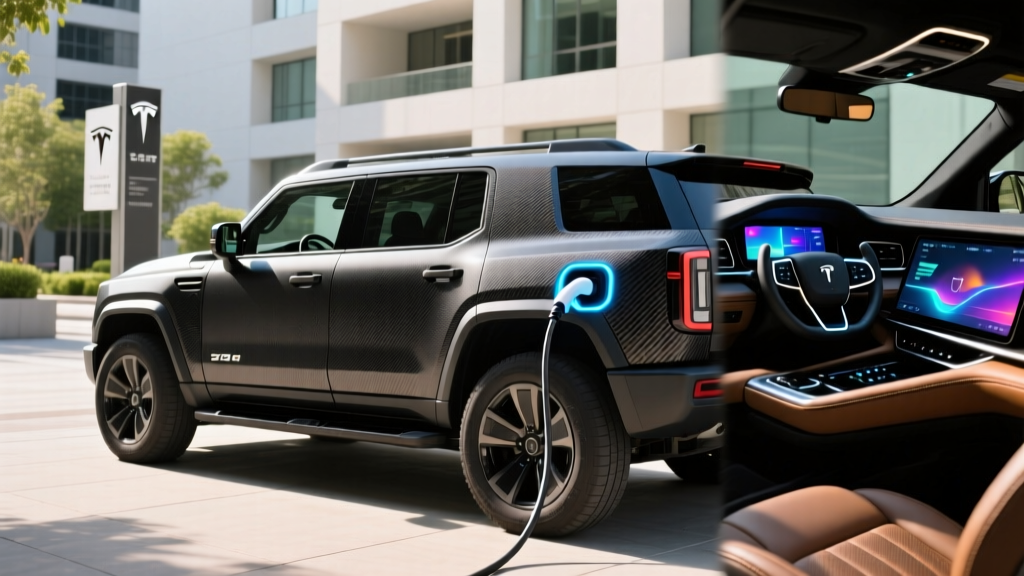
The 2026 GMC Hummer EV Carbon Fiber Edition isn't just an appearance package bolted onto a three-ton electric supertruck. It's a comprehensive upgrade that replaces standard exterior trim with exposed-weave carbon fiber accents, adds a unique interior treatment, and bundles the most capable off-road hardware GMC offers. But beneath the exotic materials lies the same Ultium-platform powertrain that defines every Hummer EV — and that means navigating the same trade-offs between staggering performance, massive battery weight, and real-world efficiency compromises.
After spending time with the Carbon Fiber Edition on highway loops, DC fast-charger stops, and light trail work, the verdict is clear: this is the most visually arresting and well-equipped Hummer EV you can buy, but it doesn't solve the fundamental physics problem of pushing 9,000+ pounds down the road. If you're buying for exclusivity, presence, and Watt-to-Watts party tricks, nothing else matches it. If you're optimizing for efficiency or daily practicality, the competition offers more rational solutions.
Full Specifications at a Glance
| Specification | 2026 GMC Hummer EV Carbon Fiber Edition (Pickup) |
|---|---|
| EPA Range | 314 miles (2X trim w/ 3X package) |
| Battery Capacity | ~246 kWh gross / ~212 kWh usable (NMC lithium-ion) |
| Drivetrain | Dual-motor AWD (e4WD) |
| Horsepower | 655 hp (standard) / 1,000 hp (Watts to Freedom mode) |
| Torque | 7,400 lb-ft (wheel torque, GM rating) |
| 0-60 mph | ~3.0 seconds (Watts to Freedom) |
| Max DC Fast Charge | 205 kW (peak) |
| 10-80% DC Charge Time | ~48 minutes (estimated) |
| Level 2 Home Charging | 11.5 kW onboard charger (~30 mi/hr) |
| Efficiency (Combined) | 47 MPGe / 72 kWh/100 mi |
| Curb Weight | ~9,046 lbs |
| Towing Capacity | 7,500 lbs (max) |
| Cargo Bed Length | 5 ft (standard) |
| Base MSRP | ~$112,595 (incl. destination) |
| Federal Tax Credit (§30D) | Not eligible (MSRP cap exceeded) |
| Battery/Powertrain Warranty | 8 years / 100,000 miles |
Range and Efficiency: EPA Numbers vs. Reality
The 2026 Hummer EV Pickup with the dual-motor 2X drivetrain and the larger battery pack carries an EPA-estimated 314 miles of combined range. The Carbon Fiber Edition, built atop the 3X equipment group, retains this same pack and powertrain, so the sticker figure holds.
- Highway (70-75 mph, mild weather): ~240–265 miles. The Hummer EV's aerodynamic profile — a flat windshield, tall ride height, and wide track — creates substantial drag above 65 mph. Expect a 15-20% reduction from EPA on sustained highway runs.
- City / Mixed Driving: ~280–300 miles. Regenerative braking recovers meaningful energy at lower speeds, and the one-pedal driving mode helps maximize recuperation.
- Cold Weather (below 32°F): ~200–230 miles. GM's battery thermal management system and available heat pump mitigate losses, but a pack this large still sheds 25-30% in deep cold without preconditioning.
- Towing (loaded, 5,000+ lbs): ~120–160 miles. Towing is the Hummer EV's Achilles heel for range. Aerodynamic drag from a trailer compounds the truck's already poor drag coefficient.
Efficiency is rated at approximately 47 MPGe combined, which translates to roughly 72 kWh consumed per 100 miles driven. For context, that's roughly 2.5 times the energy consumption per mile of a Tesla Model Y or Hyundai Ioniq 5. The physics are inescapable: moving 9,000 pounds requires enormous energy, regardless of how many electric motors you deploy.
Charging Performance: 205 kW Peak and the Curve Reality
The Hummer EV supports DC fast charging at a peak rate of 205 kW via its CCS1 connector. On paper, that's competitive with many mainstream EVs, but the Hummer's enormous battery changes the charging equation dramatically.
| Charging Level | Power / Rate | Estimated Speed | Use Case |
|---|---|---|---|
| Level 1 (120V household) | ~1.4 kW | ~2 mi/hr | Emergency top-off only |
| Level 2 (240V home) | 11.5 kW (onboard max) | ~30 mi/hr (full charge ~18 hrs) | Overnight charging — plan for 12+ hour sessions from low SoC |
| DC Fast Charge (CCS1) | 205 kW peak | 10-80% in ~48 min | Road-trip stops — but taper above 80% is steep |
Here's where ownership reality sets in. A 212 kWh usable battery at a sustained 205 kW would theoretically charge in about an hour. But peak charge rate is not sustained charge rate. The Hummer EV's charge curve ramps up to ~205 kW in the 15-40% SoC window, then progressively tapers as the battery fills and cell temperatures rise. Above 80% SoC, charge speed drops to under 50 kW to protect battery longevity. This means a 10-80% session takes roughly 45-50 minutes at a capable Electrify America or EVgo 350 kW station — significantly longer than a Hyundai Ioniq 5 (18 minutes) or Tesla Model Y (~25 minutes on V3 Superchargers).
For home charging, the 11.5 kW onboard charger means you're adding roughly 30 miles of range per hour. A full charge from near-empty takes approximately 18 hours on Level 2. Most owners will charge overnight and rarely deplete below 20%, making the practical overnight top-up more manageable — but if you arrive home at 10% SoC, you won't wake up to a full battery. A dedicated 60-amp circuit with a hardwired Level 2 station (like the ChargePoint Home Flex or Emporia Vue) is strongly recommended; a standard NEMA 14-50 outlet at 40 amps will deliver only ~9.6 kW and extend charge times further.
Performance: Watts to Freedom and the 3-Second Thrill
The Carbon Fiber Edition is built on the dual-motor e4WD architecture, producing 655 horsepower in normal driving. Engage Watts to Freedom (WTF) mode — GMC's launch-control sequence that lowers the air suspension, preconditions the battery, and plays a haptic rumble through the seat — and output climbs to 1,000 horsepower. The result is a 0-60 mph sprint in approximately 3.0 seconds, which remains astonishing for a vehicle that weighs as much as a commercial delivery van.
Adaptive air suspension provides up to 15.9 inches of ground clearance in Extract Mode (primarily for off-road obstacle clearance) and can lower the truck for highway cruising or easier bed access. The four-wheel steering system, branded CrabWalk, allows diagonal movement at low speeds — genuinely useful on tight trails and a compelling party trick in parking lots. Rear-wheel steering also reduces the turning circle at higher speeds, making the Hummer EV feel surprisingly manageable in urban environments despite its 143-inch wheelbase.
The Carbon Fiber Edition adds no performance advantage over a similarly equipped 3X-trim Hummer EV. The carbon fiber components are cosmetic and structural-lightweighting only — don't expect weight savings significant enough to move the 0-60 needle. What you do get is exclusivity: exposed-weave carbon on the mirror caps, fender flares, lower body cladding, and interior trim that signals this is the top-of-the-line model.
Pricing, Tax Credits, and Ownership Economics
The 2026 GMC Hummer EV Carbon Fiber Edition commands a starting MSRP of approximately $112,595 including destination charges. This positions it well above the Ford F-150 Lightning Platinum (~$97,000) and the Rivian R1T Quad-Motor (~$89,000), though below the Tesla Cybertruck Cyberbeast (~$100,000) when comparing fully loaded configurations.
| Cost Factor | Amount |
|---|---|
| Base MSRP (Carbon Fiber Edition) | ~$112,595 |
| Federal §30D Tax Credit | $0 — MSRP exceeds $80,000 truck cap |
| Estimated State Incentives | Varies ($0–$7,500 depending on state) |
| Effective Starting Price | ~$105,000–$112,595 (after state credits where available) |
| Estimated 5-Year Electricity Cost (15k mi/yr) | ~$8,100 (at $0.15/kWh national avg) |
| Estimated 5-Year Insurance | ~$18,000–$22,000 (high-value specialty vehicle) |
The critical tax-credit detail: the Hummer EV does not qualify for the federal §30D clean vehicle credit. The IRS caps eligible pickups at an MSRP of $80,000, and the Carbon Fiber Edition sits roughly $32,000 above that threshold. Even base-trim Hummer EV models now exceed the cap as pricing has climbed. This is a significant ownership-cost factor when comparing against the Ford F-150 Lightning (some trims still qualify) or the Rivian R1T (dual-motor trims under $80,000 may qualify, pending battery-sourcing compliance).
Operating costs are a mixed story. Electricity is cheaper per mile than gasoline — at the national average of $0.15/kWh, driving 15,000 miles annually costs roughly $1,620 in home-charging electricity. A comparable gas-powered heavy-duty truck at 14 MPG and $3.50/gallon would cost $3,750 annually. But insurance premiums for a $112,000 specialty EV with carbon fiber bodywork are steep, often exceeding $3,500-$4,000 per year depending on your profile. Depreciation on high-dollar EVs also remains elevated — plan for 40-50% value loss over five years based on current market trends.
Interior, Cargo, and Daily Livability
The Carbon Fiber Edition interior features unique carbon-fiber trim accents, premium leather upholstery with contrast stitching, and a 13.4-inch diagonal infotainment touchscreen running GM's latest Ultifi software platform. A 12.3-inch driver display and available head-up projection round out the digital cockpit. Wireless Apple CarPlay and Android Auto are standard, along with a 14-speaker Bose audio system.
Practical space is adequate but not class-leading:
- Front legroom: 45.6 inches
- Rear legroom: 38.9 inches (competitive with full-size crew cabs)
- Cargo bed volume: ~36.9 cu ft (5-foot bed)
- Front trunk (frunk): ~11.3 cu ft with power-operated tonneau-style cover
- Max payload: ~1,300 lbs
The Infinity Roof — removable transparent panels stored in the frunk — is standard on the Carbon Fiber Edition and remains one of the Hummer EV's most distinctive features. Open-air driving transforms the cabin experience, though reinstallation requires two people and careful alignment. The MultiPro tailgate offers six configurable positions including a step-in function for bed access.
Driver Assistance and Safety Technology
GMC equips the Carbon Fiber Edition with Super Cruise, GM's hands-off-wheel highway driving system on compatible divided highways. Super Cruise is a SAE Level 2 driver-assistance system — the driver must remain attentive and ready to resume control at all times, despite the hands-free operation. It's not autonomous driving. The system covers over 750,000 miles of mapped roads in North America and includes automatic lane changes when the turn signal is engaged.
- Operates only on pre-mapped divided highways — not surface streets, construction zones, or unmapped routes
- Requires driver attention monitoring via steering-wheel-mounted camera — looking away triggers escalating alerts
- Does not handle stoplights, stop signs, roundabouts, or pedestrian detection autonomously
- Hands-free does not mean eyes-free or mind-free — this is not a Level 4 robotaxi system
Standard active safety includes automatic emergency braking with pedestrian detection, lane-keep assist, blind-spot monitoring with trailer coverage, rear cross-traffic alert, and a surround-view camera system with up to 18 available camera views — critical given the Hummer EV's substantial blind zones.
Pros, Cons, and the Competitive Landscape
- Exclusive carbon fiber exterior and interior treatment — no other EV truck offers this level of material distinction
- 1,000 hp in Watts to Freedom mode delivers supercar acceleration in a 9,000-lb truck
- CrabWalk four-wheel steering and Extract Mode air suspension are genuinely capable off-road
- 314-mile EPA range is among the highest of any production EV
- Infinity Roof and MultiPro tailgate add unique open-air and utility experiences
- Super Cruise provides best-in-class hands-off highway driving on mapped routes
- $112,595+ starting price with no federal tax credit eligibility
- 72 kWh/100 mi efficiency is the worst of any mainstream EV — high charging costs and long sessions
- 10-80% DC charge time of ~48 minutes trails competitors significantly
- Curb weight of 9,000+ lbs limits payload to 1,300 lbs and towing range to ~120-160 miles
- Insurance premiums are steep for a high-value specialty vehicle
- 5-foot bed is shorter than most full-size truck buyers expect
Against the Ford F-150 Lightning Platinum, the Hummer EV wins on range, performance, and exclusivity but loses on price (by $15,000+), charging speed, bed length, and practicality. The Rivian R1T Quad-Motor offers comparable performance at a lower price point with a more refined on-road experience, though with less range and no carbon fiber option. The Tesla Cybertruck Cyberbeast undercuts on price and charges faster on the Supercharger network, but its polarizing design and build-quality inconsistencies remain concerns.
Who Should Buy the Hummer EV Carbon Fiber Edition?
- You want the most exclusive, visually distinctive electric truck on the road and budget is secondary
- You'll primarily drive locally or on moderate road trips where 314-mile range and 48-minute charge stops are acceptable
- Off-road capability (CrabWalk, Extract Mode, underbody armor) is a genuine priority
- You value Super Cruise for long highway commutes on mapped corridors
- Home Level 2 charging is available and you can accommodate 12-18 hour full-charge sessions
- Tax credit eligibility matters — the F-150 Lightning or R1T dual-motor may qualify
- You regularly tow long distances — range with a trailer drops below 160 miles
- Fast public charging is critical to your use case — the Rivian R1T and Tesla Cybertruck charge significantly faster
- Daily efficiency and operating cost are primary concerns — the Hummer EV's 72 kWh/100 mi consumption is expensive
Frequently Asked Questions
What is the real-world range of the GMC Hummer EV Carbon Fiber Edition?
The EPA rates it at 314 miles combined, but real-world highway driving at 70-75 mph typically yields 240-265 miles. Cold weather (below freezing) reduces that to roughly 200-230 miles. Towing drops range dramatically to approximately 120-160 miles depending on trailer weight and aerodynamics.
How fast does the Hummer EV charge at home and on DC fast chargers?
At home on a 240V Level 2 charger (11.5 kW), the Hummer EV adds about 30 miles of range per hour, with a full charge from near-empty taking approximately 18 hours. On DC fast chargers, it peaks at 205 kW and charges from 10-80% in roughly 48 minutes — but the charge curve tapers significantly above 80% SoC.
Does the GMC Hummer EV qualify for the federal EV tax credit?
No. The IRS §30D tax credit caps eligible pickups at $80,000 MSRP. The Carbon Fiber Edition starts at approximately $112,595, well above the threshold. Even base-trim Hummer EV models now exceed the cap. Some state-level incentives may still apply — check your local DMV or energy office for current programs.
Is the Hummer EV Carbon Fiber Edition worth buying over the Rivian R1T or F-150 Lightning?
It depends entirely on your priorities. If exclusivity, 1,000-hp performance, and off-road hardware are paramount, the Carbon Fiber Edition has no equal. If you need faster charging, better efficiency, a lower price, or tax credit eligibility, the Rivian R1T (faster charging, more refined) or Ford F-150 Lightning (more practical, lower cost, potential credit eligibility) are more rational choices.
What's the biggest drawback of owning the Hummer EV?
Charging time and efficiency. The enormous ~212 kWh usable battery takes roughly 48 minutes to charge 10-80% at peak DC speeds, and the truck consumes 72 kWh per 100 miles — roughly 2.5x the energy per mile of a mid-size EV. For road trips, this means longer, more frequent stops and higher electricity costs. At home, a full recharge from low SoC takes 18 hours on Level 2.
What is the battery warranty on the Hummer EV?
GM covers the Hummer EV's Ultium battery pack and electric powertrain components for 8 years or 100,000 miles, whichever comes first. The warranty covers defects and capacity loss below a specified retention threshold (typically 60-70% of original capacity, per GM's warranty documentation). Given the pack's massive size, out-of-warranty replacement would be extremely costly — likely $30,000-$40,000+ based on current Ultium pricing — making the warranty coverage essential.