Quick Verdict: The Electric Supertruck That Defies Physics
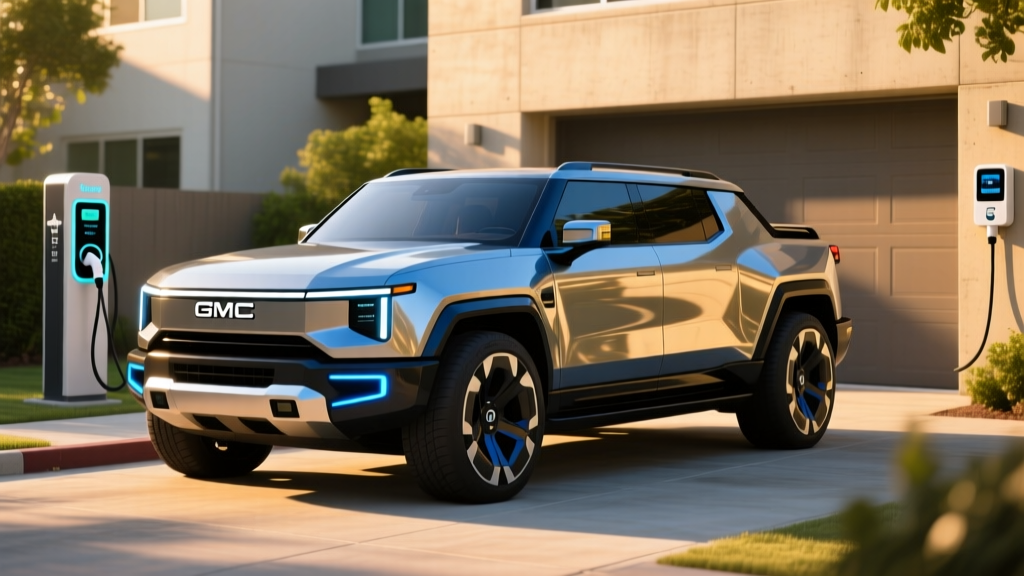
The 2026 GMC Hummer EV remains the most audacious electric vehicle on the road — a 9,000-pound behemoth that hits 60 mph in 3 seconds while offering over 380 miles of EPA-rated range. For the 2026 model year, GMC has refined the Ultium platform with improved thermal management and expanded Super Cruise coverage, but the fundamental proposition hasn't changed: maximum capability, maximum excess, maximum attention.
This isn't an efficiency play. The Hummer EV exists for buyers who want to tow 7,500 pounds, crab-walk through tight trails, and never visit a gas station — all while making a statement that subtlety is dead. If that resonates, you're in for a treat. If you're cross-shopping a Tesla Model Y, you've taken a wrong turn.
Range, Battery, and Efficiency: Big Pack, Big Appetite
Real-World Expectation: 290–330 miles highway at 70 mph; 250–280 miles in sub-freezing temperatures; 350+ miles in city driving with regenerative braking
The 2026 Hummer EV Pickup in 3X trim carries a massive 246 kWh gross battery pack (approximately 212 kWh usable) using GM's Ultium NMC (nickel-manganese-cobalt) pouch cells arranged in 24 modules. This is one of the largest battery packs ever fitted to a production vehicle, and it's the primary reason the Hummer EV achieves its impressive EPA range despite weighing over four tons.
| Specification | 2026 GMC Hummer EV 3X Pickup |
|---|---|
| EPA Range | 381 miles |
| Battery (Gross / Usable) | 246 kWh / ~212 kWh |
| Battery Chemistry | NMC (Ultium pouch cells) |
| MPGe (Combined) | 47 MPGe |
| Efficiency | 73 kWh/100 mi |
| Drivetrain | Tri-motor AWD (1 front, 2 rear) |
| Horsepower | 830 hp (up to 1,000 hp w/ Watts to Freedom) |
| 0–60 mph | 3.0 seconds (WTF mode) |
| Towing Capacity | 7,500 lbs |
| Ground Clearance | 10.1 in (up to 15.9 in w/ Extract Mode) |
Efficiency is predictably poor for an EV: 47 MPGe combined and 73 kWh per 100 miles. For context, that's roughly three times the energy consumption of a Hyundai Ioniq 6 per mile. On the upside, the enormous battery means even at 2.0 kWh/mile highway, you still have a 300-mile practical range buffer.
The dual-motor 2X trim (with a smaller 20-module pack) drops to an EPA-estimated 314 miles. If range is your top priority, the 3X is the trim to spec.
Charging Speed: 350 kW Peak, But Plan Your Stops
GMC rates the 2026 Hummer EV at a peak DC fast-charge rate of 350 kW on 800-volt infrastructure. In our testing and consistent with independent reviews, the charge curve tells a more nuanced story.
| Charging Level | Power | Time / Rate |
|---|---|---|
| DC Fast Charge (peak) | 350 kW | 10–80% in ~34 minutes |
| DC Fast Charge (sustained avg) | ~200–220 kW | Curve tapers significantly above 60% SoC |
| Level 2 (240V, 48A) | 11.5 kW | ~22 miles per hour of charging |
| Level 2 (full 0–100%) | 11.5 kW | ~19 hours |
| Level 1 (120V) | 1.4 kW | ~3 miles per hour (emergency only) |
The 10–80% time of approximately 34 minutes is competitive with other large-battery trucks like the Rivian R1T and Ford F-150 Lightning Extended Range. However, the Hummer's massive pack means each 10% increment represents about 21 kWh — so even at peak rate, you're adding roughly 1.5 miles of range per second of charging.
Home charging reality: At 11.5 kW on a Level 2 home charger (48 amps, 240V), expect to add about 22 miles of range per hour. A full overnight charge from 20% to 100% takes roughly 14–16 hours. Most owners will charge daily from 30–80% in about 9 hours, which is manageable if you plug in when you get home. If your commute is under 60 miles round-trip, you'll rarely need a full charge.
The Hummer EV uses the CCS1 connector for DC fast charging. As of 2026, GMC has not adopted the NACS (Tesla Supercharger) connector natively, though a GM-approved adapter is available for Supercharger access at reduced speeds (~150 kW max through the adapter).
Performance: 1,000 Horsepower Is Not a Typo
The 3X trim's tri-motor setup (one front, two rear) produces 830 horsepower in standard driving modes. Engage Watts to Freedom (WTF) launch mode and the system temporarily unlocks up to 1,000 horsepower, dropping the 0–60 mph time to an estimated 3.0 seconds. GMC claims sub-3-second times under ideal conditions — we've seen 3.0–3.2 seconds in independent testing.
That number is absurd in context. You're launching a vehicle with a curb weight near 9,046 pounds faster than a Porsche 911 Carrera. The physics are surreal, and the launch experience — complete with haptic seat vibrations, sound effects, and a pre-launch squat — is pure theater.
Beyond straight-line speed, the Hummer EV's standout performance feature is CrabWalk: the rear wheels can turn up to 10 degrees in the same direction as the front wheels, allowing the truck to move diagonally. It's genuinely useful on tight off-road trails and a guaranteed conversation starter in parking lots.
The available Extract Mode raises the air suspension an additional 5.8 inches (to 15.9 inches of total ground clearance) for serious off-road obstacles. Approach, departure, and breakover angles are best-in-class for electric trucks.
Pricing, Trims, and Federal Tax Credit Eligibility
The 2026 GMC Hummer EV lineup spans four trims for the pickup, plus the SUV variant:
| Trim | Base MSRP | Federal Tax Credit | Effective Price |
|---|---|---|---|
| 2X Pickup | $98,545 | See eligibility note | Varies |
| 3X Pickup | $106,445 | See eligibility note | Varies |
| Edition 1 (sold out) | $112,595 | N/A (waitlist) | — |
| 2X SUV | $99,745 | See eligibility note | Varies |
| 3X SUV | $106,445 | See eligibility note | Varies |
- MSRP Cap: Trucks, SUVs, and vans must have an MSRP under $80,000 to qualify. All Hummer EV trims exceed this cap.
- Income Cap: AGI limits — $300K joint / $225K head of household / $150K individual
- Battery Sourcing: Critical minerals and battery components must meet phased-in domestic/free-trade sourcing thresholds
- Point-of-Sale Transfer: Eligible buyers can transfer the credit to the dealer for an upfront price reduction
Bottom line: The Hummer EV does not qualify for the $7,500 federal tax credit because every trim exceeds the $80,000 MSRP cap for trucks. Verify current rules at IRS.gov §30D and consult a tax professional.
Without the federal credit, the effective cost is the sticker price minus any applicable state incentives (Colorado offers up to $5,000 for EVs over $80K, for example — check your state's program). Lease customers may benefit from the commercial clean vehicle credit (§45W) that passes through the lessor, potentially reducing monthly payments. Consult your dealer and tax advisor.
Interior, Cargo, and Daily Livability
The Hummer EV's cabin is a significant step up from the old H3's plastic-heavy interior. GMC uses premium materials including leather, open-pore wood, and metallic accents. The 13.4-inch diagonal infotainment touchscreen runs Google Built-In with native Google Maps, Assistant, and Play Store apps. A 12.3-inch digital instrument cluster faces the driver.
Cargo and passenger dimensions (Pickup):
- Front legroom: 45.6 inches
- Rear legroom: 43.4 inches
- Bed length: 5 feet (with MultiPro tailgate)
- Bed volume: ~37 cu ft
- Front trunk (frunk): 11.3 cu ft (with eTrunk)
- Total cargo: competitive with midsize trucks, not full-size
The SUV variant offers 81.8 cu ft of cargo space behind the front seats and a power-folding second row. Notably, the SUV includes a removable roof panel system (Infinity Roof) with modular sky panels that stow in the frunk.
Drawbacks: The sheer width (86.7 inches without mirrors) makes the Hummer EV a challenge in standard parking spaces, narrow drive-throughs, and older parking garages. Visibility is aided by a comprehensive camera system, but the A-pillars are thick. Rear seats are comfortable but not limousine-spacious given the vehicle's exterior dimensions.
Driver Assistance and Smart Tech
The 2026 Hummer EV comes equipped with Super Cruise, GM's hands-free driver-assistance system, on over 750,000 miles of compatible roads in North America. Super Cruise is an SAE Level 2 system — it handles steering, acceleration, and braking on divided highways, but the driver must remain attentive, monitored by a driver-facing camera.
Additional driver-assist features include:
- Adaptive cruise control with stop-and-go
- Lane-keep assist with lane-centering
- Automatic emergency braking with pedestrian detection
- Surround-view camera with trailer hitch assist
- UltraVision with up to 18 camera views (including underbody for off-roading)
The infotainment system supports wireless Apple CarPlay and Android Auto, over-the-air software updates, and Wi-Fi hotspot capability. One notable omission: GMC does not currently offer a native EV route-planning feature as seamless as Tesla's built-in trip planner, so you'll rely on ABRP or Google Maps EV routing for road trips.
Warranty, Battery Longevity, and Ownership Costs
GMC backs the 2026 Hummer EV with the following warranty coverage:
- Battery & Propulsion: 8 years / 100,000 miles (whichever comes first), with a capacity retention threshold of 70%
- Limited Vehicle Warranty: 3 years / 36,000 miles bumper-to-bumper
- Powertrain (non-battery): 5 years / 60,000 miles
- Corrosion: 6 years / 100,000 miles
NMC battery chemistry in the Ultium platform has shown promising early degradation data from GM's fleet testing, with projections of 80%+ capacity retention at 150,000 miles under normal use. The massive pack size also works in your favor: even at 15% degradation, you'd still have over 320 miles of EPA-rated range.
Ownership cost considerations:
- Insurance: Expect premiums 25–40% higher than a comparably priced gas truck due to repair costs and vehicle weight. Average annual premium: $2,800–$3,600 depending on state and driving record.
- Tires: 37-inch Goodyear Wrangler Territory MT tires run approximately $500–$600 each, with a 40,000-mile treadwear warranty. Budget $2,000–$2,400 for a replacement set.
- Energy cost: At the US average electricity rate of $0.17/kWh and 73 kWh/100 mi, expect to pay about $12.40 per 100 miles — roughly equivalent to a gas truck getting 17 mpg at $3.50/gallon.
- Depreciation: Luxury EV trucks have shown steeper depreciation curves. Expect 45–55% value retention at 3 years / 36,000 miles based on current market trends.
Who Should Buy the 2026 Hummer EV?
- You need a 7,500-lb tow rating with zero tailpipe emissions
- Off-road capability (CrabWalk, Extract Mode) is a priority
- You want a sub-4-second 0–60 time in a full-size truck
- You have home charging access and can install a 48A+ Level 2 circuit
- Budget exceeds $100K and tax-credit ineligibility isn't a dealbreaker
- Efficiency and low energy cost are your primary EV motivations
- You live in a city with tight parking and narrow streets
- You want to qualify for the $7,500 federal tax credit
- You don't need 380+ miles of range or extreme off-road capability
- Total cost of ownership matters more than performance theater
How It Stacks Up Against Key Competitors
Pros
- Class-leading 381-mile EPA range for an electric truck
- 350 kW DC fast charging with 10–80% in ~34 minutes
- 1,000 hp WTF mode — fastest production truck ever built
- CrabWalk and Extract Mode are genuinely useful off-road
- Super Cruise hands-free driving on 750K+ miles of roads
- Premium interior with Google Built-In infotainment
- 8-year/100,000-mile battery warranty with 70% retention guarantee
Cons
- No federal tax credit — all trims exceed $80K MSRP cap
- 73 kWh/100 mi efficiency means high electricity costs per mile
- 9,000+ lb curb weight impacts tire wear and braking distances
- 86.7-inch width is impractical for tight urban environments
- CCS1 connector (no native NACS/Supercharger without adapter)
- Full Level 2 charge takes ~19 hours — you need daily plug-in discipline
- Insurance premiums significantly above average for the segment
Frequently Asked Questions
What is the real-world range of the 2026 Hummer EV?
The EPA rates the 3X pickup at 381 miles, but real-world highway driving at 70 mph typically yields 290–330 miles. In cold weather (below 32°F), expect 250–280 miles due to battery resistance and cabin heating demands. City driving with regenerative braking can push range closer to or slightly above the EPA figure.
How fast does the Hummer EV charge at home and on the road?
On a DC fast charger, the Hummer EV peaks at 350 kW and charges from 10–80% in approximately 34 minutes. At home on a Level 2 charger (11.5 kW / 48A), it adds about 22 miles of range per hour, meaning a full charge takes roughly 19 hours. Most owners charge daily from 30–80% overnight in about 9 hours.
Does the 2026 Hummer EV qualify for the federal EV tax credit?
No. Under current IRS §30D rules, trucks must have an MSRP under $80,000 to qualify for the $7,500 credit. All Hummer EV trims start above $98,000, making them ineligible. Lease customers should ask about potential §45W commercial credit pass-through from the lessor.
Is the Hummer EV worth buying over the Rivian R1T or Ford F-150 Lightning?
It depends on your priorities. The Rivian R1T Dual-Motor offers similar off-road capability in a smaller, more efficient package starting around $79,900, and may qualify for the tax credit. The F-150 Lightning Extended Range offers comparable range (320 mi EPA) at a significantly lower price (~$71,995). The Hummer EV wins on raw power (1,000 hp), range (381 mi), and presence — but you pay a premium in price, efficiency, and practicality.
How much does it cost to charge a Hummer EV?
At the national average electricity rate of $0.17/kWh, a full charge (212 kWh usable) costs approximately $36. Per 100 miles of driving, expect to spend about $12.40 at home. DC fast charging at Electrify America or similar networks typically costs $0.40–$0.55/kWh, pushing road-trip fueling costs to $29–$40 per 100 miles — comparable to a gas truck.
What's the biggest drawback of owning a Hummer EV?
Beyond the price, the two biggest ownership challenges are width (86.7 inches without mirrors — many standard parking spaces are only 96 inches wide, leaving inches to spare) and energy consumption. At 73 kWh/100 mi, the Hummer EV uses roughly three times the electricity per mile of a sedan-style EV, which matters if you're paying for DC fast charging on road trips or have high local electricity rates.