Quick Verdict: The Electric Behemoth Defined
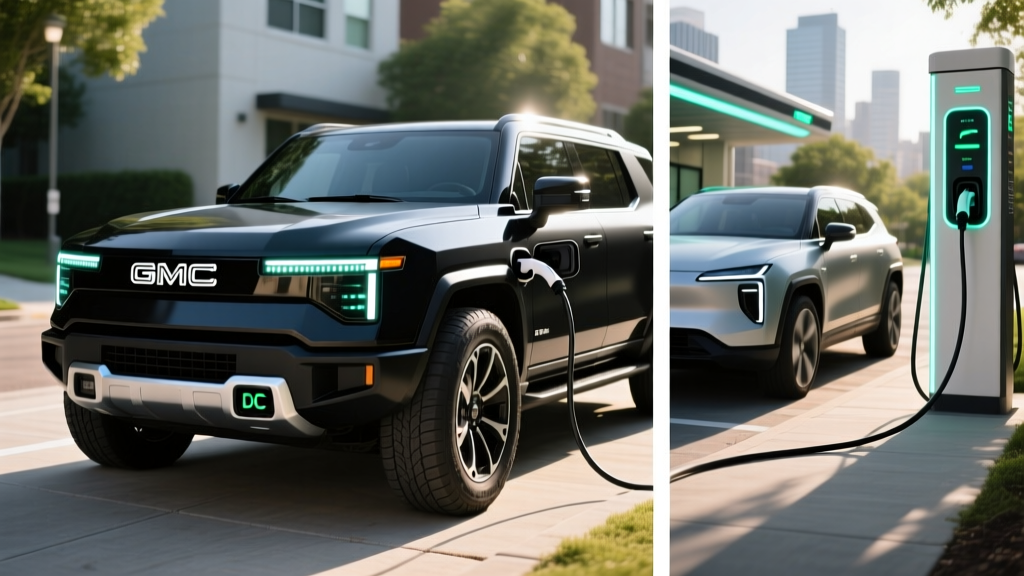
The 2025 GMC Hummer EV is the heaviest, widest, and most ostentatious battery-electric vehicle on the road — a 9,000-pound statement piece built on GM's Ultium platform that pairs absurd performance with genuine off-road capability. For the 2025 model year, GMC has streamlined the lineup around the 3X trim for both the pickup and SUV, dropping the lower-priced 2X trims that previously anchored the lineup. That consolidation pushes the entry price higher but concentrates the Hummer EV around its most capable hardware: tri-motor AWD, air suspension, and four-wheel steer with CrabWalk.
If you're cross-shopping this against a Rivian R1T, Tesla Cybertruck, or Ford F-150 Lightning, the Hummer EV wins on sheer presence and off-road hardware but demands compromises in efficiency, parking practicality, and charging speed relative to its 24-module battery. Here's every number you need to decide.
Range, Battery, and Real-World Efficiency
| Spec | Hummer EV Pickup (3X) | Hummer EV SUV (3X) |
|---|---|---|
| EPA Range | 381 miles | 314 miles |
| Battery (Usable) | ~212 kWh (24 modules, double-stack) | ~170 kWh (20 modules) |
| Battery Chemistry | NMC (Nickel Manganese Cobalt) | NMC |
| Efficiency | 47 MPGe / 72 kWh/100 mi | 45 MPGe / 75 kWh/100 mi |
| Curb Weight | ~9,046 lbs | ~8,691 lbs |
The Ultium battery uses NMC chemistry with a double-stack pouch-cell configuration in the pickup's 24-module pack. GM's wireless battery management system (wBMS) eliminates most wiring harnesses inside the pack, reducing weight and potential failure points. The battery sits low in a structural tray that contributes to chassis rigidity. According to fueleconomy.gov, the pickup's combined efficiency is 47 MPGe — among the lowest of any current EV, a direct consequence of moving over four tons of vehicle.
Charging Speed: DC Fast and Home Level 2
Charging a 212 kWh battery is a patience exercise, and this is where the Hummer EV reveals its most significant practical limitation compared to lighter EVs.
| Charging Level | Max Rate | Speed / Time | Connector |
|---|---|---|---|
| Level 1 (120V) | ~1.4 kW | ~3–4 miles per hour | J1772 / NACS (with adapter) |
| Level 2 (240V, 48A) | 11.5 kW (onboard charger) | ~25–30 miles per hour / ~18–20 hrs (10–100%) | J1772 / NACS |
| DC Fast Charge | ~350 kW peak (800V architecture) | 10–80% in ~35–40 min (pickup) | CCS1 (NACS via adapter) |
The 2025 Hummer EV uses an 800-volt battery architecture that enables peak DC charging rates near 350 kW on compatible chargers (Electrify America 350 kW stalls, for example). However, that peak rate is not sustained. The charge curve tapers significantly above 60% state of charge, and the thermal mass of a 212 kWh pack means heat management during fast charging is critical. In practice, you'll see peak rates only in the 10–40% SoC window, with a gradual decline thereafter.
For the 2025 model year, GM continues to ship the Hummer EV with a CCS1 charge port. As GM transitions to the North American Charging Standard (NACS), adapters are available for Tesla Supercharger access, though Supercharger stall spacing and cable length can be tight for the Hummer's 87.8-inch width. Plan your stops carefully — this vehicle does not fit easily into standard charging stalls bordered by concrete barriers.
Home Level 2 charging at 11.5 kW will fully replenish the pickup's battery in roughly 18–20 hours from near-empty. Most owners will top up daily and rarely charge from 0%, making overnight Level 2 sufficient for routine use. If your daily driving is under 60 miles, a Level 2 session of 4–5 hours replaces what you used.
Performance and Drivetrain
| Performance Spec | Pickup 3X | SUV 3X |
|---|---|---|
| Powertrain | Tri-motor AWD (1 front, 2 rear) | Tri-motor AWD |
| Horsepower | 1,000 hp (Watts to Freedom mode) | 830 hp |
| Torque | 1,200 lb-ft | 1,000+ lb-ft |
| 0–60 mph | ~3.0 seconds | ~3.5 seconds |
| Top Speed | 106 mph (electronically limited) | ~100 mph |
| Towing Capacity | 7,500 lbs (estimated) | 5,500 lbs (estimated) |
Watts to Freedom (WTF) mode is the headline party trick — it lowers the air suspension, preconditions the battery and motors, plays a haptic rumble and sound sequence through the seats and speakers, then unleashes the full 1,000 hp. Launching a 9,000-lb vehicle to 60 mph in three seconds is physically surreal. The torque delivery is instant and relentless, and the adaptive air suspension keeps the body remarkably flat under hard acceleration.
Beyond straight-line performance, the rear-axle dual motors enable torque vectoring across the rear wheels, and the available four-wheel steer (which GMC calls CrabWalk) can angle all four wheels up to 10 degrees in the same direction for diagonal movement. It's genuinely useful in tight off-road situations and makes the truck's 20-foot-plus length marginally more manageable in parking lots — marginally.
The Extract Mode raises the air suspension by approximately 6 inches for additional ground clearance (up to ~15.9 inches total), approaching serious off-road geometry. Underbody skid plates and underbody cameras round out the trail hardware. According to GMC's official Hummer EV page, approach, departure, and breakover angles are competitive with purpose-built off-roaders.
Interior Space, Tech, and Livability
The Hummer EV pickup offers a crew-cab layout with seating for five. Interior dimensions are generous in every direction — headroom, legroom, and shoulder room benefit from the vehicle's enormous exterior footprint. Rear-seat legroom exceeds 40 inches, and the flat floor (no transmission tunnel) gives the middle passenger usable foot space.
| Dimension | Pickup | SUV |
|---|---|---|
| Front Legroom | 45.6 in | 42.5 in |
| Rear Legroom | 42.3 in | 38.9 in |
| Cargo Volume (behind 2nd row) | Bed: ~36 cu ft (w/ tonneau) | ~35 cu ft |
| Front Trunk (Frunk) | ~7.5 cu ft (eTrunk) | ~5.0 cu ft |
| Overall Length | 216.8 in | 196.8 in |
| Width (excl. mirrors) | 87.8 in | 87.8 in |
The infotainment system runs on a 13.4-inch diagonal touchscreen with Google Built-In (Google Maps, Google Assistant, Play Store). A 12.3-inch digital instrument cluster faces the driver. The system is responsive and the interface is logical, though the sheer number of menus for off-road settings, suspension, regen, and drive modes can require hunting. Wireless Apple CarPlay and Android Auto are standard.
The available Super Cruise — GM's hands-off highway driving assist — covers over 750,000 miles of compatible divided highways in the US and Canada. It uses a driver-facing camera to monitor attention and allows true hands-off operation on mapped roads. Importantly, this is SAE Level 2 automation: you must remain attentive, eyes on the road, and ready to resume control at any time. Super Cruise is one of the most polished Level 2 systems available and makes long highway stretches significantly less fatiguing.
Notable drawbacks: the Infinity Roof with removable sky panels is a standout feature, but the panels are heavy, bulky to store, and the sealing around the roof joints can admit wind noise at highway speeds. Visibility is compromised by thick A-pillars and the massive hood. The rear window on the pickup is small, and the bed-mounted camera is essential for any backing maneuver. At 87.8 inches wide (excluding mirrors), many standard parking spaces are simply too narrow, and automated parking garages with tight clearances are off-limits.
Pricing, Trims, and Federal Tax Credit
| Trim / Config | Base MSRP | Estimated As-Tested | §30D Tax Credit Eligible? |
|---|---|---|---|
| Pickup 3X | ~$104,900 | $115,000–$130,000+ | No (exceeds MSRP cap) |
| SUV 3X | ~$98,900 | $110,000–$125,000+ | No (exceeds MSRP cap) |
| Pickup 2X (discontinued for 2025) | Was ~$84,900 | — | No (pickup cap $80,000) |
Under the IRS §30D clean vehicle credit, the Hummer EV does not qualify for the federal $7,500 tax credit. The law caps eligible pickups at an MSRP of $80,000 and SUVs/vans at $80,000. Every 2025 Hummer EV trim exceeds that threshold. Even the previously available 2X pickup at ~$84,900 was over the limit. This is a hard rule with no workaround — the point-of-sale transfer option also requires the vehicle to meet the same MSRP caps.
Additionally, §30D imposes buyer income caps ($150,000 single / $300,000 joint for new vehicles) and battery critical-mineral and component sourcing requirements that shift annually. But for the Hummer EV, the MSRP cap alone disqualifies it regardless of your income or the battery's supply chain.
Some state and utility incentives may still apply — check your local EV rebate programs and time-of-use electricity rates for potential savings on charging costs. These vary widely by jurisdiction.
Who Should Buy the Hummer EV?
Pros
- 1,000 hp and 3-second 0–60 in a production truck is unmatched
- 381-mile EPA range (pickup) from the 212 kWh Ultium pack
- Genuine off-road hardware: Extract Mode, CrabWalk, skid plates, lockers
- Super Cruise Level 2 hands-off highway driving on 750K+ miles of roads
- 800V architecture enables up to ~350 kW DC fast charging
- Enormous interior space and crew-cab comfort
- Infinity Roof with removable panels for open-air driving
Cons
- Efficiency is poor: 47 MPGe / 72 kWh per 100 miles
- 87.8-inch width makes parking and charging-stall access difficult
- No federal §30D tax credit (MSRP exceeds $80K cap)
- Highway range drops significantly due to aerodynamic drag
- Level 2 charging takes 18+ hours from empty
- Starting price over $100K with no affordable trim for 2025
- Weight (9,000+ lbs) accelerates tire wear and increases braking distance
Choose the Hummer EV SUV if: You want the Hummer experience with a shorter wheelbase, slightly better efficiency, and enclosed cargo space, and don't need the pickup bed for utility or towing.
Look elsewhere if: You want an efficient daily commuter EV, need the federal tax credit, frequently road-trip in cold climates where range loss compounds, or have a standard single-car garage.
Warranty and Long-Term Ownership
GM backs the Hummer EV's battery and powertrain with an 8-year / 100,000-mile warranty (whichever comes first), covering defects and capacity loss below a specified threshold (typically 60–70% retention, per GM's Ultium warranty terms). The limited vehicle warranty is 3 years / 36,000 miles.
Given the NMC chemistry and the sheer number of cells (hundreds of pouch cells across 24 modules), long-term degradation data is still accumulating. Early Ultium-platform vehicles suggest degradation in line with industry norms (~5–8% over the first 100K miles), but the Hummer EV's heavy weight and high discharge rates could accelerate wear in high-mileage or heavy-towing use cases. Battery replacement costs for a 212 kWh pack are not publicly itemized by GM but would likely exceed $30,000–$40,000 out of warranty based on current Ultium module pricing estimates.
Insurance premiums are commensurate with the vehicle's price and repair complexity — expect quotes in the $3,500–$5,500+ annual range depending on your profile and location. Check rates before purchasing.
Frequently Asked Questions
What is the real-world range of the 2025 GMC Hummer EV?
The EPA rates the pickup at 381 miles and the SUV at 314 miles. In real-world highway driving at 70+ mph, expect approximately 290–320 miles (pickup) and 250–275 miles (SUV). Cold weather below 30°F can reduce these figures by an additional 20–30%. The massive battery provides a buffer, but the Hummer EV's aerodynamic profile and 9,000-lb weight are significant energy penalties at highway speeds.
How fast does the Hummer EV charge at home and on the road?
At a DC fast charger rated 350 kW, the Hummer EV can charge from 10–80% in approximately 35–40 minutes, though peak rates of ~350 kW are sustained only in the lower SoC window. At home on a Level 2 charger (240V, 48A), the 11.5 kW onboard charger adds roughly 25–30 miles per hour, requiring about 18–20 hours for a full charge from near-empty.
Does the 2025 GMC Hummer EV qualify for the $7,500 federal tax credit?
No. Under IRS §30D rules, pickups must have an MSRP at or below $80,000, and SUVs must also be at or below $80,000. All 2025 Hummer EV trims start well above that threshold (pickup 3X at ~$104,900, SUV 3X at ~$98,900), making them ineligible regardless of buyer income or battery sourcing. Consult IRS.gov for current rules, which are subject to legislative change.
Is the Hummer EV worth buying over the Rivian R1T or Ford F-150 Lightning?
It depends on your priorities. The Hummer EV offers more horsepower (1,000 hp), a larger battery (212 kWh vs. R1T's ~149 kWh Max Pack), and more extreme off-road hardware. The Rivian R1T is more efficient, more practical in size, starts at a lower price, and may qualify for incentives depending on trim. The F-150 Lightning is significantly less expensive and more efficient but offers less range and performance. If presence, off-road capability, and raw power matter most, the Hummer EV is unique. If daily usability and cost-efficiency matter more, the R1T or Lightning are stronger choices.
Can the Hummer EV use Tesla Superchargers?
Yes, with a NACS adapter. GM provides or sells adapters that allow CCS-equipped vehicles to access Tesla's Supercharger network. However, the Hummer EV's extreme width (87.8 inches without mirrors) makes many Supercharger stalls physically tight, and cable reach can be an issue. Plan charging stops using the in-vehicle navigation, which can route to compatible stations.
How much does it cost to charge the Hummer EV at home?
At the US average residential electricity rate of approximately $0.17/kWh (as of early 2025), a full charge of the pickup's 212 kWh usable battery costs roughly $36. That provides ~381 EPA miles, or about $0.09–0.10 per mile. Compare that to a gas truck at 15 MPG and $3.50/gallon — about $0.23 per mile. The Hummer EV saves on fuel despite its poor efficiency, though your rate depends on your utility and whether you can charge on off-peak pricing.
What is the Hummer EV's CrabWalk and how does it work?
CrabWalk uses the four-wheel steer system to angle both the front and rear wheels up to 10 degrees in the same direction, allowing the vehicle to move diagonally. It's designed for navigating tight off-road obstacles where a traditional turning radius would be impractical. It's not meant for street use at speed — it's a low-speed maneuvering aid for trails and tight terrain.