Quick Answer: Should You Buy a GMC EV in 2026?
GMC currently sells three fully electric vehicles: the Hummer EV Pickup and SUV (starting ~$99,995), the Sierra EV (starting ~$57,900 for the Elevation trim), and the newly introduced Terrain EV (starting ~$36,900). The Sierra EV Denali Edition 1 offers up to an EPA-estimated 440 miles of range, while the Hummer EV tops out around 314 miles. If you need a full-size electric truck with towing capability and can install a Level 2 home charger, the Sierra EV is the strongest value play. If you want a compact electric crossover for commuting, the Terrain EV is the entry point. None of these currently qualify for the full $7,500 federal §30D tax credit due to battery-sourcing rules — check the IRS clean vehicle credit page for the latest eligibility before purchasing.
GMC's Electric Lineup: What's Available Now
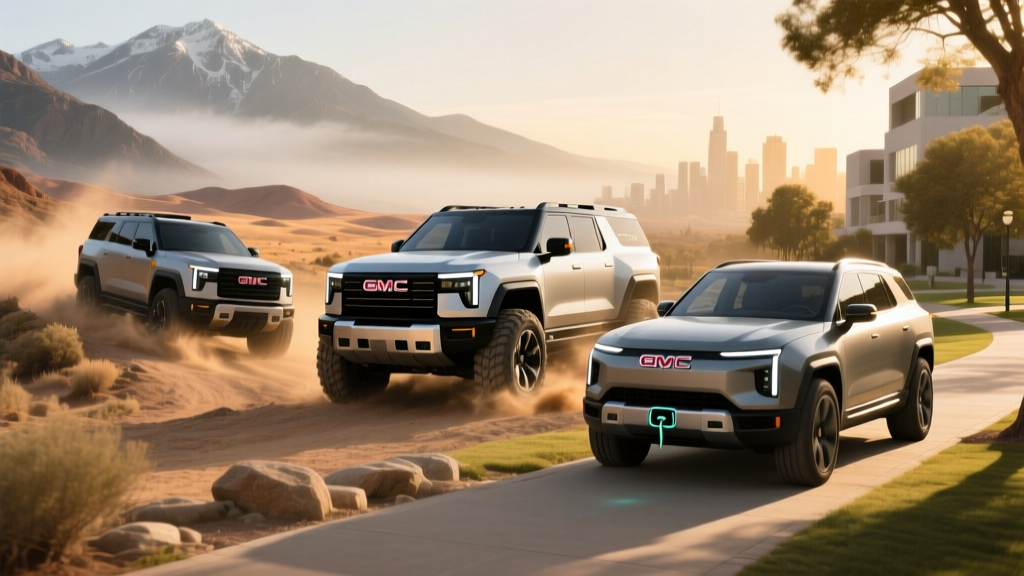
GMC's EV portfolio targets distinct buyer segments. The Hummer EV remains the halo product — a 1,000+ horsepower electric supertruck that demonstrates what's possible with a dedicated EV platform. The Sierra EV translates that Ultium architecture into a more practical full-size pickup. The Terrain EV brings GMC's design language to the affordable compact crossover segment.
| Model | Battery (kWh usable) | EPA Range | Peak DC Charge (kW) | 10–80% Time | 0–60 mph | Starting MSRP |
|---|---|---|---|---|---|---|
| Sierra EV Elevation | ~118 kWh (NMC) | ~390 mi | 200 kW | ~32 min | ~6.0 sec | $57,900 |
| Sierra EV Denali Edition 1 | ~200 kWh (NMC) | ~440 mi | 350 kW | ~22 min | ~4.5 sec | $99,495 |
| Hummer EV Pickup 3X | ~212 kWh (NMC) | ~314 mi | 350 kW | ~24 min | ~3.0 sec | $106,395 |
| Hummer EV SUV 3X | ~212 kWh (NMC) | ~314 mi | 350 kW | ~24 min | ~3.5 sec | $99,995 |
| Terrain EV | ~85 kWh (NMC) | ~310 mi | 150 kW | ~30 min | ~7.0 sec | $36,900 |
All figures reflect the latest available manufacturer data and EPA estimates at fueleconomy.gov. Real-world range will vary — expect 10–15% less on sustained highway driving at 75+ mph, and 20–30% reduction in sub-freezing temperatures due to battery heating demands and cabin climate load.
Range, Charging, and the Real-World Gap
GMC uses GM's Ultium platform across all three EVs, with nickel-manganese-cobalt (NMC) pouch cells. The Sierra EV Denali's 200 kWh pack is among the largest in any production vehicle, enabling that headline 440-mile EPA figure. But battery size alone doesn't tell the full story.
Real-World Range Reality Check
Sierra EV Denali (EPA 440 mi): Expect ~370–395 mi in mixed driving, ~340–360 mi at sustained 75 mph highway speeds, and ~300–330 mi in winter conditions below 30°F.
Sierra EV Elevation (EPA 390 mi): Expect ~330–355 mi mixed, ~290–320 mi highway, ~260–290 mi in cold weather.
Hummer EV 3X (EPA 314 mi): The Hummer's massive weight (~9,000 lbs for the pickup) and brick-like aerodynamics compress real-world range to ~250–280 mi mixed, and potentially ~210–240 mi towing or in cold weather.
Terrain EV (EPA 310 mi): Expect ~265–290 mi mixed, ~240–265 mi highway, ~220–250 mi cold weather.
Charging speed is where the Ultium platform shines on the higher trims. The Sierra EV Denali and Hummer EV both support 350 kW peak DC fast charging on 800-volt architecture — but only at compatible stations (select Electrify America and EVgo stalls). The charge curve peaks briefly and tapers significantly above 80% state of charge, which is why the 10–80% metric matters more than peak kW claims.
| Charge Level | Power | Sierra EV Denali | Sierra EV Elevation | Hummer EV | Terrain EV |
|---|---|---|---|---|---|
| Level 1 (120V) | ~1.4 kW | ~4 mi/hr | ~4 mi/hr | ~3 mi/hr | ~4 mi/hr |
| Level 2 (240V, 48A) | ~11.5 kW | ~32 mi/hr | ~32 mi/hr | ~28 mi/hr | ~33 mi/hr |
| Level 2 (240V, 80A) | ~19.2 kW | ~52 mi/hr | ~52 mi/hr | ~45 mi/hr | N/A (11.5 kW max) |
| DC Fast (peak) | 200–350 kW | ~22 min 10–80% | ~32 min 10–80% | ~24 min 10–80% | ~30 min 10–80% |
For home charging, the Sierra EV and Hummer EV accept up to 19.2 kW on Level 2 when paired with an 80-amp circuit — meaning a full overnight replenishment of even the 200 kWh pack is feasible. The Terrain EV maxes out at 11.5 kW on Level 2, which is still sufficient for overnight charging of its smaller battery. Plan on $500–$1,500 for a professional Level 2 installation if you already have a 200-amp panel; a panel upgrade to 200A can add $1,500–$3,500.
Cost Breakdown: GMC EV vs Gas Equivalent
The purchase price of GMC's electric vehicles carries a premium over their gas counterparts. But the total cost of ownership equation shifts when you factor in fuel, maintenance, and potential incentives.
| Category | Sierra EV Elevation | Sierra 1500 Gas (5.3L V8) |
|---|---|---|
| Base MSRP | $57,900 | $43,700 |
| Federal Tax Credit (§30D) | $0–$7,500* | $0 |
| Fuel/Energy (5 yrs, 75,000 mi) | $4,500–$6,750** | $11,250–$13,500*** |
| Maintenance (5 yrs) | $1,500–$2,500 | $3,500–$5,000 |
| Insurance (5 yrs avg) | $9,000–$12,000 | $7,000–$9,500 |
| Estimated 5-Year Total | $66,150–$79,650 | $65,450–$71,700 |
*Check current §30D eligibility at irs.gov — battery sourcing and income caps apply. The Sierra EV's credit eligibility has been inconsistent due to critical mineral sourcing rules.
**Assumes $0.12–$0.18/kWh home charging at 2.2–2.5 kWh/mi (Sierra EV efficiency). Public DC fast charging at $0.35–$0.50/kWh raises costs substantially.
***Assumes 17 MPG combined, $3.50–$4.25/gallon.
The EV wins on energy and maintenance costs, but the upfront premium, higher insurance rates (EVs typically cost 15–25% more to insure), and uncertain tax credit eligibility narrow the gap considerably. If you drive more than 15,000 miles annually or have access to cheap overnight electricity ($0.08–$0.12/kWh), the math shifts further in the EV's favor.
What First-Time GMC EV Buyers Must Know
If you're coming from a gas GMC Sierra or Yukon, several ownership realities require planning:
Home charging is essential for daily satisfaction. Relying solely on public DC fast charging is expensive, time-consuming, and hard on battery longevity. If you live in an apartment or lack garage/driveway access, a PHEV or gas vehicle may serve you better until public infrastructure matures.
Towing compresses range dramatically. The Sierra EV's max towing capacity is rated up to 12,500 lbs (Denali), but towing a 7,000-lb trailer can cut range by 40–50%. A 440-mile EPA range becomes 220–260 miles when towing. Plan charging stops accordingly on any trailer haul.
NACS connector adoption. GMC has committed to the North American Charging Standard (NACS) for future models, and current Ultium-based vehicles can access Tesla Supercharger stations via adapter. Confirm which connector your specific model year ships with — the transition period means some 2025–2026 models may include CCS1 with a NACS adapter included.
Battery warranty coverage. GM provides an 8-year/100,000-mile battery warranty on Ultium-based EVs, covering defects and capacity loss below 70% of original capacity. This is competitive with the industry standard, but understand that gradual degradation to 85–90% over 5 years is normal and not a warranty claim.
GMC EV vs Gas and Hybrid: Decision Framework
Which GMC Powertrain Is Right for You?
Choose the Sierra EV if:
- You have reliable Level 2 home charging (garage or driveway with 240V access)
- Your daily driving is under 200 miles and you rarely tow over 5,000 lbs
- You want minimal maintenance (no oil changes, fewer brake replacements due to regen)
- You drive 15,000+ miles/year, making fuel savings meaningful
Choose a gas Sierra 1500 if:
- You frequently tow heavy loads over long distances (8,000+ lbs, 200+ mi trips)
- You lack home charging access and your area has limited public DC infrastructure
- You operate in extreme cold (below 0°F) regularly, where range loss compounds
- Upfront budget is a hard constraint and the $14,000+ EV premium matters
Consider waiting or choosing a hybrid if:
- You want electric daily driving but gas flexibility for road trips (GMC has not yet offered a Sierra PHEV, but the Chevrolet Silverado PHEV may signal future options)
- Your driving pattern is unpredictable — some weeks 50 miles, others 600
Common GMC EV Misconceptions
| Myth | Fact |
|---|---|
| "The Sierra EV gets 440 miles no matter how you drive." | The 440-mile figure is an EPA estimate under mixed conditions. Sustained highway driving at 75+ mph, cold weather, and towing all reduce range by 15–50%. |
| "Every GMC EV qualifies for the $7,500 tax credit." | §30D eligibility depends on battery critical-mineral sourcing, buyer income caps ($150K single / $300K joint), and MSRP caps ($80K for trucks). The Sierra EV Denali at $99,495 exceeds the MSRP cap. Always verify at irs.gov. |
| "I can charge at any public station." | Connector compatibility matters. Some stations are CCS1-only, some are NACS-only (Tesla Superchargers). Verify your vehicle's connector and whether an adapter is included or available. |
| "The Hummer EV is practical for daily driving." | At ~9,000 lbs and over 18 feet long, the Hummer EV Pickup is challenging in tight urban environments, parking garages, and drive-throughs. It excels as a performance/lifestyle vehicle, not a commuter appliance. |
| "EV batteries need replacing every 5 years." | NMC batteries in Ultium-platform vehicles are designed for 150,000–200,000+ miles before reaching 70–80% capacity. GM's 8-year/100,000-mile warranty provides a baseline. Real-world data from earlier Ultium vehicles shows ~5–8% degradation over 3 years. |
Ownership Practicalities: Insurance, Maintenance, and Resale
Insurance: GMC EVs carry higher insurance premiums than their gas equivalents — typically 15–25% more, driven by higher repair costs (specialized high-voltage training, expensive battery packs, aluminum body panels). Get quotes before purchasing; the difference can be $300–$600/year depending on your profile and state.
Maintenance: EVs eliminate oil changes, spark plugs, transmission fluid, and exhaust system repairs. Brake pad life extends significantly due to regenerative braking (often 80,000–120,000 miles). Expect to spend on tire rotation, cabin air filters, windshield washer fluid, and tire replacement (EVs wear tires 20–30% faster due to instant torque and heavier weight). Budget ~$400–$600/year for basic EV maintenance vs $800–$1,200/year for a gas truck.
Resale value: EV depreciation has been steeper than gas trucks in recent years, partly due to rapid technology advancement and Tesla price cuts rippling through the used market. The Sierra EV's long-term resale is unproven as of 2026. The Hummer EV has held value better due to limited production and enthusiast demand, but this is an outlier.
Frequently Asked Questions
Does the GMC Sierra EV qualify for the federal tax credit?
Eligibility varies by trim and model year. The Sierra EV Elevation (MSRP $57,900) falls under the $80,000 truck cap, but the battery must meet critical-mineral and component sourcing requirements under §30D. The Denali Edition 1 at $99,495 exceeds the MSRP cap and does not qualify. Your personal income must also fall below $150,000 (single) or $300,000 (joint). Always check the latest list at fueleconomy.gov and consult a tax professional.
Can the GMC Sierra EV tow as much as a gas Sierra?
The Sierra EV Denali is rated for up to 12,500 lbs of towing — competitive with many gas Sierra 1500 configurations. However, range drops dramatically when towing. Expect to lose 40–50% of your range pulling a heavy trailer, meaning a 440-mile truck becomes a 220–260-mile truck under load. For frequent heavy towing over long distances, a gas or diesel Sierra remains more practical.
How long does it take to charge a GMC Hummer EV at home?
The Hummer EV's ~212 kWh battery is massive. On a standard 48-amp Level 2 charger (11.5 kW), a full 0–100% charge takes roughly 18–20 hours. On an 80-amp Level 2 circuit (19.2 kW), it drops to about 11–12 hours. Most owners will rarely charge from 0% — a typical daily top-up from 30–80% takes 5–6 hours on a 48-amp circuit, easily handled overnight.
Is the GMC Terrain EV a good first EV?
At a starting price around $36,900 with an EPA-estimated 310 miles of range, the Terrain EV is a strong first-EV candidate — provided you have home charging access. Its smaller battery means faster and cheaper home charging, and the range is more than adequate for daily commuting. The main limitation is DC fast-charging speed (150 kW peak), which means longer road-trip stops compared to the Sierra EV Denali's 350 kW capability.
What happens if my GMC EV battery degrades?
GM's Ultium battery warranty covers 8 years or 100,000 miles, whichever comes first, against defects and capacity loss below 70% of original capacity. Normal degradation for NMC chemistry typically runs 2–3% in the first year, then 1–2% annually afterward. At 150,000 miles, expect roughly 85–92% of original capacity remaining. A full battery replacement out of warranty would cost $15,000–$25,000+ depending on the pack size — a significant expense, but one that most owners will never face within the vehicle's practical lifespan.