The Short Answer: There Is No GMC EV1
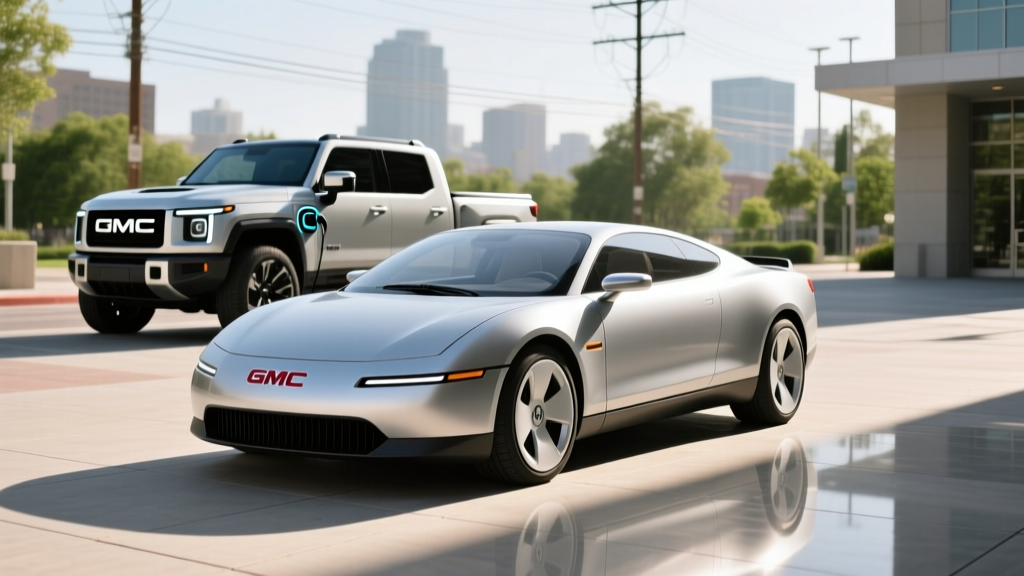
If you've been searching for a GMC EV1, here's the direct truth: GMC has never produced a vehicle called the EV1. The famous EV1 was a Chevrolet (General Motors) project — a two-seat electric coupe leased in limited numbers from 1996 to 1999 and later recalled and crushed. GMC's current electric vehicle lineup consists of the Sierra EV (full-size electric pickup, starting around $79,400 for the Denali Edition 1) and the Hummer EV (pickup and SUV, starting around $99,995). If you're interested in a GMC electric vehicle in 2026, these are the models to evaluate.
The confusion is understandable. General Motors built the EV1 under the Chevrolet brand, and over the decades, the name has become shorthand for GM's early electric ambitions. Some online forums and speculative renders have attached the "EV1" badge to hypothetical future GMC electrics, but no such vehicle is announced, planned, or in production. Let's break down what GMC actually offers in the electric truck space, what the real costs look like, and how to decide if a GMC EV fits your life.
GMC's Actual 2026 Electric Lineup: Sierra EV and Hummer EV
GMC's electric strategy in 2026 centers on two Ultium-platform vehicles, both built on GM's BT1 electric truck architecture. Here's how they stack up with hard numbers:
| Spec | Sierra EV Denali Edition 1 | Sierra EV Elevation (Announced) | Hummer EV Pickup 3X |
|---|---|---|---|
| Base MSRP | ~$79,400 | ~$59,900 (est.) | ~$106,395 |
| EPA Range | 440 miles | ~390 miles (est.) | 329 miles |
| Battery (usable) | ~200 kWh (NMC) | ~170 kWh (NMC, est.) | ~212 kWh (NMC) |
| Horsepower | 754 hp | ~510 hp (est.) | 830 hp |
| 0–60 mph | ~4.3 sec | ~5.5 sec (est.) | ~3.0 sec (Watts to Freedom) |
| Peak DC Fast Charge | 350 kW | 350 kW (est.) | 350 kW |
| 10–80% DC Charge Time | ~22 min (peak conditions) | ~25 min (est.) | ~24 min |
| Towing Capacity | 10,000 lbs (est.) | ~10,000 lbs (est.) | 7,500 lbs |
| Battery Warranty | 8 yr / 100,000 mi | 8 yr / 100,000 mi | 8 yr / 100,000 mi |
Real-world range caveat: The Sierra EV Denali's 440-mile EPA estimate is impressive on paper, but expect 320–370 miles in real-world highway driving at 70–75 mph, and potentially 250–300 miles in cold weather (below 32°F) due to battery resistance and cabin heating demands. The Hummer EV's massive 212 kWh battery and 9,000+ lb curb weight mean its 329-mile EPA figure holds up better proportionally, but highway and cold-weather losses of 15–25% still apply. Towing cuts range dramatically — expect a 40–60% reduction when pulling near max capacity.
GMC Electric Trucks vs. Gas Sierra: 5-Year Cost Breakdown
One of the most common questions from truck buyers: does going electric actually save money? The answer depends heavily on your driving patterns, electricity rates, and whether you can charge at home. Here's a realistic 5-year / 75,000-mile comparison:
| Cost Category | Sierra EV Denali Edition 1 | Sierra 1500 Denali (Gas, 6.2L V8) |
|---|---|---|
| Purchase Price (MSRP) | $79,400 | $68,700 |
| Federal Tax Credit (§30D) | $0 (MSRP exceeds $80K truck cap; income/sourcing rules apply) | $0 |
| Fuel / Electricity (75K mi) | $4,500 (home charging avg, $0.14/kWh) | $13,125 (16 MPG combined, $3.50/gal) |
| Maintenance (5 yr) | $1,800 (tire rotations, cabin filter, fluid top-offs) | $4,500 (oil changes, transmission fluid, brakes, belts) |
| Insurance (5 yr est.) | $12,500 | $9,750 |
| Estimated Depreciation | $35,700 (45%) | $30,900 (45%) |
| 5-Year Total | ~$133,900 | ~$127,075 |
Key takeaways: The Sierra EV saves roughly $8,625 in fuel and $2,700 in maintenance over five years, but those savings are offset by a higher purchase price, steeper insurance premiums (EV truck insurance runs 15–30% higher on average), and potentially greater depreciation on a $200 kWh battery pack. The break-even point arrives faster if you drive more than 15,000 miles per year, have access to cheap home electricity (under $0.12/kWh), or live in a state with additional EV incentives. The IRS §30D clean vehicle credit has strict rules: the Sierra EV Denali's MSRP may push it above the $80,000 cap for trucks, and battery sourcing/critical mineral requirements plus buyer income limits ($300K joint / $150K single) further restrict eligibility. Always verify current-year rules with a tax professional.
What the EV1 Legacy Teaches Today's Buyers
The original GM EV1 — the car that spawned the "GMC EV1" search confusion — offers practical lessons for anyone considering a GMC electric truck in 2026:
EV Myths vs. Facts: Then and Now
| Myth | Fact |
|---|---|
| "Electric vehicles are a new experiment." | GM's EV1 launched in 1996 — nearly 30 years ago. Today's Ultium platform represents three decades of battery R&D, with NMC chemistries offering 3–4× the energy density of the EV1's lead-acid (later NiMH) packs. |
| "EV batteries won't last." | GMC warranties the Sierra EV and Hummer EV batteries for 8 years/100,000 miles with a capacity retention threshold (typically 60–70%). Real-world data from earlier GM EVs shows most packs retain 85–90% capacity at 100K miles with proper care. |
| "You'll be stranded without charging." | The EV1 had ~70–90 miles of range and almost no public infrastructure. The 2026 Sierra EV Denali offers 440 EPA miles, and the U.S. now has over 70,000 public charging ports, including Tesla Superchargers opening to NACS-equipped GM vehicles. |
| "EVs can't do real truck work." | The Sierra EV targets 10,000 lbs of towing and features a MultiPro Tailgate and available 4-Wheel Steer. However, towing near max capacity cuts range by 40–60% — plan charging stops accordingly. |
| "Home charging is too expensive to install." | A basic Level 2 (240V, 48A) home charger installation runs $800–$2,500 including equipment and electrician labor, depending on panel capacity. For most truck owners with a garage or driveway, this is a one-time cost that pays for itself in fuel savings within 2–3 years. |
Home Charging Reality: What GMC EV Buyers Must Plan For
The single biggest ownership variable for a Sierra EV or Hummer EV is home charging access. These trucks carry massive battery packs (170–212 kWh usable), which means Level 1 (120V) trickle charging is essentially useless — adding roughly 3–5 miles of range per hour, or days to fully recharge. Here's what you need:
| Charging Level | Power (kW) | Miles of Range per Hour | Full Charge Time (200 kWh pack) |
|---|---|---|---|
| Level 1 (120V / 12A) | ~1.4 kW | ~3–4 mi/hr | ~60+ hours (impractical) |
| Level 2 (240V / 48A) | ~11.5 kW | ~30–35 mi/hr | ~17–19 hours |
| Level 2 (240V / 80A) | ~19.2 kW | ~50–55 mi/hr | ~10–11 hours |
| DC Fast Charge (peak) | Up to 350 kW | ~600+ mi/hr (peak) | 10–80% in ~22 min |
Practical recommendation: Install a Level 2 charger rated at 48A minimum (ideally 80A if your electrical panel supports it). A 48A unit on a 60A circuit will add ~30–35 miles per hour — enough to fully replenish a depleted Sierra EV overnight. Budget $1,200–$2,500 for a quality hardwired Level 2 station (ChargePoint Home Flex, Emporia Vue, or Wallbox Pulsar Plus) plus electrician labor. If your home has a 100A electrical panel, you may need a panel upgrade to 200A, adding $1,500–$3,500 to the project. Always get a quote from a licensed electrician before purchasing equipment.
Apartment and street-parking reality: If you can't install home charging, owning a 200 kWh battery truck becomes significantly harder. Public DC fast charging costs $0.30–$0.50/kWh (versus $0.12–$0.18/kWh at home), and relying on it exclusively adds $2,000–$4,000 in annual fuel costs versus home charging. Factor this into your decision honestly.
Common Misconceptions About GMC Electric Trucks
Before committing to a Sierra EV or Hummer EV, let's address the claims you'll encounter online — with data:
"The Sierra EV can tow 10,000 miles without stopping." No. Towing at or near max capacity reduces range by 40–60%. With a 440-mile EPA rating, expect 180–260 miles of real towing range depending on trailer weight, terrain, speed, and temperature. Plan DC fast-charging stops every 2–3 hours when towing long distances.
"GM's Super Cruise drives itself." It does not. Super Cruise is an SAE Level 2 driver-assistance system — it handles steering, acceleration, and braking on compatible divided highways, but the driver must remain attentive. An infrared camera monitors your eyes, and the system will disengage with escalating warnings if you look away. This is not autonomous driving (Level 4), and you are legally responsible for the vehicle at all times.
"Electric trucks are cheaper to own in every scenario." Not true. As our 5-year cost table shows, the Sierra EV Denali costs more upfront and may not break even versus a gas Sierra for drivers covering fewer than 12,000 miles per year, those without home charging, or those in states with high electricity rates. The savings case is strongest for high-mileage drivers with cheap home electricity.
"The battery will need replacing and cost $30,000+." Battery replacement costs for a 200 kWh Ultium pack could indeed run $20,000–$35,000 out of warranty. However, GM's 8-year/100,000-mile battery warranty covers defects and excessive degradation, and real-world data from GM's earlier EVs (Bolt, Volt) shows most packs retain 85–90%+ capacity well past 100K miles. Catastrophic failure rates are low. The risk is real but statistically small within the warranty period.
Decision Framework: Is a GMC Electric Truck Right for You?
Choose the Sierra EV if:
- You have home charging access (garage or driveway with 240V circuit)
- You drive 12,000+ miles per year (fuel savings offset higher purchase price)
- Your daily commute is under 200 miles round-trip (charge overnight, never visit a public charger for daily use)
- You want maximum torque for light-to-moderate towing and appreciate instant electric acceleration
- You value the MultiPro MidGate for extended bed length (Sierra EV exclusive feature)
- Your household income is under §30D thresholds and you can verify battery sourcing eligibility
Choose a gas Sierra 1500 if:
- You cannot install home charging (apartment, street parking, landlord restrictions)
- You regularly tow heavy loads over long distances (300+ miles) where charging stops add 2+ hours
- You live in a charging desert (rural areas with limited DC fast-charging infrastructure)
- Your annual mileage is under 10,000 miles (fuel savings won't offset the price premium)
- You need the lowest possible upfront purchase price
Consider a hybrid alternative (e.g., Ford F-150 PowerBoost Hybrid) if:
- You want improved fuel economy without range compromise (~22–24 MPG combined vs. 16 MPG for a gas V8 Sierra)
- You tow frequently and can't risk charging-infrastructure gaps
- You're not ready to commit to full electric but want lower fuel costs
Frequently Asked Questions
Was the GMC EV1 ever a real vehicle?
No. The EV1 was a Chevrolet-branded General Motors electric coupe produced from 1996 to 1999. It was available only by lease in California and Arizona, and GM recalled and crushed most units. GMC has never used the EV1 nameplate. The confusion likely stems from GM's corporate umbrella — both Chevrolet and GMC fall under General Motors.
What is the cheapest GMC electric vehicle available in 2026?
The upcoming Sierra EV Elevation trim is expected to start around $59,900, making it the most affordable entry point into GMC's electric lineup. The currently available Denali Edition 1 starts at approximately $79,400. The Hummer EV starts above $99,000 and is positioned as a luxury/performance vehicle rather than a volume seller.
Do GMC electric trucks qualify for the $7,500 federal tax credit?
Eligibility depends on multiple factors under IRS §30D rules: the truck's MSRP must not exceed $80,000 (the cap for vans, SUVs, and pickups), the buyer's adjusted gross income must fall below $300,000 (joint) or $150,000 (single), and the battery must meet critical-mineral and component sourcing requirements that tighten annually. The Sierra EV Denali's ~$79,400 MSRP is near the cap, and options can push it over. Always verify eligibility with the IRS's official clean vehicle credit tool and a qualified tax professional before purchasing.
How long does it take to charge a Sierra EV at home?
With a 48A Level 2 charger (240V), expect roughly 17–19 hours from near-empty to full on the Denali's ~200 kWh pack. In practice, most owners charge from 20–80% daily, which takes 10–12 hours — easily accomplished overnight. An 80A Level 2 unit cuts this to roughly 10–11 hours for a full charge.
Can the Hummer EV or Sierra EV use Tesla Superchargers?
GM has adopted the NACS (North American Charging Standard) connector for its electric vehicles. Starting with 2025 model-year vehicles, GM EVs ship with native NACS ports and can access Tesla Supercharger stations that have been opened to non-Tesla vehicles. For earlier models with CCS ports, GM offers a NACS adapter. Check GM's official EV page for the latest compatibility details on your specific model year.
What happens to a GMC EV's range in cold weather?
In temperatures below 32°F, expect a 15–30% reduction in range depending on severity (colder = greater loss). At 0°F, a Sierra EV Denali rated at 440 miles EPA might deliver 300–340 real-world miles. Using seat heaters and steering-wheel heaters instead of cranking cabin heat, preconditioning the battery while plugged in, and garaging the truck all help minimize cold-weather losses. The Ultium platform includes active thermal management to mitigate this, but physics still applies.