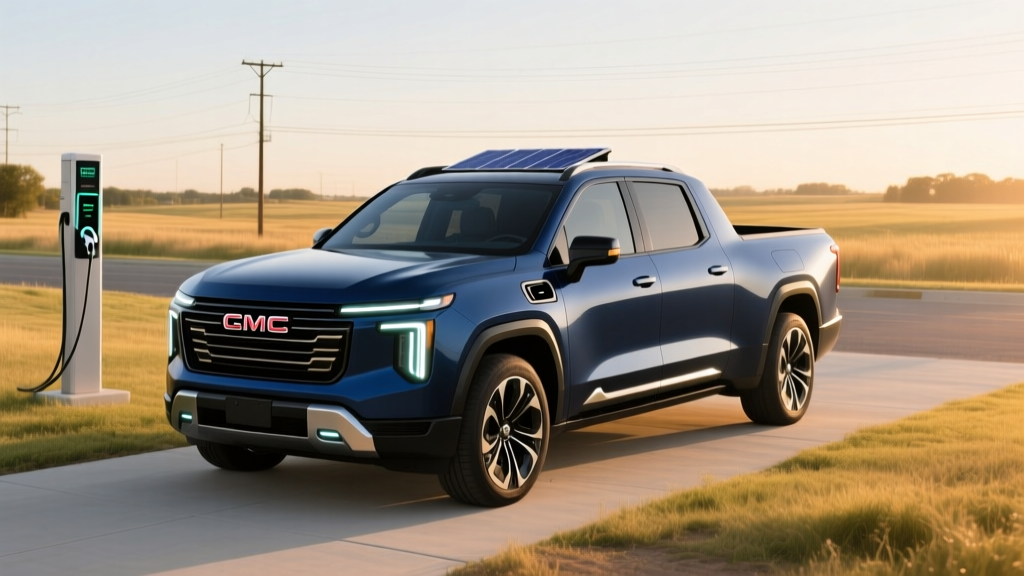
Bottom line on GMC EV trucks: The 2026 GMC Sierra EV lineup offers three battery/range tiers — from the ~239-mile Standard Range to the headline 460-mile Max Range — with pricing spanning roughly $57,000 to $100,000+ before incentives. The Sierra EV qualifies for the federal §30D tax credit on trims meeting battery-sourcing and MSRP caps (up to $80,000 for pickups). If you tow frequently, live in a charging desert, or lack home Level 2 access, a hybrid Silverado or gas Sierra may still be the pragmatic choice. If you commute daily under 100 miles, charge at home, and rarely tow over 5,000 lbs, the Sierra EV delivers dramatically lower per-mile energy costs and near-zero drivetrain maintenance.
The 2026 GMC Sierra EV Lineup at a Glance
GMC has structured the Sierra EV around Ultium-based battery packs and dual-motor AWD across most trims. The key differentiators are battery size, range, and peak charging power. Here is the spec matrix for the current model year:
| Spec | Standard Range | Extended Range | Max Range |
|---|---|---|---|
| Usable Battery (kWh) | ~100 kWh (est.) | ~150 kWh (est.) | ~200 kWh (est.) |
| EPA Range | ~239 mi | ~340 mi | ~460 mi (Denali) |
| Peak DC Fast Charge | ~200 kW | ~300 kW | ~350 kW |
| 10–80% DC Charge | ~35 min | ~28 min | ~32 min |
| Level 2 Home Charge (kW) | 11.5 kW | 11.5 kW | 19.2 kW (opt.) |
| 0–60 mph | ~5.5 sec (est.) | ~4.5 sec | ~4.3 sec (Denali) |
| Horsepower | ~510 hp | ~625 hp | ~754 hp (Denali) |
| Max Towing | ~10,000 lbs | ~12,000 lbs | ~12,000 lbs |
| Starting MSRP | ~$57,000 | ~$72,000 | ~$98,000+ |
| Battery/Powertrain Warranty | 8 yr / 100,000 mi | 8 yr / 100,000 mi | 8 yr / 100,000 mi |
Sources: fueleconomy.gov, GMC official specifications. Max Range figures reflect the Denali Edition 1 variant. Standard and Extended Range specs are estimates based on announced powertrain data and may vary by final EPA certification.
Real-World Range vs. EPA Sticker: What to Actually Expect
The Sierra EV's 460-mile EPA figure is impressive on paper, but real-world range in a full-size truck depends heavily on speed, temperature, payload, and terrain. Based on testing patterns across Ultium-platform vehicles:
Real-world range expectations for the Sierra EV Max Range (460 mi EPA):
- Mild-weather mixed driving (55–65 mph): ~390–420 miles
- Highway sustained (75 mph+): ~320–360 miles
- Cold weather (below 32°F): ~280–330 miles (30–40% reduction)
- Towing 7,000+ lb trailer: ~180–230 miles (range roughly halves)
For the Standard Range model, cut these figures roughly in proportion — expect ~170–190 miles highway, and potentially under 130 miles towing in cold conditions.
The Sierra EV's massive battery (particularly the Max Range pack) gives it a buffer advantage over smaller EVs, but physics still applies: aerodynamic drag at highway speed and trailer towing are the primary range killers. If your typical use involves unloaded commuting and moderate-speed road trips, the Extended Range (~340 mi EPA) is the sweet spot for value versus real-world usability.
Charging the Sierra EV: Home, Public, and What You Need to Know
GMC equips the Sierra EV with a NACS (North American Charging Standard) port, giving it native access to Tesla Supercharger stations via the expanding Supercharger network, plus Electrify America and other NACS-compatible networks.
| Charging Level | Power (kW) | Miles Added/Hour | Best For |
|---|---|---|---|
| Level 1 (120V outlet) | ~1.4 kW | ~4–5 mi/hr | Emergency top-ups only |
| Level 2 (240V, 48A) | 11.5 kW | ~34–38 mi/hr | Daily home charging |
| Level 2 (240V, 80A) | 19.2 kW | ~57–63 mi/hr | Max Range fast home fill |
| DC Fast (350 kW peak) | Up to 350 kW | ~100 mi in ~10 min | Road trips, rapid top-ups |
Critical kW vs. kWh distinction: kW (kilowatts) measures charging power — how fast energy flows into the battery. kWh (kilowatt-hours) measures battery capacity — how much energy it stores. The Sierra EV's ~200 kWh Max Range battery charged at a sustained 300 kW would theoretically fill in ~40 minutes, but real charge curves taper significantly above 80% SoC (State of Charge) to protect battery health. Expect the 10–80% window to be the practical fast-charging range.
Home Charging Installation Costs
Most Sierra EV owners will want a Level 2 home charger. Budget for the following:
| Item | Typical Cost Range |
|---|---|
| Level 2 charger hardware (48A–80A) | $400–$1,200 |
| Electrician labor (240V/50–100A circuit) | $800–$2,500 |
| Permit and inspection | $100–$400 |
| Electrical panel upgrade (if needed) | $1,500–$3,500 |
| Total (no panel upgrade) | $1,300–$4,100 |
| Total (with panel upgrade) | $2,800–$7,600 |
If your home has a 200-amp panel with spare capacity, you'll likely stay in the lower range. Older homes with 100-amp service may require an upgrade — get a licensed electrician's assessment before purchasing.
GMC EV Trucks vs. Gas Sierra: Total Cost of Ownership
The purchase price of a Sierra EV is higher than a comparably equipped gas Sierra, but energy, maintenance, and incentive differences close the gap over time. Here's a 5-year / 75,000-mile comparison between a Sierra EV Extended Range (~$72,000) and a gas Sierra 1500 AT4 (~$62,000):
| Cost Category | Sierra EV Extended Range | Gas Sierra 1500 AT4 |
|---|---|---|
| Purchase Price (MSRP) | $72,000 | $62,000 |
| Federal Tax Credit (§30D) | –$7,500* | $0 |
| Net Purchase | $64,500 | $62,000 |
| Fuel/Energy (75,000 mi) | ~$4,800** | ~$11,250*** |
| Maintenance (5 yr) | ~$1,200 | ~$3,800 |
| Insurance (5 yr est.) | ~$12,500 | ~$9,500 |
| 5-Year Total | ~$83,000 | ~$86,550 |
* §30D credit eligibility depends on battery-sourcing requirements, buyer income caps ($300K joint / $150K single), and MSRP caps ($80K for trucks). Verify at irs.gov. Point-of-sale transfer available at participating dealers.
** Based on $0.14/kWh national average home charging and 2.0 kWh/mi efficiency. Public DC charging costs significantly more ($0.35–$0.55/kWh).
*** Based on $3.50/gal and 18 MPG combined.
The EV breaks even or pulls ahead within 4–5 years for most drivers who charge primarily at home. The gap widens if gas prices rise, but narrows if you rely heavily on expensive public DC charging or if your insurance premiums run above the estimate (EV insurance can be 15–30% higher for full-size trucks).
Federal Tax Credit Eligibility for the Sierra EV
§30D Clean Vehicle Credit requirements (2026 rules):
- MSRP cap: ≤ $80,000 for pickups and SUVs (eliminates Max Range Denali trims)
- Buyer income cap: AGI ≤ $300,000 (joint) / $225,000 (HoH) / $150,000 (single)
- Battery sourcing: Minimum thresholds for critical minerals and battery components sourced from US/FTA partners — check the specific VIN at fueleconomy.gov
- Point-of-sale transfer: Eligible buyers can apply the credit as a down payment reduction at the dealer
- Assembly: Must be assembled in North America (Sierra EV is built at GM's Factory ZERO in Michigan)
The Standard Range and most Extended Range Sierra EV trims fall under the $80K MSRP cap and should qualify for the full $7,500 credit if battery-sourcing requirements are met and the buyer is within income limits. The Max Range Denali variants exceed $80K and are ineligible. Always confirm eligibility for your specific VIN and tax situation — consult a tax professional before relying on the credit.
Towing, Payload, and the Practical Limits of Electric Trucks
The Sierra EV's up-to-12,000-lb towing rating is competitive with half-ton gas trucks, but towing range is the honest limitation. When pulling a 7,000-lb travel trailer at 65 mph, expect range to drop to roughly 45–55% of the EPA figure. For the Max Range model, that means ~200–250 real-world miles before needing to stop — and finding a DC fast charger that accommodates a truck-plus-trailer without unhitching remains a challenge on many routes.
For buyers who tow weekly or take long trailer trips through rural areas, this is the most significant ownership friction point. The Sierra EV excels as a daily driver and light-duty truck, but frequent heavy towing still favors diesel or gas powertrains for range predictability and refueling convenience.
The Sierra EV does offer ProGrade trailering tech, integrated trailer brake controllers, and available Super Cruise (GM's hands-free Level 2 driver-assistance on compatible highways). Remember: Super Cruise is SAE Level 2 — you must remain attentive and ready to take over at all times. It is not autonomous driving.
Common Misconceptions About GMC EV Trucks
| Myth | Fact |
|---|---|
| "The battery will need replacing in 5 years" | GM warranties the Ultium battery for 8 years/100,000 miles against degradation below 70% capacity. Real-world Ultium degradation data suggests ~8–12% loss over 100K miles with normal use. |
| "You can't charge an EV truck at home" | A standard 240V Level 2 charger adds 34–63 miles per hour. An overnight charge (10 hours) fully replenishes even the Max Range pack. |
| "EV trucks cost more to own, period" | Higher purchase price is offset by $6,000–$8,000 in fuel savings and $2,500+ in maintenance savings over 5 years, plus available tax credits. |
| "The Sierra EV can tow just as far as a gas truck" | Towing range drops to ~200–250 miles max even on the largest battery. Gas trucks maintain 400+ miles towing with easy refueling. |
| "All Sierra EV trims get the $7,500 tax credit" | Only trims under $80,000 MSRP with compliant battery sourcing qualify. Max Range Denali variants exceed the cap. |
Decision Framework: Should You Buy a GMC Sierra EV?
Choose the Sierra EV if:
- You have reliable home Level 2 charging access (garage or driveway with 240V)
- Your daily driving is under 150 miles round-trip
- You rarely tow more than 5,000 lbs or take long towing trips through remote areas
- You qualify for the §30D tax credit (income and MSRP within limits)
- You value instant torque, quiet operation, and minimal drivetrain maintenance
- You want access to Tesla Superchargers via the NACS connector
Stick with a gas or hybrid truck if:
- You tow 7,000+ lbs frequently and travel routes with sparse DC charging
- You live in an apartment or lack any home charging option
- Your budget is under $55,000 and you need a full-size truck now
- You regularly drive in extreme cold (below 0°F) where range loss exceeds 40%
- You need maximum payload for commercial work daily
Frequently Asked Questions
What is the real-world range of the GMC Sierra EV?
The EPA rates the Max Range Sierra EV at ~460 miles, but real-world mixed driving yields ~390–420 miles. Highway driving at 75+ mph drops this to ~320–360 miles, and cold weather can reduce range by 30–40%. The Standard Range model delivers roughly half these figures.
How long does it take to charge a Sierra EV at home?
On an 11.5 kW Level 2 charger, a full charge takes roughly 9 hours for the Standard Range and ~17 hours for the Max Range pack. Most owners charge incrementally overnight rather than from 0–100%. The optional 19.2 kW onboard charger reduces Max Range charge time to ~11 hours.
Does the Sierra EV qualify for the $7,500 federal tax credit?
Standard Range and Extended Range trims under $80,000 MSRP are eligible if battery-sourcing requirements are met and buyer income is within §30D caps. Max Range Denali trims exceed the MSRP cap and do not qualify. Verify at irs.gov and confirm your specific VIN's eligibility.
Can the Sierra EV use Tesla Superchargers?
Yes. The Sierra EV uses the NACS connector natively, giving it direct access to Tesla's Supercharger network, which now includes thousands of stations across the US.
How does Sierra EV insurance compare to a gas Sierra?
EV truck insurance typically runs 15–30% higher than equivalent gas trucks due to higher repair costs and vehicle values. Expect $2,200–$2,800/year for the Sierra EV versus $1,700–$2,100 for a gas Sierra, though rates vary significantly by insurer, state, and driving record.
What happens if the Sierra EV battery degrades?
GM's Ultium battery warranty covers 8 years/100,000 miles with a capacity retention threshold (typically 70%). If the battery falls below this threshold within the warranty period, GM will repair or replace it. Real-world data from GM's EV fleet suggests most Ultium packs retain 88–92% capacity at 100,000 miles under normal use.