Quick Answer: Does GM Make a Sporty Chevrolet EV?
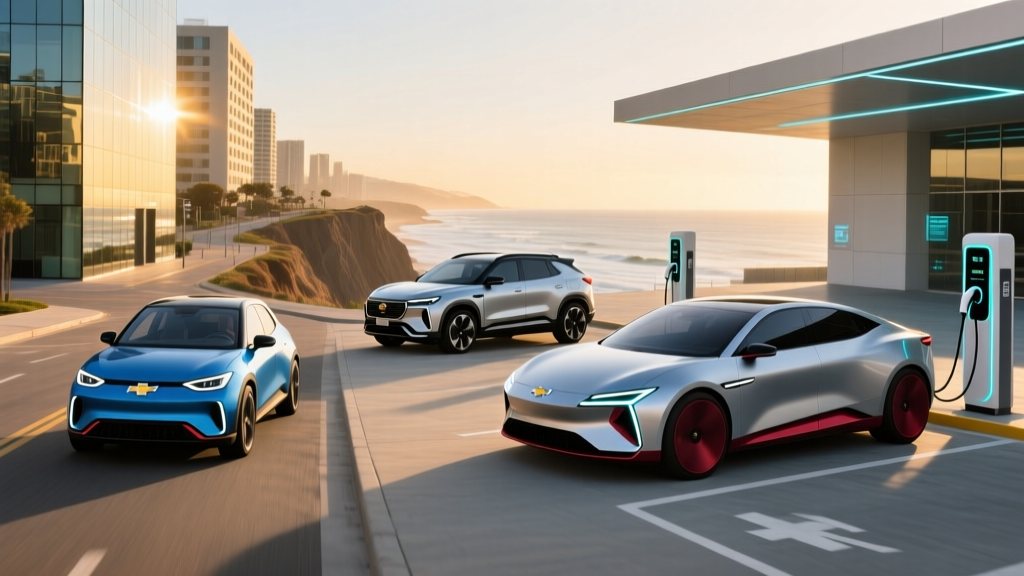
Yes. For 2026, GM's sportiest Chevrolet EV options are the Chevrolet Blazer EV (midsize crossover, up to 324 miles EPA range, starting around $44,600) and the Chevrolet Equinox EV (compact crossover, up to 319 miles, starting near $33,600). Both ride on GM's Ultium platform and offer SS performance trims. Neither qualifies for the full $7,500 federal tax credit under current §30D battery-sourcing rules as of early 2026, though point-of-sale lease credits may apply. If you want a true sport-sedan EV from GM, you'll need to look at the Cadillac Lyriq or wait for future Chevrolet announcements.
The Ultium Platform: GM's Sporty EV Foundation
Every modern Chevrolet EV shares GM's Ultium architecture — a modular battery platform using pouch-style NMC (nickel manganese cobalt) cells arranged in large-format modules. The platform supports 400V and, in select configurations, 800V charging. For the 2026 model year, Chevrolet's EV lineup focuses on crossovers and SUVs rather than low-slung sport sedans, but the Blazer EV SS and upcoming performance variants deliver genuine athletic dynamics.
GM's design language for these vehicles leans aggressive: slim LED light bars, blacked-out trim on RS and SS trims, coupe-like rooflines on the Blazer EV, and available 22-inch wheels. The aesthetic borrows from Chevrolet's Camaro and Corvette heritage without mimicking it. Inside, a 17.7-inch infotainment screen dominates the Blazer EV dashboard, while the Equinox EV gets an 11.3-inch unit.
2026 Chevrolet EV Lineup: Specs at a Glance
| Spec | Blazer EV 2LT (AWD) | Blazer EV SS (AWD) | Equinox EV RS (FWD) |
|---|---|---|---|
| EPA Range | 279 mi | 293 mi | 319 mi |
| Battery (usable) | 85 kWh, NMC | 102 kWh, NMC | 85 kWh, NMC |
| Horsepower | 288 hp | 557 hp | 213 hp |
| 0–60 mph | ~6.2 sec | ~3.4 sec (WOW mode) | ~8.1 sec |
| Peak DC Fast Charge | 190 kW | 190 kW | 150 kW |
| 10–80% DC Charge | ~28 min | ~30 min | ~35 min |
| Level 2 Rate (AC) | 11.5 kW | 11.5 kW | 11.5 kW |
| Starting MSRP | $44,600 | $60,600 | $33,600 |
| Battery Warranty | 8 yr / 100,000 mi | 8 yr / 100,000 mi | 8 yr / 100,000 mi |
Sources: fueleconomy.gov, chevrolet.com/electric. Real-world highway range typically runs 10–15% below EPA; expect ~240–250 mi highway for the Blazer EV 2LT and ~270 mi for the Equinox EV RS in mild weather.
Sporty Design vs. Real Performance: What You Actually Get
The Blazer EV SS is the closest thing to a "sporty Chevrolet EV" in the current lineup. Its 557 hp and Wide Open Watts (WOW) mode deliver a 3.4-second 0–60 run — territory that rivals the Tesla Model Y Performance and Porsche Macan Electric. The SS includes a sport-tuned suspension, Brembo front brakes, and a limited-slip rear axle on AWD models.
But sporty design doesn't always mean sporty driving dynamics. The Blazer EV weighs over 5,400 lbs in SS trim. On twisty roads, you'll feel that mass through the steering wheel. Compared to a Hyundai Ioniq 5 N (641 hp, ~5,200 lbs, simulated gear shifts), the Blazer EV SS prioritizes straight-line thrust over corner-carving engagement. If your definition of "sporty" leans toward track-day capability, the Ioniq 5 N or Tesla Model 3 Performance remain sharper tools.
Real-World Range Reality Check
Blazer EV SS: EPA 293 mi → expect ~250 mi highway at 70 mph, ~210 mi in sub-30°F weather with cabin heat. The 102 kWh battery helps, but cold saps NMC chemistry harder than LFP.
Equinox EV RS: EPA 319 mi → expect ~275 mi highway, ~230 mi in deep cold. Lighter weight and lower power output help efficiency.
DC fast charging tapers significantly above 80% SoC. Plan road-trip stops at 10–80% to avoid the slow top-off — a full 10–100% session can add 15+ minutes for minimal range.
EV vs. Gas: The Sporty Crossover Cost Comparison
Let's compare the Blazer EV 2LT against its closest gas counterpart, the 2026 Chevrolet Blazer (gas) 2LT AWD, over a 5-year / 75,000-mile ownership period.
| Cost Category | Blazer EV 2LT (AWD) | Blazer Gas 2LT (AWD, 2.0T) |
|---|---|---|
| Base MSRP | $44,600 | $39,400 |
| Federal Tax Credit (§30D) | $0 (battery sourcing)* | N/A |
| Fuel/Energy (5 yr, 75k mi) | $4,500 (home L2 @ $0.14/kWh) | $9,375 (24 MPG, $3.60/gal) |
| Maintenance (5 yr) | ~$1,800 | ~$3,750 |
| Insurance (5 yr est.) | $11,250 ($2,250/yr avg) | $8,750 ($1,750/yr avg) |
| Est. Depreciation (5 yr) | $17,800 (40%) | $15,760 (40%) |
| 5-Year Total Cost | $79,350 | $77,035 |
*As of early 2026, the Blazer EV does not meet §30D critical-mineral and battery-component sourcing thresholds for the purchase credit. Leasing may unlock a $7,500 commercial credit passed through as a lease incentive — confirm with your dealer. Rules change; verify at IRS §30D page.
The EV costs about $2,300 more over five years in this scenario, driven entirely by the higher purchase price and insurance premiums. Energy and maintenance savings are substantial — nearly $6,800 combined — but they don't fully close the gap without a tax credit. If you qualify for a state rebate (e.g., California's CVRP, Colorado's innovative motor vehicle credit), the math can flip in the EV's favor.
Real Ownership Considerations Before You Buy
Home Charging Access
The Blazer EV and Equinox EV both accept 11.5 kW on Level 2 AC — roughly 34 miles of range per hour of charging. An overnight session (8 hours) adds ~270 miles, enough to replenish either vehicle fully. But this requires a 240V / 48A circuit installed by a licensed electrician.
| Home Install Item | Typical Cost Range |
|---|---|
| Level 2 Charger (hardwired, 48A) | $400–$700 |
| Electrician labor (4–8 hrs) | $600–$1,600 |
| Permit & inspection | $100–$300 |
| Panel upgrade (if 200A needed) | $1,500–$3,500 |
| Total (no panel upgrade) | $1,100–$2,600 |
| Total (with panel upgrade) | $2,600–$6,100 |
If you live in an apartment or lack garage/outdoor outlet access, public DC fast charging becomes your primary fueling method. At Electrify America or EVgo stations, expect to pay $0.48–$0.56/kWh — roughly doubling your energy cost vs. home charging. Factor this into your budget before purchasing.
Cold-Weather Impact
NMC batteries lose 20–30% of usable range in sustained sub-30°F temperatures. The Blazer EV includes a heat pump on higher trims, which helps, but physics is physics. If you live in Minnesota, Montana, or upstate New York, budget your daily commute against ~70% of the EPA sticker in winter. Battery preconditioning for DC fast charging is supported — activate it via the infotainment system 15–20 minutes before arriving at a charger to maintain faster charge speeds in cold weather.
Driving Patterns That Favor an EV
City and suburban driving maximizes regenerative braking efficiency and keeps the battery in its optimal temperature window. Highway-heavy commuters (70+ mph sustained) will see higher kWh/mi consumption. If your daily round-trip exceeds 120 miles and you lack home charging, a PHEV like the Toyota RAV4 Prime (42 mi electric-only, 38 MPG combined after depletion) may serve you better until charging infrastructure matures in your area.
Common Misconceptions About Sporty Chevrolet EVs
| Myth | Fact |
|---|---|
| "The Blazer EV gets the full $7,500 tax credit." | As of early 2026, it does not meet §30D battery-sourcing requirements for the purchase credit. Lease incentives may apply. Always verify at IRS.gov. |
| "190 kW charging means I'll charge in 15 minutes." | Peak kW is not sustained kW. The charge curve tapers above 50% SoC. Real-world 10–80% takes ~28–30 minutes. Plan accordingly. |
| "EV batteries need replacing every few years." | GM warranties the Ultium battery for 8 years/100,000 miles against degradation below 70% capacity. Real-world data from older Ultium/Bolt packs shows ~10–12% degradation at 100k miles — well within warranty. |
| "Sporty EVs have terrible insurance rates." | Insurance is higher than gas equivalents (~25–35% more), but not extreme. The Blazer EV 2LT averages $2,100–$2,400/year depending on state and driver profile (IIHS safety ratings help). |
| "I can charge on any public network." | The Blazer EV uses the NACS (Tesla-style) connector natively for 2026. You can access Tesla Superchargers directly. For CCS-only networks, you'll need an adapter. Confirm connector type before road-tripping. |
Decision Framework: Is a Sporty Chevrolet EV Right for You?
Choose the Blazer EV SS if:
- You want 557 hp and sub-3.5-second 0–60 in a practical crossover
- You have home Level 2 charging (or can install it)
- Your daily drive is under 100 miles round-trip
- You value aggressive styling and a large infotainment screen
- You can absorb the $60,600+ starting price without a federal purchase credit
Choose the Equinox EV RS if:
- You want the most range per dollar in a Chevrolet EV (319 mi EPA at $33,600)
- Sporty styling matters, but straight-line speed is secondary
- You're a first-time EV buyer looking for an accessible entry point
- Your budget is under $40,000 before any state incentives
Look elsewhere if:
- You need a sport sedan form factor — consider the Tesla Model 3 Performance, Hyundai Ioniq 6, or BMW i4
- You frequently tow — the Blazer EV maxes out at 1,500 lbs, far below the gas Blazer's 4,500-lb rating
- You live in a rural charging desert and can't install home Level 2 — a PHEV is the pragmatic choice
- You need three rows — the Blazer EV is strictly a two-row vehicle
What First-Time EV Buyers Should Know
If this is your first EV purchase, three things will surprise you:
- Charging time replaces refueling time. You won't spend 5 minutes at a pump. Home charging happens while you sleep (zero active time), but road-trip DC fast stops take 25–35 minutes. Plan bathroom and food breaks around them.
- kWh is your gallon; kW is your hose size. The battery holds a certain number of kWh (energy capacity), and the charger delivers kW (power/flow rate). A 190 kW charger fills an 85 kWh battery fast — but only until the battery's charge curve tapers the flow.
- One-pedal driving changes your commute. Chevrolet's regen settings (especially in "L" mode) let you decelerate significantly by lifting off the accelerator. It reduces brake wear and feels natural within a few days.
Before signing, confirm the exact trim, connector type (NACS for 2026 models), included charging credits (GM has offered complimentary charging on networks like EVgo in past years), and whether your state offers additional rebates. Get a home electrical assessment from a licensed electrician before delivery day to avoid surprises.
Frequently Asked Questions
Does GM plan a sporty Chevrolet EV sedan or coupe?
GM has not announced a Chevrolet-badged sport sedan EV as of early 2026. The Cadillac brand handles GM's luxury-performance EV space (Lyriq, Optiq, Celestiq). Chevrolet's sporty EV efforts focus on performance crossovers (Blazer EV SS) and the Silverado EV truck. If a sporty Chevy EV coupe arrives, it would likely ride on an evolved Ultium platform — watch for announcements at CES or the Detroit Auto Show.
Can the Blazer EV use Tesla Superchargers?
Yes. For 2026, the Blazer EV is equipped with a native NACS charge port, granting direct access to Tesla's Supercharger network — over 25,000 stalls in North America. No adapter is needed. For older CCS-only public chargers, GM provides or sells a NACS-to-CCS adapter.
What is the real cost per mile to drive a Chevrolet EV?
At the US average residential electricity rate of ~$0.16/kWh (EIA, 2025 data), the Blazer EV 2LT (consuming ~36 kWh/100 mi) costs about $0.058 per mile on home charging. The gas Blazer at 24 MPG combined and $3.60/gallon costs $0.15 per mile. That's a 61% per-mile savings on energy with the EV.
How long will the Ultium battery last?
GM warranties the battery for 8 years or 100,000 miles, whichever comes first, against capacity loss below 70% of original. Based on data from the Chevrolet Bolt (earlier-generation NMC), owners report ~88–92% capacity retention at 100,000 miles. Full battery replacement out of warranty is estimated at $12,000–$18,000 depending on pack size, though prices continue to decline as cell costs fall.
Is the Blazer EV SS faster than a Camaro SS?
In a straight line, yes. The Blazer EV SS hits 60 mph in ~3.4 seconds, compared to the final-generation Camaro SS (6.2L V8, 455 hp) at ~4.0 seconds. But the Camaro weighs nearly 1,600 lbs less, making it far more agile on a winding road. Different definitions of "sporty" apply.