The Short Answer: GM Hummer & Escalade EV Production Shutdown
General Motors temporarily paused production of the GMC Hummer EV and Cadillac Escalade IQ at its Factory ZERO (Detroit-Hamtramck) plant to address supply-chain bottlenecks and retool for updated battery-pack configurations. If you have an existing order, expect delays of 2–6 months depending on trim and configuration. New orders placed today will likely not deliver until late 2026 or early 2027. The vehicles remain on sale — this is a production scheduling pause, not a cancellation — but it directly impacts availability, pricing leverage, and whether you should lock in an order now or wait.
Why GM Paused Hummer EV and Escalade IQ Production
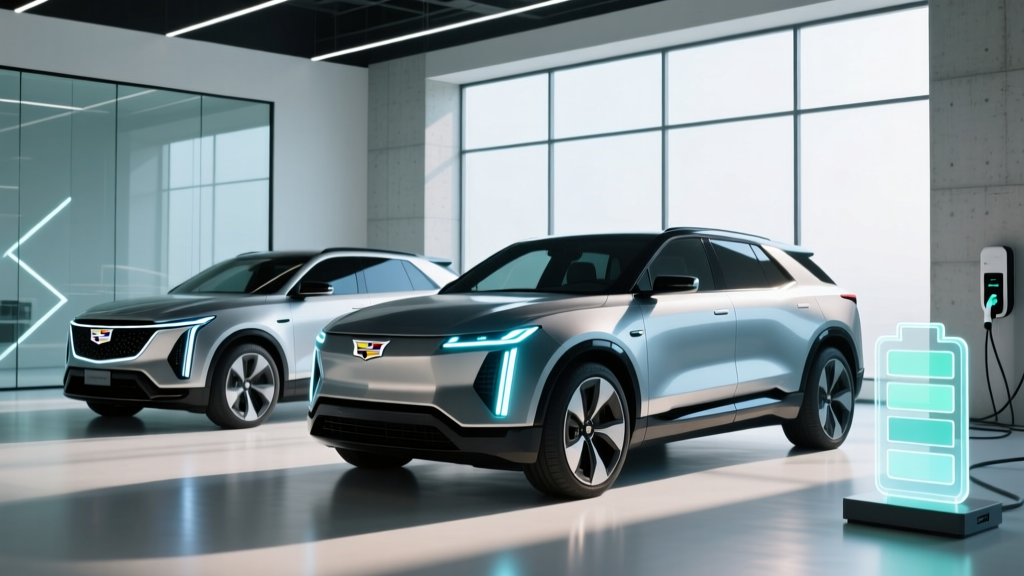
The GMC Hummer EV (pickup and SUV) and the Cadillac Escalade IQ share GM's BT1 electric platform and Ultium battery architecture. Both are low-volume, high-margin flagship EVs built at Factory ZERO, the same facility producing the Chevrolet Silverado EV and BrightDrop delivery vans.
The shutdown stems from three converging pressures:
- Battery cell supply reallocation: GM redirected Ultium cell production from its Lansing and Spring Hill plants toward higher-volume models like the Equinox EV and Blazer EV, which carry greater total-unit impact for meeting CAFE standards.
- Supplier component delays: Specific power-electronics modules and high-voltage wiring harnesses faced extended lead times from tier-one suppliers, creating incomplete-vehicle buildholds on the assembly line.
- 2026 model-year changeover: GM is integrating updated battery-pack configurations with revised thermal-management calibration, requiring a multi-week retooling window that the company combined with the supply pause.
This is not a demand problem. The Hummer EV pickup carries a wait list measured in months, and the Escalade IQ — which launched for the 2025 model year with an MSRP starting around $129,990 — has been one of Cadillac's most backlogged nameplates.
What This Means for Your Order (or New Purchase)
If You Already Have an Order
Contact your dealer for a revised build-week estimate. GM communicates production slots through dealer order-management systems, and your position in the queue may shift depending on configuration. Priority typically follows: Edition 1 / launch trims first, then higher-MSRP configurations, then base trims. If your estimated delivery has already slipped past 90 days, ask your dealer about reconfiguring to an available slot — sometimes changing a wheel option or exterior color can move you into an earlier build window.
If You're Considering a New Order
New orders for the 2026 Hummer EV pickup (3X trim, ~$104,500 MSRP) and Escalade IQ (Luxury trim, ~$129,990) are being accepted, but realistic delivery timelines stretch into Q4 2026 or Q1 2027. This affects two practical buying decisions:
- Federal tax credit eligibility: Under current IRS §30D rules, the Hummer EV pickup (MSRP cap: $80,000 for trucks) and Escalade IQ (MSRP cap: $80,000 for SUVs/vans) both exceed the MSRP cap and do not qualify for the $7,500 new clean-vehicle credit regardless of battery sourcing. This has been the case since launch — the shutdown doesn't change it, but buyers sometimes assume a delayed delivery might shift eligibility. It won't.
- Dealer markups and allocation scarcity: Production pauses tighten allocation. Expect dealer premiums of $10,000–$30,000 above MSRP on in-stock units, particularly for 3X and Edition 1 Hummer configurations and Escalade IQ Sport trims.
Specs at a Glance: Hummer EV vs. Escalade IQ
| Spec | 2026 GMC Hummer EV Pickup (3X) | 2026 Cadillac Escalade IQ (Luxury) |
|---|---|---|
| Battery (usable) | ~212 kWh, NMC (Ultium) | ~200 kWh, NMC (Ultium) |
| EPA Range | ~329 mi (est.) | ~300 mi (est.) |
| Real-World Highway Range | ~260–280 mi | ~245–265 mi |
| Peak DC Fast Charge | 350 kW | 350 kW |
| 10–80% DCFC Time | ~30 min (est.) | ~28 min (est.) |
| Level 2 Charge Rate | 19.2 kW | 19.2 kW |
| Horsepower | 830 hp (Watts to Freedom) | 755 hp (Velocity) |
| 0–60 mph | ~3.0 sec | ~3.7 sec |
| Towing Capacity | 7,500 lbs | 8,000 lbs |
| Base MSRP | ~$104,500 | ~$129,990 |
| Federal Tax Credit | $0 (exceeds MSRP cap) | $0 (exceeds MSRP cap) |
| Battery Warranty | 8 yr / 100,000 mi | 8 yr / 100,000 mi |
Cost of Ownership: Hummer EV / Escalade IQ vs. Gas Equivalents
These are premium, heavy, high-horsepower vehicles. The ownership-cost comparison isn't about saving money — it's about where the costs land.
| Annual Cost Factor | Hummer EV (3X) | Ford F-150 Raptor (Gas) | Escalade IQ (Luxury) | Escalade V (Gas, 6.2L V8) |
|---|---|---|---|---|
| Purchase Price (MSRP) | $104,500 | $82,000 | $129,990 | $155,000 |
| Federal Tax Credit | $0 | $0 | $0 | $0 |
| Annual Fuel / Electricity | ~$1,400 (home L2) | ~$3,800 (12 mpg, 15k mi) | ~$1,500 (home L2) | ~$4,200 (14 mpg, 15k mi) |
| Annual Maintenance | ~$300 | ~$900 | ~$350 | ~$1,100 |
| Annual Insurance (est.) | ~$3,200 | ~$2,400 | ~$3,800 | ~$3,500 |
| 5-Year Total Operating Cost | ~$24,500 | ~$35,500 | ~$28,250 | ~$44,000 |
Key takeaway: You'll save roughly $10,000–$16,000 in fuel and maintenance over five years driving electric versus the gas equivalent, but insurance premiums on the Hummer EV and Escalade IQ are substantially higher — often $800–$1,200 more per year — due to repair costs for Ultium battery packs and specialized aluminum body panels. Get insurance quotes before ordering.
Charging at Home: What These Trucks Actually Require
Both vehicles accept 19.2 kW on Level 2 AC charging, which is higher than the typical 11.5 kW residential charger. To take full advantage:
- Electrical service: A 19.2 kW charger draws 80 amps continuous, requiring a 100-amp dedicated circuit. Most homes with 200-amp main panels will need a panel upgrade to 400 amps or a load-management system (like Span or a smart panel) to accommodate this alongside normal household loads.
- Charging speed at 19.2 kW: Adds roughly 35–40 miles of range per hour. A full charge from 10% on the Hummer EV's ~212 kWh pack takes about 11 hours — feasible overnight, but only if you arrive home with meaningful charge remaining.
- Charging speed at 11.5 kW (standard 48A L2): Adds roughly 20–23 miles per hour. A full charge takes ~18 hours. Adequate for daily driving of 50–80 miles, but inadequate for heavy-use days followed by a long trip.
- Install cost: A standard 48-amp Level 2 install runs $1,200–$2,500 (charger + electrician + permit). A 19.2 kW install with a panel upgrade can reach $4,000–$8,000 depending on your existing service and conduit run distance.
Common Misconceptions About the Shutdown and These EVs
| Myth | Fact |
|---|---|
| "GM is discontinuing the Hummer EV." | Production is temporarily paused for supply-chain and retooling reasons. The model remains in GM's active lineup with continued dealer orders. |
| "The shutdown means there's a battery defect." | No safety recall or defect investigation is linked to this pause. GM has cited supply-chain and changeover logistics, not quality issues. |
| "I'll get the $7,500 tax credit if I wait." | Both vehicles exceed the §30D MSRP cap ($80,000 for trucks/SUVs). Credit eligibility won't change regardless of production timing. |
| "These trucks can tow 10,000+ miles of range." | Towing at max capacity cuts range by 40–55%. Expect ~150–180 miles from the Hummer EV while towing 7,500 lbs at highway speeds. |
| "350 kW charging means a full charge in 20 minutes." | Peak 350 kW is sustained only briefly at low SoC. The charge curve tapers significantly above 50% SoC. Real-world 10–80% is ~28–32 minutes on a capable charger. |
Should You Buy Now, Wait, or Look Elsewhere?
Actionable Decision Framework
Order now if:
- You want a specific configuration and are willing to wait 6–9 months for delivery.
- You have confirmed home Level 2 charging access (minimum 11.5 kW / 48-amp circuit).
- Your daily driving is under 150 miles round-trip, with occasional longer road trips.
- You've obtained an insurance quote within your budget.
Wait if:
- You need a vehicle within 60 days — in-stock units carry heavy dealer markups ($10K–$30K over MSRP).
- You're hoping for a federal tax credit — it won't materialize for these models.
- You want 2027 model-year updates that may include revised battery chemistry or software-defined features GM is testing.
Look elsewhere if:
- You need a 3-row electric SUV now: consider the Cadillac Escalade IQ (if you can find one), Rivian R1S (EPA ~352 mi, starting ~$82,000), or Kia EV9 (EPA ~304 mi, starting ~$60,500).
- You want an electric truck with better availability: the Ford F-150 Lightning (EPA ~320 mi, starting ~$55,000) and Rivian R1T (EPA ~352 mi, starting ~$73,000) have shorter wait times.
- You need to tow frequently over 200+ miles: no current EV handles this gracefully. A diesel or hybrid truck remains the pragmatic choice for heavy towing without charging-stop planning.
The Broader Picture: What This Shutdown Signals for GM's EV Strategy
GM's decision to pause flagship production while prioritizing volume models like the Equinox EV and Blazer EV reflects a calculated bet: meeting fleet-emissions targets and building Ultium battery supply-chain muscle at scale matters more than fulfilling low-volume halo-vehicle backlogs.
For buyers, this means the Hummer EV and Escalade IQ will remain exclusive, expensive, and occasionally hard to obtain — which may actually support their resale values. According to IIHS data and industry depreciation tracking, limited-production luxury EVs have held value better than mass-market EVs during the 2024–2025 price-correction cycle.
If you're committed to the platform, the production pause is an inconvenience, not a deal-breaker. If you're flexible, the current market offers electric trucks and large SUVs that are easier to buy today — just with less horsepower and fewer party tricks like CrabWalk.
Frequently Asked Questions
When will GM resume full Hummer EV and Escalade IQ production?
GM has not published a specific restart date. Industry reporting suggests a phased resumption in mid-to-late 2026, with priority given to existing order-bank configurations. Check with your dealer monthly for updated build-slot estimates.
Can I cancel my order and get my deposit back?
Most GM dealer reservations require a refundable deposit ($100–$1,000). Cancellation policies are set by the individual dealer, not GM corporate. Review your reservation agreement for refund terms before canceling.
Does the production pause affect warranty or service support?
No. GM's 8-year/100,000-mile battery and powertrain warranty remains fully in effect. Service parts availability and dealer technician training for Ultium vehicles are unaffected by the production pause.
Will the 2027 model year bring significant changes?
GM has not announced 2027 specs, but the retooling window suggests updated battery-pack configurations — potentially improved energy density or revised thermal calibration for faster sustained charging. If you're not in a rush, waiting for 2027 model-year announcements (expected late 2026) may be worthwhile.
How does the Hummer EV compare to the Rivian R1T for real-world use?
The Hummer EV offers more horsepower (830 vs. 665 hp), a larger battery (~212 vs. ~141 kWh), and unique features like CrabWalk and Extract Mode. The R1T is lighter, more efficient (~3.5 mi/kWh vs. ~1.6 mi/kWh), has a gear tunnel for storage, and is significantly easier to purchase with shorter wait times. For daily driving, the R1T is more practical. For maximum capability and presence, the Hummer EV wins.
What's the cheapest way to charge these vehicles at home?
A standard 48-amp Level 2 charger (11.5 kW) on a NEMA 14-50 or hardwired circuit, paired with time-of-use utility rates. Charge overnight during off-peak hours (typically 10 PM–6 AM) for electricity costs of $0.08–$0.12/kWh in most markets, translating to roughly $17–$25 for a full Hummer EV charge — compared to $80–$120 for a gas fill-up at current fuel prices.