The Quick Answer: You Can't Buy a GM EV1
If you've been searching for an EV1 for sale, here's the reality: General Motors never sold the EV1 to the public. Every one of the approximately 1,117 units produced between 1996 and 1999 was available only through lease programs in California and Arizona. When GM terminated the program in 2003, nearly all EV1s were recalled and crushed. A handful were donated to museums and universities with disabled powertrains. Today, no street-legal, drivable EV1 exists in private hands. If you see one listed online, it's either a scam, a replica, or a non-functional shell.
The good news: the EV1's legacy lives on in today's EV market. Below, we break down what made the EV1 significant, what it would cost if you could own one, and which 2026 EVs actually deliver on the promise the EV1 started nearly 30 years ago.
Why the GM EV1 Was Never For Sale — and What Happened to Them
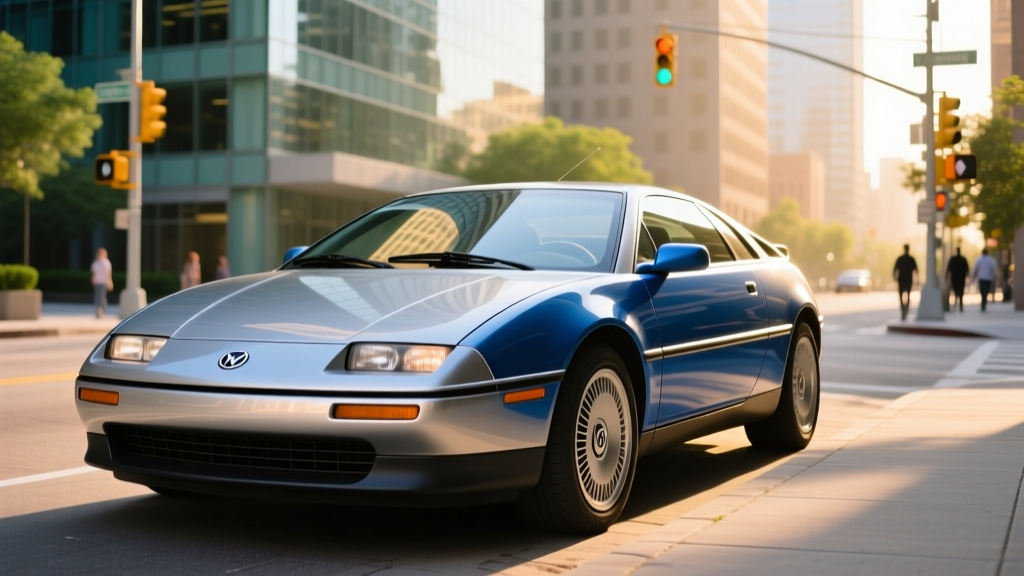
The GM EV1 was a purpose-built electric vehicle launched in 1996 as a response to California's Zero Emission Vehicle (ZEV) mandate. It was a two-seat coupe with a lead-acid battery in its first generation (Gen I, 1996-1997) and an upgraded nickel-metal hydride (NiMH) pack in Gen II (1999). Here's what those specs looked like:
| Spec | EV1 Gen I (1996-97) | EV1 Gen II (1999) |
|---|---|---|
| Battery Chemistry | Lead-Acid | NiMH |
| Battery Capacity | ~16.5 kWh | ~26.4 kWh |
| EPA-Estimated Range | ~60 miles | ~80-100 miles |
| Motor Output | 102 kW (~137 hp) | 102 kW (~137 hp) |
| 0-60 mph | ~8.0 seconds | ~8.0 seconds |
| Top Speed | 80 mph (electronically limited) | 80 mph |
| Charging | Magne-charge inductive paddle (Level 2) | Magne-charge inductive paddle (Level 2) |
| Lease Price (1996) | ~$399-$549/month | ~$399-$549/month |
GM's decision to lease-only was framed as a way to manage risk around an unproven technology and maintain control over the proprietary charging and battery systems. But when California weakened its ZEV mandate and GM determined the program wasn't profitable, the company recalled every EV1 — over the protests of lessees who wanted to keep their cars. The documentary Who Killed the Electric Car? (2006) chronicled this controversy in detail.
According to Smithsonian Magazine, roughly 40 EV1s were spared from the crusher and donated to institutions, but with their drivetrains disabled. One surviving EV1 is on display at the Henry Ford Museum in Dearborn, Michigan. None are road-legal or available for private purchase.
The "EV1 for Sale" Listings You'll Find Online — and Why to Avoid Them
A search for "EV1 for sale" in 2026 will surface a few categories of results. Understanding what they actually are will save you time and money:
| What You'll See | What It Actually Is | Verdict |
|---|---|---|
| "Original GM EV1" on auction sites | Scam listings or photoshopped images | ❌ Do not engage |
| EV1 replicas or kit cars | Custom-built vehicles styled to look like an EV1, often on a donor chassis | ⚠️ Not a real EV1; evaluate as a custom build |
| Museum/deactivated shells | Non-drivable bodies with no battery, motor, or electronics | ❌ Display-only; no road use |
| "EV1-style" conversions | Aftermarket EV conversions of other cars marketed with EV1 aesthetics | ⚠️ Legally a different vehicle entirely |
Bottom line: there is no legitimate market for an original, drivable GM EV1. If owning a piece of EV history is your goal, your best option is to visit a museum display or invest in a well-documented early EV like a first-generation Nissan Leaf or Tesla Roadster (2008-2012), which can be found on the used market.
What the EV1's Specs Mean in 2026 Context
To understand how far EVs have come — and why the EV1's limitations led to its cancellation — let's put its numbers next to a few accessible 2026 EVs that capture different aspects of the EV1's original mission: efficiency, compact design, and everyday usability.
| Spec | GM EV1 Gen II (1999) | 2026 Chevrolet Equinox EV 2LT | 2026 Tesla Model 3 RWD | 2026 Hyundai Ioniq 5 SE Std Range |
|---|---|---|---|---|
| Battery Capacity | ~26.4 kWh (NiMH) | 85 kWh (NMC) | 57.5 kWh (LFP) | 58 kWh (LFP) |
| EPA Range | ~80-100 mi | 319 mi | 272 mi | 245 mi |
| Motor Output | 137 hp | 213 hp (FWD) | 271 hp | 168 hp |
| 0-60 mph | ~8.0 sec | ~7.9 sec | 5.8 sec | 8.1 sec |
| DC Fast Charge (Peak) | N/A (no DCFC) | 150 kW | 170 kW | 150 kW |
| 10-80% DCFC Time | N/A | ~30 min | ~25 min | ~24 min |
| Base MSRP (2026) | Not sold (lease ~$449/mo in 1999) | $33,600 | $38,990 | $42,450 |
| Federal Tax Credit (§30D) | N/A | Up to $7,500* | Up to $7,500* | Up to $7,500* |
* §30D tax credit eligibility depends on buyer income limits, vehicle MSRP caps, battery sourcing requirements, and point-of-sale transfer rules. Check IRS guidelines for current-year specifics.
The contrast is stark. The EV1's 26.4 kWh NiMH pack delivered under 100 miles of range with no fast-charging capability and a two-seat cabin. Today's $33,600 Chevrolet Equinox EV offers 319 miles of EPA range, five seats, DC fast charging, and qualifies for federal incentives the EV1's era never had.
If You Could Own an EV1: Estimated Costs vs. a 2026 EV
Since you can't actually buy an EV1, let's run a thought experiment. If one were available as a functioning vehicle, what would ownership look like compared to a modern EV? This comparison also illustrates why early EVs struggled commercially.
| Cost Factor | EV1 (Hypothetical Collector) | 2026 Chevy Equinox EV 2LT |
|---|---|---|
| Purchase Price | $50,000-$150,000+ (collector premium) | $33,600 MSRP (~$26,100 after $7,500 credit if eligible) |
| Battery Replacement | $20,000-$40,000 (custom NiMH rebuild, no supply chain) | $14,000-$18,000 (NMC pack, dealer network) |
| Annual Insurance | $3,000-$5,000 (collector/rare vehicle) | $1,400-$2,000 (varies by state/driver) |
| Charging Cost (home, 12,000 mi/yr) | ~$430/yr (small battery, 0.25 kWh/mi at $0.13/kWh) | ~$470/yr (~0.30 kWh/mi at $0.13/kWh) |
| Maintenance (annual) | $2,000-$5,000 (custom parts, specialist labor) | $200-$400 (cabin filter, tire rotation, fluid top-offs) |
| Practicality | 2 seats, no DCFC, 80 mi range, no modern safety | 5 seats, DCFC, 319 mi range, AEB, lane-keep, backup cam |
The EV1's efficiency was actually impressive for its era — its aerodynamic teardrop shape (drag coefficient of 0.19) and lightweight construction meant it used less energy per mile than many modern EVs. But 80 miles of range, no fast charging, and zero parts availability make it a museum piece, not a daily driver.
The Real Question: Which 2026 EV Actually Fits Your Needs?
If the EV1 search brought you here because you're exploring EV ownership for the first time, the real decision isn't about a 30-year-old prototype — it's about which current EV matches your driving pattern, budget, and charging situation. Here's a practical framework:
EV Decision Framework: If X, Then Y
- If you drive under 40 miles/day and have home charging (Level 2 or even a standard 120V outlet): Any 2026 EV with 200+ miles of range will require almost zero public charging. The Chevrolet Equinox EV ($33,600, 319 mi) or Volvo EX30 ($34,950, 261 mi) are strong value picks.
- If you take regular road trips (200+ miles one way): Prioritize DC fast-charge speed. The Hyundai Ioniq 5 (peaks at ~240 kW on 800V architecture, 10-80% in ~18 min) or Tesla Model 3 Long Range (Supercharger network access, 10-80% in ~25 min) minimize downtime.
- If you live in a cold climate (regularly below 30°F): Expect 20-30% range loss in winter. Choose an EV with a heat pump (standard on Ioniq 5, Tesla Model 3) and buy more range than you think you need. A 300-mile EPA rating becomes ~210-240 miles in January.
- If you can't charge at home (apartment, street parking): Public DCFC dependency is viable but adds cost ($0.30-$0.50/kWh vs. $0.13/kWh at home) and time. Consider a plug-in hybrid like the Toyota RAV4 Prime (42 mi electric + 38 mpg gas) as a bridge until charging access improves.
- If budget is the primary constraint: The used EV market has strong options. A 2022-2023 Chevrolet Bolt EUV can be found for $18,000-$22,000 with 247 miles of range and eligibility for the up-to-$4,000 used EV credit (income limits apply).
Common EV1 Myths — and the Facts Behind Them
The EV1's dramatic history has generated plenty of misinformation. Here are the most persistent claims, addressed with data:
| Myth | Fact |
|---|---|
| "The EV1 could have succeeded if GM kept it alive." | With 80 miles of range, 2 seats, no fast charging, and a $33,995 equivalent sticker (1999 dollars), the EV1 was a compliance car for a niche market. Battery tech in 1999 simply couldn't support mass adoption at viable cost. |
| "Oil companies killed the EV1." | GM's own financial analysis concluded the EV1 program wasn't profitable. The weakened ZEV mandate removed the regulatory requirement. Multiple factors — cost, battery limitations, low fuel prices in the early 2000s — contributed. |
| "EV1 lessees could have bought their cars." | GM's lease agreements explicitly prohibited purchase. Several lessees offered to buy their vehicles at full cost; GM refused and recalled them anyway. |
| "The EV1's technology was ahead of its time." | In some ways, yes (regenerative braking, inductive charging, aerodynamics). But its lead-acid and NiMH batteries were heavy, expensive, and energy-poor compared to modern lithium-ion. The EV1 was an engineering showcase, not a commercially scalable product. |
EV Ownership in 2026: What First-Time Buyers Actually Need to Know
The EV1's story is a history lesson. If you're entering the EV market today, here are the practical realities that no spec sheet fully captures:
Home Charging Is the Foundation
Over 80% of EV charging happens at home. A Level 2 home charger (240V, 32-48 amps, delivering 7.7-11.5 kW) adds 25-44 miles of range per hour and costs $500-$2,000 to install depending on whether your electrical panel needs an upgrade. If you're in a home with a 200-amp panel and a nearby garage outlet, installation can be as low as $500-$800. Older homes with 100-amp panels may need a $1,500-$3,000 panel upgrade. Get a quote from a licensed electrician before purchasing your EV.
Real-World Range Is Not the EPA Sticker
EPA range is measured under controlled conditions. In practice:
- Highway driving (70+ mph): Expect 10-15% less than EPA range due to aerodynamic drag.
- Cold weather (below freezing): Expect 20-30% reduction from battery chemistry limitations and cabin heating load.
- Combined cold + highway: Plan for up to 35% below the sticker number.
A 2026 Tesla Model 3 Long Range with an EPA rating of 363 miles might deliver ~250-270 miles on a 75 mph highway drive in 25°F weather. That's still plenty — but it's not 363.
Charging Speed Is About the Curve, Not the Peak
When manufacturers advertise "250 kW DC fast charging," that's the peak rate, sustained only at low state of charge (typically 10-40%). Above 80%, charging slows dramatically to protect the battery. A car that peaks at 250 kW might average 100-130 kW across a 10-80% session. Always check the 10-80% charge time, not just the peak kW number.
EVs Cost More Upfront, Less Over Time
According to fueleconomy.gov, the average EV costs roughly $0.04-$0.05 per mile to charge at home (at $0.13/kWh), compared to $0.12-$0.14 per mile for a 25 mpg gas car at $3.50/gallon. Over 5 years and 60,000 miles, that's a fuel savings of $4,800-$5,400. EVs also eliminate oil changes, spark plugs, and transmission fluid. However, EV insurance premiums run 15-25% higher on average, and tire replacement comes sooner due to higher vehicle weight and instant torque. Factor all of this into your total cost of ownership, not just the sticker price.
Where to Actually See an EV1 in 2026
If your interest in the EV1 is historical rather than purchase-driven, several institutions have surviving units on public display:
- The Henry Ford Museum (Dearborn, MI) — EV1 on permanent display
- Petersen Automotive Museum (Los Angeles, CA) — has featured EV1 in exhibitions
- Smithsonian Institution — holds an EV1 in its collection (display rotates)
- Various university engineering departments — received deactivated units in 2003 for research; not all remain on public display
Call ahead to confirm availability before traveling, as museum collections rotate.
Is there any way to legally buy an original GM EV1 in 2026?
No. Every EV1 was leased, never sold. When GM recalled them, the vehicles were either crushed or donated to institutions with disabled drivetrains. No street-legal EV1 exists in private ownership. Any listing claiming to sell an original, drivable EV1 is fraudulent.
What was the GM EV1's range?
The Gen I EV1 (1996-97, lead-acid battery) achieved roughly 60 miles of range. The Gen II (1999, NiMH battery) improved to approximately 80-100 miles depending on driving conditions. For context, that's roughly one-third the range of the least expensive 2026 EV.
Why did GM cancel the EV1 program?
GM cited a combination of factors: the high cost of production relative to demand, California's weakened ZEV mandate, limited battery technology, and the conclusion that the program was not financially sustainable. The decision remains controversial among EV advocates.
What modern EV is closest to the EV1's original mission?
The EV1 was designed as an efficient, aerodynamic, lightweight commuter for urban drivers. The closest 2026 spiritual successor is arguably the Chevrolet Equinox EV — a mainstream, affordable, efficiency-focused EV with over 300 miles of range. For the compact, sporty aspect, the Tesla Model 3 or Hyundai Ioniq 5 carry forward the EV1's blend of performance and efficiency.
Can I buy an EV1 replica or kit car?
A few custom builders have created EV1-styled replicas, typically on a donor chassis with an aftermarket electric drivetrain. These are legally classified as custom or kit vehicles, not original GM products. Quality, safety, and roadworthiness vary enormously. Have any replica inspected by a qualified mechanic and verify it can be titled and insured in your state before purchasing.
What should I look for instead of an EV1 if I want an affordable first EV?
For a new EV under $35,000 in 2026, the Chevrolet Equinox EV ($33,600, 319 mi range) and Volvo EX30 ($34,950, 261 mi) lead the value segment. On the used market, a 2022-2023 Chevrolet Bolt EUV ($18,000-$22,000, 247 mi range) remains one of the best bargains in EV ownership, with eligibility for the federal used-EV credit of up to $4,000 if you meet income requirements.