Quick Answer: What Was the EV1 Auction?
There was never a public EV1 auction in the traditional sense. When General Motors terminated its EV1 lease program in 2003, it recalled and crushed nearly all 1,117 units rather than selling them. A handful of EV1s were donated to museums and universities with disabled powertrains. The few that occasionally surface at collector auctions or private sales today are non-functional shells or university-deaccessioned units, typically commanding $20,000–$60,000 as historical artifacts rather than drivable vehicles. For modern buyers researching the EV1 auction market, the real takeaway is understanding why GM killed the program — and how those lessons directly inform whether a 2026 EV is right for your garage.
The GM EV1 Story: Why an Auction Never Really Happened
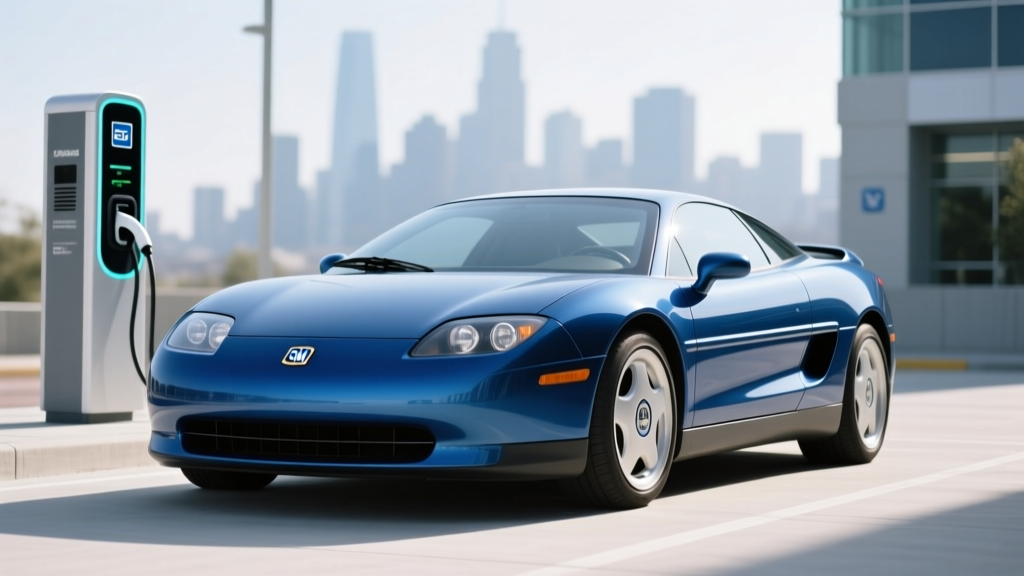
Introduced for the 1997 model year, the GM EV1 was the first mass-produced electric vehicle from a major automaker in the modern era. It was available only through lease — never for outright purchase — in California and Arizona. The two-seat coupe came in two generations:
- Gen I (1997–1999): Lead-acid battery, ~70 miles EPA range, 137 hp, 0–60 mph in ~9 seconds
- Gen II (1999–2003): Nickel-metal hydride (NiMH) battery, ~100–140 miles range (depending on pack), 137 hp, improved thermal management
By 2003, GM had spent an estimated $1 billion developing and supporting the EV1 program. Citing low demand, high parts costs, and the California Air Resources Board's rollback of its zero-emission vehicle mandate, GM recalled all leased units. Despite petitions from lessees who wanted to buy their cars, GM refused. Most were sent to the crusher. The documentary Who Killed the Electric Car? (2006) brought widespread attention to the controversy, including scenes of EV1s being towed from owners' driveways.
A small number of EV1s — fewer than 40 — were donated to institutions like the Petersen Automotive Museum, Cal State University, and the Smithsonian. These were delivered with disabled drivetrains. When universities deaccession them or when collectors acquire them through private channels, that's the closest thing to an "EV1 auction" that exists.
What an EV1 Shell Costs at Auction Today
If you're tracking collector-car platforms like Bring a Trailer or Mecum for an EV1 listing, here's what the market looks like:
| Condition / Status | Estimated Price Range | Drivable? |
|---|---|---|
| Disabled museum/university unit (non-running) | $20,000–$40,000 | No |
| Restored with aftermarket EV components | $40,000–$60,000+ | Varies |
| Body shell / parts car | $5,000–$15,000 | No |
These are not practical vehicles. They lack modern safety equipment, have no active manufacturer support, and any restoration to drivable condition requires custom fabrication. For the price of an EV1 shell, you could purchase a fully warranted, 300+ mile range 2026 EV with DC fast charging, over-the-air updates, and a federal tax credit of up to $7,500.
EV1 vs. a 2026 EV: How Far the Technology Has Come
The most useful exercise for someone researching an EV1 auction is comparing what that car offered against a modern equivalent. Here's a side-by-side look at the Gen II EV1 against a 2026 Chevrolet Equinox EV 3LT — a mainstream crossover at a similar spirit of accessible electric mobility.
| Spec | GM EV1 Gen II (1999) | 2026 Chevrolet Equinox EV 3LT |
|---|---|---|
| EPA Range | ~100–140 miles (NiMH) | 319 miles |
| Battery Chemistry | NiMH (26.4 kWh gross) | NMC lithium-ion (85 kWh usable) |
| DC Fast Charging | Not available (Level 2 only, ~6.6 kW via Magne Charge) | Peak 150 kW, 10–80% in ~30 min |
| Level 2 Home Charging | Inductive paddle, ~3–5 hours | 11.5 kW onboard, ~9 hours (0–100%) |
| 0–60 mph | ~8.5 seconds | ~7.9 seconds |
| Horsepower | 137 hp | 213 hp (FWD) / 288 hp (AWD) |
| Cargo Space | ~10 cu ft (two-seater) | 26.4 cu ft (rear seats up) |
| MSRP / Lease | $33,995 (lease only, ~$399–$549/mo) | ~$43,400 (before incentives) |
| Federal Tax Credit (§30D) | None (program predated credits) | Up to $7,500 (subject to income/MSRP/sourcing rules — see IRS.gov) |
| Battery Warranty | None (recalled and crushed) | 8 years / 100,000 miles |
| ADAS / Safety Tech | Dual front airbags, ABS | Automatic emergency braking, lane-keep, adaptive cruise, blind-spot monitoring |
The gap is staggering. A 2026 Equinox EV delivers more than double the range, seats five, charges at public DC stations coast-to-coast, and qualifies for federal incentives the EV1 never had access to. According to fueleconomy.gov, the Equinox EV achieves 114 MPGe combined — compared to the EV1's equivalent of roughly 75–85 MPGe with its NiMH pack.
Real Costs: What EV Ownership Actually Looks Like in 2026
If the EV1 auction search is driven by curiosity about whether an older EV is a budget-friendly entry point, the economics strongly favor a modern vehicle. Here's a five-year cost comparison between buying a 2026 Equinox EV and a comparable gas-powered compact SUV (2026 Toyota RAV4 LE AWD, ~$30,000 MSRP):
| Cost Category (5 Years / 75,000 Miles) | 2026 Equinox EV 3LT | 2026 RAV4 LE AWD (Gas) |
|---|---|---|
| Purchase Price (after $7,500 credit) | ~$35,900 | $30,000 |
| Fuel / Electricity | ~$3,200 (home charging at $0.14/kWh avg) | ~$8,100 (at $3.50/gal, 30 MPG combined) |
| Maintenance | ~$1,200 (no oil changes, fewer brake replacements due to regen) | ~$3,500 (oil, filters, belts, more brake wear) |
| Insurance (avg) | ~$9,500 (EV premiums run ~15–25% higher) | ~$7,800 |
| Estimated Depreciation | ~$14,000 (EV resale stabilizing but still higher than ICE) | ~$11,000 |
| Total 5-Year Cost | ~$63,800 | ~$60,400 |
| Cost Per Mile | ~$0.85 | ~$0.81 |
The EV is marginally more expensive over five years when you factor in higher insurance and steeper initial depreciation, but the gap has narrowed dramatically. If electricity rates are lower in your area or you have access to free workplace/public charging, the EV can break even or come out ahead. The DOE's side-by-side comparison tool lets you plug in your local rates and commute distance for a personalized estimate.
Common EV1 Myths — and What They Mean for Today's Buyers
| Myth | Fact |
|---|---|
| "The EV1 proved EVs don't work." | The EV1 had a 100+ mile range in 1999 with NiMH chemistry. Modern NMC and LFP batteries deliver 250–400+ miles. The technology problem was real then; it's solved now. |
| "GM killed the EV1 because nobody wanted one." | Lessee demand was strong — waiting lists existed. GM cited low volume, parts costs, and shifting ZEV mandates. It was a business decision, not a technology verdict. |
| "You could buy an EV1 at auction cheap." | GM never sold them. Disabled units sell for $20K–$60K as collectibles. They are not practical daily drivers. |
| "EV batteries degrade so fast you'll need a $20K replacement." | Modern NMC and LFP packs are warrantied for 8 years / 100,000 miles with a 70% capacity retention floor. Real-world data from Tesla, Hyundai, and others shows typical degradation of 10–15% over 200,000 miles. |
| "EVs are worse in cold weather." | Range drops 20–40% in sub-freezing temps — this is real. But heat pumps (standard on many 2026 models) and battery preconditioning have significantly reduced the penalty compared to the EV1 era, which had no thermal management. |
Real-World Ownership Considerations Before You Buy Any EV
The EV1's demise taught the industry that infrastructure and practicality matter as much as the car itself. Here's what to evaluate honestly before committing to an EV in 2026:
Home Charging Access
If you can install a Level 2 home charger (240V, typically 32–48 amps), an EV becomes dramatically more convenient. Expect $500–$1,500 for the charger hardware and $800–$3,000 for electrician installation, depending on panel capacity. If your home has a 100-amp panel, a $1,500–$3,000 panel upgrade to 200 amps may be necessary. Without home charging, public DC fast charging at $0.35–$0.55/kWh erodes the fuel-cost advantage significantly.
Climate and Range Reality
An EPA-rated 319-mile EV will deliver closer to 250–270 miles in sustained highway driving at 70+ mph, and potentially 190–230 miles in sub-20°F winter conditions. If your daily round-trip commute exceeds 80 miles and you live in a cold climate, prioritize a vehicle with 300+ EPA miles and a heat pump.
Driving Patterns
Urban and suburban drivers with predictable routes benefit most from regenerative braking and lower per-mile costs. Frequent road-trippers should prioritize DC fast-charging speed (look for 150+ kW peak capability and 10–80% times under 30 minutes) and verify NHTSA and IIHS safety ratings for highway confidence.
Tax Credit Eligibility
The federal §30D credit of up to $7,500 is not universal. For 2026, your modified adjusted gross income must not exceed $150,000 (single) or $300,000 (joint). The vehicle MSRP must be under $55,000 for cars and $80,000 for SUVs/trucks. Battery components and critical minerals must meet domestic-sourcing thresholds that tighten annually. Always verify current-year rules at IRS.gov and consult a tax professional. Some states offer additional credits — check your state energy office.
Decision Framework: Should You Chase an EV1 Collectible or Buy a Modern EV?
Choose an EV1 collector shell if:
- You're an automotive historian or collector seeking a display piece
- You have $20,000–$60,000 in discretionary funds for a non-drivable artifact
- You understand it has no warranty, no parts support, and no practical daily use
Choose a 2026 production EV if:
- You want a daily driver with 250+ miles of real-world range
- You need DC fast charging for road trips (10–80% in under 30 minutes)
- You want to leverage the $7,500 federal tax credit (if eligible)
- You value an 8-year/100,000-mile battery warranty
- You want modern ADAS (automatic emergency braking, lane-keep assist, adaptive cruise)
Choose a PHEV (plug-in hybrid) instead if:
- You lack reliable home or workplace charging
- You regularly drive 400+ miles in rural areas with sparse DC charging infrastructure
- You want electric-only commuting (typically 30–50 miles) without full range dependency
FAQ: EV1 Auction and Legacy Questions
Can I actually buy a GM EV1 at auction today?
Extremely rarely. Fewer than 40 EV1s were saved from the crusher, and all were delivered with disabled powertrains to museums and universities. When one surfaces at auction (typically through university deaccession), it sells as a non-running collectible for $20,000–$60,000. It is not a practical vehicle purchase.
Why did GM crush the EV1 instead of selling it?
GM cited long-term parts liability, low production volume, and the fact that the EV1 was only offered as a lease. By reclaiming and destroying the vehicles, GM eliminated ongoing support obligations. Critics argue the move was designed to eliminate evidence that consumer EV demand existed before the company was ready to support it.
How does the EV1's range compare to a 2026 EV?
The Gen II EV1 delivered roughly 100–140 miles on its NiMH pack. A 2026 Chevrolet Equinox EV offers 319 EPA-rated miles, a Hyundai Ioniq 6 delivers up to 361 miles, and a Tesla Model 3 Long Range achieves 363 miles. Modern lithium-ion chemistry and thermal management have roughly tripled usable range.
Is buying a used EV a better deal than an EV1 collectible?
Absolutely. A 2022–2024 used EV with 85+ kWh battery and 250+ miles of range typically sells for $22,000–$35,000 and remains under factory battery warranty. The used EV federal tax credit (§25E) offers up to $4,000 on vehicles priced under $25,000 — something an EV1 shell could never qualify for.
What happened to EV1 owners after the recall?
Lessees were required to return their vehicles. Many wrote letters and petitions to GM requesting the option to purchase, but all were denied. Some owners held "funerals" for their cars. The experience galvanized early EV advocacy and directly influenced the development of California's subsequent ZEV mandates and the broader plug-in vehicle movement.