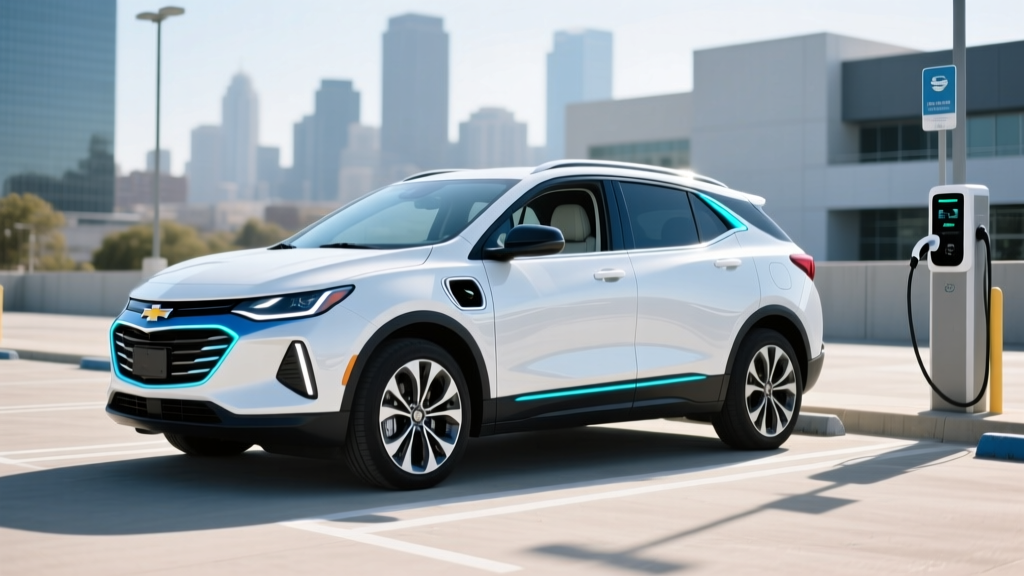
General Motors' electric vehicle lineup has expanded dramatically, but a major shift in how buyers access federal incentives has reshaped the purchase equation. The GM EV tax credit program change — driven by evolving battery-sourcing rules under IRS §30D and GM's own supply-chain transitions — means that not every Chevy, Cadillac, or GMC electric model qualifies for the full $7,500 credit in 2026, and eligibility now hinges on a matrix of income caps, MSRP limits, and critical-mineral sourcing requirements that shift annually.
This guide breaks down exactly what the current rules mean for GM EV shoppers, runs the five-year total cost of ownership on popular models like the Equinox EV and Silverado EV, and gives you the math to decide whether going electric with GM actually saves you money.
What Changed: The GM EV Tax Credit Program Shift
Through 2023 and into 2024, several GM EVs — including the Equinox EV and early Blazer EV builds — qualified for the full $7,500 federal tax credit because their battery components and critical minerals met the phased-in thresholds under the Inflation Reduction Act. However, as the IRS §30D rules tightened their critical-mineral and battery-component sourcing requirements for 2025 and 2026, some GM configurations lost partial or full eligibility as supply chains adjusted.
GM has been aggressively onshoring battery production through its Ultium Cells joint venture plants in Ohio, Tennessee, and Michigan. This vertical integration is designed to bring more models back into compliance over time. But the practical reality for 2026 buyers is that eligibility can vary by model, trim, and even build month — making it essential to verify a specific vehicle's status at the point of sale rather than assuming blanket qualification.
2026 Federal EV Tax Credit (§30D) Eligibility Checklist
- Vehicle MSRP cap: Vans, SUVs, and pickups ≤ $80,000; sedans and other body styles ≤ $55,000
- Buyer income cap (modified AGI): $300,000 joint / $225,000 head of household / $150,000 single
- Battery sourcing: Minimum percentages of critical minerals and battery components must be sourced from the U.S. or FTA partners — thresholds increase annually
- Final assembly: Must occur in North America
- Point-of-sale transfer: Buyers can transfer the credit to the dealer for an immediate price reduction (up to $7,500), subject to IRS registration and verification
- Nonrefundable: If claimed on taxes (not transferred), the credit cannot exceed your total tax liability for the year
Source: IRS.gov — Clean Vehicle Credits. Rules are subject to annual adjustment. Always verify with a tax professional before purchase.
GM's 2026 EV Lineup: Credit Eligibility at a Glance
Here is where GM's current electrified lineup stands regarding §30D eligibility for 2026. Note that GM has publicly committed to restoring and maintaining credit eligibility across its Ultium-based lineup, but supply-chain timing means buyers should confirm at the dealer using the IRS's official seller-reporting tool at the time of purchase.
| Model | Starting MSRP | Body Type | MSRP Cap | EPA Range | Estimated §30D Credit |
|---|---|---|---|---|---|
| Chevrolet Equinox EV 2LT | $33,600 | SUV | $80,000 | 319 mi | Up to $7,500* |
| Chevrolet Blazer EV 2LT | $44,600 | SUV | $80,000 | 279–324 mi | Up to $7,500* |
| Cadillac Lyriq Tech | $58,590 | SUV | $80,000 | 314 mi | Up to $7,500* |
| Chevrolet Silverado EV 4WT | $73,800 | Pickup | $80,000 | 380 mi | Up to $7,500* |
| GMC Sierra EV Denali Edition 1 | $99,495 | Pickup | $80,000 | 440 mi | Ineligible (exceeds MSRP cap) |
*Credit amount depends on battery-sourcing compliance at time of delivery. Verify with dealer and IRS tool. Source: fueleconomy.gov, GM press specifications.
Five-Year Total Cost of Ownership: GM EV vs. Gas Equivalent
To understand whether a GM EV genuinely saves money, we need to look beyond the sticker price. Below is a five-year TCO comparison between the Chevrolet Equinox EV 2LT (AWD, 85 kWh usable battery, 319 mi EPA) and a comparably equipped Chevrolet Equinox gas AWD (1.5L turbo, 26 MPG combined). Both assume 15,000 miles/year, 75,000 miles total.
| Cost Category | Equinox EV 2LT AWD | Equinox Gas AWD | Notes |
|---|---|---|---|
| Purchase Price (MSRP) | $33,600 | $31,900 | Base MSRP before incentives |
| Federal Tax Credit | –$7,500 | $0 | Assumes full §30D eligibility |
| Effective Purchase Price | $26,100 | $31,900 | After credit applied at POS |
| Fuel / Charging (5 yrs) | $3,940 | $8,650 | EV: $0.14/kWh home; Gas: $3.40/gal |
| Maintenance (5 yrs) | $1,800 | $3,750 | EV: no oil, fewer fluids, regen saves brakes |
| Insurance (5 yrs) | $9,750 | $7,500 | EV premiums ~25–30% higher on average |
| Depreciation (5 yrs) | $14,200 | $12,100 | EVs depreciate faster currently; gap narrowing |
| Total 5-Year Cost | $55,790 | $63,900 | EV saves ~$8,110 over 5 years |
The Equinox EV comes out ahead by roughly $8,100 over five years — but only if you qualify for the full tax credit and charge primarily at home at residential electricity rates. Lose the credit, and the advantage shrinks to around $600, making the decision far closer. This is why the GM EV tax credit program change matters so much in practice.
Fuel Savings: The Real $/Mile Math
The single largest ongoing savings from EV ownership comes from energy costs. Here is the concrete math using the Equinox EV and its gas counterpart:
| Metric | Equinox EV AWD | Equinox Gas AWD |
|---|---|---|
| Efficiency | 3.0 mi/kWh (100 MPGe) | 26 MPG combined |
| Energy Cost | $0.14/kWh (home avg) | $3.40/gallon (national avg) |
| Cost Per Mile | $0.047/mile | $0.131/mile |
| Annual Cost (15k mi) | $705 | $1,965 |
| 5-Year Cost (75k mi) | $3,525 | $9,825 |
Assumes 85% home charging at $0.14/kWh and 15% DC fast charging at $0.35/kWh for blended EV rate. Gas price based on EIA 2026 forecast average. Actual costs vary by region and utility rate plan. Source: fueleconomy.gov, U.S. EIA.
That's a $6,300 energy savings over five years — but note the assumption: it requires reliable home Level 2 charging. If you rely entirely on public DC fast charging at $0.35–$0.50/kWh, your per-mile cost jumps to $0.12–$0.17/mile, potentially erasing the fuel-cost advantage entirely. Home charging access remains the single most important variable in EV economics.
Maintenance: Where EVs Quietly Win
EVs eliminate entire categories of routine maintenance. The Ultium platform in GM's EVs has far fewer moving parts than a comparable internal-combustion drivetrain — no multi-speed transmission, no exhaust system, no timing chain, and no engine oil.
| Service Item | EV Required? | Gas Vehicle Cost (5 yrs) |
|---|---|---|
| Oil changes (5–7 over 5 yrs) | No | $350–$700 |
| Transmission fluid | No (single-speed reduction gear) | $150–$300 |
| Brake pads | Rarely (regen braking extends life 2–3×) | $400–$800 |
| Engine air filter | No | $100–$200 |
| Spark plugs | No | $200–$400 |
| Coolant / fluid flushes | Yes (battery thermal system) | $150–$300 |
| Cabin air filter | Yes | $100–$200 |
| Tire rotation / replacement | Yes (EVs wear tires ~15% faster due to weight and torque) | $2,000–$3,000 |
The net maintenance savings is approximately $1,500–$2,500 over five years. The one area where EVs cost more is tires — the Equinox EV's 4,300+ lb curb weight and instant torque accelerate tread wear. Budget for a tire replacement around year 3 or 4, and consider EV-specific touring tires (like the Michelin Energy Saver or Hankook iON) rated for heavier loads.
Insurance: The Cost EV Buyers Often Overlook
EV insurance premiums run 25–30% higher than equivalent gas vehicles on average, according to industry data. For the Equinox EV, expect annual premiums around $1,800–$2,200 depending on your state, driving record, and coverage level — compared to roughly $1,400–$1,600 for the gas Equinox.
Why the gap? Three factors drive it:
- Higher repair costs: EV battery packs and power electronics are expensive to replace after collision damage, and fewer body shops have HV-certified technicians.
- Higher vehicle values: Even after the tax credit, insurers often base comprehensive/collision premiums on pre-credit MSRP.
- Total-loss thresholds: Battery damage in even moderate collisions can push a vehicle past the total-loss threshold, increasing claim frequency.
Shop multiple insurers before purchase. Some carriers (like Progressive and State Farm) have begun offering EV-specific discounts, and GM's own OnStar-linked insurance program may offer competitive rates for Ultium-based models. Bundling home and auto can also narrow the gap.
Depreciation and Resale Value: The Honest Picture
EV depreciation has been steeper than gas vehicles over the past three years, driven by rapid price cuts on new models (particularly from Tesla), improving technology making older EVs less desirable, and lingering consumer uncertainty about long-term battery health.
For the Equinox EV, industry projections suggest 45–55% depreciation over five years (75,000 miles), compared to roughly 38–45% for the gas Equinox. On a $33,600 purchase, that translates to $15,100–$18,500 in value lost vs. $12,100–$14,300 for the gas model.
However, two factors work in GM EVs' favor going forward:
- Ultium battery warranty: GM covers the battery for 8 years / 100,000 miles against defects and excessive capacity loss (below 60% state of health), which supports used-EV buyer confidence.
- Slowing price wars: As new-EV pricing stabilizes post-2024, used-EV values are expected to follow suit rather than continuing the freefall seen in 2023–2024.
If you plan to keep your GM EV for 8+ years and drive it past 100,000 miles, depreciation matters far less — you'll have extracted maximum value from the purchase and the battery warranty covers you through most of that period.
State, Local, and Utility Incentives
Beyond the federal §30D credit, many states and utilities offer additional rebates that can meaningfully reduce your net cost:
- State rebates: California (CVRP, up to $7,000 for income-qualified buyers), Colorado ($5,000 state credit), Massachusetts (MOR-EV, up to $3,500), New York (Drive Clean Plus, up to $2,000) — amounts and eligibility vary widely by state and change frequently. Check your state energy office for current programs.
- Utility rebates: Many utilities offer $250–$1,500 rebates for home Level 2 charger purchase and installation, plus time-of-use (TOU) rate plans that lower overnight charging costs to $0.06–$0.10/kWh.
- HOV lane access: States like California, Colorado, and Virginia offer single-occupant HOV lane access for qualifying EVs — a non-monetary benefit worth significant commute time.
Always verify current incentive availability with your state energy office and local utility before relying on these amounts in your purchase math.
Decision Framework: Is a GM EV Right for Your Budget?
Choose a GM EV if:
- You qualify for the full $7,500 federal credit (income within caps, model under MSRP cap, battery sourcing confirmed)
- You have reliable home Level 2 charging access (garage or driveway with 240V circuit)
- You drive 12,000+ miles per year (higher mileage = greater fuel savings)
- You plan to keep the vehicle 5–8+ years (amortizes higher depreciation and insurance)
- Your state offers additional rebates that stack on top of the federal credit
Consider waiting or choosing a PHEV instead if:
- You cannot confirm §30D eligibility for your chosen model and build month
- You lack home charging access and would rely entirely on public DC fast charging
- You drive under 8,000 miles per year (fuel savings won't offset the purchase premium)
- You trade vehicles every 2–3 years (depreciation will dominate your cost)
- Your insurance quotes come in 40%+ higher than your current gas vehicle
Frequently Asked Questions
How much does it really cost to own a GM EV over 5 years?
For a Chevrolet Equinox EV 2LT AWD with the full $7,500 federal credit, expect roughly $55,000–$58,000 over five years (75,000 miles) including purchase, charging, insurance, maintenance, and depreciation. That compares to roughly $62,000–$66,000 for the gas Equinox AWD — a net savings of $5,000–$10,000 depending on your electricity rates, insurance, and how long you hold the vehicle. Without the tax credit, the costs are roughly equal.
Do I qualify for the federal EV tax credit on a GM vehicle?
You may qualify if your modified adjusted gross income is under $300,000 (joint), $225,000 (head of household), or $150,000 (single); the vehicle MSRP is under the applicable cap ($80,000 for SUVs/pickups, $55,000 for sedans); and the specific vehicle's battery meets the 2026 critical-mineral and component-sourcing thresholds. The Equinox EV, Blazer EV, Lyriq, and Silverado EV 4WT all fall under their MSRP caps, but battery sourcing compliance can vary by build. Always verify at the dealership using the IRS seller-reporting portal before finalizing your purchase.
How much do I save on fuel and maintenance with a GM EV?
Combined fuel and maintenance savings run approximately $7,500–$9,000 over five years (75,000 miles) compared to an equivalent gas vehicle, assuming primarily home charging at $0.14/kWh. Fuel savings alone account for roughly $6,000–$6,500 of that figure. These savings scale directly with mileage — the more you drive, the more you save.
Are GM EVs more expensive to insure?
Yes, typically 25–30% more than their gas equivalents. For an Equinox EV, expect annual premiums of $1,800–$2,200 vs. $1,400–$1,600 for the gas model. Over five years, that adds roughly $2,000–$3,000 in additional insurance cost. Get quotes from multiple carriers before purchasing — rates vary significantly by insurer.
How well do GM EVs hold their value?
Current projections show GM EVs depreciating 45–55% over five years, compared to 38–45% for gas equivalents. The gap is narrowing as the used-EV market matures and buyers gain confidence in battery longevity (backed by GM's 8-year/100,000-mile battery warranty). If you hold the vehicle 8+ years, depreciation becomes less impactful to your total cost equation.
Can I transfer the tax credit to the dealer for an instant discount?
Yes. Under the 2024–2026 rules, you can transfer your §30D credit to the selling dealer as a point-of-sale reduction, effectively lowering your purchase price or down payment by up to $7,500 at the time of delivery. The dealer must be registered with the IRS Energy Credits Online portal, and you'll need to attest to your income eligibility. This is often the most practical way to benefit from the credit, especially if your tax liability in the purchase year is less than $7,500.